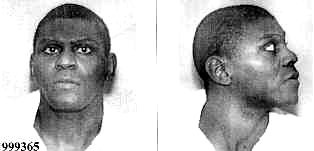
Exzavier Stevenson
Murderer Russell Ellwood
Murderer · USA · 1991
Russell Ellwood was a former taxi driver. Authorities suspected him of killing…
20 victims
Russell Ellwood
Murderer · USA · 1991
Russell Ellwood was a former taxi driver. Authorities suspected him of killing…
20 victims
 Robert Martines Perez
Murderer · USA · 1994
Name: Robert Martines Perez · Other name used in proceedings: Robert Martinez P…
15 victims
Robert Martines Perez
Murderer · USA · 1994
Name: Robert Martines Perez · Other name used in proceedings: Robert Martinez P…
15 victims
 Billy Frank Vickers
Murderer · USA · 1993
Billy Frank Vickers Vickers was executed by lethal injection in Texas on Januar…
14 victims
Billy Frank Vickers
Murderer · USA · 1993
Billy Frank Vickers Vickers was executed by lethal injection in Texas on Januar…
14 victims
 Ricky Don Blackmon
Murderer · USA · 1987
Ricky Don Blackmon was convicted of capital murder and sentenced to death by le…
3 victims
Ricky Don Blackmon
Murderer · USA · 1987
Ricky Don Blackmon was convicted of capital murder and sentenced to death by le…
3 victims
 Moninder Singh Pandher
Serial killer ? · India · 2005
Moninder Singh Pandher was a Punjabi businessman arrested in connection with th…
18 victims
Moninder Singh Pandher
Serial killer ? · India · 2005
Moninder Singh Pandher was a Punjabi businessman arrested in connection with th…
18 victims
 Willie Williams
Mass murderer · USA · 1991
08-13-93 — Received at DOC. · 09/02/91 — Date of offense. · 09/1/91 — Williams…
4 victims
Willie Williams
Mass murderer · USA · 1991
08-13-93 — Received at DOC. · 09/02/91 — Date of offense. · 09/1/91 — Williams…
4 victims
 Diane Spencer
Murderer · USA
Diane Louise Spencer was sentenced to life in prison in Michigan on March 13, 1…
1990 victims
Diane Spencer
Murderer · USA
Diane Louise Spencer was sentenced to life in prison in Michigan on March 13, 1…
1990 victims
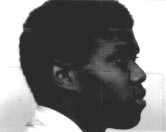 Patrick Fitzgerald Rogers
Murderer · USA · 1985
June 2, 1997 — Patrick Rogers was executed by lethal injection in Texas. · June…
1 victim
Patrick Fitzgerald Rogers
Murderer · USA · 1985
June 2, 1997 — Patrick Rogers was executed by lethal injection in Texas. · June…
1 victim
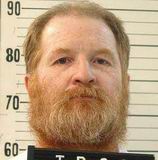 Harold Wayne Nichols
Murderer · USA · 1988
Defendant: Harold Wayne Nichols Victim: Karen Pulley (age 21) Place: Chattanoog…
1 victim
Harold Wayne Nichols
Murderer · USA · 1988
Defendant: Harold Wayne Nichols Victim: Karen Pulley (age 21) Place: Chattanoog…
1 victim
- Gender
- male
- Country
- USA
- Location
- Harris County, Texas, USA
- Date of birth
- J une 6, 1968
- Age at first offence
- 32
- Characteristics
- mentally ill
- Victim profile
- Khalid Masroor and Syed Mehdi ( convenience store clerks )
- Method of murder
- Shooting
- Date(s) of murder
- February 16, 2000
- Years active
- 2000
- Date of arrest
- —
- Status
-
Sentenced to death
Sentenced to death on November 1, 2000
Case record
Identification
Exzavier Lamont Stevenson (TDCJ Number 999365) was born on 06/06/1968. He was received on 11/01/2000 and was 32 years old when received.
Education
He had an education level of 9.
County and location details
The county was Harris County. The state was Texas.
Prior occupation
He worked as a Texas laborer.
Prior prison record
Stevenson had a 2 year sentence from Harris County for 1 count of assault. He was released on mandatory supervision on 4/8/1997. His mandatory supervision discharge was on 5/5/1998.
The offence
Date and age at the offense
On 02/16/2000, Stevenson was 31 years old at the time of the offense.
Victims
The case involved 2 victims, Khalid Masroor and Syed Mehdi, described as convenience store clerks and as convenience store clerks at a gas station in Houston. Both victims were fatally shot.
Events leading to the killing
On 2/16/2000, Stevenson argued with 2 male proprietors at a convenience store.
He returned a short time later and fatally shot both men. Stevenson told police he had forgotten to collect 75 cents in change after buying gum at the store. He said he returned to the store later the same day to make another purchase, but the clerk refused to credit him 10 cents from the earlier purchase. Stevenson returned later, shot the clerks, and tried to open the cash register, witnesses said in court.
Investigation
A psychologist examined Stevenson before trial and determined that he was sane at the time of the offense. The examination also determined that he was competent to stand trial, including that he could assist in his defense.
Trial
Plea and conviction
Stevenson pleaded guilty to capital murder in the shooting of Khalid Masroor and Syed Mehdi.
A jury convicted him of capital murder after he pled guilty.
Punishment phase and sentence
The trial court sentenced Stevenson to death pursuant to the jury's answers to the special issues submitted at the punishment phase. The jury found that Stevenson was a threat to society and, despite testimony from family members regarding his childhood and low mental capacity, also found that he should be sentenced to die.
Jury and legal standards discussed
The trial court sentenced him to death pursuant to the jury's answers to the special issues submitted at the punishment phase.
Defence and mental capacity evidence
During closing jury arguments, Stevenson’s counsel asked the jury to consider the extent of his mental illness. The defence argument included the following quotations:
“I ask you to take all those things into consideration.
This man is mentally ill. This man was born mentally ill.
The question becomes, do we operate under the mad dog theory.
Mad dog can't be cured, shoot him. Some people do. I ask you not to.
Was he ever treated? Not really. Couldn't keep up with the treatment. Nobody to take him. He never was really treated. One thing Dr. Brown said is a positive aspect is, if the man had had prolonged psychiatric treatment, this may never have happened. This may never have happened. Not somebody hell bent on stealing, robbing and killing and carrying on. But somebody, if he had just gotten treated, could have been saved, could have saved [one of the victims] and others out there that day.”
The prosecution responded with the following quotation:
“This is what this case is about. And I don't want to-there are so many details to cover. This is what the case is about. [Appellant] suffers from a mental illness. It may be severe, it may not be severe. Psychologists use various tests. Psychologists say one thing today and another thing tomorrow. And all of that is important. And you may be able to help some people if you take them to psychologists and you give them medicine. Medicine sometimes helps. Other things that psychologists use sometimes helps. But aside from psychology, everybody has a personality. They think if they are rational-and that's what Dr. Friedman was-that's all he was examining for, was he competent and did he know right from wrong. And Dr. Brown agreed with that. They know right from wrong. They pick and choose. They choose to go back to the store instead of staying home. They choose to steal or not to steal. Does not stem from the mental illness. That is a problem that people deal with. But whether you choose to act is a personality.”
Direct appeal and point of error
On direct appeal, Stevenson raised one point of error with several subpoints in an automatic direct appeal. The Court of Criminal Appeals of Texas addressed those issues and affirmed.
The appellate discussion included Stevenson’s claim that he was mentally retarded and that executing mentally retarded persons violated the Eighth Amendment to the United States Constitution. Stevenson implicitly, if not explicitly, conceded he was only “mildly” and not “profoundly or severely” mentally retarded.
The Court of Criminal Appeals stated that the record reflected that Stevenson made no such claim at trial. It further described that the issue litigated through psychological experts was that a mental illness reduced his moral culpability for the offense and justified a sentence less than death, and that he did not assert that his moral culpability should be reduced because of mental retardation.
Closing argument and mental retardation discussion
The Court of Criminal Appeals’ opinion included a description of evidence presented on mental retardation, including:
- Stevenson’s IQ of 68.
- Special Ed classes and “Slow classes where he was a slow learner.”
- Adaptive difficulties and “tics” at a young age.
- A statement that Stevenson was “distant, off to hisself in a dark room, rocking and speaking to no one.”
- At night in bed, he would rock his head on the bed until his nose would bleed.
- A description that he “always rocked” and “just like he did now, and banged his head against the wall.”
- He pulled his eyelashes out “all the time,” and also his eyebrows.
- In hot summertime he put on three jackets and came out in the heat, for which his father beat him.
- The Court described that until he was “trained” to do otherwise, he would not engage in violence even when others picked on him.
- When he was 12 or 13 and lost a fight with his brother Aubrey in front of girls, he tried to kill himself by taking a bottle of Tylenol.
The Court also described family and living circumstances, including:
- Stevenson’s dependence on others and reliance on those in his family who were stable, who loved him, and also his mother, who was chronically mentally ill.
- A quoted statement associated with Stevenson: “I am the movie star; Ms. Daisy, and I have plenty of money”
The Court described vulnerability to abuse as a child, with quotations including:
- “downgrade him and tell him that he's not going to be nothing”
- “until they got tired” It described beatings and abuse by his father with a water hose; his mother with a belt or her fists; his grandfather with whatever he could get in his hands, a belt, or extension cord; and his stepfather until it was so bad that his sister could not watch.
The Court described continued adaptive difficulty and employment, including:
- He could not hold a job for very long, except for one $5-an-hour job as an unarmed night security watchman.
- He worked at whatever he could find to take care of his daughter and Monique Hayward's two children.
- He lived on and off with his mother and siblings.
- He had to move out of his sister Dorothy's apartment to live with his mother after a landlord intervened.
- His mother was living with a man, but the man died, and his family did not want them there anymore.
- After that, he had no place to go.
- In January 1999, he went to stay with his cousin Eric Taylor and at that time he was very “distant and depressed.”
The Court further stated that, during the punishment phase, defense counsel called family members to recount instances where Stevenson manifested symptoms of mental illness, and it described:
- Stevenson suffered from a split personality.
- He was a slow learner.
- He suffered physical and mental abuse by authority figures.
- He would rock in the corner of a dark room.
- He tried to kill himself with an overdose of Tylenol after he lost a fight.
- He once wore three jackets outside in the summertime.
- He plucked out his eyelashes and eyebrows nervously.
- He routinely hit his head on the wall but did not remember doing so.
- He carved symbols on his body with a burned knife or hanger.
A defence expert recalled documents in Stevenson’s file recording other instances of self-mutilation and writing on walls in his own blood.
Testimony quoted on IQ and mental retardation evidence
The opinion included testimony quoted from Stevenson’s mother:
“Somebody told you he was retarded?
A. The doctor told me-okay, like if he's 30, he has the mind like a 19-year-old. That's what the doctor explained to me.”
The opinion included an IQ related question and answer from Stevenson’s psychological expert:
“Dr. Brown, now did you make any independent testing-or do an independent testing to determine his IQ?
A. Yes, yesterday I did administer an intelligence test; and it was consistent with what was reported by the family. He has an IQ in the upper range of mentally retarded, mentally defective range. 68 was his IQ.”
It also included the following quotation about motivation and scoring low:
“Q. If you believe that having a 68 on an IQ test may save you from the death penalty, don't you have a strong motivation to score low on an IQ test?
A. Might.”
Appeals
The case was in the Court of Criminal Appeals of Texas in No. 73,963 titled “Exavier Lamont Stevenson v. The State of Texas.” The Court was described as delivering a unanimous opinion.
The opinion stated that the Court affirmed the trial court’s judgment. It overruled point of error one.
Delivering date and publication
The opinion stated that it was delivered: April 24, 2002. The opinion was published.
Discussion of legal authorities
The opinion included discussion of Penry v. Lynaugh and Ex parte Tennard and cited Section 591.003(13) and Section 591.003(16) of the Texas Health & Safety Code.
The opinion included the following quotations in discussing the Eighth Amendment framework:
“who are profoundly, or severely retarded and wholly lacking the capacity to appreciate the wrongfulness of their actions”
It also included discussion of the inability to say that “all mentally retarded people” can never act with the level of culpability associated with the death penalty, stated as:
“can never act with the level of culpability associated with the death penalty”
The opinion also included several quotations while discussing what could happen if low IQ scores were used solely, including:
- “mildly” retarded citizens
- “perfectly capable of a self-sustaining life”
- “mildly retarded persons could be denied the opportunity to enter into contracts or to marry”
- “mildly retarded persons”
- “low IQ scores”
- “mildly

Spotted an error, or have more information about this case?