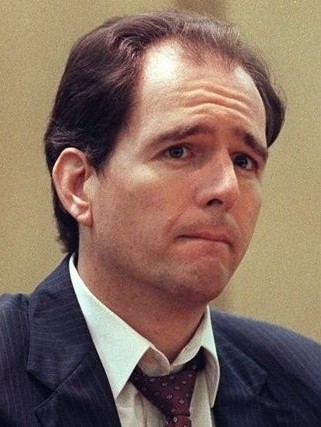
Danny Rolling
Serial killer Glen Edward Rogers
Serial killer · USA · 1993
Glen Edward Rogers was a spree killer whose cross-country rampage in 1994-95 le…
70 victims
Glen Edward Rogers
Serial killer · USA · 1993
Glen Edward Rogers was a spree killer whose cross-country rampage in 1994-95 le…
70 victims
 Michael Swango
Serial killer · USA · 1981
Michael Swango (Joseph Michael Swango) was a physician and American serial kill…
60 victims
Michael Swango
Serial killer · USA · 1981
Michael Swango (Joseph Michael Swango) was a physician and American serial kill…
60 victims
 Efren Saldivar
Serial killer · USA · 1989
Efren Saldivar (born 30 September 1969) was an American serial killer who murde…
50 victims
Efren Saldivar
Serial killer · USA · 1989
Efren Saldivar (born 30 September 1969) was an American serial killer who murde…
50 victims
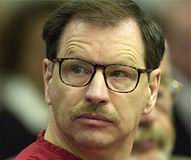 Gary Ridgway
Serial killer · USA · 1982
Gary Leon Ridgway Ridgway was born 18-February-1949 in Salt Lake City, UT. He w…
49 victims
Gary Ridgway
Serial killer · USA · 1982
Gary Leon Ridgway Ridgway was born 18-February-1949 in Salt Lake City, UT. He w…
49 victims
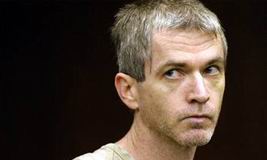 Charles Cullen
Serial killer · USA · 1984
Charles Cullen (born February 22, 1960) was a former nurse and the most prolifi…
45 victims
Charles Cullen
Serial killer · USA · 1984
Charles Cullen (born February 22, 1960) was a former nurse and the most prolifi…
45 victims
 Carl Robert Brown
Mass murderer · USA · 1982
Carl Robert Brown was fatally shot and run down by two witnesses while cycling…
8 victims
Carl Robert Brown
Mass murderer · USA · 1982
Carl Robert Brown was fatally shot and run down by two witnesses while cycling…
8 victims
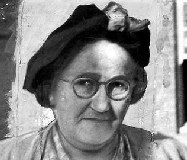 Caroline Grills
Serial killer · Australia · 1947
Caroline Grills (born Caroline Mickelson; 1890 – October 1960), was an Australi…
4 victims
Caroline Grills
Serial killer · Australia · 1947
Caroline Grills (born Caroline Mickelson; 1890 – October 1960), was an Australi…
4 victims
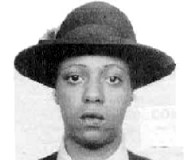 Corrine Sykes
Murderer · USA · 1944
Corrine Sykes was 20 years old when she worked as a housemaid for Mrs. Wodlinge…
1 victim
Corrine Sykes
Murderer · USA · 1944
Corrine Sykes was 20 years old when she worked as a housemaid for Mrs. Wodlinge…
1 victim
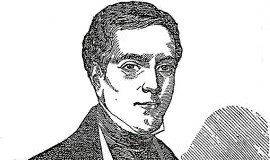 Jereboam Beauchamp
Murderer · USA · 1825
Jereboam Orville Beauchamp was an American lawyer and convicted murderer who wa…
1 victim
Jereboam Beauchamp
Murderer · USA · 1825
Jereboam Orville Beauchamp was an American lawyer and convicted murderer who wa…
1 victim
- Gender
- male
- Country
- USA
- Location
- Louisiana/Florida, USA
- Date of birth
- May 26, 1954
- Age at first offence
- 35
- Characteristics
- rape, sex with corpse, mutilator
- Victim profile
- Julie Grissom, 24, her nephew Sean Grissom, 8, and her father Tom Grissom, 55 / Sonja Larson, 18, and Christina Powell, 17 / Christa Hoyt, 18 /Manuel "Manny" Taboada, 23, and Tracy Paules, 23
- Method of murder
- St abbing with knife
- Date(s) of murder
- 1989 - 1990
- Years active
- 1989–1990
- Date of arrest
- September 8, 1990
- Status
-
Executed
Executed by lethal injection in Florida on October 25, 2006
Case record: Danny Rolling
Identifiers and background
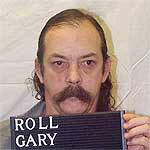
Danny Harold Rolling was executed by lethal injection in Florida on October 25, 2006.
He used the aliases MICHAEL KENNEDY, DANNY ROLLING, DANNY HAROLD ROLLING, and DANNY HAROLE ROLLING. He was white and male. His hair color was brown and his eye color was hazel. He was 6' 01" tall and weighed 200.
His birth date was 05/26/1954. His initial reception was 05/27/83. His current facility was FLORIDA STATE PRISON. His DC number was 521178.
Status and execution details
Rolling was pronounced dead at 6:13 p.m. 13 minutes after he started singing and two minutes after his body stopped quivering and his jowls fell, puffed and discolored.
Witnesses at the execution said Rolling sang a song repeating the line "None greater than thee, oh Lord," as relatives of the slain students watched in the death chamber. Another account said witnesses and prison officials said Rolling sang for two minutes with the refrain "none greater than thee, O Lord, none greater than thee," and that he appeared to continue singing after prison officials turned off the microphone, finally stopping just before he died.
One report stated the U.S. Supreme Court rejected Rolling's last-ditch appeal earlier Wednesday and that Justices Stephen Breyer and John Paul Stevens voted to grant the stay of execution, with the court issuing a three-sentence order.
Rolling's last meal consisted of lobster tail, shrimp, a baked potato, strawberry cheese cake and sweet tea. A later account said his last meal consisted of lobster tail, butterfly shrimp, baked potato, strawberry cheesecake and sweet tea, and that he ate every bite.
Officials said Rolling met in the morning with his brother, Kevin, and two clergymen. Department of Corrections spokeswoman Gretl Plessinger said Rolling sought spiritual advice on his last day from a minister of the church and that Rolling met in the morning with his brother Kevin and two clergymen.
Prison officials made arrangements to give Rolling's belongings to his brother, Kevin Rolling. Among Rolling's possessions were a 13-inch television, personal hygiene items, a few books and colored pencils he used to draw with, along with his drawings.
Timeline
- August 24, 1990 — Rolling broke into the apartment of 17-year-old University of Florida freshmen Sonja Larson and Christina Powell; both women were found mutilated and stabbed to death.
- August 25, 1990 — Rolling killed 18-year-old Christa Hoyt.
- August 27, 1990 — Rolling entered an apartment occupied by roommates and college students Tracy Paules and Manuel Taboada; Paules and Taboada were killed.
- September 8, 1990 — Rolling was arrested after a botched robbery in the central Florida town of Ocala.
- 1992 — Rolling was not charged in the Gainesville slayings until 1992, while serving a life sentence for armed robbery and other crimes.
- February 15, 1994 — On the day trial was scheduled to begin, Rolling changed his plea to guilty on all counts.
- April 20, 1994 — Judge Morris announced final judgment and sentenced Danny Harold Rolling to death for all five victims.
- October 25, 2006 — Florida executed Danny Rolling by lethal injection.
- 6:13 p.m. (execution day) — Rolling was pronounced dead at Florida State Prison.
The victims and locations
Rolling murdered five college students in their apartments in Gainesville in 1990.
The victims named in the case materials included:
- Sonja Larson, 17 (University of Florida freshman)
- Christina Powell, 17 (University of Florida freshman)
- Christa Hoyt, 18 (Santa Fe Community College student)
- Tracy Paules, 23
- Manuel Taboada, 23
The crimes began at an off-campus apartment connected to Williamsburg Village Apartments, identified in multiple accounts as town house 113 and described as an apartment shared by Sonya Larson and Christina Powell. Another victim, Christa Hoyt, was killed in her apartment, described as an isolated duplex. Tracy Paules and Manuel Taboada were killed in a Gatorwood Apartments unit.
The offence
Rolling murdered five college students and a Santa Fe Community College student in their apartments in 1990.
In the first offence, Rolling broke into the apartment shared by Sonya Larson and Christina Powell. He observed Christina Powell asleep downstairs but did not awaken her. He then went upstairs where he found Sonya Larson asleep, decided which woman to sexually assault, attacked Ms. Larson, and stabbed her. He placed duct tape over her mouth to muffle her cries and continued to stab her. He stabbed her on her arms and delivered a slashing blow to her left thigh. The record reflected that Ms. Larson maintained consciousness for less than a minute and died as a direct result of stab wounds inflicted by Rolling. Rolling then returned to the downstairs area where Christina remained asleep, taped her mouth and taped her hands behind her back, cut off her clothing and undergarments, sexually battered her, threatened her with the knife, forced her facedown near the couch, and stabbed her five times in the back, causing her death. Rolling posed the bodies of the victims and left the apartment.
Rolling decapitated one victim, posed with some of the bodies, removed skin and body parts, and arranged the murder scenes using props that included broken mirrors.
The next day, Rolling killed Hoyt, 18. One account described her body as sitting up in bed with her severed head perched on a shelf across the room. The record also stated that Rolling sliced off her nipples and left them on the bed next to her, and that her torso was sliced open from her chest to her pubic bone. Another detailed account described her headless corpse sitting at the end of the bed, with her nipples on the bed next to her, and stated her head was propped up on a bookshelf in the bedroom.
Two days later, Rolling killed roommates Tracy Paules and Manuel Taboada, both 23. Rolling followed the initial struggle, subdued Tracy Paules, taped her mouth and hands, cut or tore off her t-shirt, sexually battered her, threatened her with the knife, turned her over on the bed, and killed her with three stabbing blows to her back. The record stated Rolling cleaned and posed the body of Tracy Paules and left the apartment.
Rolling was described as a convicted serial rapist and mutilator; the case materials characterized him as a serial killer known as the Gainesville Ripper.
Investigation and arrest
Rolling remained at large until September 8, when he was arrested after a botched robbery in Ocala.
He was later linked by DNA to three more killings in Shreveport, Louisiana, in 1989.
Investigators focused on Rolling at the suggestion of Louisiana authorities investigating killings in Shreveport. Rolling was not charged in the Gainesville slayings until 1992, while serving a life sentence for armed robbery and other crimes.
Accounts stated that Rolling was arrested shortly after the killings on an unrelated charge of robbing a grocery store. He was described as having been arrested after robbing a grocery store, and that Shreveport police contacted Gainesville police and described similarities between murders in Florida and a triple homicide in Louisiana.
DNA tests ultimately showed Rolling was responsible for the murders.
Plea and trial proceedings
Rolling was charged in the Gainesville slayings with five counts of first-degree murder, three counts of sexual battery, and three counts of armed burglary of a dwelling with a battery.
On June 9, 1992, Rolling entered a plea of not guilty on all counts. On February 15, 1994, Rolling changed his plea to guilty on all counts. The trial court accepted the plea after reviewing with him the factual basis for it and adjudicated him guilty on all counts.
A penalty phase proceeding was held. The jury recommended that Rolling be sentenced to death for each murder by a vote of twelve to zero, and the trial court followed the advisory recommendation.
Sentencing
Rolling was sentenced to death for each homicide.
In the sentencing findings, the trial court found four aggravating circumstances applicable to each homicide:
- Rolling had been previously convicted of a violent felony.
- Each murder was cold, calculated, and premeditated.
- Each murder was heinous, atrocious, or cruel.
- Each murder was committed while Rolling was engaged in the commission of a burglary or sexual battery.
The trial court found the following statutory mitigating factors:
- Rolling had the emotional age of a fifteen-year-old.
- Rolling committed the crimes while under the influence of extreme mental or emotional disturbance.
For nonstatutory mitigators, the trial court found:
- Rolling came from a dysfunctional family where he suffered physical and mental abuse during his childhood, and this background contributed to his mental condition at the time of the offenses.
- Rolling cooperated with law enforcement officers by confessing and entering a guilty plea on all counts, thereby saving the criminal justice system time and expense.
- Rolling felt remorse for his actions.
- Rolling's family has a history of mental illness.
- Rolling's ability to conform his conduct to the requirements of law was impaired because of his mental illness.
The trial court concluded that Rolling's impairment “did not rise to the level of being substantial, and is therefore not a statutory mitigating factor.” See § 921.141(6)(f), Fla.Stat. (1995).
The sentencing material also stated that in one account Judge Morris announced his final judgment on April 20, 1994 after giving parties an opportunity to state their case personally.
Appeals and postconviction proceedings
Direct appeal
Rolling appealed the trial court's imposition of five death sentences.
In Rolling v. State, 695 So.2d 278 (Fla. 1997) (Direct Appeal), the Florida Supreme Court affirmed the imposition of the death sentences.
The claims and rulings included:
- Pervasive and prejudicial pretrial publicity did not require change of venue.
- Statements to fellow inmate and to investigators were not a Sixth Amendment violation.
- Inventory search of tote bag found at campsite was proper.
- Rolling waived claim of error in joinder of offenses for penalty phase.
- Instruction on heinous, atrocious, or cruel (HAC) aggravating factor was proper.
- Penalty was not disproportionate.
The court also stated: “It is so ordered.”
An opinion by Anstead, Judge, concurred in part and dissented in part; Anstead stated he could not concur in the majority’s conclusion that appellant was not entitled to a change of venue, writing that denial of venue was inconsistent with cases about “reign of terror,” and referencing Bundy v. State, 455 So.2d 330 (Fla. 1984).
Postconviction
In Rolling v. State, 825 So.2d 293 (Fla. 2002) (PCR), the Florida Supreme Court affirmed the denial of postconviction relief. The court held:
- The claim of assistance of counsel was procedurally barred.
- Attorneys' three-year delay in moving for change of venue after jury selection had begun was within the wide range of reasonable professional assistance.
Successive postconviction
In Rolling v. Dugger, --- So.2d ----, 2006 WL 2956382 (Fla. 2006) (Successive Postconviction), the Florida Supreme Court affirmed the circuit court's order denying Rolling's successive motion for postconviction relief.
The successive-motion material included these points:
- Claims regarding lethal injection and cruel and unusual punishment were denied based on Sims v. State, and because Rolling’s reliance on a research letter published in April 2005 in The Lancet was not found to entitle him to an evidentiary hearing under the court’s standard.
- A First Amendment claim regarding pancuronium bromide was denied as in Rutherford, because Rolling could not demonstrate chemicals would be administered improperly in his case.
- Public records requests were denied because Rolling had served the public records request six days after Governor Bush signed Rolling’s death warrant on September 22, 2006, and because there was no evidence in the record that Rolling had previously requested records from the Medical Examiner’s Office or the Department of Corrections.
- A claim based on an American Bar Association report published September 17, 2006 was denied because the court concluded it was not newly discovered evidence.
The conclusion in the successive postconviction material stated: “For the reasons explained above, we affirm the circuit court's order denying Rolling's successive motion for postconviction relief. It is so ordered.”
Other named people and involvement
Family and relatives
- Sonja Larson and Christina Powell were victims.
- Christa Hoyt was a victim.
- Tracy Paules and Manuel Taboada were victims.
- Mario Taboada was Manuel “Manny” Taboada’s brother.
- Dianna Hoyt was the stepmother of victim Christa Hoyt.
- Ricky Paules was the mother of victim Tracy Paules.
- Laurie Lahey was the sister of Tracy Paules.
- Deborah Michaud was a friend or childhood acquaintance of Paules and Taboada, described as having been childhood friends; she was against the death penalty.
- Tonya Wilson, 34, attended to remember her roommates, Larson and Powell.
- Mario Taboada chose not to witness the execution.
- Pro- and anti-death penalty demonstrators gathered outside Florida State Prison.
Quotes preserved from these people included:
- Ricky Paules: "Hatred. Very, very bitter throughout the whole thing. I saw his breath go out of him. . . . We waited for this time. And justice was done.''
- Diana Hoyt: “Maybe now that this is over with and we don't have this cause to fight for, we can try and relax and live with our memories of our children and be at peace with that,” and also: “Maybe now that we don’t have this on us,”.
- Dianna Hoyt also said: "Today's been a very surreal day for me. It's like a dream, walking through a dream.''
- Dianna Hoyt said: "I'm an nurse, and I've seen my patients die. And they died a much more horrific death than what this man suffered through, that's for sure. He relaxed, went to sleep, did not feel anything,''.
- Tonya Wilson: ''I'm here for Christi and Sonja,''.
- Tonya Wilson: "I told them I would be from the beginning.''.
- Tonya Wilson: 'EYE FOR AN EYE': "I'm an eye-for-an-eye kind of person,'' and "I think he's getting off so easy it's sickening.''.
- Deborah Michaud: ''I feel really helpless,'' and "I don't know what I can do to stop executions, and I also don't know what I can do to stop violence. But I feel this is not the answer.''.
- Laurie Lahey: “Once everything quiets down, I’ll think about Tracy and I’ll be sad,” and “But right now, he’s gone. He’s gone.”.
- Ricky Paules in another account: "Hatred. I was mad all the way through it.".
Clergy and visitors
- Reverend Mike Hudspeth was a pastor from Shreveport, La., and one of Rolling’s last visitors Wednesday hours before he was executed.
- A Department of Corrections spokeswoman was Gretl Plessinger.
Legal officials
- Bill Cervone was the state attorney for Gainesville and described Rolling as “the face of evil in our community.” The quote preserved was:
- "Even after his conviction ... and ever since he was imprisoned under sentence of death, he still cast a shadow on our community," and "This execution has removed that shadow."
- Prosecutor Rod Smith oversaw the prosecution in the trial materials.
Defense and prosecution figures
- John J. Kearns was described as recognized in 1986 as the state's outstanding public defender.
- C. Richard Parker was identified in trial-related discussion as a public defender.
- Victoria Lisarralde was identified as Rolling’s defense attorney in connection with psychological tests and attempts to withdraw guilty plea on armed robbery charges.
- Jim Nilon appeared as a prosecution witness examiner in Claudia Rolling’s testimony exchange.
- Stanley R. Morris was the circuit judge in sentencing and in accepting pleas.
Other people named in execution-day and prison-life accounts
- Kevin Rolling was Rolling’s brother.
- Sondra London was Rolling's fiancée in prison; Rolling became engaged to her and coauthored "The Making of a Serial Killer."
- Boby Lewis was an inmate Rolling formed a friendship with; he was described as known as the only man to have escaped from Florida's death row.
- Rusty Binstead was described as a confidante.
- Henry Carter was mentioned as HAL CARTER in a confession narrative attributed to Rolling.
Substantiated court citations
The case included multiple citations:
- Rolling v. State, 695 So.2d 278 (Fla. 1997) (Direct Appeal).
- Rolling v. State, 825 So.2d 293 (Fla. 2002) (PCR).
- Rolling v. 2006) (Successive Postconviction).
The record also contained references to this Court’s jurisdiction and procedural posture, including the grand jury indictment date and plea dates as part of the reported appellate discussion:
- The grand jury indicted appellant, Danny Rolling, on November 15, 1991.
- Rolling was indicted for serial murders with five counts of first-degree murder, three counts of sexual battery, and three counts of armed burglary of a dwelling with a battery.
- The trial court accepted the guilty plea after reviewing with him the factual basis for it and adjudicated him guilty on all counts.
- The jury recommended death for each murder by a vote of twelve to zero.
Additional offences mentioned
Rolling was linked by DNA to killings in Shreveport, Louisiana, involving Tom Grissom, Julie Grissom, and Sean Grissom, named in the case materials as being stabbed to death in November 1989 in Shreveport. Rolling was not charged in the Gainesville slayings until 1992 while serving a life sentence for armed robbery and other crimes, and in the related materials it stated he was not charged with the Grissom murders.
A confession narrative described in the execution-related materials preserved a written communication attributed to Rolling, including the confession text: "In order to fulfill all things that no stone be unturned. Here by I make a formal written statement concerning the murders of Julie, Tom & SEAN GRISSOM in my hometown of Shreveport, Louisiana ... HAL CARTER, Julie Grissom's former fiancee is 100% INNOCENT -- TOTALLY PURE of that crime. I, and I alone am guilty. It was my hand that took those precious lights out of this ole dark world. With all my heart & soul would I could bring them back. Being a native son of Shreveport, I can only offer this confession of deep felt remorse over the loss of such fine -- outstanding souls. "
And also: "Have wept an ocean of tears ... By which mournful doth float 'pon a sea of regret."
Legal standards and specific jury instruction text
The appellate material reproduced the HAC jury instruction given at Rolling's penalty phase trial: "The crime for which the Defendant is to be sentenced was especially heinous, atrocious or cruel. Heinous means especially wicked or shockingly evil. Atrocious means outrageously wicked and vile. Cruel means designed to inflict a high degree of pain with utter indifference to, or even enjoyment of, the suffering of others. In order for you to find a first-degree murder was heinous, atrocious or cruel, you must find that it was accompanied by additional acts that showed that the crime was conscious [sic] or pitiless, and was unnecessarily torturous to the victim. Events occurring after the victim dies or loses consciousness should not be considered by you to establish that this crime was especially heinous, atrocious, or cruel."
The appellate material also included a part of the sentencing-order description about Sonya Larson: "Sonya Larson was killed in her own bed by multiple stab wounds···· The attack was characterized by the medical examiner as a “blitz” attack after which the victim would have remained alive for a period from thirty to sixty seconds. Despite the relative shortness of the event, the fact that many of the wounds were characterized as defensive wounds indicates that the victim was awake and aware of what was occurring. During all this time, the victim's mouth was taped shut so that she could not cry out."
Prior convictions and other criminal conduct mentioned
The materials described Rolling as having a series of prior violent felonies, including:
- a 1976 Mississippi conviction for armed robbery;
- a 1979 Georgia conviction for two counts of armed robbery;
- a 1980 Alabama conviction for robbery;
- a 1991 Hillsborough County, Florida conviction for three counts of attempted robbery with a firearm and two counts of aggravated assault on a law enforcement officer; and
- a 1992 federal conviction for armed bank robbery.
Other materials described Rolling as having been serving a life sentence for armed robbery and other crimes at the time he was not charged in the Gainesville slayings until 1992.
Rolling was arrested in connection with robbing a grocery store and was described as having burgled multiple apartments and houses, including stealing keys to a 1978 Buick Regal. A high-speed chase occurred after a robbery at a Winn Dixie supermarket in Ocala on September 8, 1990, followed by arrest after the crash and foot escape failed.
Aftermath
After Rolling's execution, members of victims' families and other community participants sought comfort and support and gathered to speak to the media. Family members met for lunch at the Best Western Gateway Grand at 4200 NW 97th Blvd., in Gainesville and left with white roses.
A funeral remained private, known only to relatives who asked an area funeral home not to disclose details.
Rolling's execution was described as one of Florida’s highest-profile executions since the execution of serial killer Ted Bundy, who was put to death in 1989.
Spotted an error, or have more information about this case?