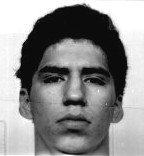
Jesus Romero
Murderer Brian Kevin Rosenfeld
Murderer · USA · 1985
Brian Kevin Rosenfeld Brian Kevin Rosenfeld was sentenced to three concurrent l…
23 victims
Brian Kevin Rosenfeld
Murderer · USA · 1985
Brian Kevin Rosenfeld Brian Kevin Rosenfeld was sentenced to three concurrent l…
23 victims
 Marvin Gray
Murderer · USA · 1975
Marvin Gray was convicted killer who claimed responsibility for 23 slayings and…
23 victims
Marvin Gray
Murderer · USA · 1975
Marvin Gray was convicted killer who claimed responsibility for 23 slayings and…
23 victims
 Yahweh ben Yahweh
Murderer · USA · 1980
Yahweh ben Yahweh was born and legally named Hulon Mitchell Jr. (October 27, 19…
23 victims
Yahweh ben Yahweh
Murderer · USA · 1980
Yahweh ben Yahweh was born and legally named Hulon Mitchell Jr. (October 27, 19…
23 victims
 Russell Ellwood
Murderer · USA · 1991
Russell Ellwood was a former taxi driver. Authorities suspected him of killing…
20 victims
Russell Ellwood
Murderer · USA · 1991
Russell Ellwood was a former taxi driver. Authorities suspected him of killing…
20 victims
 John Floyd Thomas
Serial killer · USA · 1972
John Floyd Thomas, Jr. (born July 26, 1936) was an American criminal who was ar…
7 victims
John Floyd Thomas
Serial killer · USA · 1972
John Floyd Thomas, Jr. (born July 26, 1936) was an American criminal who was ar…
7 victims
 Marvin Lee Irvin
Murderer · USA · 1979
Marvin Lee Irvin was a former police officer. West was last seen as leaving St.…
3 victims
Marvin Lee Irvin
Murderer · USA · 1979
Marvin Lee Irvin was a former police officer. West was last seen as leaving St.…
3 victims
 Carman Jenkins
Murderer · USA · 2008
Carman Jenkins pleaded guilty to murder in the death of Mekole Harris and was s…
1 victim
Carman Jenkins
Murderer · USA · 2008
Carman Jenkins pleaded guilty to murder in the death of Mekole Harris and was s…
1 victim
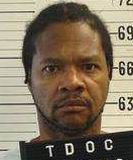 Larry McKay
Murderer · USA · 1981
Larry McKay was convicted of two counts of felony murder each for the shooting…
2 victims
Larry McKay
Murderer · USA · 1981
Larry McKay was convicted of two counts of felony murder each for the shooting…
2 victims
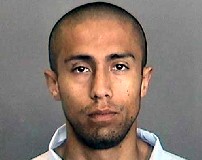 Itzcoatl Ocampo
Serial killer · USA · 2011
Itzcoatl Ocampo was a former Marine accused in Orange County of brutally murder…
6 victims
Itzcoatl Ocampo
Serial killer · USA · 2011
Itzcoatl Ocampo was a former Marine accused in Orange County of brutally murder…
6 victims
- Gender
- male
- Country
- USA
- Location
- Cameron County, Texas, USA
- Date of birth
- February 3, 1965
- Age at first offence
- 19
- Characteristics
- rape, gang
- Victim profile
- Olga Lydia Perales (female, 15)
- Method of murder
- St abbing with knife
- Date(s) of murder
- December 24, 1984
- Years active
- 1984
- Date of arrest
- —
- Status
-
Executed
Executed by lethal injection on May 20, 1992 in Texas
Case overview
Jesus Romero was convicted of capital murder of Olga Lydia Perales and was sentenced to death. Romero was executed by lethal injection in Texas on May 20, 1992.
Victim
Olga Lydia Perales was 15 years old. She was murdered on December 23, 1984, in San Benito.
Offence
On December 23, 1984, a party attended by Perales was held at Ray Amaya’s house in San Benito. Romero and his three friends, David Lozado, Jose Cardenas, and Rafael Leyva Jr., approached Leyva in downtown San Benito in Cardenas’ car and invited him to go to a party with them. They drove and cruised for about an hour, during which they were drinking beer and smoking marijuana.
When they arrived at Amaya’s house, the party had broken up and only Amaya and Perales were present. Perales came out and “started going to the car slowly ... all of a sudden Jesse [Romero] pushed the girl [the deceased] inside the car.” Cardenas was in the driver’s seat and Romero pushed Perales into the passenger side of the front seat. Leyva testified that Romero “was holding the girl’s head down.... He was holding it with the right hand on her head pushing to her knees ... he was telling her just to keep quiet.” Leyva testified that they drove to a place beside the lake called La Piedra while Romero held Perales’ head down and told her to be quiet. Perales asked to “leave her alone” and “take her home.”
Leyva testified that Davis Lozada first had sex with Perales. Leyva testified: “Davis put ‘a knife to her neck ... and she got on ‘four’ giving Davis a blow job ... the girl was saying to take her home and just to leave her alone and Davis was telling her to shut up and if she didn’t shut up something was going to happen to her, and the girl was kind of like weeping ...’” Leyva testified: “[Romero] ‘unzipped his pants and got inside the car while the girl was on ‘four,’ and still gave Davis the blow job, he got in through the back and started having sex with her.’” After Romero finished, Leyva testified: “started having sex with her in the back.”
Perales continued to ask to be taken home. Cardenas removed a pipe from the car that “looked like a baseball bat.” Leyva testified that a discussion ensued about whether Perales would tell anyone and that Perales insisted that she would keep quiet and say nothing. Leyva testified that he told the others that she would keep quiet and they kept telling him “That’s no good. She’s going to say something and we are going to get in trouble.”
Leyva testified that Cardenas handed him the pipe and Leyva hit Perales on the forehead with the pipe. Leyva testified that Perales did not fall down and that Romero grabbed the pipe out of Leyva’s hand and “started hitting the girl ... he was hitting her head with both hands on the pipe.” Leyva testified that Perales fell to the ground after Romero hit her the second time and that after she fell, Romero hit her “three or four or five times at the most.” Leyva testified that Perales stopped making noise after Romero “finished hitting her.” Leyva testified that someone else hit her “three or four times.”
Leyva testified that he observed Cardenas hitting Perales “with both hands on the pipe,” and Leyva testified: “Jesse [Romero] was giggling while he was hitting the girl.” Leyva testified that Lozada told him to “grab the girl.” Leyva testified that Lozada and Romero “both came at me with knives.” Leyva testified: “[Romero] then observed the girl move and Losada said ‘Just to make sure she’s dead, I’ll stab her.’” Leyva testified that Lozada again told him to drag Perales into the bushes and that after dragging her “halfway,” Davis told Romero “to give me a hand” and “my [sic] and Jesse [Romero] dragged the girl way back in the bushes.”
Leyva testified that Romero, “with a knife in his hand,” told Leyva “Stab her or I’ll stab you.” Leyva testified that he stabbed Perales “from the waist to her chest” and gave the knife back to Romero. Leyva testified that he and his three companions returned to the car and left the scene, and that Lozada said, “We all did it, you know. Everybody had a part in it.” Leyva testified that Lozada threw the knife “into some canal.” Leyva testified that Romero then handed his knife to Lozada so he could throw it out. Leyva testified that Cardenas stopped on a bridge and Lozado threw Perales’ clothes out.
Leyva testified that he was instructed by Lozado not to tell anyone that they were together. Leyva testified that the remaining three would say “all we know is that we dropped the girl off at the Azteca.” Leyva testified that Lozado warned him “Just keep your mouth shut and if you don’t the same thing is going to happen to you.”
A written confession by Romero was admitted into evidence. Portions admitted into evidence included: “The party started to break up around 11:00 or 11:30 p.m. We left in Joe’s [Cardenas] car. Joe was driving. Davis [Losada] and Rafa [Leyva] were in the back seat. We drove out to what is known as La Piedra and drove down a narrow road from a bigger road for approximately one city block in distance. Davis, with the knife in one hand, forced [deceased] to make out with him, Rafa made out with her, then Joe made out with her. Davis got a pipe and started hitting [deceased] about the head. Rafa hit her also. Joe did hit her. Afterwards, [deceased] was laying there and Davis stabbed her. After Davis stabbed her Rafa got a hold of one leg and I got a hold of the other leg and we pulled her into the bushes. I don’t know what happened to the pipe and didn’t see it anymore when we left the area. When we left the area Joe was driving. Rafa and I were in the back seat, and Davis was in the front passenger side. As we traveled down a dirt road, Davis got rid of the knife that was used to stab [deceased] and also got rid of another knife. He did this by throwing the knives out the window. We then traveled some more and we then stopped on a small bridge that goes over a drainage ditch there by the overpass that is close to the Valley Buick Company located just southeast of San Benito. When we stopped there Davis gave Rafa some other items and Rafa threw those out in the drainage ditch also. Rafa was dropped off first by the Bertha Cavazos School. ‘I have been shown two photos by Investigator Joe Alvarado of the District Attorney’s Office and I have identified both pictures as being # 1, that of [deceased], the way we left her that night there in the bushes. Photo # 2 is the way we left [deceased] after Rafa and I dragged her into the bushes. I have initialed, dated, and placed the time on both photos.’”
Investigation and evidence
A search of Romero’s residence resulted in the recovery of a man’s “blooded underwear” at the bottom of a garbage bag. Raul Guajardo, a chemist with the Department of Public Safety, testified that human blood was on the sides of the underwear. Guajardo’s analysis revealed findings consistent with either Type A or Type AB. Blood samples from Perales and Romero were both type A. Blood samples of the three codefendants showed all of them to be type O.
People involved
- Jesus Romero was the defendant and was described as a 27-year-old former migrant worker.
- Olga Lydia Perales was the victim (15 years old).
- David Lozado was a codefendant.
- Jose Cardenas was a codefendant.
- Rafael Leyva Jr. was a codefendant who testified on behalf of the State at trial.
- Raul Guajardo was a chemist with the Department of Public Safety.
- Investigator Joe Alvarado of the District Attorney’s Office appeared in Romero’s confession regarding photo identifications.
- Raul Guajardo performed blood analysis on the underwear.
- Texas Ranger Bruce Casteel and District Attorney Alvarado and an attorney for Leyva, Horacio Berrera, were summoned when Leyva went to his juvenile probation officer.
- Leyva’s statement to his juvenile probation officer reported his presence at the offense while denying other involvement.
- Romero’s trial counsel on appeal and at trial was Jon Wood.
Other named individuals included Leticia Esparza, a witness at the evidentiary hearing; Alejandro Espinoza, a lab technician; George Scharmen, Romero’s appeals lawyer; Marianne Alvarez, Norma Charles, and Henry Thomas, who testified at the punishment phase; and three local police officers who testified to Romero’s bad reputation.
Background and prior history
Marianne Alvarez testified at the punishment phase that less than three weeks before Perales’ murder Romero, armed with a pistol, attempted to force her into a stolen car. When she resisted, he beat her in the face with his fist, stopping only when a passing motorist produced a pistol and fired at a then fleeing Romero.
Norma Charles testified that only eight days before Perales’ murder Romero assaulted her as she walked home, knocking her to the ground and hitting her fifteen to twenty times in the face with his fists and beating her head on the pavement. She fled when her boyfriend, Henry Thomas came upon the scene. Henry Thomas also testified at the punishment phase, corroborating Norma Charles’ testimony.
Police officers testified to Romero’s bad reputation and to Romero and his brothers fighting with their father, with testimony that Romero’s family was very violent.
Romero’s previous criminal history involved 10 years in prison for aggravated sexual assault.
Romero was diagnosed as a schizophrenic in relation to the appeals. His appeals attorney said that the state doctor changed testimony during the trial, and later re-evaluated Romero and came back with a diagnosis of schizophrenia. The appellate record also included discussion of Romero’s mental-health history, including that he had been committed twice into mental health facilities in San Benito with other mental illnesses.
Trial
Charge and verdict
On July 20, 1985, a Texas jury found Jesus Romero guilty of the capital murder of Olga Lydia Perales during the course of aggravated sexual assault. The jury gave affirmative answers to the two questions required by Tex.Code Crim.Proc.Ann. art. 37.071 (Vernon Supp.1988), and punishment was set at death.
In the trial proceedings described, Romero did not testify.
Jury sentencing statement
Romero’s lawyer offered only the following in closing at the sentencing phase: Defense Counsel: “Ladies and Gentlemen, I appreciate the time you took deliberating and the thought you put into this. I’m going to be extremely brief. I have a reputation for not being brief. Jesse, stand up. Jesse? The Defendant: Sir? Defense Counsel: Stand up. You are an extremely intelligent jury. You’ve got that man’s life in your hands. You can take it or not. That’s all I have to say.”
Sentencing evidence
At the sentencing phase, in addition to evidence about assaults of women, three local police officers testified to Romero’s bad reputation, and about Romero and his brothers fighting with their father. Testimony included that Romero’s family was very violent.
Appeals and post-conviction proceedings
The trial court’s judgment and sentence were affirmed on direct appeal. Romero v. State, 716 S.W.2d 519 (Tex.Crim.App.1986). The United States Supreme Court denied certiorari. Romero v. Texas, 479 U.S. 1070 (1987).
On March 20, 1987, six days before his scheduled execution, Romero filed an application for writ of habeas corpus in the state trial court pursuant to Tex.Code Crim.Proc.Ann. art. 11.07 (Vernon Supp.1988). The trial judge found no questions of fact and forwarded the application to the Court of Criminal Appeals. That court stayed execution and remanded the case to the trial court with instructions to conduct a hearing on the issue of effective counsel.
On May 28, 1987, following the ordered hearing, the trial court filed detailed findings of fact and conclusions of law. The Court of Criminal Appeals denied Romero’s petition for relief without written order, and the trial court set Romero’s execution for July 22, 1987.
On July 16, 1987, Romero filed a petition for writ of habeas corpus with the United States District Court for the Southern District of Texas and on July 17, 1987, that court granted his unopposed request for stay of execution.
The federal district court did not conduct an evidentiary hearing and relied on the transcript of the state hearing. It granted relief and ordered the death sentence commuted to life imprisonment, based on the determination that Romero’s lawyer so abbreviated the closing argument and otherwise failed to offer mitigating circumstances in the sentencing phase that he failed to render constitutionally required assistance.
The State of Texas appealed. The United States Court of Appeals, Fifth Circuit, reversed the grant of relief and remanded with instruction to enter an order denying Romero’s petition for a writ of habeas corpus. The Fifth Circuit did not reach the question of authority of a federal habeas court to commute a death sentence.
The Fifth Circuit judgment referenced in the record included:
- 884 F.2d 871 (October 5, 1989) in Romero’s habeas proceedings.
Additional habeas litigation described
Romero filed a second Petition for Writ of Habeas Corpus in the 197th District Court and the Texas Court of Criminal Appeals on April 4, 1990. He alleged that Texas special issues precluded the jury from considering and giving full effect to mitigating evidence of Romero’s youth, intoxication, and turbulent family background, relying on Penry v. Lynaugh.
On November 6, 1991, the Texas Court of Criminal Appeals, en banc with two dissents, denied relief. Romero’s Motion for Rehearing was denied on December 11, 1991. On December 16, 1991, the Texas Court of Criminal Appeals granted Romero’s motion to stay the mandate.
On March 10, 1992, Romero filed a Petition for Writ of Certiorari in the U.S. Supreme Court, and the petition was pending.
On April 15, 1992, the state trial court set Romero’s execution for May 20, 1992.
On May 15, 1992, Romero filed a third Application for Post-conviction Habeas Corpus in the 197th Judicial District Court and the Texas Court of Criminal Appeals. The application asserted multiple claims; the record described that the sixth claim asserting Penry violations was made for the first time in the second state habeas petition.
On May 18, 1992, the state trial court entered findings of fact and conclusions of law recommending that all relief be denied. The Texas Court of Criminal Appeals denied relief on May 19, 1992. Romero filed a second federal petition with the United States District Court for the Southern District of Texas.
On May 19, 1992, the federal district court granted Romero’s petition for stay and set an evidentiary hearing for May 22, 1992, to consider issues described as writ abuse, psychiatric evaluations before trial, prosecutorial misconduct concerning Romero’s mental state, and effectiveness of counsel’s investigation of Romero’s mental state.
On May 19, 1992, the Fifth Circuit granted the State’s motion to vacate the stay of execution scheduled between midnight and sunrise on May 20, 1992. The Fifth Circuit’s per curiam decision referenced the procedural standards for successive writs.
Within this described successive-writ decision, Judge Hester’s findings included: “The State did not fail to disclose exculpatory material to Applicant.” The findings also included discussion of medical records and a report of Dr. Jorge Cardenas dated April 2, 1985, described as filed in papers of Cause No. 85-CR-51-C in which Romero was charged and convicted of Attempted Sexual Assault and described as a public record equally available to Romero and the State.
The record also included statements from proposed evidence discussed by the Fifth Circuit about mental capacity. The Fifth Circuit summarized assertions in which Dr. Cardenas stated that he would have concluded that “at the time of the alleged offense Romero was acting with severely diminished capacity such that he was temporarily insane.” It also summarized Dr. Cardenas expressing doubts “whether Romero was competent to stand trial.”
The record also summarized Dr. Diaz’s conclusions that, had he been provided with certain records and other documents “at the time of my examination of Mr. Romero, I might have determined, contrary to my original findings, that at the time of the alleged offense, and as a result of his mental disorder, he had a markedly decreased ability to know that his conduct was wrong.” The record included the attached letter in which Dr. Diaz stated that Romero was “candid and cooperative with the examination,” and that Romero had told him he had been recently released from jail on a previous charge, with denial of significant history of neurological or psychiatric illnesses. The record included Dr. Diaz stating that “the defendant is able to remember the events and circumstances preceding and following the incident.”
The state habeas judge’s finding was summarized in the Fifth Circuit decision as: “there is no credible evidence that Applicant was insane at the time of the offense. To the contrary, all the credible evidence is that the Applicant was sane at the time of the offense and mentally competent at trial.”
Execution
Romero’s family was present at his execution but could not witness his death. His lawyer was present to offer support.
Romero’s last statement was: “ Tell Mom I love her. ” The attorney responded: “I love you, too.”
Romero was executed by lethal injection on May 20, 1992 and was pronounced dead at 1:40 a.m.
Other details
Companions and gang affiliation
The record described that Romero and his three friends, David Lozado, Jose Cardenas, and Rafael Leyva Jr., were involved with Perales’ rape and murder. It stated that all three were in the “La Cliqua” gang and were said to have known the victim.
Evidence and witness testimony at sentencing about Romero’s family
At the guilt phase, Romero’s sister, Leticia Esparza testified about one of Romero’s sisters, described as Sylvia. The testimony included that Sylvia was “Mongoloid and lacked full ability to care for herself.” Esparza testified that Sylvia had found Sylvia’s blood stained briefs at home on previous occasions. The lab technician Alejandro Espinoza testified that Sylvia’s blood sample tested A-positive.
Evidence presented regarding blood-stained shorts at guilt phase
At sentencing, Romero’s lawyer attempted to explain blood stains on shorts through testimony from Esparza and Alejandro Espinoza. The record stated that Wood’s plan attempted to offer an innocent explanation for the shorts with blood stains of his type found in a search of the home following the murder.
Spotted an error, or have more information about this case?