
John William Rook
Murderer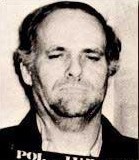 Ervil LeBaron
Murderer · USA · 1972
Ervil Morrell LeBaron (1925 to August 16, 1981) was the leader of a polygamous…
35 victims
Ervil LeBaron
Murderer · USA · 1972
Ervil Morrell LeBaron (1925 to August 16, 1981) was the leader of a polygamous…
35 victims
 Brian Kevin Rosenfeld
Murderer · USA · 1985
Brian Kevin Rosenfeld Brian Kevin Rosenfeld was sentenced to three concurrent l…
23 victims
Brian Kevin Rosenfeld
Murderer · USA · 1985
Brian Kevin Rosenfeld Brian Kevin Rosenfeld was sentenced to three concurrent l…
23 victims
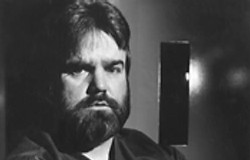 Marvin Gray
Murderer · USA · 1975
Marvin Gray was convicted killer who claimed responsibility for 23 slayings and…
23 victims
Marvin Gray
Murderer · USA · 1975
Marvin Gray was convicted killer who claimed responsibility for 23 slayings and…
23 victims
 Yahweh ben Yahweh
Murderer · USA · 1980
Yahweh ben Yahweh was born and legally named Hulon Mitchell Jr. (October 27, 19…
23 victims
Yahweh ben Yahweh
Murderer · USA · 1980
Yahweh ben Yahweh was born and legally named Hulon Mitchell Jr. (October 27, 19…
23 victims
 Rocky Barton
Murderer · USA · 2003
Defendant: Rocky Barton · Victim: Kimbirli Jo Barton (fourth wife) · The grand…
1 victim
Rocky Barton
Murderer · USA · 2003
Defendant: Rocky Barton · Victim: Kimbirli Jo Barton (fourth wife) · The grand…
1 victim
 Gwendolyn Graham
Serial killer · USA · 1987
Gwendolyn Graham worked as a nurse’s aide at the Alpine Manor Nursing Home in W…
5 victims
Gwendolyn Graham
Serial killer · USA · 1987
Gwendolyn Graham worked as a nurse’s aide at the Alpine Manor Nursing Home in W…
5 victims
 Vernon Sattiewhite
Murderer · USA · 1976
Vernon Sattiewhite, executed by lethal injection in Texas on August 15, 1995, h…
2 victims
Vernon Sattiewhite
Murderer · USA · 1976
Vernon Sattiewhite, executed by lethal injection in Texas on August 15, 1995, h…
2 victims
 Robert Courchesne
Murderer · USA · 1998
Robert Courchesne was sentenced to death for killing Demetris Rodgers and her b…
1 victim
Robert Courchesne
Murderer · USA · 1998
Robert Courchesne was sentenced to death for killing Demetris Rodgers and her b…
1 victim
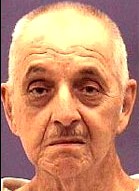 William Pierce
Serial killer · USA · 1970
William Pierce was paroled from the Georgia state prison at Reidsville in May 1…
9 victims
William Pierce
Serial killer · USA · 1970
William Pierce was paroled from the Georgia state prison at Reidsville in May 1…
9 victims
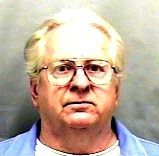 Allen Leroy Anderson
Spree killer · USA · 1976
Allen Leroy Anderson was a 34-year-old vagrant with a long record of felony arr…
8 victims
Allen Leroy Anderson
Spree killer · USA · 1976
Allen Leroy Anderson was a 34-year-old vagrant with a long record of felony arr…
8 victims
- Gender
- male
- Country
- USA
- Location
- Wake County, North Carolina, USA
- Date of birth
- March 17, 1959
- Age at first offence
- 21
- Characteristics
- rape, kidnapping, alcohol
- Victim profile
- Ann Marie Roche (female, 25)
- Method of murder
- R un over with car
- Date(s) of murder
- May 12, 1980
- Years active
- 1980
- Date of arrest
- 3 days after
- Status
-
Executed
Executed by lethal injection in North Carolina on September 19, 1986
Case information
John William Rook was tried for first-degree rape, kidnapping, and first-degree murder, and was sentenced to death for first-degree murder. He appealed the denial of his habeas corpus petition.
Timeline
- May 12, 1980 — Ann Marie Roche was walking along a public road in or near the City of Raleigh, North Carolina, when she was abducted by a white man with long, blond hair worn in a ponytail.
- May 15, 1980 (approximately 4:00 p.m.) — John William Rook was arrested by Raleigh police on unrelated misdemeanor charges of assault on a minor child and failing to appear in court on a charge of driving under the influence (“DUI”).
- May 15, 1980 (approximately 8:00 p.m.) — Rook was taken from his cell to an interview room, his rights were provided again, and he signed a form waiving his rights.
- October 23, 1980 — The jury convicted Rook on all three charges.
- July 26, 1982 — Rook filed a motion for appropriate relief in the Superior Court of Wake County.
- October 14, 1982 — An amendment to the motion for appropriate relief was filed.
- December 7, 1982 — Rook filed a renewed motion for appropriate relief.
- August 29–September 2, 1983; September 19–22, 1983 — An evidentiary hearing was held.
- June 4, 1985 — Rook filed a petition for a writ of habeas corpus in United States district court.
- October 18, 1985 — The district court dismissed the petition (C/A No. 85-848-HC).
- February 14, 1986 — An execution date was set.
- January 31, 1986 — The United States Court of Appeals for the Fourth Circuit decided appeal No. 85-4004 (783 F.2d 401).
- December 3, 1985 — The district court denied his application for a stay on execution.
- December 6, 1985 — This Court denied Rook’s application for a stay of execution.
- September 15, 1986 — A subsequent appeal was submitted (No. 86-4005).
- September 16, 1986 — That subsequent appeal was decided.
- September 19, 1986 — Rook was executed by lethal injection in North Carolina.
The offence
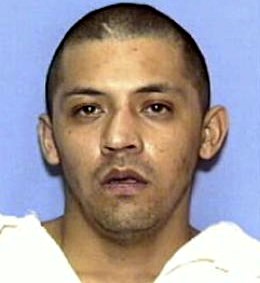
In 1980, 25-year-old nurse Ann Marie Roche was kidnapped from the parking lot of Wake Medical Center where she worked by John William Rook. Roche was driven to a vacant field, where she was raped and then murdered by Rook. Rook subsequently drove his vehicle over her body. On May 12, 1980, Roche was abducted by a white man with long, blond hair worn in a ponytail while walking along a public road in or near the City of Raleigh, North Carolina. She was kidnapped and carried away in an automobile to a remote site several miles away, where she was brutally beaten, assaulted, raped, and run over by an automobile as she lay wounded and bleeding to death. The next day, her body was found.
Investigation
Witnesses to the abduction wrote down the license plate number of the car into which Roche was forced and reported that license plate number to the Raleigh police. During investigation, police discovered that the car at the time in question had been on loan to John William Rook from his neighbor. The police also determined that Rook matched the witnesses’ description of Roche’s assailant.
Arrest
Approximately 4:00 p.m. on May 15, 1980, Rook was arrested by Raleigh police on unrelated misdemeanor charges of assault on a minor child and failing to appear in court on a charge of driving under the influence (“DUI”). Rook was transported to a magistrate’s office, where the warrants were read and his rights were explained. Rook told arresting officer Ronnie Holloway that he understood his rights and that he would answer questions without a lawyer being present. Bond was set at $1,000 on the charge of failing to appear on the DUI charge and $50,000 on the charge of assault on a minor. Rook was transferred to a jail cell.
Police interview and confession
Later that evening, at approximately 8:00 p.m., Rook was taken from his cell to an interview room. He was provided a copy of his rights and was again read those rights. Rook told an attending officer, Freddie Benson, that he understood his rights and did not want a lawyer present. He then signed a form waiving his rights. After obtaining identifying information from Rook, Officer Benson questioned him about his whereabouts on May 12, 1980. Rook replied that he had been involved in a fight with some black people on that date. Officer Benson then, in a loud voice, told Rook that he was a liar. Officer Benson read Rook a warrant obtained approximately two hours earlier that charged Rook with the murder of Ann Marie Roche, and advised him that he was being charged with murder. Officer Benson left the interview room. Officers J.C. Holder and Ted Lanier remained.
Officer Holder reintroduced himself to Rook and advised him that he was a Raleigh Police Officer. Holder went over the rights form and waiver with Rook a second time. Rook advised Holder that he understood his rights and the waiver and told him he could read and had had his rights read several times before. Rook discussed his drinking problem, a former girlfriend whom he had beaten up, and about his wife. He also told the officers that while in prison he attended AA meetings and thought that he had his drinking under control, but had started drinking again and needed help for his problems. Holder advised Rook that neither Holder nor Officer Lanier could help him and that the only thing that could help him was to tell the truth. Holder told Rook: “It took a strong man to admit that he was wrong.” Rook then told Officer Holder: “Okay, I did it. I hope you’re happy.” Holder asked Rook to tell them about what had happened, and Rook proceeded to make detailed inculpatory statements concerning his activities involving the death of Ann Marie Roche.
Trial
Following these events, Rook was charged with first-degree rape, kidnapping, and first-degree murder. Counsel was appointed, and Rook pleaded not guilty on all three charges. Rook was convicted by jury on all counts charged on October 23, 1980.
Sentencing
After the verdict, the trial court convened a sentence determination phase before the same jury. The jury recommended the death sentence for first-degree murder and consecutive life sentences for kidnapping and rape.
Appeals
Direct review in North Carolina and United States Supreme Court
Rook appealed to the Supreme Court of North Carolina, which affirmed. Justice Exum concurred in part and dissented in part. State v. Rook, 304 N.C. 201, 283 S.E.2d 732 (1981). The Supreme Court of the United States denied certiorari. Rook v. North Carolina, 455 U.S. 1038, 102 S.Ct. 1741, 72 L.Ed.2d 155 (1982).
Justice Exum dissented in part on the issue of sentencing procedure. Justice Exum voted to remand for re-sentencing because the trial court had failed to require the sentencing jury separately to indicate its findings on each mitigating circumstance submitted for its consideration. Justice Exum based this essentially upon prejudicial error in failing to follow the state statute, and indicated belief that the procedure used might also amount to constitutional error because of its failure, under the circumstances, to accord individualized consideration held to be constitutionally mandated in Lockett v. Ohio, 438 U.S. 586, 98 S.Ct. 2954, 57 L.Ed.2d 973 (1978).
Justice Exum’s analysis also addressed that requiring independent attention to each mitigating circumstance could not be considered a constitutional imperative under every state's procedures, and that the North Carolina procedure’s dynamics significantly undercut the degree of individualized consideration contemplated by the Lockett Court. Justice Exum concluded that Rook’s eighth and fourteenth amendment rights were violated by the procedure used in the sentencing proceeding and would have issued the writ conditioned upon the state providing a new sentencing proceeding free of the constitutional infirmity within a reasonable time.
State collateral proceedings and federal habeas
On July 26, 1982, Rook filed a motion for appropriate relief pursuant to N.C. Gen. Stat. Sec. 15A-1411 et seq. (1978) in the Superior Court of Wake County. An amendment to the motion was filed on October 14, 1982. The Superior Court dismissed the motion with leave to renew. Rook filed a renewed motion for appropriate relief on December 7, 1982. An evidentiary hearing was held on August 29–September 2, 1983, and September 19–22, 1983. The Superior Court denied relief and dismissed the renewed motion. Rook then filed a petition for writ of certiorari in the Supreme Court of North Carolina seeking review of the Superior Court’s judgment. That petition was denied. The Supreme Court of the United States denied certiorari again: Rook v. North Carolina, --- U.S. ----, 105 S.Ct. 608, 83 L.Ed.2d 716 (1984), reh’g denied, --- U.S. ----, 105 S.Ct. 1237, 84 L.Ed.2d 373.
On June 4, 1985, Rook filed a petition for a writ of habeas corpus in United States district court. Following the respondent’s motion to dismiss, the district court entered a memorandum opinion and order dismissing the petition: Rook v. Rice, C/A No. 85-848-HC (E.D.N.C. October 18, 1985). Rook filed a motion to alter or amend the judgment, and it was denied. The district court issued a certificate of probable cause to appeal, leading to the Fourth Circuit appeal.
Habeas corpus appeal (No. 85-4004, 783 F.2d 401)
The United States Court of Appeals for the Fourth Circuit affirmed the district court’s denial of Rook’s petition for habeas corpus relief under 28 U.S.C. Sec. 2254.
Issues raised and rulings
Rook asserted constitutional infirmities in convictions for first-degree rape, kidnapping, and first-degree murder, and in his capital murder sentence. The panel rejected each contention:
- Voluntariness of confession: Rook claimed his confession was involuntary because he was not informed at the time of arrest that he was a suspect in the Roche murder. He also claimed Officer Holder’s statement that the only thing that could help him was to tell the truth induced him to confess due to desire for help with his alcoholism, and argued that his low I.Q. of 71, poor education (seventh grade), young age (21), and history of deprivation and abuse as a child made him susceptible to pressure, so his statements should have been suppressed. The panel rejected the contention as meritless, relying on state court findings that no promises, offers of reward, or inducements were made; Rook was not threatened; and the confession was made freely, voluntarily, and knowingly after a full understanding and appreciation of constitutional rights. The panel stated it found no undue pressure and that Rook knowingly, intentionally, and voluntarily consented to questioning.
- Jury instructions on malice: Rook asserted that trial court instructions shifted the burden of proof to him. The panel concluded that the instruction merely shifted the burden of production. The panel quoted the trial judge’s instruction about malice:
Now, if the State proves to you beyond a reasonable doubt that the defendant intentionally killed Ann Marie Roche with a deadly weapon, or that he intentionally inflicted a wound upon her with a deadly weapon that proximately caused her death, then the law implies, first, that the killing was unlawful, and secondly, that it was done with malice.
The panel concluded the jury found the killing intentional and not accidental, and that because Rook did not produce evidence of self-defense or heat of passion, the jury’s finding necessarily included malice.
- Instructions on mitigating circumstances: Rook argued the jury instructions deprived him of a reliable sentencing determination because the order of questions and the final question did not ask the jury whether death was appropriate when aggravating circumstances were considered with mitigating circumstances. He also argued his case was among the few pre-McDougall cases where the jury was not required to indicate separately in writing whether each mitigating circumstance had been found. The panel agreed with the district court that the procedure satisfied constitutional requirements and stated that the Supreme Court of North Carolina’s decision in McDougall did not constitutionally mandate a particular order or form for sentencing instructions. The panel also concluded that failure to require the jury to list mitigating circumstances did not rise to constitutional violation and that the procedure provided a reliable means to determine whether Rook should receive a death sentence.
- Excessiveness of death sentence: Rook contended his death sentence was excessive and disproportionate based on drug and alcohol problems, troubled youth, and alleged failure to provide adequate help. The panel concluded the district court did not err and noted that Rook’s youth and alcohol and drug abuse were presented to the examining psychiatrist and sentencing jury, and that the examining psychiatrist found Rook responsible for his acts and competent to stand trial. The panel further stated the sentencing jury found mitigating circumstances outweighed by sufficiently substantial aggravating circumstances warranting death, and that the panel agreed the death sentence was not excessive in light of the crimes.
- Death-qualification of jury: Rook argued that death-qualification deprived him of a fair and impartial jury because seven jurors had been successfully challenged by the state for cause due to opposition to death. The panel stated it had rejected the same contention in Keeten v. Garrison and therefore rejected Rook’s claim.
- Arbitrary and racially discriminatory administration: Rook argued that North Carolina capital statutes were administered arbitrarily and in a racially discriminatory manner, asserting that defendants who murdered whites were more likely to receive death sentences than defendants who murdered blacks. The panel noted the state court rejected the claim after concluding that Rook failed to prove by a preponderance of evidence that the death penalty was administered pursuant to a pattern of race discrimination and that there was no evidence the death sentence in Rook’s case was product of intentional discrimination. The panel agreed and rejected the claim as meritless.
The Court of Appeals affirmed the judgment of the district court.
Separate opinions within No. 85-4004
JAMES DICKSON PHILLIPS, Circuit Judge, concurring in part and dissenting in part: Phillips concurred in the majority’s conclusion that there was no constitutional error invalidating Rook’s conviction and in parts explaining that conclusion except the issue in Part III about burden-shifting instructions. Phillips concurred in the result on that issue but wrote specially that his concurrence was based on reasoning that Davis v. Allsbrooks controlled. Phillips dissented from the majority’s conclusion that there was no constitutional error in the procedure by which the death sentence was imposed. Phillips stated he would direct the writ to issue conditioned upon the state's provision of a new sentencing proceeding.
Phillips discussed that his dissent from the death-sentence procedure arose from constitutional concerns about individualized consideration and the procedure used. He referenced his interpretation that requiring independent consideration and response to mitigating factors while requiring it as to aggravating factors under North Carolina procedure significantly undercut individualized consideration contemplated by Lockett.
Successive habeas appeal (No. 86-4005)
In a subsequent appeal (No. 86-4005), Rook petitioned the district court for a writ of habeas corpus and for a stay of execution. The principal basis was that the death penalty as imposed by North Carolina was unconstitutionally arbitrary because it was statistically more likely to be imposed if the homicide victim was white. The district court dismissed the petition as successive under Habeas Corpus Rule 9(b), pursuant to 28 U.S.C. (foll. Sec. 2254). The case proceeded to the Fourth Circuit.
Fourth Circuit decision
The Fourth Circuit affirmed the district court’s denial of habeas relief and denied Rook’s motion for a stay of execution. The panel held that Rook conceded his contention had been presented unsuccessfully in the earlier habeas petition and that the successive petition was not subject to an “ends of justice” exception.
The Fourth Circuit stated it previously held in Rook v. Rice, 783 F.2d 401, that Rook’s proffered evidence on racial disparity was insufficiently accurate and did not show the death sentence was a product of intentional discrimination. The new evidence Rook sought to offer was a study entitled “The Arbitrariness of the Capital Death Penalty” by Professors Nakell and Hardy of the University of North Carolina. The panel held that the new study did not justify an “ends of justice” exception because it examined the death penalty in North Carolina between 1977 and 1978 and did not address the time period when Rook’s punishment was assessed. The panel also stated the study provided no evidence that Rook’s sentence resulted from intentional discrimination. The panel concluded Rook was not denied a full and fair opportunity to challenge the constitutionality of the North Carolina death penalty. It therefore affirmed and denied a stay, directing issuance of the mandate forthwith.
Other details
Rook’s appellate arguments included challenges to jury instructions, sentencing procedures, death-qualification of jurors, and claims of arbitrary and racially discriminatory administration of capital statutes.
The trial judge instructed the jury in another stated context (quoted in the later appeal record) as follows:
The State must satisfy you from the evidence beyond a reasonable doubt that the victim's death was not accidental before you may return a verdict of guilty of first degree murder on the grounds of malice, premeditation and deliberation. The burden of proving malice is not upon the defendant. The burden remains on the State to prove that the defendant acted intentionally with malice, with premeditation and deliberation. If the State has failed to do so, then you cannot find the defendant guilty of first degree murder on the basis of malice, premeditation and deliberation.
Spotted an error, or have more information about this case?