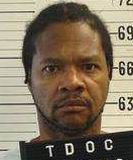
Larry McKay
Murderer Ervil LeBaron
Murderer · USA · 1972
Ervil Morrell LeBaron (1925 to August 16, 1981) was the leader of a polygamous…
35 victims
Ervil LeBaron
Murderer · USA · 1972
Ervil Morrell LeBaron (1925 to August 16, 1981) was the leader of a polygamous…
35 victims
 Brian Kevin Rosenfeld
Murderer · USA · 1985
Brian Kevin Rosenfeld Brian Kevin Rosenfeld was sentenced to three concurrent l…
23 victims
Brian Kevin Rosenfeld
Murderer · USA · 1985
Brian Kevin Rosenfeld Brian Kevin Rosenfeld was sentenced to three concurrent l…
23 victims
 Marvin Gray
Murderer · USA · 1975
Marvin Gray was convicted killer who claimed responsibility for 23 slayings and…
23 victims
Marvin Gray
Murderer · USA · 1975
Marvin Gray was convicted killer who claimed responsibility for 23 slayings and…
23 victims
 Yahweh ben Yahweh
Murderer · USA · 1980
Yahweh ben Yahweh was born and legally named Hulon Mitchell Jr. (October 27, 19…
23 victims
Yahweh ben Yahweh
Murderer · USA · 1980
Yahweh ben Yahweh was born and legally named Hulon Mitchell Jr. (October 27, 19…
23 victims
 Russell Ellwood
Murderer · USA · 1991
Russell Ellwood was a former taxi driver. Authorities suspected him of killing…
20 victims
Russell Ellwood
Murderer · USA · 1991
Russell Ellwood was a former taxi driver. Authorities suspected him of killing…
20 victims
 John Louis Evans
Murderer · USA · 1977
John Louis Evans III was born on January 4, 1950, in Beaumont, Texas. He was ex…
1 victim
John Louis Evans
Murderer · USA · 1977
John Louis Evans III was born on January 4, 1950, in Beaumont, Texas. He was ex…
1 victim
 David Dewayne Johnson
Murderer · USA · 1989
David Dewayne Johnson was convicted of capital murder and was sentenced to deat…
1 victim
David Dewayne Johnson
Murderer · USA · 1989
David Dewayne Johnson was convicted of capital murder and was sentenced to deat…
1 victim
 Larry Joe Johnson
Murderer · USA · 1979
Larry Joe Johnson Larry Joe Johnson was executed by electrocution in Florida on…
1 victim
Larry Joe Johnson
Murderer · USA · 1979
Larry Joe Johnson Larry Joe Johnson was executed by electrocution in Florida on…
1 victim
 John Douglas White
Murderer · USA · 1994
John Douglas White was a former pastor of a small Mount Pleasant church and lat…
2 victims
John Douglas White
Murderer · USA · 1994
John Douglas White was a former pastor of a small Mount Pleasant church and lat…
2 victims
 Daniel Bondeson
Murderer · 2003
Daniel Bondeson was implicated in arsenic poisonings at Gustaf Adolph Lutheran…
1 victim
Daniel Bondeson
Murderer · 2003
Daniel Bondeson was implicated in arsenic poisonings at Gustaf Adolph Lutheran…
1 victim
 Tommie Smith
Murderer · USA · 1980
Tommie Smith was executed by lethal injection in Indiana on July 18, 1996. His…
1 victim
Tommie Smith
Murderer · USA · 1980
Tommie Smith was executed by lethal injection in Indiana on July 18, 1996. His…
1 victim
- Gender
- male
- Country
- USA
- Location
- Shelby County, Tennessee, USA
- Date of birth
- June 26, 1956
- Age at first offence
- 25
- Characteristics
- robbery, armed robbery
- Victim profile
- Benjamin Cooke and Steve Jones (store clerks)
- Method of murder
- Shooting (.32 caliber handgun)
- Date(s) of murder
- August 29, 1981
- Years active
- 1981
- Date of arrest
- Next day
- Status
-
Sentenced to death
Sentenced to death on February 7, 1983
Overview
Larry McKay was convicted of two counts of felony murder each for the shooting deaths of two Shelby County store clerks during a 1981 robbery. He appealed his convictions of murder in the perpetration of armed robbery and his death sentences. The Court of Criminal Appeals of Tennessee at Jackson affirmed the convictions of murder in the first degree and the death sentences.
Case information
- Defendants: Larry McKay; Michael Eugene Sample
- Appellate court: Court of Criminal Appeals of Tennessee at Jackson
- Judgment details: “STATE OF TENNESSEE, APPELLEE v. LARRY MCKAY AND MICHAEL EUGENE SAMPLE, APPELLANTS”
- Trial court: Shelby Criminal; Honorable Bernie Weinman, Judge
- Opinion author: Fones, J.
- Concurrence and dissents: Cooper, C.J., Harbison, J., and McLemore, S.J., concurred; Brock, J. concurred in part and dissented in part; separate opinion included
Timeline
- August 29, 1981 (approximately 11:00 p.m.) — Melvin Wallace, Jr. entered the L & G Sundry Store at 1069 North Watkins in Memphis to purchase two barbecue sandwiches; four men were in the store including clerks Benjamin Cooke and Steve Jones and defendants Larry McKay and Michael Eugene Sample.
- August 31, 1981 (2:43 p.m.) — Wallace positively identified McKay and Sample in a line-up as the murderers of Cooke and Jones.
- Next day (after the leads from the two robberies) — Police apprehended Sample and McKay; the .45 automatic with the serial number of the pistol stolen from the grocery across the street was found on McKay; a .32 caliber revolver was found inside the car; two blue hospital surgical caps were found in the car; bullets recovered from Jones’ cheek, Cooke’s head and chest and Wallace’s leg had been fired from the .32 caliber revolver found in the car.
- Ten days earlier (relative to the Sundry Store robbery) — A grocery store across the street from the L & G Sundry Store was robbed; witnesses said the robbers were two black males wearing blue-green surgical caps; a .45 caliber automatic pistol that had a tendency to misfire was among the items taken.
- October 15, 1984 — Supreme Court of Tennessee opinion in “STATE OF TENNESSEE v. LARRY MCKAY AND MICHAEL EUGENE SAMPLE” delivered by Fones, J.
- Twenty-first day of January, 1985 — The death sentence would be carried out unless stayed by appropriate authority.
- February 7, 1983 — Death sentence status recorded as “Sentenced to death on February 7, 1983.”
The offence
Location and people present
Melvin Wallace, Jr. entered the L & G Sundry Store at 1069 North Watkins in Memphis to purchase two barbecue sandwiches. Four men were in the Sundry Store at the time, including two clerks, Benjamin Cooke and Steve Jones, known to Wallace as he was a regular customer. The other two men were defendants Larry McKay and Michael Eugene Sample. Wallace did not know them before the incident but positively identified them in a line-up at 2:43 p.m. on August 31, 1981.
Sequence of events during the robbery and shootings
Wallace went to the back of the store where Cooke had gone to prepare the sandwiches. McKay was also standing in the back with a quart of “45 Beer” mumbling to himself. Wallace turned his attention to the front where Jones and Sample were standing.
When Wallace looked around at Cooke, he saw that McKay had gone behind the counter and was holding a gun at Cooke’s head. Wallace realized “it was a robbery” and “broke and ran for the front door.” Sample hollered for him to halt and shot him in the thigh. Wallace testified that he tried to play dead but Sample came over and said, “This nigger ain’t dead,” and shot him in the back.
Wallace had heard Sample demanding that Jones give him all the money and heard Jones say, “Man, I gave you everything I had.” After hearing Sample say several times, “I ought to kill all you son-of-a-bitches,” Wallace heard him say, “Kill every son-of-a-bitch in here,” and the defendants started shooting.
Wallace testified that he saw McKay shoot Cooke in the head. Sample came back to where Wallace was lying on the floor and put a pistol to his head; it clicked several times and did not go off. Wallace testified that he “came up off the floor” and started wrestling with Sample; the gun went off past Wallace’s head and Wallace lapsed into unconsciousness. When Wallace woke up, he heard Sample say, “Let’s get the hell out of here.”
Wallace testified to the deaths of Cooke and Jones from bullet wounds to their heads. Cooke and Jones died from bullet wounds to their heads; Wallace survived and gave information about the episode to police at the scene and at the hospital.
Victims and fatalities
- Benjamin Cooke: store clerk; died from a bullet wound to the head
- Steve Jones: store clerk; died from a bullet wound to the head
Investigation
Prior robbery across the street
An investigating officer remembered that a grocery store across the street from the L & G Sundry Store had been robbed about ten days earlier, and that witnesses had said the robbers were two black males wearing blue-green surgical caps. Among the items taken in the earlier robbery was a .45 caliber automatic pistol that had a tendency to misfire.
Evidence recovered and linking
Shell casings from a .45 caliber automatic were found in the Sundry Store. Leads from the two robberies led police to apprehend Sample and McKay the next day.
The defendants were in a car with a third man. The .45 automatic with the serial number of the pistol stolen from the grocery across the street was found on McKay. A .32 caliber revolver was found inside the car. Bullets recovered from Jones’ cheek, Cooke’s head and chest and Wallace’s leg were fired from the .32 caliber revolver found in the car. Two blue hospital surgical caps were found in the car.
Cash taken
More than two hundred and perhaps as much as seven hundred dollars in cash was stolen from the Sundry Store.
Arrest
Sample and McKay were apprehended the next day after police used leads from the earlier robbery and evidence at the Sundry Store.
At the time of arrest:
- McKay: unemployed; had $166.30 on his person
- Sample: $195 in cash on his person
Witnesses
Charles Rice, age sixteen, went to the L & G Sundry Store to buy cigarettes. As he arrived at the door, he saw the robbery in progress, specifically the gun pointed at the head of one of the clerks. He turned and ran home, told his mother what he had seen, and later reported the information to police. He made a positive identification of both defendants.
Trial
Charges and convictions
The defendants were convicted of:
- Two counts of felony murder each for the shooting deaths of two Shelby County store clerks during a 1981 robbery.
The jury found:
- Sample guilty of three aggravating circumstances
- McKay guilty of four aggravating circumstances and no mitigating circumstances as to either defendant
The opinion stated that the jury found guilt of “murder in the first degree” and returned death sentences.
Sufficiency of evidence issues raised on appeal
Both defendants raised the issue that the evidence was insufficient to justify a rational trier of fact in finding guilt beyond a reasonable doubt. The court found the proof that the defendants robbed the Sundry Store, gunned down the two clerks, and attempted to murder Wallace to be “overwhelming,” and it held the evidence was sufficient beyond a reasonable doubt.
McKay asserted that the evidence indicated that he did not inflict any wounds on the victims and argued that all victims were shot with a .32 caliber weapon allegedly carried by Sample. The court described uncertainty as to who carried or fired the .45 and .32 caliber weapons at particular times. It stated Wallace identified Sample as the one who shot him in the hip and back and that the gun that misfired was the .45 caliber pistol by circumstantial evidence.
The court stated:
- Wallace was shot in hip and back by a .32 caliber bullet
- Cooke’s death resulted from a .32 caliber bullet removed from his head
- Jones’ death involved a bullet to the head with an entry wound and an exit wound; its caliber was not positively ascertained though a .45 caliber hull was found beside Jones’ head
- There was evidence to support findings that Jones was killed with the .45 caliber pistol and Cooke with the .32 caliber pistol
- If McKay did not fire a fatal bullet, the court held he was a principal actively participating, aiding and abetting Sample
- Both defendants were jointly indicted for felony and common-law murder counts separately for Cooke and for Jones
- The jury found both defendants guilty of the felony murder of Cooke and of Jones
- The evidence would have sustained a verdict on the common-law counts beyond a reasonable doubt
Enmund v. Florida contention
McKay’s argument was addressed through reference to Enmund v. Florida. The court stated Enmund held that the death penalty could not be imposed upon one who aids and abets a felony but does not kill, attempt to kill, or intend that lethal force be employed. The court concluded that Enmund provided “no solice to McKay,” reasoning that there was evidence beyond a reasonable doubt that McKay attempted to kill and employed lethal force and that there was strong circumstantial evidence that McKay intended to kill.
Constitutional and procedural arguments addressed
The court addressed multiple other contentions, including:
- arguments regarding Tennessee’s Death Penalty Statute’s constitutionality and its asserted issues
- voir dire issues including Witherspoon questions, exposure to prejudicial publicity, and complaints about the trial judge’s conduct
- motion to dismiss the indictment based on alleged discrimination against women in selection of grand jury forepersons
- claims that defendants were arrested illegally and evidence acquired should be suppressed
- identification procedures used in line-ups and photographic arrays
- motions for severance
- jury instructions relating to common-law premeditated murder and burden-shifting concerns
- evidentiary issues regarding cross-examination during sentencing after defendants testified
- denial of motions regarding admissibility of prior convictions under the Morgan rule
- admission of evidence of a separate robbery of a grocery across the street ten days earlier
- testimony beyond permissible scope regarding “physical assaults on employees” during the grocery robbery and harmless error
- denial of a request to sequester prospective jurors during an eight day selection process
Sentencing
Aggravating and mitigating findings
The jury found:
Death sentence and affirmance
The court affirmed both death sentences and stated that the death sentence would be carried out on the twenty-first day of January, 1985, unless stayed by appropriate authority.
Appeals and outcome
The defendants appealed their convictions and sentences of death. The Court of Criminal Appeals of Tennessee affirmed:
- the convictions of murder in the first degree
- the death sentences imposed by the Criminal Court of Shelby County The death sentence was scheduled to be carried out on the twenty-first day of January, 1985, unless stayed by appropriate authority.
Other details
- The opinion indicated that multiple issues raised on appeal were found to be without merit.
- The jury selection process allowed jurors to separate and return to their homes during the selection process; after the selection process was completed and the jury was sworn, jurors were sequestered until trial and sentencing were completed.

Spotted an error, or have more information about this case?