
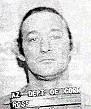
John Hardy Rose
Murderer Brian Kevin Rosenfeld
Murderer · USA · 1985
Brian Kevin Rosenfeld Brian Kevin Rosenfeld was sentenced to three concurrent l…
23 victims
Brian Kevin Rosenfeld
Murderer · USA · 1985
Brian Kevin Rosenfeld Brian Kevin Rosenfeld was sentenced to three concurrent l…
23 victims
 Russell Ellwood
Murderer · USA · 1991
Russell Ellwood was a former taxi driver. Authorities suspected him of killing…
20 victims
Russell Ellwood
Murderer · USA · 1991
Russell Ellwood was a former taxi driver. Authorities suspected him of killing…
20 victims
 Robert Martines Perez
Murderer · USA · 1994
Name: Robert Martines Perez · Other name used in proceedings: Robert Martinez P…
15 victims
Robert Martines Perez
Murderer · USA · 1994
Name: Robert Martines Perez · Other name used in proceedings: Robert Martinez P…
15 victims
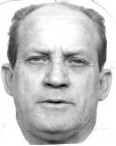 Billy Frank Vickers
Murderer · USA · 1993
Billy Frank Vickers Vickers was executed by lethal injection in Texas on Januar…
14 victims
Billy Frank Vickers
Murderer · USA · 1993
Billy Frank Vickers Vickers was executed by lethal injection in Texas on Januar…
14 victims
 Roy Keough
Murderer · USA · 1989
Roy Keough was convicted of one count of premeditated first degree murder and o…
2 victims
Roy Keough
Murderer · USA · 1989
Roy Keough was convicted of one count of premeditated first degree murder and o…
2 victims
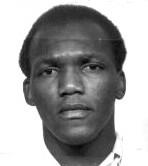 Carl Eugene Kelly
Murderer · USA · 1980
Carl Eugene Kelly Carl Eugene Kelly was a high school dropout. He had a drug pr…
2 victims
Carl Eugene Kelly
Murderer · USA · 1980
Carl Eugene Kelly Carl Eugene Kelly was a high school dropout. He had a drug pr…
2 victims
 Mary Bell
Homicide · United Kingdom · 1968
Mary Flora Bell was convicted of manslaughter on the grounds of diminished resp…
2 victims
Mary Bell
Homicide · United Kingdom · 1968
Mary Flora Bell was convicted of manslaughter on the grounds of diminished resp…
2 victims
 Charles Mark Cohen
Murderer · USA · 1988
Charles Mark Cohen was 41 when the Delaware Board of Pardons refused to recomme…
3 victims
Charles Mark Cohen
Murderer · USA · 1988
Charles Mark Cohen was 41 when the Delaware Board of Pardons refused to recomme…
3 victims
 Debra Hartmann
Murderer · USA · 1982
Debra Hartmann was sentenced to 22 years in prison for conspiracy connected to…
1 victim
Debra Hartmann
Murderer · USA · 1982
Debra Hartmann was sentenced to 22 years in prison for conspiracy connected to…
1 victim
 Jesús Lozano Velásquez
Mass murderer · Colombia · 2000
Jesús Lozano Velásquez was involved in the Reminiscencias dance club shooting,…
11 victims
Jesús Lozano Velásquez
Mass murderer · Colombia · 2000
Jesús Lozano Velásquez was involved in the Reminiscencias dance club shooting,…
11 victims
- Gender
- male
- Country
- USA
- Location
- Haywood County, North Carolina, USA
- Date of birth
- January 26, 1958
- Age at first offence
- 33
- Characteristics
- alcohol, drug addict, attempted rape
- Victim profile
- Patricia Stewart (female, 24)
- Method of murder
- St abbing with knife
- Date(s) of murder
- January 3, 1991
- Years active
- 1991
- Date of arrest
- January 15, 1991
- Status
-
Executed
Executed by lethal injection in North Carolina on November 30, 2001
Case overview
John Hardy Rose was convicted of capital murder for the murder of Patricia Stewart. Following a capital sentencing proceeding, the jury recommended, and the trial court imposed, a sentence of death. After exhausting all available state remedies, Rose petitioned for federal habeas corpus relief. In the federal appeal, the United States Court of Appeals for the Fourth Circuit affirmed in part and reversed in part. Rose ultimately was executed by lethal injection in North Carolina on November 30, 2001.
Timeline
- January 13, 1991 — The State Bureau of Investigation (SBI) performed a consent search of vehicles owned by Rose and his sister, recovering items that tested positive for blood.
- January 14, 1991 — SBI agents met with Rose to discuss the results of the automobile searches.
- January 15, 1991 — Rose was arrested after informing agents that Patricia Stewart’s body was at his grandmother’s farm; he waived Miranda rights and gave an additional statement.
- January 3, 1991 — Rose received the death penalty for killing Patricia Stewart, 24.
- May 12, 1992 — Rose appealed to the North Carolina Supreme Court.
- June 27, 1994 — The United States Supreme Court denied Rose’s petition for a writ of certiorari.
- October 4, 1995 — Rose filed his Motion for Appropriate Relief (MAR) in state court.
- June 21, 1996 — The North Carolina legislature amended N.C. Gen. Stat. § 15A-1419.
- April 5, 2001 — The Fourth Circuit case was argued.
- May 24, 2001 — The Fourth Circuit decided the case.
- November 27, 2001 — Gov. Mike Easley held a clemency hearing; Rose directed his lawyer not to pursue clemency.
- November 30, 2001 — Gov. Mike Easley refused to grant clemency; Rose was executed by lethal injection, with death pronounced at 2:18 a.m.
Background
Patricia Stewart was missing, and small drops of blood were found in and around her apartment. Rose lived with his sister and her boyfriend in the apartment above Stewart’s apartment in Robbinsville, North Carolina.
Rose had a history described as including an alcoholic father and an upbringing described as poverty-stricken and brutal. The materials also stated that Rose’s upbringing included an 11-year-old Rose being forced to have sex with his father’s mistresses. As an adult, Rose married and had 3 sons. The materials further stated that Rose took up a drug and alcohol habit and served a prison sentence in Mississippi for attempted rape. During sentencing, the State introduced as aggravating evidence exhibits related to Rose’s conviction in Mississippi for attempted rape.
During sentencing, many witnesses testified to Rose’s troubled upbringing: a physically abusive, alcoholic father and Rose’s record as an otherwise model citizen. The materials stated that a physically abusive, alcoholic father was abusive to Rose’s mother and siblings. Rose’s mother and sisters testified to Rose’s troubled upbringing. The materials also stated that Rose received honorable discharges from the United States Marine Corps and the Army.
The offence
Patricia Stewart was murdered in Robbinsville, North Carolina, in January 1991. Rose’s confession and related testimony described that Rose was in Stewart’s apartment after midnight on Wednesday, January 2. A friend came to visit Stewart, and Stewart asked Rose to leave and come back later, which he did. Rose stated that he smoked marijuana and drank a quart of whiskey before going to Stewart’s apartment. Rose claimed that he told Stewart he was going back to his girlfriend in Alabama, and Stewart retorted that she would have him arrested for rape if he tried to leave her. In response, Rose stated that he “just went crazy,” stabbing, beating, and choking Stewart to death.
Rose’s description also stated that he wrapped Stewart’s body in her bed linen and put it in the trunk of his Pontiac, but the car would not start. He then went back inside and tried to clean up, leaving the body in the trunk. Rose stated that he took the knife he used to kill Stewart to his apartment, cleaned it, and placed it in a box in his bedroom. Rose then borrowed his sister’s Ford automobile, transferred the body to the trunk of the Ford, drove the Ford to his grandmother’s farm, took the body behind the house, used his grandmother’s hoe to dig a shallow grave, poured gasoline on the body, set it afire, and walked away. When the fire went out, Rose returned and covered the body with rocks, leaves, and tree branches.
A medical examiner testified that Rose stabbed Stewart five times, with four knife wounds to her body and one knife wound to her head that was inflicted with enough force to pierce her skull.
Investigation
The Graham County, North Carolina, police department conducted several interviews with Rose after receiving a report that Patricia Stewart was missing and finding small drops of blood in and around her apartment. Rose lived with his sister and her boyfriend in the apartment above Stewart.
Vehicle searches and blood evidence
On January 13, 1991, SBI Agent Mark Nelson performed a consent search of a blue Pontiac owned by Rose and a yellow Ford owned by Rose’s sister. Investigators found a pair of numchucks, a tire tool, jumper cables, a black sleeveless jacket, and a thermos in the two cars. All of the items tested positive for blood. The thermos and the trunk of the Ford contained bloodstains that were consistent with Stewart’s blood type and inconsistent with Rose’s.
Interviews before arrest
On January 14, 1991, SBI Agent Frye met with Rose to discuss the results of the vehicle searches. Rose told Frye that he did not want to discuss Stewart’s disappearance “because the situation surrounding it was too bad to talk about, and he was concerned about what his family would think of him.” Rose also told the officers that “the disposition of Patricia Stewart was so bad” that they would not be able to find any of her remains.
On January 15, 1991, agents spoke again with Rose in the presence of his mother. Rose’s mother told Rose that he needed to reveal any information he had regarding Stewart’s disappearance. Rose informed the agents that Stewart’s body was located at his grandmother’s farm. Agents radioed this information to officers searching for the victim’s body, and the body was already uncovered. Rose then was arrested and was given Miranda warnings for the first time.
Rose waived his Miranda rights and gave an additional statement describing the events leading to Stewart’s killing and the subsequent disposal described in the confession.
Arrest
Rose’s arrest followed agents receiving information from Rose that Stewart’s body was located at his grandmother’s farm. After the arrest, Rose was given Miranda warnings for the first time, waived his Miranda rights, and provided an additional statement.
Trial
Verdict
A North Carolina jury convicted John Hardy Rose of capital murder for the murder of Patricia Stewart. The jury returned a verdict finding Rose guilty of first-degree murder.
After the guilty verdict, a capital sentencing proceeding was held pursuant to N.C. Gen. Stat. § 15A-2000. The jury recommended, and the trial court imposed, a sentence of death.
Confession and guilt-phase testimony
Rose’s testimony during the guilt phase of the trial was similar to his confession, with a few deviations.
Rose testified that after he told Stewart he was going to Alabama, Stewart reached over and picked up a pocket knife that she had lying on her nightstand beside her bed. Rose claimed that Stewart shook the knife and said, “You ain’t going nowhere.”
Rose testified that he jumped up and hit Stewart’s arm, causing the knife to hit her in the head, and immediately jumped on top of her. Rose testified that he then “heard something pop, backed up and saw blood coming out of Stewart’s head.”
Rose testified that “he did not remember choking Stewart that morning and that he did not intend to harm her and did not think anything like that would happen.”
Sentencing evidence and factors
At sentencing, the State introduced as aggravating evidence exhibits related to Rose’s conviction in Mississippi for attempted rape. The materials stated that the following statutory aggravating factors were presented to the jury and were found unanimously to be applicable beyond a reasonable doubt:
- Rose had been previously convicted of a felony involving the use or threat of violence to another person.
- The facts surrounding Stewart’s murder were particularly heinous, atrocious, or cruel.
The materials also stated that the jury was instructed that although the jury must unanimously agree that the government established the existence of an aggravating factor beyond a reasonable doubt, the jury could consider a mitigating factor in its weighing process so long as one juror found that Rose established its existence by a preponderance of the evidence.
Statutory mitigating factors not found
The following statutory mitigating factors were submitted at sentencing and were not found by any members of the jury:
- (i) Rose had no significant history of prior criminal activity;
- (ii) the murder was committed while Rose was under the influence of mental or emotional disturbance;
- (iii) the capacity of Rose to appreciate the criminality of his conduct or to conform his conduct to the requirements of the law was impaired; and
- (iv) any other circumstances arising from the evidence.
Non-statutory mitigating factors found
The following non-statutory mitigating factors were submitted and were found by one or more member of the jury:
- (i) Rose was reared until at least his twelfth birthday in the home of his father and mother, the father being a chronic alcoholic who was abusive both physically and mentally to Rose’s mother in the presence of Rose;
- (ii) Rose was the product of a broken home;
- (iii) Rose received an honorable discharge from the United States Army;
- (iv) Rose received an honorable discharge from the United States Marine Corps;
- (v) Rose was a good and obedient prisoner in the Graham County jail for 15 months, and at no time caused any problem with the jailer or other personnel of the Sheriff’s Department or with any other inmates confined there;
- (vi) Rose was a good and obedient prisoner in Haywood County jail for 12 days;
- (vii) Rose cooperated with agents of the SBI and members of the Graham County Sheriff’s Departments when he, at their request, agreed to take and did take a polygraph test at a time when he was not in custody and was free to come and go as he pleased;
- (viii) Rose had been a good and reliable employee of Tuckaseegee Mills for a substantial period of time prior to January 1, 1991; and
- (ix) Rose had a good character and reputation for truth and veracity in the work community of his place of employment.
Sentencing
Rose was sentenced to death in Haywood County on May 12, 1992 for the murder of Patricia Stewart. He later exhausted all available state remedies.
Appeals
State appellate review
On May 12, 1992, Rose appealed to the North Carolina Supreme Court, which unanimously found no error in Rose’s conviction or death sentence.
United States Supreme Court
On June 27, 1994, the United States Supreme Court denied Rose’s petition for a writ of certiorari.
State habeas proceedings (MAR)
Rose filed a Motion for Appropriate Relief (MAR). The MAR was filed on October 4, 1995. After holding an evidentiary hearing, the state habeas court denied Rose’s requested relief. The State habeas court applied amended procedural rules in N.C. Gen. Stat. § 15A-1419 and held several claims procedurally barred.
Federal habeas proceedings
Rose petitioned the federal district court for habeas relief, challenging his conviction and sentence on numerous grounds. The petition was referred to a United States Magistrate Judge, who recommended dismissing the majority of Rose’s claims on summary judgment but granting the writ regarding Rose’s ineffective assistance of counsel claim. After de novo review, the district court issued a writ of habeas corpus with respect to Rose’s ineffective assistance of counsel claim and dismissed the remainder of the petition.
Fourth Circuit decision
The Fourth Circuit stated that a North Carolina jury convicted Rose of capital murder for the murder of Patricia Stewart, and that after exhausting all available state remedies, Rose petitioned for a writ of habeas corpus. The district court ordered that the writ be granted because the state habeas court applied the wrong legal standard to Rose’s ineffective assistance of counsel claim.
The Fourth Circuit affirmed in part and reversed in part. The Fourth Circuit held that it would reverse the district court’s issuance of the writ on the ineffective assistance of counsel claim.
Fourth Circuit issues decided
The Fourth Circuit addressed Rose’s request for a certificate of appealability on several issues: an Ex Post Facto claim, a confession claim, and an economic discrimination claim. It also addressed the State’s argument about the district court remanding Rose’s ineffective assistance of counsel claim for the state habeas court to apply the correct legal standard.
Ex Post Facto claim
Rose argued that applying N.C. Gen. Stat. § 15A-1419 as amended violated the Ex Post Facto Clause. Rose’s MAR was filed on October 4, 1995, and on June 21, 1996 the North Carolina legislature amended N.C. Gen. Stat. § 15A-1419 to make procedural bars mandatory rather than discretionary unless the petitioner could establish good cause or that the failure to consider the claim would result in a fundamental miscarriage of justice. The district court rejected the Ex Post Facto claim on the merits, and the Fourth Circuit denied a certificate of appealability on this issue, holding that reasonable jurists could not disagree with the district court.
Confession claim
Rose sought a certificate of appealability on the claim that his confession was unconstitutionally compelled with a promise of life imprisonment and then used to secure his death sentence. The Fourth Circuit stated that the state habeas court found the confession claim procedurally defaulted pursuant to N.C. Gen. Stat. § 15A-1419(a)(2) (1996). The Fourth Circuit denied the certificate of appealability, concluding that reasonable jurists would not find the constitutional claim debatable. The Fourth Circuit discussed affidavits from Rose’s mother and sister dated January 6, 1998, stating that on January 15, 1991 an agent told them and Rose that “things would go easier on [Rose] if he told them where the body was.” The Fourth Circuit addressed the voluntariness standard for confessions and found no unconstitutional coercion in the circumstances described.
Economic discrimination claim
Rose sought to appeal the denial of a claim that North Carolina unconstitutionally discriminates based upon economics in its imposition of the death penalty. The district court declined to address merits because Rose did not fairly present the issue to the State courts. On appeal, Rose conceded the economic claim had not been presented to state courts. The Fourth Circuit found cause arguments waived or inadequate and denied a certificate of appealability.
Ineffective assistance of counsel claim (ultimate disposition)
The Fourth Circuit reversed the district court’s grant of habeas relief on ineffective assistance of counsel. It held that the state habeas court’s adjudication was contrary to Strickland due to using the wrong burden of proof, but after a de novo review it concluded Rose failed to establish ineffective assistance.
The Fourth Circuit described Rose’s ineffective assistance theory as counsel’s failure to adequately investigate events surrounding Rose’s prior violent felony attempted rape conviction, which was used by the State as an aggravating factor. Rose argued that if counsel investigated further, they would have discovered mitigating evidence relating to Rose’s mental health.
The Fourth Circuit described testimony from psychiatrists Dr. Brown and Dr. Berlin during the state evidentiary hearing and described the Dorothea Dix Hospital evaluation ordered prior to trial. It also described trial counsel testimony from lead trial counsel J.K. Coward, Jr. and co-counsel Marcellus Buchanan regarding their decision not to pursue a defense based on Rose’s sexual disorders, including the reasoning that introducing “further bad elements into the case” would mean they “would have no chance whatsoever with the jury.” The Fourth Circuit also discussed Coward’s testimony that introducing testimony about sexual disorders would eliminate the chance for leniency, and counsel’s view that Rose had explicitly instructed them not to present evidence exposing his children to adverse publicity.
The Fourth Circuit concluded counsel acted in an objectively reasonable fashion by declining to pursue a defense based on Rose’s sexual disorders, and that Rose did not establish prejudice. The Fourth Circuit noted evidence and conclusions from the state habeas court, including that the evidence would have been considerably more shocking, potentially supporting the aggravating factor related to the murder being part of a course of conduct, and that a jury would have been even more likely to recommend a death sentence. The Fourth Circuit agreed that introducing evidence of Rose’s sexual disorders would have contributed equally, if not more, to statutory aggravating factors than it would have contributed to mitigating factors. It therefore reversed the district court’s issuance of a writ on ineffective assistance of counsel.
Outcome
John Hardy Rose was executed by lethal injection in North Carolina on November 30, 2001. Death was pronounced at 2:18 a.m. in the Central Prison death chamber.
Gov. Mike Easley refused to grant clemency despite an appeal from Pope John Paul II. Rose directed his lawyer not to pursue clemency, and his court appeals were exhausted two months before the execution.
Witnesses at the execution included Rose’s mother and 2 sisters, plus the mother, 2 aunts, and sister of Rose’s victim, Patricia Stewart.
Aftermath
Family members described Stewart’s life after a divorce and her desire to live by herself. Stewart’s aunt, Lee Vonda Riddle, was quoted as saying: “wanted to prove to the world that she could live by herself.”
Rose’s mother, Eloise Pace, visited Rose this week for the 3rd time since he was sent to death row and stated Rose was at peace with his fate. Eloise Pace said Rose repeatedly had tried to write to Stewart’s family of his remorse, but could not put his feelings on paper, and that Rose prayed about it and the words “just come to him,” in words quoted in the materials:
- “Then he finally prayed about it, and the words just come to him,” said Pace.
Rose led police to Stewart’s body, which had been set on fire before being buried in a shallow grave on a mountain.
A group of people opposed to capital punishment marched from a local church to the gates of the massive prison for a peaceful candlelit protest. After receiving David’s letter, Archbishop Gabriel Montalvo of the Apostolic Nuncio to the United States sent a six-paragraph letter to Gov. Easley on behalf of Pope John Paul II. In that letter, Archbishop Montalvo wrote:
“COMMITTED TO UPHOLDING the sacredness and dignity of each human life, our Holy Father prays that the life of Mr. Rose may be saved through your compassion and dig-nity,” Archbishop Montalvo wrote. “He trusts in your authority to have a life spared by commuting this sentence with a gesture of mercy.”
During the clemency context described in the materials, Appellate Defender Staples Hughes was quoted:
- “On the basis of a superficial review, we've learned that as a child John Hardy Rose was forced to have sex with his father's mistresses, and that he suffers from mental illness,” said Appellate Defender Staples Hughes.
- “This is a case that cries out for closer examination and clemency consideration.”
- “For the first time, the Governor is saying that he will not hear from anyone with knowledge of the case. He has said 'no' to a temporary stay, and declined to give us adequate time to prepare a clemency presentation.”
PFADP Director Steve Dear was quoted:
- “We are disturbed that Governor Easley is not giving this grave life and death matter the full attention it deserves,” said PFADP Director, Steve Dear.
David, pastor of Immaculate Conception Church in Durham, was quoted at the protest context:
- “Governor Easley is Catholic, but he supports the death penalty, something our pope and bishops say is immoral,” said David, pastor of Immaculate Conception Church in Durham.
- “Easley supports the death penalty and I think that’s wrong.”
David vowed to continue to fight against the death penalty, and was quoted:
- “We’re not going to fold up our tent because of this,” he said.
- “We have been working hard to overturn the death penalty in this state and the country and the people who oppose the death penalty won’t give up and I won’t give up either.”
Other details
The Fourth Circuit opinion described the procedural handling of Rose’s claims for a certificate of appealability. Rose was denied a certificate of appealability on the claims rejected by the district court. The Fourth Circuit affirmed in part and reversed in part, specifically reversing the district court’s issuance of a writ of habeas corpus on the ineffective assistance of counsel claim. It also declined to grant Rose a certificate of appealability.
Rose’s Mississippi conviction was used as an aggravating factor at sentencing, and Rose’s sentencing proceeding included aggravating evidence exhibits related to that attempted rape conviction.
Rose’s confession included statements describing the events leading to Stewart’s death, including the use of marijuana and whiskey, Rose’s claimed threat-based response, the stabbing, beating, and choking, the transfer of the body via vehicles, the burial, gasoline being poured, the body being set on fire, and subsequent covering with rocks, leaves, and tree branches.
Rose’s guilty-phase testimony included deviations from the confession, including testimony about Stewart picking up a pocket knife and saying “You ain’t going nowhere,” and testimony that he did not remember choking Stewart that morning and did not intend to harm her.
Spotted an error, or have more information about this case?