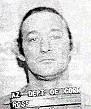
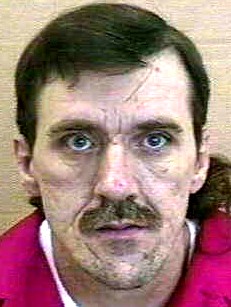
Arthur Martin Ross
Murderer Brian Kevin Rosenfeld
Murderer · USA · 1985
Brian Kevin Rosenfeld Brian Kevin Rosenfeld was sentenced to three concurrent l…
23 victims
Brian Kevin Rosenfeld
Murderer · USA · 1985
Brian Kevin Rosenfeld Brian Kevin Rosenfeld was sentenced to three concurrent l…
23 victims
 Yahweh ben Yahweh
Murderer · USA · 1980
Yahweh ben Yahweh was born and legally named Hulon Mitchell Jr. (October 27, 19…
23 victims
Yahweh ben Yahweh
Murderer · USA · 1980
Yahweh ben Yahweh was born and legally named Hulon Mitchell Jr. (October 27, 19…
23 victims
 Russell Ellwood
Murderer · USA · 1991
Russell Ellwood was a former taxi driver. Authorities suspected him of killing…
20 victims
Russell Ellwood
Murderer · USA · 1991
Russell Ellwood was a former taxi driver. Authorities suspected him of killing…
20 victims
 Robert Martines Perez
Murderer · USA · 1994
Name: Robert Martines Perez · Other name used in proceedings: Robert Martinez P…
15 victims
Robert Martines Perez
Murderer · USA · 1994
Name: Robert Martines Perez · Other name used in proceedings: Robert Martinez P…
15 victims
 David Lee McNish
Murderer · USA · 1983
Defendant: David Lee McNish · Victim: Gladys E. Smith (also referred to as Mrs.…
1 victim
David Lee McNish
Murderer · USA · 1983
Defendant: David Lee McNish · Victim: Gladys E. Smith (also referred to as Mrs.…
1 victim
 Bobby Joe Long
Serial killer · USA · 1984
Bobby Joe Long (born October 14, 1953) was an American serial killer. He was al…
10 victims
Bobby Joe Long
Serial killer · USA · 1984
Bobby Joe Long (born October 14, 1953) was an American serial killer. He was al…
10 victims
 George Huguely
Murderer · USA · 2010
George Huguely was sentenced to 23 years in prison on August 30, 2012. · George…
1 victim
George Huguely
Murderer · USA · 2010
George Huguely was sentenced to 23 years in prison on August 30, 2012. · George…
1 victim
 Charles Smith 1
Murderer? · USA · 1982
Charles Smith was sentenced to death on October 18, 1983. They stopped to let S…
1 victim
Charles Smith 1
Murderer? · USA · 1982
Charles Smith was sentenced to death on October 18, 1983. They stopped to let S…
1 victim
 Misty Witherspoon
Murderer · USA · 2005
Misty Witherspoon — defendant; her husband was Quinn Witherspoon (a Concord Pol…
1 victim
Misty Witherspoon
Murderer · USA · 2005
Misty Witherspoon — defendant; her husband was Quinn Witherspoon (a Concord Pol…
1 victim
 Sadashiv Sahu
Serial killer? · India · 2000
Sadashiv Sahu was identified as the suspect in a series of mystery killings of…
22 victims
Sadashiv Sahu
Serial killer? · India · 2000
Sadashiv Sahu was identified as the suspect in a series of mystery killings of…
22 victims
- Gender
- male
- Country
- USA
- Location
- Tucson, Arizona, USA
- Date of birth
- May 24, 1954
- Age at first offence
- 36
- Characteristics
- robbery, armed robbery
- Victim profile
- James Ruble, 26 (real estate agent)
- Method of murder
- Shooting (handgun)
- Date(s) of murder
- April 10, 1990
- Years active
- 1990
- Date of arrest
- 4 days after
- Status
-
Executed
Executed by lethal injection in Arizona on April 29, 1998
Case identification
Arthur Martin Ross
Timeline
- April 10, 1990 — Arthur Ross telephoned the victim and arranged to meet about leasing a vacant office at the comer of Ina and Thorneydale in Tucson.
- April 10, 1990 — Ross met the victim, entered the business, and shot the victim twice in the head with a nine millimeter handgun; Ross fled with the victim’s wallet and identification.
- April 10, 1990 — Ross used the victim’s bank card to withdraw approximately $800 from the victim’s account at automatic teller machines in Tucson and Casa Grande.
- April 14, 1990 — Police arrested the defendant in Casa Grande following a trail of credit card and bank card transactions.
- December 18, 1990 — Start of trial.
- February 1, 1991 — Verdict.
- April 19, 1991 — Sentencing.
- April 29, 1998 — Arthur Ross was executed by lethal injection in Arizona.
- 1994 — State v. Ross, 180 Ariz. 598, 886 P.2d 1354 (1994) was published.
Background
Arthur Ross arrived in Tucson in April 1990 and began plotting his crime immediately, prosecutors said. Ross posed as a businessman interested in renting office space to persuade James Ruble, a 26-year-old real estate agent 4 years out of the University of Arizona, to take him to the empty office on April 10.
The offence
On April 10, 1990, Arthur Ross telephoned the victim, a 26-year-old male real estate agent. He told the victim that he was a business man interested in leasing a vacant office at the comer of Ina and Thorneydale in Tucson. Ross met with the victim, and once inside the business, shot the victim twice in the head with a nine millimeter handgun. Ross dragged the victim behind a counter and shot him again.
Ross fled with the victim’s wallet, which contained a credit card, a bank card, and identification. Ross used the bank card to withdraw approximately $800 from the victim’s account at automatic teller machines in Tucson and Casa Grande. Ross used the victim’s ID card to get a temporary driver’s license and bought a car with the victim’s identification. Ross had the victim’s wallet in his possession when he was arrested by police.
Investigation
The victim’s roommate and a co-worker became concerned when he did not return from the appointment. They obtained his appointment book and went to the office building, where they found the body. Police followed a trail of credit card and bank card transactions, which led to the defendant’s arrest in Casa Grande on April 14, 1990.
Arrest
Arthur Ross was arrested in Casa Grande 4 days later.
Trial
Presiding Judge: Michael D. Alfred Prosecutor: Rick Unklesbay Start of Trial: December 18, 1990 Verdict: February 1, 1991
Procedural posture: Defendant was convicted in Superior Court (Pima) of premeditated first-degree murder and armed robbery and sentenced to death for first-degree murder. This was the defendant’s automatic direct appeal to the Arizona Supreme Court.
Sentencing
Sentencing: April 19, 1991
Aggravating Circumstances:
- Pecuniary gain
- Especially heinous/depraved
Mitigating Circumstances:
- None sufficient to call for leniency
- The Court found the following mitigating circumstances existed, but were insufficiently substantial to call for leniency: Lack of Criminal History; Family Ties.
- The Court found the defendant failed to prove by a preponderance of the evidence the existence of the following as mitigating circumstances: Difficult Childhood/Family History; Model Prisoner; and Cooperation with police.
Judgment on aggravating and mitigating findings: The Arizona Supreme Court reversed the (F)(6) finding and then reweighed the aggravating and mitigating circumstances before affirming the sentence. Convictions and death sentence were affirmed.
Aggravating circumstance upholding: (F)(5) (Pecuniary Gain) — UPHELD The defendant’s admitted objective was to steal money and identification. It was not relevant whether he intended to kill before the robbery. The Court stated that a person furthers his pecuniary gain motive when he kills to facilitate escape and to ensure keeping the stolen items. The defendant killed to steal credit cards and bankcards. The defendant lured the victim real estate agent to a vacant store under the pretext of an interest in leasing the property. Once inside, the defendant demanded the victim’s wallet and during the ensuing struggle shot the victim in the head. The defendant dragged the victim’s body behind the counter and again shot him in the head. After stealing the victim’s wallet, the defendant immediately began using the victim’s bank and credit cards. He withdrew money from a bank, obtained a temporary driver's license, and bought a car with the victim's identification. The defendant had the victim’s wallet in his possession when he was arrested by the police.
Aggravating circumstance reversal: (F)(6) (Heinous, Cruel or Depraved) — REVERSED Cruel: Not addressed. Heinous or Depraved: Reversed. Senselessness and helplessness alone "will ordinarily not be sufficient to prove heinousness or depravity." 180 Ariz. at 607. Senselessness was found. The defendant argued that the victim fought back during the robbery so he had to shoot him to complete the robbery. The Court disagreed. The defendant had the victim's wallet before the second shot was fired, so there was no need to shoot again. The defendant could have taken victim's wallet without killing him.
Helplessness was found. The victim was shot twice. He was rendered helpless by the first shot and hence, the second shot was delivered when the victim was helpless. 180 Ariz. at 606.
Witness elimination: Not found. The Court articulated three fact patterns where witness elimination may be found, pursuant to previously existing case law:
- "where the murder victim is a witness to some other crime, and is killed to prevent that person from testifying about the other crime";
- "when 'a statement by the defendant that witness elimination is a motive for the murder' is made"; and
- "where extraordinary circumstances of the crime show, beyond a reasonable doubt, that witness elimination is a motive. This will only occur in the most extreme cases."
The Court held that the facts of this case did not fit into any of the three categories.
Appeals
The defendant’s automatic direct appeal to the Arizona Supreme Court resulted in:
- Convictions and death sentence affirmed.
Published opinion:
- State v. Ross, 180 Ariz. 598, 886 P.2d 1354 (1994)
Other details
Arthur Ross was 43 at the time of execution. He arrived in Tucson in April 1990 and began plotting his crime immediately, prosecutors said. Ross withdrew approximately $800 from the victim’s accounts, and used the victim’s identification to obtain a driver’s license and buy a car.
Last meal:
- 3 Grilled cheese & fried egg sandwiches, Macaroni & cheese (lots)
- Pint of mint chocolate chip ice cream, 2 cans of Pepsi
Last meal and final remarks at execution: Arthur Ross, 43, had legal options available but didn’t use them, saying he was tired of living on death row and would rather die. He had no final words. Witnesses reported that Ross had no last words and seemed ready to accept his fate.
Execution details: Ross was put to death by lethal injection at 12:03 a.m. (3:03 a.m. EDT) in the death house at the state prison complex southeast of Phoenix. The fatal dose killed the 43-year-old three minutes later, officials said. A state panel decided against clemency Friday. State officials said Ross could have lived at least three more years had he not declined to pursue his available appeals.
Parole and prior record facts included in the case narrative: At the time of the slaying, Ross was on parole for a 1989 2nd-degree burglary conviction in Georgia. He was released from prison there after serving 8 months of a 20-year sentence. Prosecutors called him a career criminal with convictions in Kansas, Tennessee, Missouri, Kentucky and California.
Victim information: The victim was a 26-year-old male real estate agent named James Ruble.
Outcome
Arthur Ross was executed by lethal injection in Arizona on April 29, 1998.
Spotted an error, or have more information about this case?