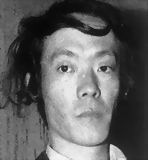
Issei Sagawa
Murderer Christian Ranucci
Murderer · France · 1974
Christian Ranucci (April 6, 1954 – July 28, 1976) was one of the last people ex…
1 victim
Christian Ranucci
Murderer · France · 1974
Christian Ranucci (April 6, 1954 – July 28, 1976) was one of the last people ex…
1 victim
 Hamida Djandoubi
Murderer · France · 1974
1968 — Hamida Djandoubi started living and working in Marseille, France, as a p…
1 victim
Hamida Djandoubi
Murderer · France · 1974
1968 — Hamida Djandoubi started living and working in Marseille, France, as a p…
1 victim
 Jean-Louis Turquin
Murderer · France · 1991
Jean-Louis Turquin was a Nice veterinary surgeon who was convicted of murdering…
1 victim
Jean-Louis Turquin
Murderer · France · 1991
Jean-Louis Turquin was a Nice veterinary surgeon who was convicted of murdering…
1 victim
 Jérôme Carrein
Murderer · France · 1975
Jérôme Carrein (1939 — June 23, 1977) was executed by guillotine in the yard of…
1 victim
Jérôme Carrein
Murderer · France · 1975
Jérôme Carrein (1939 — June 23, 1977) was executed by guillotine in the yard of…
1 victim
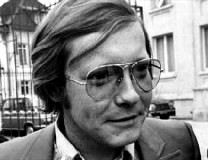 Patrick Henry
Murderer · France · 1976
Patrick Henry was born on March 31, 1953 in Troyes (France). He was described a…
1 victim
Patrick Henry
Murderer · France · 1976
Patrick Henry was born on March 31, 1953 in Troyes (France). He was described a…
1 victim
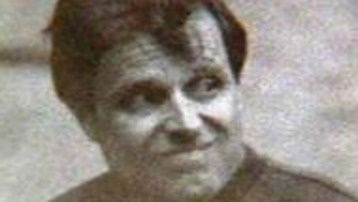 Albert Foulcher
Murderer · France · 1993
Albert Foulcher was described as a former insurance agent and a gun enthusiast.…
5 victims
Albert Foulcher
Murderer · France · 1993
Albert Foulcher was described as a former insurance agent and a gun enthusiast.…
5 victims
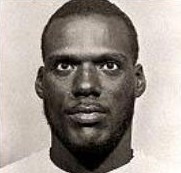 Harrison Graham
Serial killer · USA · 1986
Harrison Graham was a 28-year-old mentally retarded drug abuser who lived in a…
7 victims
Harrison Graham
Serial killer · USA · 1986
Harrison Graham was a 28-year-old mentally retarded drug abuser who lived in a…
7 victims
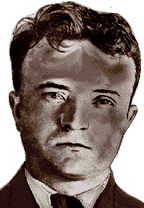 Paul Jaworski
Murderer · USA · 1926
Paul Jaworski was born in Poland as Paul Poluszynski in 1900. He later immigrat…
20 victims
Paul Jaworski
Murderer · USA · 1926
Paul Jaworski was born in Poland as Paul Poluszynski in 1900. He later immigrat…
20 victims
 Anthony Hardy
Serial killer · United Kingdom · 2002
Anthony John Hardy (born May 31, 1951) was an English serial killer who was con…
3 victims
Anthony Hardy
Serial killer · United Kingdom · 2002
Anthony John Hardy (born May 31, 1951) was an English serial killer who was con…
3 victims
 Scott William Cox
Serial killer? · Several States USA / Canada · 1980
Name: Scott William Cox Tia Hicks vanished in 1990 after Scott William Cox was…
20 victims
Scott William Cox
Serial killer? · Several States USA / Canada · 1980
Name: Scott William Cox Tia Hicks vanished in 1990 after Scott William Cox was…
20 victims
 Pedro Alberto Vargas
Mass murderer · USA · 2013
Pedro Alberto Vargas carried out a shooting rampage at an apartment complex in…
6 victims
Pedro Alberto Vargas
Mass murderer · USA · 2013
Pedro Alberto Vargas carried out a shooting rampage at an apartment complex in…
6 victims
 Darick Walker
Homicide · USA · 1996
Darick Demorris Walker was convicted of capital murder for the killings of two…
2 victims
Darick Walker
Homicide · USA · 1996
Darick Demorris Walker was convicted of capital murder for the killings of two…
2 victims
- Gender
- male
- Country
- France
- Location
- Paris, France
- Date of birth
- June 11, 1949
- Age at first offence
- 32
- Characteristics
- cannibalism, sex with corpse
- Victim profile
- Renée Hartevelt, 25
- Method of murder
- Shooting (rifle)
- Date(s) of murder
- June 11, 1981
- Years active
- 1981
- Date of arrest
- 2 days after
- Status
-
Found legally insane and unfit to stand trial; ordered to be held indefinitely in a mental institution; extradited to Japan; found sane but "evil"; checked himself out of the mental institution on August 12, 1986, and has been a free man ever since
Case information
Name: Issei Sagawa (佐川 一政, Sagawa Issei) Born: June 11, 1949 Age at offence: 32
Background
Issei Sagawa was born in Kobe, Hyōgo Prefecture, Japan, to wealthy parents. He attended college at the University of Paris.
The offence
In 1981, Sagawa murdered and cannibalized a Dutch woman named Renée Hartevelt.
On June 11, 1981, Sagawa invited Hartevelt to dinner at his 10 Rue Erlanger apartment under the pretense of literary conversation. After her arrival, Sagawa shot Hartevelt in the neck with a rifle while she sat with her back to him at a desk, and then began to carry out his plan of eating her.
Sagawa’s stated selection of Hartevelt was based on her health and beauty, characteristics he believed he lacked. He described himself as a "weak, ugly, and small man" and said he was just under 5 ft (1.52 m) tall. He also claimed he wanted to "absorb her energy".
Sagawa said he fainted after the shock of shooting her but awoke with the realization that he had to carry out his desire to eat her. He did so beginning with her hips and legs, after having sex with the corpse. In interviews, he noted his surprise at the "corn-colored" nature of human fat. For two days, Sagawa ate various parts of Hartevelt’s body. He described the meat as "soft" and "odorless", like tuna.
Sagawa then attempted to dump the mutilated body in a remote lake, but he was seen in the act and later arrested by French police.
In the narrative account of the murder, Sagawa described shooting Hartevelt with a rifle while she was seated on a chair, continuing to talk to her after she fell, and being surprised by how quiet it was. He described undressing the body, difficulty removing clothing from a corpse, and taking body parts including the tip of her left breast and a piece of her nose, which he consumed. He also described choosing her right buttock but finding it difficult to bite into and realizing he had a headache. He described the appearance and taste of her fat and muscle, including that "[It] melted in my mouth like raw tuna in a sushi restaurant."
He said that he used an electric carving knife to cut Hartevelt into parts, stored strips of flesh for later, nibbled on pieces raw, and made a fried meal of human flesh with mustard. He took photographs of the mutilated corpse and had sex with it, and wrote: "When I hug her," "she lets out a breath." He recorded that he listened to the cassette recorder of Hartevelt’s reading of the poem and wiped his mouth with her underwear as a napkin. He then described cutting off a breast and baking it, disliked the greasy consistency, and preferred her thighs.
He also described taking what was left of the corpse into his bed to sleep with it and returning to the body the next day. He described chewing her arm from underarm to elbow and wrote: "I had no idea," "that it would taste so good." He described hesitating over certain actions but deciding to continue, cutting out the anus and putting it into his mouth, and then returning to the body when the smell overpowered him.
He wrote about dismembering Hartevelt and described using a hatchet to chop her into pieces that would fit into the suitcases he had bought for this purpose. He described masturbation with Hartevelt’s hand and chewing her nose, hearing cartilage crunching. He wrote: "I want her tongue," and stated: "I can't open her lower jaw, but I can reach in between her teeth. Finally it comes out." He also described popping the tongue into his mouth and watching himself chewing it in the mirror.
He described removing the eyes as part of the process. In the narrative account, the final step involved exploring the internal organs and then using a hatchet to cut off Hartevelt’s head. He described hanging the head in front of him and saying: "I realized I am a cannibal."
In the narrative, after bagging the pieces and locking them into a suitcase, Sagawa called a cab, brought the suitcases to the Bois de Boulogne, and intended to shove them into the pond. He left the suitcases after noticing people watching him.
Police opened the suitcases, found the remains, and traced the bags back to the purchaser.
Investigation and arrest
When police arrived at Sagawa’s apartment two days after the murder with a search warrant, Sagawa let them in. Police opened the refrigerator and found pieces of a female body inside, including lips. Sagawa confessed to what he had done and said he had a history of mental illness.
Sagawa was later arrested by French police after attempting to dump the mutilated body in a remote lake; he had been seen in the act.
Trial
Sagawa did not go to trial. A French judge found him "obviously" legally insane and unfit to stand trial and ordered him to be held indefinitely in a mental institution after Sagawa had been held for two years without trial. The judge was Jean-Louis Bruguières.
Sentencing and mental health status
Sagawa was ordered to be held indefinitely in a mental institution.
Following a visit by the author Inuhiko Yomota, Sagawa’s account of the murder was published in Japan with the title In the Fog.
Upon arrival in Japan, examining psychologists at Matsuzawa hospital all found him to be sane but "evil". The Japanese authorities found it to be legally impossible to hold him, purportedly because they lacked certain important papers from the French court.
Sagawa checked himself out of the mental institution on August 12, 1986, and has been a free man ever since.
A quoted statement attributed to Sagawa stated: "The public has made me the godfather of cannibalism," and "and I am happy about that."
Aftermath and public life
After release, Sagawa became a minor celebrity in Japan and made a living through the public’s interest in his crime. He lived in Tokyo and was often invited as a guest speaker and commentator.
Sagawa wrote restaurant reviews for the Japanese magazine Spa.
In 1992, he appeared in Hisayasu Sato’s exploitation film Uwakizuma: Chijokuzeme (Unfaithful Wife: Shameful Torture) as a sadosexual voyeur.
Sagawa wrote a commentary book Shonen A in 1997 on the Kobe children serial killings of 1997, when a 14-year-old referred to in the media as "Boy A" (「Shōnen A」) killed and decapitated a child and attacked several others.
Sagawa’s story inspired:
- the 1981 Stranglers song "La Folie"
- the 1983 Rolling Stones song "Too Much Blood"
- the 2004 Human Factors Lab song "Dinner with Renee"
A 1986 short film by Olivier Smolders titled Adoration was based on Sagawa’s story.
In 1986, the TV channel Viasat Explorer released a 47-minute documentary film called "Cannibal Superstar".
In 2009, Sagawa was documented in a History Channel show titled "Strange Rituals" discussing cannibalism. The show revealed Sagawa as a freelance artist of nude paintings.
In the narrative account, police arrival and investigation were described, and Sagawa was said to have freely confessed. The narrative also stated that he was taken to Matsuzawa psychiatric hospital in Japan following a deal in 1984 and that he remained for only 15 months before being granted freedom in August 1985, again thanks to his father and against the advice of the superintendent; it also stated he was granted a passport to go to Germany.
The narrative added that after killing and consuming the remains, Sagawa was able to go freely about in society only five years after the crime, and it described him enjoying the attention on television talk shows, agreeing to appear in Japanese pornographic films, and writing four novels, including one that sold over 200,000 copies.
It also stated that he wrote a weekly column for a tabloid publication, edited an anthology of cannibal fantasies, and was featured on the cover of a Japanese gourmet magazine. Under an assumed name, it said he managed to get women to pose nude for him, and that on his website he offered excerpts from his rendition of his crime and discussed why cannibalism was not such a horrific act. It also stated that he showed examples of paintings, mostly of the fleshy buttocks of white females.
A quote attributed to Sagawa in that narrative stated: "I realized I am a cannibal."
Other details
Sagawa later told a British journalist that his compulsion for cannibalism probably came from a childhood dream he had that left a huge impression: "He was in a boiling pot with his brother, being prepared for a meal for someone else."
The narrative stated that Sagawa sought out a psychiatrist after his first breaking-and-entering incident in Tokyo and that his father engineered a cover-up and sent him out of the country to another school.
In the narrative about his appearance and obsession, it quoted Sagawa saying: "When I met this woman in the street," and it continued: "I wondered if I could eat her."
In the narrative, it also included: "It pays to be rich."
The narrative stated that Sagawa corresponded with several members of the Japanese literati while in the hospital and that he said: "I realized I was not so unusual," and that he said he had "learned how to go about such a crime without getting arrested."
The case summary also included a reference to a British journalist Peter McGill and to a writer Katherine Ramsland.
Spotted an error, or have more information about this case?