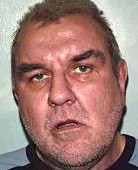
Anthony Hardy
Serial killer Colin Norris
Serial killer · United Kingdom · 2002
Colin Campbell Norris (born 1976) was a Scottish nurse described in the British…
7 victims
Colin Norris
Serial killer · United Kingdom · 2002
Colin Campbell Norris (born 1976) was a Scottish nurse described in the British…
7 victims
 Colin Ireland
Serial killer · United Kingdom · 1993
Name: Colin Ireland · Also known as / tabloid name: London's "Gay Slayer" · Cri…
5 victims
Colin Ireland
Serial killer · United Kingdom · 1993
Name: Colin Ireland · Also known as / tabloid name: London's "Gay Slayer" · Cri…
5 victims
 Stephen Akinmurele
Serial killer · United Kingdom · 1995
Stephen Akinmurele was accused in connection with the deaths of multiple pensio…
5 victims
Stephen Akinmurele
Serial killer · United Kingdom · 1995
Stephen Akinmurele was accused in connection with the deaths of multiple pensio…
5 victims
 Steven Wright
Serial killer · United Kingdom · 2006
Steven Gerald James Wright was a British serial murderer, also known as the Suf…
5 victims
Steven Wright
Serial killer · United Kingdom · 2006
Steven Gerald James Wright was a British serial murderer, also known as the Suf…
5 victims
 Peter Moore
Serial killer · United Kingdom · 1995
Peter Moore (born 1940) was a Welsh serial killer who murdered four men in 1995…
4 victims
Peter Moore
Serial killer · United Kingdom · 1995
Peter Moore (born 1940) was a Welsh serial killer who murdered four men in 1995…
4 victims
 Steven John Grieveson
Serial killer · United Kingdom · 1993
Steven John Grieveson (born 1970) was an English serial killer. Grieveson murde…
4 victims
Steven John Grieveson
Serial killer · United Kingdom · 1993
Steven John Grieveson (born 1970) was an English serial killer. Grieveson murde…
4 victims
 David Housler
Mass murderer? · USA · 1994
Court of Criminal Appeals of Tennessee: State of Tennessee v. David G. Housler…
4 victims
David Housler
Mass murderer? · USA · 1994
Court of Criminal Appeals of Tennessee: State of Tennessee v. David G. Housler…
4 victims
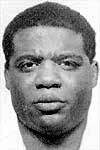 Jeffery Lee Griffin
Homicide · USA · 1978
Jeffery Lee Griffin was executed by lethal injection in Texas on November 19, 1…
3 victims
Jeffery Lee Griffin
Homicide · USA · 1978
Jeffery Lee Griffin was executed by lethal injection in Texas on November 19, 1…
3 victims
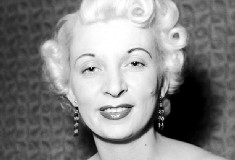 Ruth Ellis
Murderer · United Kingdom · 1955
Ruth Ellis (9 October 1926 – 13 July 1955), née Neilson, was the last woman to…
1 victim
Ruth Ellis
Murderer · United Kingdom · 1955
Ruth Ellis (9 October 1926 – 13 July 1955), née Neilson, was the last woman to…
1 victim
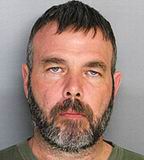 Kenneth Myers
Mass murderer · USA · 2011
Kenneth Lee Myers was 47. He killed four women and then took his own life betwe…
4 victims
Kenneth Myers
Mass murderer · USA · 2011
Kenneth Lee Myers was 47. He killed four women and then took his own life betwe…
4 victims
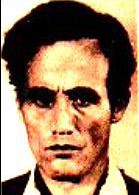 William MacDonald
Serial killer · Australia · 1961
William MacDonald was an Australian serial murderer who was dubbed the “Sydney…
5 victims
William MacDonald
Serial killer · Australia · 1961
William MacDonald was an Australian serial murderer who was dubbed the “Sydney…
5 victims
- Gender
- male
- Country
- United Kingdom
- Location
- London, England, United Kingdom
- Date of birth
- May 31, 1951
- Age at first offence
- 51
- Characteristics
- necrophilia, dismemberment, history of mental illness
- Victim profile
- Sally White, 38 (his flatmate) / Elizabeth Valad, 29, and Bridgette MacClennan, 34 (prostitutes)
- Method of murder
- Strangulation
- Date(s) of murder
- 2002
- Years active
- 2002
- Date of arrest
- January 2, 2003
- Status
-
Life imprisonment
Sentenced to life in prison on November 25, 2003
Case record: Anthony Hardy
Overview
Anthony John Hardy (born May 31, 1951) was an English serial killer who was convicted of murdering three women in London.
Timeline
- January 2002 — Police were called to a block of flats that Hardy lived in after a neighbour complained that someone had vandalised her front door and that she strongly suspected Hardy; officers found a locked door in Hardy’s flat and the body of a dead woman lying on a bed.
- December 30, 2002 — A homeless man foraging in bins found dismembered remains of two women in bin-liners; investigators later searched Hardy’s flat.
- January 1 — A CCTV camera caught Hardy trying to fill a prescription for his diabetic medication at a London hospital.
- January 2 — A local citizen contacted police after spotting Hardy at Great Ormond Street Hospital for children; officers converged, found Hardy in the area, and he was arrested and held at a local police station.
- January 6 — Brigitte MacClennan’s identity was revealed during a brief hearing at a Hendon court where Hardy was charged with the murders.
- May 2010 — A High Court judge decided Hardy should never be released from prison and placed him on the list of Whole life tariff prisoners.
- November 25, 2003 — Hardy was given three life sentences for the murders.
Background
Hardy was born on May 31, 1951, in Burton upon Trent, Staffordshire. He excelled in school and college, particularly in engineering. He married and fathered two sons and two daughters. His wife divorced him in 1986, accusing him of domestic violence.
In 1982, Hardy had been arrested for trying to drown his wife, but the charges were later dropped.
After the divorce, Hardy spent time in mental hospitals and was diagnosed with depression. He lived in various hostels in London. He had convictions for theft and for being drunk and disorderly. His behaviour history included psychiatric problems and violent behaviour.
Hardy was diagnosed with bipolar disorder.
The offence
Hardy was convicted of murdering three women in London.
Sally White (murdered at Hardy’s flat)
A neighbour complained that someone had vandalised her front door and that she strongly suspected Hardy. When police investigated Hardy’s flat, they found a locked door. Despite Hardy’s original claims to the contrary, police found that Hardy had a key. Investigating the room, police found the body of a dead woman lying on a bed. She was identified as Sally White, 38, Hardy’s flatmate.
A coroner later determined that White had died of a heart attack, even though she was found naked in a locked room with cuts and bruises to her head. Hardy spent a short time in jail for the vandalism offence then was released.
Hardy was later charged with the murder of Sally White, after his other killings came to light. At trial, he changed his plea to guilty to all three counts of murder.
Bridgette MacClennan and Elizabeth Valad (dismembered remains found)
On December 30, 2002, a homeless man hunting for food in bins found some dismembered remains of two women stuffed in bin-liners.
The victims were identified as:
- Bridgette MacClennan, 34
- Elizabeth Valad, 29
Parts of the dismembered remains of MacClennan and Valad were found in bin bags in the early hours of December 30, 2002. The body of Sally White was found in Hardy’s flat in January 2002.
For Valad, investigators found evidence including that DNA identification was possible because her hands and head were missing; investigators obtained positive identification through serial numbers found on her breast implants.
For MacClennan, her torso and other body parts were found in garbage bins, and her head and hands were not found; her identity was revealed through DNA.
Investigation
Police found evidence at Hardy’s flat indicating that the two women had been killed and dismembered there, including old bloodstains.
After the discovery of the body parts by the homeless man, DNA testing was conducted in the hopes of identifying the women. Investigators also located a torso of Valad in Hardy’s flat after post mortem tests were discussed.
Arrest
The investigation led to Hardy. He was arrested a week later. Hardy had gone on the run but had been spotted by an off-duty policemen when he went to a hospital to collect his prescription for psychiatric drugs.
Under arrest, Hardy said “No comment” to every question put to him by police.
A CCTV video surveillance camera caught Hardy on January 1 trying to fill a prescription for his diabetic medication at a London hospital. A member of the public had reported Hardy with a young woman named Kelly Anne Nicol, 24, shortly after the Christmas holidays; family members and police were concerned for her safety. She contacted her parents to let them know she was okay, despite contact with Hardy and repeated attempts by him to persuade her back to his apartment.
On January 2, a local citizen contacted police after spotting Hardy at Great Ormond Street Hospital for children in central London. Police converged, found Hardy in the area where he was last witnessed, arrested him, and held him at a local police station. Under detention he revealed the full extent of his crimes.
Trial
Hardy’s murder trial began at the Old Bailey Courthouse in November 2003.
Hardy changed his plea to guilty to all three counts of murder at his trial in November 2003. He pleaded guilty to murdering Elizabeth Valad, Bridgette MacClennan, and Sally White.
During the trial, Hardy was said to have lured all of the women to his apartment with the offer of money, then engaged in extreme sex with the women before strangling them. It was suggested that his primary motivation for committing the murders was so that he could photograph them. He was described as “pornography-obsessed necrophiliac” who achieved sexual gratification by posing the nude bodies of his victims after death and taking “explicit photos of their naked corpses.”
After Hardy had finished with his victims, he used a hacksaw to dismember their bodies in his bathtub. Evidence of victims’ blood was found in the bathroom. Oldham reported that when police interviewed neighbours after the discovery of the bodies, they claimed to have heard drilling sounds “at all hours of the day.”
Judge Mr Justice Keith told Hardy:
“Only you know for sure how your victims met their deaths but the unspeakable indignities to which you subjected the bodies of your last two victims in order to satisfy your depraved and perverted needs are in no doubt.”
At sentencing, the 52-year-old was given three life sentences.
Sentencing
On November 25, 2003, Hardy was given three life sentences for the murders.
His sentencing occurred after he pleaded guilty to murdering Sally White, Elizabeth Valad, and Bridgette MacClennan.
Appeals
In May 2010, a High Court judge decided that Hardy should never be released from prison, placing him on the list of Whole life tariff prisoners.
Mr Justice Keith said:
“This is one of those exceptionally rare cases in which life should mean life.”
Outcome
Hardy remained sentenced to life in prison and was placed on the list of Whole life tariff prisoners.
Aftermath
An independent enquiry was announced into Hardy’s care because of his history of psychiatric problems and violent behaviour.
Police were reported to believe Hardy was likely to be connected to unsolved cases involving two prostitutes found dismembered and dumped in the Thames, and to up to five or six other area murders with marked similarities. There was not enough evidence available directly implicating him in further murders for additional action.
Other details
Prior legal matters
In 1998, Hardy was arrested after a prostitute accused him of raping her, but the charges were later dropped due to lack of evidence.
Hardy had been investigated for three rapes, but there was insufficient evidence to bring a case.
Hardy had been arrested for trying to drown his wife in 1982, but the charges were later dropped.
After his wife divorced him in 1986 and accused him of domestic violence, Hardy had spent time in mental hospitals.
Evidence and related remarks
A prosecuting attorney, Richard Horwell, said:
“We do not profess to have every piece of this disturbing jigsaw, but the defendant had an obsession with pornography and liked to dominate women” and later: “A motive for the murders we suggest is that he decided to kill these women in order to photograph them in various positions which he had arranged when were dead.”
Malcolm Swift QC, defending, said:
“accepts he used excessive force in the course of otherwise consensual but extreme sexual activity but maintains he did not have an intention to kill.”
Detective Chief Inspector Ken Bell said outside court:
“Hardy is manipulative and evil. He is highly dangerous to women.” and also: “Without doubt Sally White died of a heart attack. What the investigation could never have known at the time was the background of Hardy in relation to his obsession with prostitutes and his sexual activities. ” and: “Evidence from the murders committed a year on led me to examine the case of Sally White and to go back to the Home Office pathologist and ask him to reassess his findings.”
Mental health evaluation and release
In January 2002, Hardy was detained in the mental ward at St. Luke’s Hospital in Muswell to undergo a psychological evaluation after he had been detained for pouring battery acid into a neighbor’s mailbox.
Dr. Alan Stuart-Reid warned:
“His behavior is characterized by impulsiveness, lack of forethought about the consequences of his actions, seriously irresponsible behavior, inability to learn from experience and lack of concern for others' feelings.” and also: “there was a strong chance that if he were reintegrated back into society he would likely re-offend and ‘cause others serious physical or psychological harm.’”
Hardy was released in November 2002 after repeated warnings from health care professionals.
A spokeswoman for the Camden and Islington Mental Health Trust confirmed Hardy was under supervision throughout Christmas and kept an appointment with his supervisory group outside the hospital on December 30, the day the vagrant first discovered the body parts behind a pub in Camden Town.
Another account said health supervisors refused to go to Hardy’s council flat and agreed to meet him only in cafes due to fear.
Popular culture references
After Hardy was imprisoned, controversial British rap artist Plan B released a song about Hardy, dubbing him the “Camden Ripper.”
The song described Hardy’s psychiatric problems and said he was able to carry out the murders because of “neighbours who were always out raving”.
Hardy was mentioned, and his flat pointed out, in the music video “Guided tour of Camden” by Charlie Sloth. The song talked about a fictional fifth victim, Suzanne Smith.
Hardy was the subject of a Channel 4 documentary, “The Hunt for the Camden Ripper”, broadcast in 2004. It was narrated by Juliet Stevenson and directed by Olly Lambert.
Unconnected material in the record
An entry described a separate case on the River Thames near Church Road in Battersea, including the recovery of a woman’s upper body floating in the water and references to police hoping a tattoo and a twisted lateral incisor tooth would help identify the victim. That entry discussed the victim’s identification as Zoe Louise Parker, 24, and later mentioned a separate set of findings in the Regent’s Canal and the identification of Paula Fields, 31. It also included speculation about an individual in custody described as Anthony Hardy and the nickname “the Camden Ripper,” and it described additional details about Hardy’s background, mental health, and arrests.
Spotted an error, or have more information about this case?