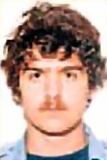
Harry Sassounian
Murderer Ervil LeBaron
Murderer · USA · 1972
Ervil Morrell LeBaron (1925 to August 16, 1981) was the leader of a polygamous…
35 victims
Ervil LeBaron
Murderer · USA · 1972
Ervil Morrell LeBaron (1925 to August 16, 1981) was the leader of a polygamous…
35 victims
 Brian Kevin Rosenfeld
Murderer · USA · 1985
Brian Kevin Rosenfeld Brian Kevin Rosenfeld was sentenced to three concurrent l…
23 victims
Brian Kevin Rosenfeld
Murderer · USA · 1985
Brian Kevin Rosenfeld Brian Kevin Rosenfeld was sentenced to three concurrent l…
23 victims
 Marvin Gray
Murderer · USA · 1975
Marvin Gray was convicted killer who claimed responsibility for 23 slayings and…
23 victims
Marvin Gray
Murderer · USA · 1975
Marvin Gray was convicted killer who claimed responsibility for 23 slayings and…
23 victims
 Yahweh ben Yahweh
Murderer · USA · 1980
Yahweh ben Yahweh was born and legally named Hulon Mitchell Jr. (October 27, 19…
23 victims
Yahweh ben Yahweh
Murderer · USA · 1980
Yahweh ben Yahweh was born and legally named Hulon Mitchell Jr. (October 27, 19…
23 victims
 Russell Ellwood
Murderer · USA · 1991
Russell Ellwood was a former taxi driver. Authorities suspected him of killing…
20 victims
Russell Ellwood
Murderer · USA · 1991
Russell Ellwood was a former taxi driver. Authorities suspected him of killing…
20 victims
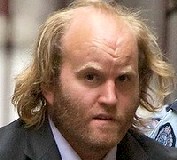 Arthur Freeman
Murderer · Australia · 2009
Arthur Phillip Freeman was 37 at sentencing. He had been involved in an extende…
1 victim
Arthur Freeman
Murderer · Australia · 2009
Arthur Phillip Freeman was 37 at sentencing. He had been involved in an extende…
1 victim
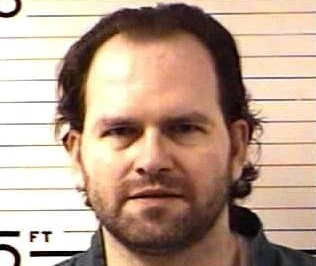 James Genrich
Murderer · USA · 1991
James Genrich was a Colorado man who was convicted of killing two people in 199…
2 victims
James Genrich
Murderer · USA · 1991
James Genrich was a Colorado man who was convicted of killing two people in 199…
2 victims
 Conan Wayne Hale
Murderer · USA · 1995
Conan Wayne Hale was sentenced to death on May 29, 1998. On automatic and direc…
3 victims
Conan Wayne Hale
Murderer · USA · 1995
Conan Wayne Hale was sentenced to death on May 29, 1998. On automatic and direc…
3 victims
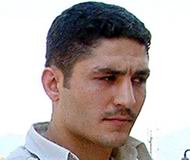 Ali Kaya
Serial killer · Turkey · 1997
Ali Kaya was a Turkish serial killer. He was nicknamed "The Babyface Killer" (T…
10 victims
Ali Kaya
Serial killer · Turkey · 1997
Ali Kaya was a Turkish serial killer. He was nicknamed "The Babyface Killer" (T…
10 victims
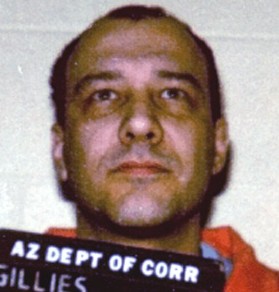 Jess James Gillies
Murderer · USA · 1981
Defendant: Jess James Gillies (38) · Co-defendant/friend: Mike Logan · Victim:…
1 victim
Jess James Gillies
Murderer · USA · 1981
Defendant: Jess James Gillies (38) · Co-defendant/friend: Mike Logan · Victim:…
1 victim
- Gender
- male
- Country
- USA
- Location
- Los Angeles, California, USA
- Date of birth
- 1961
- Age at first offence
- 21
- Characteristics
- abuse, domestic violence, history of mental illness, escape
- Victim profile
- Kemal Arikan, 54 (Consul General of the Republic of Turkey at Los Angeles)
- Method of murder
- Shooting
- Date(s) of murder
- January 28, 1982
- Years active
- 1982
- Date of arrest
- Same day
- Status
-
Life imprisonment
Sentenced to life in prison without parole on June 15, 1984; prosecutors agreed in 2002 to drop the “national origin” special circumstance making Sassounian eligible for parole in exchange for his admitting his guilt and formally apologizing; the California Prison Parole Board rejected his release demands in 2006 and 2010
Case information
Harry M. Sassounian was convicted of murder in the first degree (Pen. Code, § 187) for the killing of Turkish Consul General Kemal Arikan in Los Angeles.
Timeline
- January 28, 1982 (9:40 a.m.) — Kemal Arikan left his home in the Westwood area of Los Angeles to go to work.
- January 28, 1982 (about 9:45 a.m.) — Two gunmen approached Arikan’s vehicle at the intersection of Comstock and Wilshire; each was armed with a large caliber handgun and fired from close range.
- January 28, 1982 (10:05 a.m.) — Arikan was pronounced dead.
- January 28, 1982 (about 2 p.m.) — Genie Goetz reported she first heard anything about a “shooting” that had taken place at Wilshire and Comstock.
- January 28, 1982 (about 12 noon) — Police arrived at Sassounian’s residence at 1375 Villa Street in Pasadena and placed his home under surveillance.
- January 28, 1982 (a little past 1 p.m.) — Deputy sheriffs saw a grey Chevrolet with license number 534 TER and later saw a white vehicle parked in front of 1375 Villa with “KoKo” Saliba honking the horn.
- January 28, 1982 (a little after 3 p.m.) — Police observed Sassounian leave his home driving the grey Chevrolet; the car was stopped and Sassounian was placed under arrest.
- February 1, 1982 — Genie Goetz was taken to a lineup and identified Sassounian; James Jeffs was taken to a lineup; other photo identifications were made.
- January 4, 1984 — The jury returned a guilty verdict for violation of Penal Code section 187 (murder in the first degree) and found as true the special circumstance under Penal Code section 190.2, subdivision (a)(16) relating to the victim’s “nationality” or “country of origin.”
- One week later (date given as January 11, 1984) — During the penalty phase trial, the court received a note from juror Dylane Rankins.
- June 15, 1984 — The court imposed sentence of life without possibility of parole.
- February or early March 1983 (before March 18, 1983 transfer to Chino; time not precisely pinpointed) — Jeffrey Busch testified he conversed with Sassounian in the Los Angeles County jail.
- June 1, 1983 — A Sergeant Engquist of the Los Angeles Police Department had an initial meeting with Busch at Chino.
- June 23, 1983 — Busch spoke with Engquist and at that time was unable to pick Sassounian out of a photo lineup.
- July 1, 1983 — Busch sent a letter to Engquist making requests for special treatment and privileges.
- May 30, 1986 — The Court of Appeals of California rendered its opinion in People v. Sassounian.
- 2002 — Prosecutors agreed to drop the “national origin” special circumstance, making Sassounian eligible for parole, in exchange for admitting his guilt and formally apologizing.
- 2006 — The California Prison Parole Board rejected Sassounian’s demands of release.
- 2010 — The California Prison Parole Board rejected Sassounian’s demands of release.
Background
Kemal Arikan was Turkish Consul General of the Republic of Turkey at Los Angeles. On the last morning of his life, Arikan left his home in the Westwood area of Los Angeles to go to work, unaware that two armed men waited to kill him for no other reason than he was who he was (i.e., a Turk, and an official representative of the government of Turkey).
Harry M. Sassounian was an Armenian immigrant who had come with his family from Lebanon some six and one-half years earlier. His family came to the United States from Lebanon six and one-half years earlier. Ara Sassounian testified that his family had come from Lebanon and that Sassounian had never permitted anyone else to drive his car.
Sassounian was identified by witnesses as one of the two gunmen. He was a member of the Armenian Youth Federation and Justice Commandos Against Armenian Genocide.
President Ronald Reagan condemned the murder as “an apparent act of terrorism”.
The offence
On January 28, 1982, at the intersection of Wilshire Boulevard and Comstock Street in the Westwood area of Los Angeles, Arikan was gunned down in his car while waiting at a red light.
About 9:45 a.m. on January 28, 1982, two men approached Arikan’s vehicle at close range. Each was armed with a large caliber handgun. One approached from the driver’s side and the other from the passenger’s side and fired a number of rounds at Arikan from close range. Arikan died within a very few minutes from multiple gunshot wounds to the head and chest. There was also a gunshot wound in Arikan’s left knee.
After the shooting, the two gunmen ran south on Comstock, deposited their weapons under a hedge, and escaped in a grey car.
The jury found that Sassounian singled out the victim because of the victim’s nationality. The prosecutors indicated that Sassounian “was motivated to kill Arikan by vengeance for the Ottoman Empire’s genocide of an estimated million Armenians between 1915 and 1923.”
Investigation
Eyewitness testimony
Genie Goetz testified that at approximately 9:20 a.m. on Thursday, January 28, 1982, she was driving north on Comstock, stopped for the red light at Wilshire and Comstock, and noticed a man she later identified as Sassounian standing on the southeast corner of Wilshire and Comstock and another man standing on the opposite corner on the southwest corner. She described their behavior as strange, with both standing very close to the street while making no attempt to cross despite a green light. She continued to observe the two men until the light changed, proceeded across Wilshire to attend class at UCLA, and later heard about the shooting. She telephoned the Los Angeles Police Department in the evening at approximately 9 o’clock. On February 1, 1982, she was taken to a lineup, picked out Sassounian from a group of seven, and also identified him at the preliminary hearing and trial. She identified a blue vest (People’s exhibit 37) as clothing Sassounian wore at the time.
James Jeffs testified he left his apartment on Ashton Avenue about 9:47 a.m., drove east on Ashton and then turned left and went north on Comstock towards Wilshire, stopped at a stop sign at Ashton and Comstock, heard six shots or gunshots, and saw two men running south on Comstock. One man wearing a blue vest or waist length coat carried a handgun in his left hand; Jeffs identified that man as Sassounian. He was taken to a lineup of six on February 1, 1982 and indicated that he “believed” Sassounian was the man he had seen (No. 4 in the lineup), later made a second identification from a photo lineup, and identified Sassounian at the preliminary hearing and trial. Jeffs described his certainty as a “high probability” and indicated it could be quantified as a 70 to 80 percent probability.
Dawn Stensrud testified she stopped at a red light at Wilshire and Comstock, heard a sound that “sounded like a pack of firecrackers going off,” saw a white Ford or Lincoln on Comstock heading north on the south side of Wilshire, observed a man on each side of the car, and then saw the man on the passenger side start to run behind the car. The men met at the rear of the car and went south on Comstock. She later saw the white car slowly cross Wilshire, collide with a small red car, and crash into a tree. Photographs introduced at trial depicted the bullet-riddled body of the victim slumped in the front seat of the white car against the tree. She noticed the driver-side man putting something in his waistband as the men started to run. She was unable to identify what it was but later identified Sassounian as the man she saw on the passenger side of the car.
Wells Wohlwend testified as an attorney and that he was driving south on Comstock north of Wilshire around just before 10 a.m., heard “cracking noises,” initially thought they were construction noises, then saw two young men running very quickly, followed them, observed them bend over a hedge area and kick at something, and watched them leave the hedge and go to a parked automobile. Wohlwend noted there was no front license plate on the vehicle and wrote down the number on the back license plate. He stated the license number was California license No. 534 TER, assigned to a grey Chevrolet registered to Sassounian, Harry M. Sassounian. After returning to the intersection, he observed activity and told police what he had observed.
Valli Kaufhold testified she was walking south on Comstock on the north side of Wilshire on the morning of January 28, 1982 and was taking a baby she took care of out for a walk. She noticed two men standing on the south side of Wilshire, one on the east side of Comstock and the other on the west side next to the Beverly Comstock Hotel. She heard a noise “sounded like firecrackers just going off all the time,” saw one man holding a gun and shooting, saw flash of light or fire coming out of the gun, and described the shooter as holding his weapon “in a two hand stance” and “slightly crouched.” She continued watching as the two men ran south on Comstock toward her, saw both men with guns place them in the waistband, and then saw both run west and get into a grey car and leave. She could not identify Sassounian at a subsequent lineup, but at a photo lineup she picked out the picture of Krikor Saliba as the man she had seen on the west side. She reported the incident to police.
Harry Warrington testified he was working in front of two apartment buildings located on the northwest corner of Wilshire and Comstock about 300 feet from the shooting. He heard sounds resembling Chinese firecrackers, realized shots were being fired into the car by the two men, observed the man on the passenger side leaving and the man on the driver’s side turning back to “do the final shots.” He was unable to identify Sassounian as one of the gunmen but later identified Krikor Saliba via a photo lineup as the gunman he had seen on the driver’s side. He remained at the scene until police arrived and told them what he observed.
Lois Lian testified that between 9:40 and 9:45 a.m. she stopped her car for the red light at Comstock and Wilshire, proceeded north on Comstock intending to turn right and go east on Wilshire, and on her return noticed a young man standing a little south of the intersection on the east side of Comstock. She anticipated he would cross but when he did not she made her right turn and proceeded east on Wilshire. She identified Sassounian in court as someone who “very much resembles the man I remember seeing on the corner,” but conceded her identification was “not absolutely positive” and that a positive identification would have required speaking with the person or knowing him. She did not learn until several hours later about the shooting, called police on January 29, 1982 (Friday), and reported what she had observed.
Discovery of weapons and forensic work
Police retrieved weapons from the hedge areas on Ashton Avenue based on information from Wohlwend. Police retrieved a .45 caliber pistol and a .9 mm “Combat Commander” pistol. Latent fingerprint experts were unable to develop fingerprints from either handgun.
An autopsy was performed by Dr. Donald Kornblum. He concluded Arikan died as a result of multiple gunshots wounds. There were three entry wounds in the face and head and two in the chest, one piercing the heart. Kornblum determined Arikan died within minutes after he was shot, pronounced dead at 10:05 a.m. on January 28, 1982.
Gunshot residue and hydroxy guinoline tests were performed on Sassounian’s hands and on items of clothing. The hydroxy guinoline test was negative. Gunshot residue tests detected gunshot residue on Sassounian’s left hand but not his right hand. An expert testified that gunshot residue was consistent with a subject having recently fired a gun. Particles in the waistband of brown Levi corduroy pants were found consistent with gunshot residue.
Latent fingerprints on the .45 and .9 mm handguns were not developed, but fingerprints from the grey Chevrolet bearing license number 534 TER produced fingerprints belonging to Sassounian and “KoKo” Saliba.
Arleigh McCree testified as a firearms expert and provided ballistics and trajectory analysis. McCree identified the .45 handgun found in the hedge on Ashton Avenue and described its condition. He test fired the handgun to compare test shots with casings and bullets recovered from the scene and stated all of the .45 casings were fired from that .45 weapon found on Ashton Avenue. He identified the .9 mm weapon and its accompanying magazine and stated all but one of the .9 mm casings were fired from the .9 mm weapon found at the scene; McCree had doubt as to the last casing because of its mutilation. McCree testified that one .9 mm bullet was fired from the .9 mm Colt Commander and one .45 caliber bullet was fired from the .45 Colt automatic pistol. He stated the sequence of shots began as the vehicle approached the intersection of Wilshire and Comstock and continued as Arikan’s vehicle passed and/or moved as the gunmen fired. He expressed the opinion that the gunman on the east side of Comstock acted as a “stall man” tactic used by assassination teams to get a vehicle to slow or stop.
Police arrest and physical evidence at Sassounian’s home
After obtaining the license number from Wohlwend, police determined the grey Chevrolet was registered to Sassounian and that his residence was at 1375 Villa Street, Pasadena. Police arrived around 12 noon on January 28, and placed his home under surveillance. A little past 1 p.m., deputies observed the grey Chevrolet and also saw a white vehicle parked in front of 1375 Villa with “KoKo” Saliba honking the horn. A few minutes later they saw the same car at the rear of the residence near the garage area again honking. A little after 3 p.m., police observed Sassounian leave his home driving the grey Chevrolet; the car was stopped and Sassounian was arrested.
On the evening of January 28, 1982, police searched Sassounian’s home and recovered photographs depicting Sassounian dressed in military fatigues holding and aiming a semiautomatic weapon and two handguns resembling the two weapons found at the scene. Police recovered various clothing items later tested. Police spoke with Sassounian’s brother Ara Sassounian and obtained a blue ski vest or parka identified by Genie Goetz as the one Sassounian wore on the morning of January 28, 1982. Ara Sassounian testified he and his brother often exchanged clothing and he found the blue ski vest lying on a bed when he came home from school on the afternoon of January 28, 1982. Ara Sassounian also stated he had bad feelings towards Turkish people for what they had done in the past and stated Turks were animals; he testified Sassounian felt the same way. (A subsequent account also had Ara Sassounian state he found the vest hanging in a closet rather than lying on a bed.)
Arrest
Sassounian was arrested on January 28, 1982 after police stopped the grey Chevrolet he was driving when he left his home near 1375 Villa Street, Pasadena.
Trial
Charges and special circumstance findings
Sassounian was convicted of murder in the first degree under Penal Code section 187. The jury found as true the special circumstance charged under Penal Code section 190.2, subdivision (a)(16) that the killing was because of the victim’s nationality or country of origin.
The jury was unable to reach a verdict on the alleged special circumstance of lying-in-wait (Pen. Code, § 190.2, subd. (a)(16)) and on the charge that Sassounian used a gun in the commission of the crime (Pen. Code, § 12022.5).
Jailhouse confession evidence
Jeffrey Busch testified he met Sassounian in the Los Angeles County jail sometime in February or early March 1983, before March 18, 1983 when he was transferred to Chino. Busch was a “khaki trustee” and had relative freedom of movement in the jail during the hours from 5 a.m. to 9 p.m. Busch testified that he approached Sassounian, who was alone in an open cell, and asked if he wanted to buy cigarettes. Busch stated Sassounian identified himself as “Sassounian” and asked whether Busch knew anything that would help him with his case. Busch stated he needed more information to answer, and Sassounian then told him he was charged with murder involving the assassination of the Turkish Consul in Los Angeles, described it as a revenge killing planned and carried out as part of their involvement with the “Justice Commandos,” and described it as revenge against the Turkish people for what they had done years before to the Armenians. Busch testified Sassounian described the weapons used, the number of persons involved, confirmed they spent time in surveillance of their victim to determine the best time and place to carry out the assassination.
Busch testified that the meeting and conversation were corroborated by trustee Danny Gruytch. Gruytch testified to the same facts as Busch except he did not hear defendant’s entire statement after he stepped away.
Busch testified he did not speak to anyone in authority about his conversation until late May 1983 when he mentioned it to a correction officer at Chino who contacted the Los Angeles Police Department. Busch testified that Sergeant Engquist had an initial meeting with him on June 1, 1983. Busch testified that after that meeting he spoke with another Chino inmate known as “W.W.” and asked what “W.W.” knew about the “Justice Commandos” and what other acts they claimed to have committed. Busch testified that he decided to put down in writing what he recalled and he included information given to him by “W.W.” about other assaults on Turkish diplomats or embassies in Toronto, New York and London. Busch testified the writing was introduced as People’s exhibit 50. Busch testified he next spoke with Engquist on June 23, 1983, was unable to pick Sassounian out of a photo lineup at that time, but identified him during the trial. Busch conceded he sent a letter on July 1, 1983 to Engquist making requests for special treatment and privileges, but stated the requests were not honored and he did not receive them. Busch admitted he had acted as an informant in another Orange County case about one year before.
Defense
Sassounian did not testify. The defense offered evidence supporting three theories: (1) mistaken identification, calling four witnesses present at the intersection of Wilshire and Comstock at or about the time of the murder; none identified him as a gunman, and Judith Jones positively testified that the gunman standing on the southeast corner was not Sassounian; (2) alibi, calling two witnesses placing Sassounian in Pasadena at a food market between 10:20 a.m. and 10:40 a.m. on January 28, 1982 and a third witness testified about breakfast with Sassounian in Pasadena from approximately 9 a.m. to 10 a.m. that morning; (3) rebuttal to Busch, calling four present or former incarcerated felons who testified Busch fabricated his testimony to secure a better deal for himself and that Busch was a notorious liar and a repeat informer known as “King Snitch.”
The jury rejected this evidence by its verdict.
Sentencing
On January 4, 1984, the jury returned its verdict of guilty and found the national origin special circumstance true. During the penalty phase trial, the court received a note from juror Dylane Rankins dated “1-11-84.” The note stated:
“1-11-84. Your Honor, is it too late to change my vote on one of the special circumstances? On Wednesday, 4th, I was ill. I was unable to think clearly because of my illness and the pressure from the other jurors. Now my sickness is over, except for the coughing. I can think clearer. I feel I have made an error. Also based on some evidence that was brought out in our deliberations that wasn't evidence brought out in court.” (Italics supplied.)
As a result, the court conducted separate in-chambers interrogation of each juror. The court denied the defendant’s motion for a mistrial and motion to set aside the verdict on grounds of jury misconduct. The court found no jury misconduct and concluded that after recordation of a verdict a juror may not change his or her vote on a verdict.
After hearing evidence in the penalty phase, the jury returned a verdict of life without possibility of parole, and the court imposed that sentence on June 15, 1984.
Appeals
Court of Appeals of California decision
Sassounian appealed. The judgment of conviction, including life without possibility of parole, was affirmed. Lillie, P. J., concurred.
Johnson, J., concurred in most respects but dissented from the majority’s affirmance of the special circumstance finding based on jury misconduct, arguing the special circumstance finding should be reversed and remanded for a new trial of that issue. Johnson would affirm the conviction but reverse and remand for a new trial of the special circumstance finding.
Outcome
The Court of Appeals of California affirmed the judgment of conviction, including the sentence of life imprisonment without the possibility of parole.
The jury had found the special circumstance of murder motivated by the victim’s national origin true, leading to life without possibility of parole at sentencing.
Aftermath
Parole eligibility and board decisions
In 2002, prosecutors agreed to drop the “national origin” special circumstance, making Sassounian eligible for parole in exchange for him admitting his guilt and formally apologizing.
Sassounian read aloud from a letter detailing the plea bargain:
“I participated in the murder of Kemal Arikan,” Sassounian read aloud from a letter detailing the plea bargain. “I renounce the use of terrorist tactics to achieve political goals. I regret the suffering of the Arikan family."
The California Prison Parole Board rejected Sassounian’s demands of release in 2006 and 2010.
AYF and Armenian Revolutionary Federation support Sassounian as a “martyr” who should be released; his justice costs were paid by ARF, after specifical collects.
Other details
Sassounian’s trial included discussions of anticipated evidence, cross-examination of defense witnesses Charles Laughlin and B. L. Bradford, an alleged destruction or suppression of a jail record regarding cell status on February 14, 1983, and final argument remarks including an analogy to assassinations and references to a defense exhibit as a “clever trick.”
The appellate opinion discussed claimed instructional errors, including an aiding and abetting instruction issue, lying-in-wait instruction issues, and refusal of an instruction on circumstantial evidence (CALJIC No. 2.01).
The appellate opinion discussed issues regarding the special circumstance under Penal Code section 190.2, subdivision (a)(16), including challenges to sufficiency of the evidence, a corpus delicti instruction argument, vagueness of the special circumstance terms “nationality” and “country of origin,” and whether the trial court properly exercised discretion in relation to a motion to strike the special circumstance.
The appellate opinion also addressed the claim of systematic exclusion of jurors who would not impose the death penalty, rejecting the claim under existing California authority, including People v. Fields.
Spotted an error, or have more information about this case?