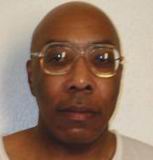
Andrew Sasser
Murderer Brian Kevin Rosenfeld
Murderer · USA · 1985
Brian Kevin Rosenfeld Brian Kevin Rosenfeld was sentenced to three concurrent l…
23 victims
Brian Kevin Rosenfeld
Murderer · USA · 1985
Brian Kevin Rosenfeld Brian Kevin Rosenfeld was sentenced to three concurrent l…
23 victims
 Russell Ellwood
Murderer · USA · 1991
Russell Ellwood was a former taxi driver. Authorities suspected him of killing…
20 victims
Russell Ellwood
Murderer · USA · 1991
Russell Ellwood was a former taxi driver. Authorities suspected him of killing…
20 victims
 Robert Martines Perez
Murderer · USA · 1994
Name: Robert Martines Perez · Other name used in proceedings: Robert Martinez P…
15 victims
Robert Martines Perez
Murderer · USA · 1994
Name: Robert Martines Perez · Other name used in proceedings: Robert Martinez P…
15 victims
 Billy Frank Vickers
Murderer · USA · 1993
Billy Frank Vickers Vickers was executed by lethal injection in Texas on Januar…
14 victims
Billy Frank Vickers
Murderer · USA · 1993
Billy Frank Vickers Vickers was executed by lethal injection in Texas on Januar…
14 victims
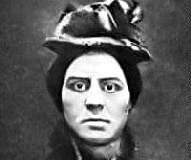 Kate Webster
Murderer · United Kingdom · 1879
Kate Webster was executed by hanging at Wandsworth Prison on July 29, 1879. · 2…
1 victim
Kate Webster
Murderer · United Kingdom · 1879
Kate Webster was executed by hanging at Wandsworth Prison on July 29, 1879. · 2…
1 victim
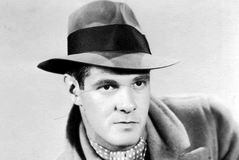 Paul Michael Kelly
Murderer · USA · 1927
Paul Michael Kelly (August 9, 1899 – November 6, 1956) was an American child ac…
1 victim
Paul Michael Kelly
Murderer · USA · 1927
Paul Michael Kelly (August 9, 1899 – November 6, 1956) was an American child ac…
1 victim
 Saeed Hanaei
Serial killer · Iran · 2000
Saeed Hanaei Saeed Hanaei was found guilty and was hanged at dawn in Mashhad Pr…
19 victims
Saeed Hanaei
Serial killer · Iran · 2000
Saeed Hanaei Saeed Hanaei was found guilty and was hanged at dawn in Mashhad Pr…
19 victims
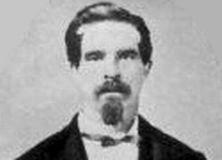 John Milliam
Murderer · USA · 1867
John Millian was convicted of murdering Julia Bulette and was hanged in Storey…
1 victim
John Milliam
Murderer · USA · 1867
John Millian was convicted of murdering Julia Bulette and was hanged in Storey…
1 victim
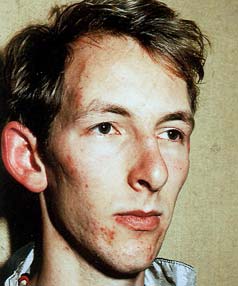 David Bain
Mass murderer ? · New Zealand · 1994
David Cullen Bain (born 27 March 1972) was a New Zealander who featured in one…
5 victims
David Bain
Mass murderer ? · New Zealand · 1994
David Cullen Bain (born 27 March 1972) was a New Zealander who featured in one…
5 victims
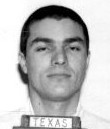 Victor Saldano
Murderer · USA · 1995
Victor Saldano, appellant. · In 1996, Victor Saldano was convicted of capital m…
1 victim
Victor Saldano
Murderer · USA · 1995
Victor Saldano, appellant. · In 1996, Victor Saldano was convicted of capital m…
1 victim
- Gender
- male
- Country
- USA
- Location
- Miller County, Arkansas, USA
- Date of birth
- October 21, 1964
- Age at first offence
- 29
- Characteristics
- attempted rape
- Victim profile
- Jo Ann Kennedy (convenience store clerk)
- Method of murder
- St abbing with knife
- Date(s) of murder
- July 12, 1993
- Years active
- 1993
- Date of arrest
- —
- Status
-
Sentenced to death
Sentenced to death on March 3, 1994
Case information
Andrew Sasser was convicted of capital felony murder and sentenced to die by lethal injection.
Timeline
- April 22, 1988 — Ms. Jackie Carter testified that Sasser attacked and raped her on this date at the E-Z Mart Store in Lewisville.
- July 11, 1993 — Sasser stopped at the E-Z Mart in Garland City between 3:00 p.m. and approximately 12:00 a.m. on July 12, 1993 to buy chips and to use the telephone.
- July 12, 1993 — The State charged Sasser with capital felony murder for causing the death of Ms. Jo Ann Kennedy “on or about July 12, 1993,” in the course of or in immediate flight from his commission or attempt to commit the victim’s rape or kidnapping.
- July 12, 1993 — The police dispatcher received Jeanice Pree’s 911 telephone call at approximately 12:46 a.m.
- July 12, 1993 — Sasser was interrogated at the Lafayette County Sheriff’s Office in Lewisville for approximately two hours beginning around 7:45 p.m.; his tape recorded statement and a transcript were introduced at trial.
- March 3, 1994 — Sasser was sentenced to death.
- July 8, 1999 — The Supreme Court of Arkansas opinion was delivered in Andrew Sasser v. State.
- Jan. 9, 2007 — Petition for Writ of Habeas Corpus Denied in its entirety by State v. Norris (2007 WL 63765).
- April 18, 2007 — Motion to Alter or Amend Judgment Denied by District Court in Sasser v. Norris (2007 WL 1159634).
- Aug. 15, 2003 — The Eighth Circuit granted appellant’s motion to remand the petition to allow litigation of Mr. Sasser’s Atkins claim (unpublished orders dated Aug. 15, 2003).
- Mar. 9, 2004 — The Eighth Circuit granted appellant’s motion to remand the petition (unpublished orders dated Mar. 9, 2004).
- 1995 — Sentence and conviction affirmed on direct appeal by Sasser v. State, 902 S.W.2d 773 (Ark. 1995).
Background
The State charged Sasser with capital felony murder for causing the death of Ms. Jo Ann Kennedy, “on or about July 12, 1993,” in the course of or in immediate flight from his commission or attempt to commit the victim’s rape or kidnapping under circumstances manifesting extreme indifference to the value of human life.
At the time of her death, the victim was working alone as the store clerk at the E-Z Mart in Garland.
Following voir dire and immediately preceding the trial’s commencement, the State announced, in camera, that it intended to offer evidence of prior crimes committed by Sasser in 1988 at an E-Z Mart in Lewisville against its store clerk, Ms. Jackie Carter, for which he was convicted of second-degree battery, kidnapping and rape. The State relied upon Rule 404(b) and the decision reported as Thrash v. State, 291 Ark. 575, 726 S.W.2d 283 (1987), and offered the evidence to prove appellant’s modus operandi and intent. The State enumerated several points of similarity between the circumstances of the present crime and the 1988 crimes.
Appellant objected, arguing “one previous crime does not a pattern make” and that the evidence had no probative value, only prejudicial effect. The trial court held Thrash was controlling, found the proposed testimony to be “more (probable) than prejudicial,” and ruled it admissible. The conviction ruling was affirmed.
Sasser stipulated that he caused the death of the victim while in the possession of and while driving his brother’s pickup truck. Other stipulated facts included:
- Sasser stopped at the E-Z Mart in Garland City two or three times to buy chips and to use the telephone between the hours of 3:00 p.m. on July 11, 1993 and approximately 12:00 a.m. on July 12, 1993.
- The victim was discovered nude from the waist down.
- The pants and panties found in the E-Z Mart’s men’s bathroom were hers.
The offence
The autopsy report showed the victim died of multiple stab and cutting wounds and blunt-force head injuries, and that no anal or vaginal injury or any spermatozoa were present.
The jury trial proceeded with instructions that required the jury, to convict Sasser of either degree of felony murder, to find that he committed one of four possible underlying felonies: kidnapping, attempted kidnapping, rape, or attempted rape. The jury was instructed to weigh Sasser’s guilt according to instructions for capital felony murder and first degree felony murder.
The conviction for capital felony murder was based on the death of Ms. Jo Ann Kennedy in the course of or in immediate flight from an attempt to commit either rape or kidnapping under circumstances manifesting extreme indifference.
Investigation
Numerous items of physical evidence and photographs were introduced into evidence through the testimony of Miller County Sheriff’s Department Investigator Toby Giles and Deputy Jim Nicholas, including a photograph of the drive-through window and cash register area showing two plastic containers of nachos.
Arkansas State Police Investigator Robert Neal testified he and Miller County Sheriff H.L. Phillips interrogated Sasser at the Lafayette County Sheriff’s Office in Lewisville for approximately two hours beginning around 7:45 p.m. on July 12, 1993.
Sasser’s tape recorded statement and a transcript of the same were introduced at trial and were provided as follows (verbatim):
Sasser stated he drove up to the window at the Garland City E-Z Mart and ordered nachos from the victim. He described the victim as a "lady . . . [who] had an attitude" and was angry because someone else had ordered nachos, then failed to pick up the order. Sasser stated the victim tried to sell him two orders of nachos, but he declined. He stated they argued and the victim slammed the drive-through window on his hand. Sasser stated he jerked the window open whereupon the victim cut him with an knife-like object with a blade. Sasser stated he grabbed the victim and she jerked him through the drive-through window. He stated they scuffled, moving from the drive-through window area, down the counter area, out into the store's interior, back to the store office at the rear of the store, and up to the potato chip rack at the front of the store. Sasser stated the victim opened the store's front door, they exited the store and the victim followed him to his pickup truck, still fighting. Sasser stated he entered the vehicle and left. Sasser stated he did not recall going into the E-Z Mart's restrooms but that he "had to go back there." He stated the victim repeatedly hit him with her fists while they scuffled. Sasser stated he wrested the victim's knife-like object from her and used it to hit her, finally dropping the object near the pickup truck. Sasser stated he did not know why the victim's clothes were removed. When asked whether he did not remove the victim's clothes or did not remember doing so, he replied: "No sir." Sasser stated he did not try to rape the victim or to rob her.
Arrest
Sasser’s interrogation occurred at the Lafayette County Sheriff’s Office in Lewisville for approximately two hours beginning around 7:45 p.m. on July 12, 1993.
Trial
Witnesses and observations
Jeanice Pree testified that she and her mother, Gloria Jean Williams, lived across the street from the Garland City E-Z Mart. Pree testified she had an unobstructed view of the store. Pree testified she also worked at the E-Z Mart and believed its front door was locked at 12:00 midnight and thereafter customers were required to use a drive-through window.
Pree testified she was sitting on her couch watching television when she looked out her window, saw the victim and a man behind the store counter and assumed he was a friend of the victim. Pree testified she looked back and saw the victim and the man coming to the store’s front door. Pree testified she could tell the victim was being forced to come out because it looked like her hands were behind her back. Pree testified she telephoned 911.
The police dispatcher testified he received Pree’s 911 telephone call at approximately 12:46 a.m. on July 12, 1993, and that she stated “there was a woman that she believed was being killed at the E-Z Mart, being drug through the window.”
Williams testified she watched the E-Z Mart from the window in her house while her daughter telephoned 911. Williams testified she saw a truck leave the store, and then the victim “came around from the side of the E-Z Mart. She reached for the door and she just collapsed, right there.”
Miller County Sheriff’s Deputy Jim Nicholas testified the victim was found lying just outside the E-Z Mart door on the sidewalk, and appeared to be dead. Nicholas testified the victim was nude from the waist down, and what appeared to be her panties and pants were located in the men’s restroom of the store. Nicholas testified one of the victim’s shoes was in the front aisle and one behind the counter, and a large wad of hair was found behind the cash register near the drive-through window. Nicholas testified blood spatters were observed at the drive-through window, on the store’s “outside aisles,” counter, and on the men’s bathroom wall. Nicholas testified the drive-through window was open.
Prior-crime evidence and testimony
The State’s final witness, Ms. Carter, testified appellant attacked and raped her on April 22, 1988 at the E-Z Mart Store in Lewisville. Carter testified she was the only employee on duty when appellant entered the store at approximately 1:00 a.m. and purchased cigarettes, returned fifteen minutes later and purchased a soft drink, then returned five minutes later, asked to use the telephone and stated he had had a wreck on his motorcycle. Carter testified appellant then stood in the store after stating he was waiting on his wife to pick him up.
Carter testified that, at approximately 1:35 a.m., a truck drove up and appellant went outside to talk to its occupants. Carter testified she moved from behind the cash register and began putting up items in the freezer when appellant approached her from behind and hit her on the back of the head with a soft-drink bottle.
Carter testified she and appellant struggled and he continued to hit her, then forced her to a utility/bathroom located at the back of the store. Carter testified another man approached and appellant decided to take her out of the store. Carter testified appellant forced her out of the store, picked up his bicycle, and pushed Carter and the bicycle into an alley.
Carter testified that, when the other man drove by, appellant forced her across the street, told her to pull down her clothes, pulled down his own clothes, and raped her. Carter testified appellant then told her he should not have done it and should kill her, whereupon she begged him not to and agreed to say a truck had dropped her off and appellant had found her. Carter testified appellant forced her back to the store where the police were waiting.
Carter testified that, when she gained the opportunity to speak privately to a policeman, she identified appellant as her attacker.
Stipulations and instructions
At trial, Sasser stipulated to causing the death of the victim while in possession of and driving his brother’s pickup truck. He also stipulated the times and activities at the E-Z Mart in Garland City and the discovery of the victim nude from the waist down.
The trial court submitted instructions for the crimes of attempted kidnapping and attempted rape. Sasser’s postconviction argument asserted that the attempt instructions omitted the actus reus element requiring a “substantial step” toward completing the crime and were completed when Sasser formed the mental state to commit the rape or kidnapping.
In the context of the postconviction analysis, the jury instructions cited included the following (as stated in the record):
- The jury instruction with regard to kidnapping: “To prove kidnapping, the State must prove beyond a reasonable doubt first, that Andrew Sasser did, without the consent of Joanne Kennedy, restrain her so as to interfere substantially with her liberty, and second, that Andrew Sasser restrained Joanne Kennedy with the purpose of facilitating the commission of murder or the flight thereafter, or inflicting physical injury upon her or engaging in sexual intercourse.”
- The jury instruction regarding the offence of rape: “To prove rape the State must prove beyond a reasonable doubt first, that Andrew Sasser engaged in sexual intercourse with Joanne Kennedy and second, that he did so by forcible compulsion.”
The record also discussed AMCI 2d 501, model jury instruction for criminal attempt, providing that to prove an attempt the State must prove beyond a reasonable doubt:
- “First : That the defendant intended to commit the offense of (rape or kidnapping);”
- “Second : That the defendant purposely engaged in conduct that was a substantial step in a course of conduct intended to culminate in the commission of (rape or kidnapping);”
- “Third : That defendant's conduct was strongly corroborative of the criminal purpose.”
Sentencing
Sasser was convicted of capital felony murder and sentenced to die by lethal injection.
The sentencing date stated was March 3, 1994. The death sentence was imposed by lethal injection.
Appeals
Direct appeal
Sasser v. State, 902 S.W.2d 773 (Ark. 1995) affirmed the conviction and sentence. The conviction and sentence were affirmed in Sasser v. State, 321 Ark. 438 (1995).
Postconviction relief and further proceedings
Sasser subsequently filed a timely petition for postconviction relief pursuant to Arkansas Criminal Procedure Rule 37. The Circuit Court entered written findings of fact and conclusions of law denying relief, after a hearing.
Sasser appealed that denial; the Supreme Court of Arkansas affirmed.
Key issues described for the postconviction proceedings included:
- A claim of mental retardation under Atkins v. Virginia.
- Omission of the actus reus element from attempted rape and attempted kidnapping instructions, which were predicates for felony murder.
- Trial counsel’s failure to object to the instructions on this basis.
- The trial court’s admission of a previous rape offense for purpose of showing common scheme or modus operandi.
The Supreme Court of Arkansas addressed multiple procedural and substantive points, including:
- Constitutional issues had to be raised in the trial court and on direct appeal rather than in Rule 37 proceedings.
- Arkansas Rule of Criminal Procedure 37 did not provide a method for review of mere error and did not substitute for an appeal, subject to a narrow exception for fundamental errors rendering the judgment void.
- The omission of an element from a jury instruction was held not to be structural error, and an argument assigning error to omission could not be considered for the first time in a Rule 37 proceeding.
- The effectiveness of counsel claims were evaluated under Strickland v. Washington, 466 U.S. 668 (1984), including both deficient performance and prejudice.
- Although the court found little doubt that Sasser’s trial counsel rendered deficient performance by failing to object to the omission of the actus reus element, the court concluded Sasser failed to satisfy Strickland’s prejudice prong.
- The court found no clearly erroneous denial regarding failures to object during prosecutor comments and regarding due process objections connected to admission of prior-crime testimony.
- The court addressed failure to request a limiting instruction regarding the prior-crime testimony, concluding no reasonable probability that the outcome would have differed.
- The court affirmed the denial of a claim based on not being represented by two attorneys, because Sasser made only bare and conclusory allegations and did not show how the absence of a second attorney affected counsel’s performance or prejudiced him.
The portion of the Supreme Court order included a statement that counsel had not objected during closing arguments and explained permissible trial strategy, including that further objections could highlight the comment to the jury.
Habeas corpus and remand
Petition for Writ of Habeas Corpus was denied in its entirety by State v. Norris (2007 WL 63765) on Jan. 9, 2007.
Following the denial of habeas, the Eighth Circuit granted appellant’s motion to remand the petition to allow litigation of Mr. Sasser’s Atkins claim and to assess whether such a claim had been exhausted in state court, with unpublished orders dated Aug. 15, 2003 and Mar. 9, 2004.
Denial of post-conviction relief was affirmed by Sasser v. State, 993 S.W.2d 901 (Ark. 1999).
Outcome
The Supreme Court of Arkansas affirmed the denial of postconviction relief. The appellant Andrew Sasser had been convicted of capital felony murder and sentenced to die by lethal injection.
Other details
Trial counsel and counsel for appeal
Trial counsel was Charles Potter.
Current counsel was Bruce Eddy Federal Public Defender Office.
Postconviction appellate counsel included:
- Deborah R. Sallings, for appellant.
- Winston Bryant, Att’y Gen., by Todd L. Newton, Ass’t Att’y Gen., and James Gowen, Law Student No. 301 Admitted to Practice Pursuant to Rule XV(E)(1)(b) of the Rules Governing Admission to the Bar of the Supreme Court and Under the Supervision of Kelly K. Hill, Dep. Att’y Gen., for appellee.
Appeal from Miller Circuit Court; Phillip B. Purifoy was the judge.
Prosecutor comments alleged in postconviction appeal
Sasser alleged prosecutor comments during the guilt and penalty phases were improper, including:
- A remark that if the prosecutor thought Sasser committed first-degree murder rather than capital murder, he “would have considered doing something less.”
- A remark that Ms. Carter “wouldn’t have been over here testifying yesterday if that evidence hadn’t been ruled by the Court as relevant and probative of this guy's intent.”
- A rhetorical question about remorse: “Did you hear any sign of remorse from him? None.”
The Circuit Court observed:
- “Several of these remarks look worse on paper than they did in the courtroom.”
- It described the prosecutor’s statements about charging something else and that “mercy has no place in the criminal justice system” as a way of speaking and understood as the prosecutor’s opinion about the evidence presented.
- It cited: “Although it is not good practice for counsel to inject their personal beliefs into the closing arguments, mere expressions of opinion by counsel in closing argument are not reversible error so long as they do not purposely arouse passion and prejudice.”
Procedural standards cited in the decision
The Supreme Court cited multiple standards and authorities, including:
- In re Winship, 397 U.S. 358 (1970).
- Strickland v. Washington, 466 U.S. 668 (1984).
- Sullivan v. Louisiana, 508 U.S. 275 (1993).
- Neder v. United States, 527 U.S. (Slip Opinion, June 10, 1999).
- California v. Roy, 519 U.S. 2 (1996).
- Pitcock v. State, 279 Ark. 174, 649 S.W.2d 393 (1983).
- Neff v. State, 287 Ark. 88, 696 S.W.2d 736 (1985).
- Cohen v. United States, 996 F. Supp. 110 (D. Mass. 1998).
- United States v. Randazzo, 80 F.3d 623 (1st Cir. 1996).
- United States v. King, 897 F.2d 911 (7th Cir. 1990).
- Brooks v. State, 303 Ark. 188, 792 S.W.2d 617 (1990).
Mention of motion and judgments by district court
Motion to Alter or Amend Judgment was denied by District Court in Sasser v. Norris, 2007 WL 1159634 (April 18, 2007).

Spotted an error, or have more information about this case?