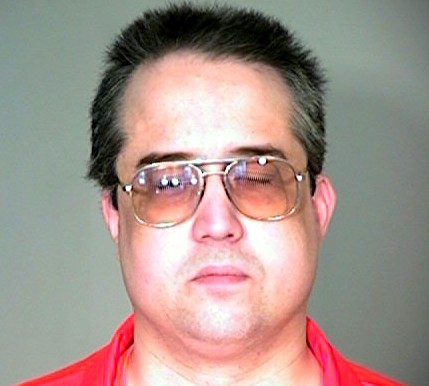
Ronald Schackart
Murderer Brian Kevin Rosenfeld
Murderer · USA · 1985
Brian Kevin Rosenfeld Brian Kevin Rosenfeld was sentenced to three concurrent l…
23 victims
Brian Kevin Rosenfeld
Murderer · USA · 1985
Brian Kevin Rosenfeld Brian Kevin Rosenfeld was sentenced to three concurrent l…
23 victims
 Marvin Gray
Murderer · USA · 1975
Marvin Gray was convicted killer who claimed responsibility for 23 slayings and…
23 victims
Marvin Gray
Murderer · USA · 1975
Marvin Gray was convicted killer who claimed responsibility for 23 slayings and…
23 victims
 Yahweh ben Yahweh
Murderer · USA · 1980
Yahweh ben Yahweh was born and legally named Hulon Mitchell Jr. (October 27, 19…
23 victims
Yahweh ben Yahweh
Murderer · USA · 1980
Yahweh ben Yahweh was born and legally named Hulon Mitchell Jr. (October 27, 19…
23 victims
 Russell Ellwood
Murderer · USA · 1991
Russell Ellwood was a former taxi driver. Authorities suspected him of killing…
20 victims
Russell Ellwood
Murderer · USA · 1991
Russell Ellwood was a former taxi driver. Authorities suspected him of killing…
20 victims
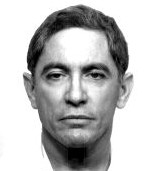 George Douglas Lott
Murderer · USA · 1992
George Douglas Lott · July 1, 1992 — George Lott stood up in a Tarrant County C…
2 victims
George Douglas Lott
Murderer · USA · 1992
George Douglas Lott · July 1, 1992 — George Lott stood up in a Tarrant County C…
2 victims
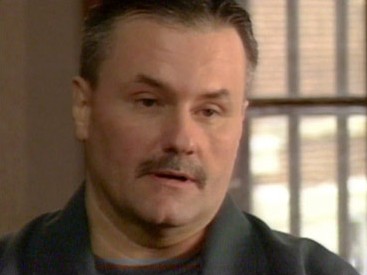 John Maloney
Murderer · USA · 1998
John Maloney — former police arson detective; Green Bay Police Department offic…
1 victim
John Maloney
Murderer · USA · 1998
John Maloney — former police arson detective; Green Bay Police Department offic…
1 victim
 Ron Shamburger
Murderer · USA · 1994
Ron Scott Shamburger was executed by lethal injection in Texas on September 18,…
1 victim
Ron Shamburger
Murderer · USA · 1994
Ron Scott Shamburger was executed by lethal injection in Texas on September 18,…
1 victim
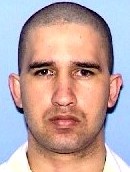 Edgardo Rafael Cubas
Murderer · USA · 2002
Edgardo Rafael Cubas (also spelled Edgardo Rafael Cuba and Edgardo Rafael Cubas…
4 victims
Edgardo Rafael Cubas
Murderer · USA · 2002
Edgardo Rafael Cubas (also spelled Edgardo Rafael Cuba and Edgardo Rafael Cubas…
4 victims
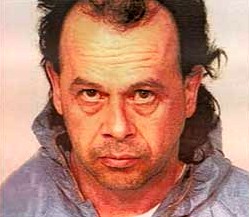 William Patrick Fyfe
Serial killer · Canada · 1979
William Patrick Fyfe was a Canadian serial killer who was convicted of five cou…
25 victims
William Patrick Fyfe
Serial killer · Canada · 1979
William Patrick Fyfe was a Canadian serial killer who was convicted of five cou…
25 victims
- Gender
- male
- Country
- USA
- Location
- Pima County, Arizona, USA
- Date of birth
- December 2, 1962
- Age at first offence
- 22
- Characteristics
- rape, kidnapping
- Victim profile
- Charla Regan
- Method of murder
- Strangulation
- Date(s) of murder
- March 8, 1984
- Years active
- 1984
- Date of arrest
- Same day (surrenders)
- Status
-
Sentenced to death
Sentenced to death on May 3, 1985; death sentence was resentenced on December 7, 1993.
Offence summary
Ronald Dwight Schackart and Charla Regan had known each other since high school and continued to be friends at the University of Arizona. On March 8, 1984, Schackart told Regan he needed a place to stay since his parents had kicked him out of their house. He also told her he needed to talk to her about his wife's filing rape charges against him.
Schackart and Regan went to a Tucson Holiday Inn. Schackart raped Charla at gunpoint, hit her in the face with the gun, strangled her to death, and stuffed a large sock into her mouth.
After the killing, Schackart reported the killing to the police and claimed he had not intended to kill Charla. A federal habeas proceedings memorandum also described Schackart’s confession as stating that he believed he had forced the victim to have sex at gunpoint, struck her on the neck with the gun butt when she appeared to be sleeping, then strangled her when she awoke and began screaming. The victim was found at the Holiday Inn dead from strangulation and with a sock stuffed in her mouth.
Background
Schackart and Regan had known each other since high school and remained friends at the University of Arizona. On March 8, 1984, Schackart told Regan that he needed a place to stay because his parents had kicked him out of their house.
Investigation
Schackart reported the killing to the police. After the report, his confession was described as including that he and the victim had been friends and that they intended to meet for lunch on March 8, 1984 to discuss his recent problems. The federal memorandum set out that, upon discharge from the army, Schackart had allegedly returned home to find his wife in bed with a man, that he denied having been charged with sexually assaulting his wife, and that he was out of work and had no place to stay after moving from his parents’ house following an argument.
Arrest
After his killing of Charla, Schackart drove to the home of his pastor, who accompanied him to his mother's house. After he told his mother what had happened, he turned himself in to the police.
Trial
Proceedings and judges
The presiding judge was Michael J. Brown. The prosecutor was Richard Nichols.
Start of trial, verdict, and conviction
The trial began on March 12, 1985. The verdict was on March 16, 1985.
On March 16, 1985, Schackart was convicted of sexual assault, kidnapping, and first degree murder. The proceedings described that the murder and the other counts were considered separately at sentencing.
Jury selection and voir dire (death penalty)
During voir dire, the court stated that first degree murder was a Class 1 felony punishable by either death or imprisonment, and that the decision of which sentence would be imposed was made by the trial judge after a separate sentencing hearing, not by the jury.
The federal memorandum reproduced the following exchange:
THE COURT: First degree murder, ladies and gentlemen, is a Class 1 felony. It's punishable by either death or by imprisonment. The decision as to which of those sentences shall be imposed is made by the trial judge after a separate sentencing hearing. It's not made by the jury. Is there anything about that fact that would prevent you from being a fair and impartial juror in this case? (No response)
THE COURT: Do any of you -- yes, Mr. Soto?
MR. SOTO: I don't believe in capital punishment, okay?
THE COURT: Is there anything -- what I need to know is whether or not -- you obviously have an opinion or believe about capital punishment. Aside from the fact that you don't believe in that, Mr. Soto, the question that I have for you is: Is your opinion or belief so strong that it would either prevent you or substantially impair your ability to perform your sworn duty as a juror in this case to well and truly try the issues in the case according to the law and the evidence?
MR. SOTO: Yeah, it would, really.
THE COURT: Okay. In other words, what you're telling me, Mr. Soto, is that because of your opinion you believe that you would be unable to sit as a judge in this case of the facts and try the guilt or innocence of the defendant?
MR. SOTO: Yeah.
THE COURT: I'm sorry. You have to speak up because the gentleman is taking down the answers. You believe -- I just want to know if you believe that your opinion is so strong that you couldn't sit as a trial juror in the case?
MR. SOTO: Yes. Yeah, I --
THE COURT: All right. I'll excuse you, Mr. Soto, because of that answer.
(RT 3/12/85 at 34-35.)
The court denied the defense request for additional questioning of Mr. Soto regarding whether he could decide guilt without considering the consequences.
The court proceeded to question another juror:
THE COURT: Mr. Westerfield? All I want to know is whether you have an opinion.
MR. WESTERFIELD: Yes, I do.
THE COURT: Okay. The question I have, Mr. Westerfield, is whether that opinion, whatever it is, would affect your ability to sit as a fair and impartial juror in the case. In other words, could you not sit and judge the guilt or innocence of the defendant based on the evidence in this case?
MR. WESTERFIELD: I'm afraid I could not.
THE COURT: All right. I appreciate your candor and I will, in fact, excuse you based on the fact that you have an opinion concerning capital punishment that would either prevent or substantially impair your ability to sit as a trial juror in the case and follow your oath as a juror to justly decide the evidence.
MR. WESTERFIELD: Yes, it is.
THE COURT: All right. You are then excused. . . .
(Id. at 37.)
Defense counsel again objected to the dismissal after finding the claim procedurally barred and, alternatively, on the merits, it was stated that the prospective jurors stated unequivocally that their beliefs would prevent them from being able to act impartially.
Sentencing
Initial sentencing
The sentencing date was May 3, 1985. Pima County Superior Court Judge Michael J. Brown sentenced Schackart to death for the murder and to a term of years for the other counts.
Aggravating and mitigating circumstances
The aggravating circumstances included that the murder was “especially cruel.” The mitigating circumstances were stated as none.
Resentencing and death sentence
The death sentence was vacated due to an inadequate transcript for review, and the case was remanded for a new sentencing hearing.
Schackart was again sentenced to death for the first degree murder conviction on December 7, 1993. That sentence was affirmed.
Sentencing remarks and challenged statements
The federal memorandum reproduced challenged statements made during resentencing and included the following exchanges and quotations.
Statements related to refusal to acknowledge sexual assault and the sock into the victim’s mouth:
The Court has further considered that you have steadfastly refused to acknowledge your sexual assault of the victim while at the same time relying on your own statements concerning that sexual assault to Detective Reuter and to Dr. Bendheim as forming a part of the basis upon which you elicited testimony from Dr. Bendheim for purposes of mitigating the sentencing in this action.
The Court further finds as an aggravating factor that you have specifically lied to the Court with respect to your depiction of when you stuffed the knee sock into the victim's mouth. . . . [I]t is not probable that you will ever be rehabilitated . . . .
(RT 12/7/93 at 18-21.)
Statement challenged regarding his treatment of his wife and forcing himself upon her:
You acknowledged that it was your custom to terminate marital arguments unilaterally, and in the event Miss Pajkos, your wife, attempted to continue them past your deadline you would then end the argument by slapping or hitting her. You acknowledge forcing yourself upon her in December of 1983 while using a knife to threaten her to comply.
The Court finds that the fact that you chose and continue to make her the sine qua non of your depraved behavior instead of postulating that your use of her as punching bag and your treatment of her as if she was chattel may have had some significant influence on her actions is unsatisfactory at best and is hardly a mitigating factor.
(Id. at 23 (emphasis added) *fn7 .)
Statements challenged during discussion of the (F)(6) aggravating factor:
Your entire manner and demeanor before, during and since this trial, your treatment of this process as merely some new intellectual game leads this Court to the conclusion that your only familiarity with remorse is the spelling and pronunciation of the word.
You wrote to me, "the knowledge that Charlie is forever gone from this plane of existence is made especially painful by the fact that her life literally passed through my hands."
You may think that to have been a clever turn of phrase; I find that it is a snide word game describing a foul murder perpetrated by you.
It speaks volumes not of remorse or of respect for Ms. Regan, but of a mind so supercillious [sic] and full of self that it believes it is permissible to be cute about this crime.
It says that you committed these crimes with a depraved mind and a malignant heart.
(Id. at 26-27 (emphasis added) *fn8 .)
Statement on deterrence:
After reviewing aggravation and mitigation and concluding no mitigation was sufficiently substantial to call for leniency, the court stated:
"while we can only hope that capital punishment will deter others, we know it will deter you."
(Id. at 29-30.)
Appeals
Arizona Supreme Court affirmance and vacatur/remand
The Arizona Supreme Court affirmed the convictions for all three crimes and affirmed the sentences for sexual assault and kidnapping. It also vacated the death sentence and remanded for a new sentencing hearing because the transcript was inadequate for review.
The decisions included:
- State v. Schackart, 175 Ariz. 494, 858 P.2d 639 (1993) (“Schackart I”).
- State v. Schackart, 190 Ariz. 238, 947 P.2d 315 (1997) (“Schackart II”).
Post-conviction relief (PCR)
Schackart filed a petition for post-conviction relief (PCR) with the trial court and a subsequent addendum to the PCR petition. The PCR petition was denied without a hearing. The Arizona Supreme Court summarily denied a petition for review on May 28, 2003.
Federal habeas corpus proceedings
A federal habeas corpus memorandum described that Schackart filed a Petition for Writ of Habeas Corpus alleging he was imprisoned and sentenced to death in violation of the United States Constitution. The petition was denied, and the stay of execution entered on June 6, 2003 was vacated. A Certificate of Appealability was granted as to two issues, described in that memorandum.
Outcome
The memorandum of decision concluded that Schackart was not entitled to relief on the remaining claims reviewed. It denied his amended petition for writ of habeas corpus and directed the clerk to enter judgment accordingly. The stay of execution entered on June 6, 2003 was vacated.
The Certificate of Appealability was granted as to the issues:
- Whether Claim 5—alleging that Schackart’s right to a fair and impartial jury was violated—failed on the merits.
- Whether Claim 6(a)—alleging ineffective assistance of counsel for failing to develop a proper factual record regarding the partiality of the jury—failed on the merits.
Timeline
- March 8, 1984 — Schackart told Charla Regan he needed a place to stay and needed to discuss his wife’s rape charges; they went to a Tucson Holiday Inn where Schackart raped Charla at gunpoint, hit her in the face with the gun, strangled her to death, and stuffed a large sock into her mouth.
- March 12, 1985 — Trial began.
- March 16, 1985 — Schackart was convicted of sexual assault, kidnapping, and first degree murder; the verdict was returned.
- May 3, 1985 — Schackart was sentenced to death.
- December 7, 1993 — Schackart was resentenced to death for the first degree murder conviction.
- May 28, 2003 — The Arizona Supreme Court summarily denied Schackart’s petition for review in the post-conviction matter.
- December 7, 1993 — The resentencing proceeding resulted in another death sentence.
- June 6, 2003 — A stay of execution was entered and later vacated.
- March 13, 2009 — The federal memorandum of decision and order was entered in the habeas corpus matter.
Other details
Schackart’s guilt-phase and death-qualification issues were discussed within the federal memorandum, including the procedural default framework under the Antiterrorism and Effective Death Penalty Act of 1996 (AEDPA).
The memorandum referenced:
- Witherspoon v. Illinois, 391 U.S. 510 (1968).
- Adams v. Texas, 448 U.S. 38 (1980).
- Wainwright v. Witt, 469 U.S. 412 (1985).
- Strickland v. Washington, 466 U.S. 668 (1984) and Evitts v. Lucey, 469 U.S. 387 (1985).
- Cause and procedural default principles including Coleman v. Thompson, 501 U.S. 722 (1991), Rose v. Lundy, 455 U.S. 509 (1982), and O’ Sullivan v. Boerckel, 526 U.S. 838 (1999).
- Additional discussion of Eighth Amendment arguments, including Lackey v. Texas, 514 U.S. 1045 (1995) (mem.), and circuit cases addressing delays in execution under a sentence of death.
- Discussions of Arizona’s capital sentencing scheme and statutory aggravating circumstances, including A.R.S. § 13-703(F), as well as Arizona cases and United States Supreme Court decisions cited in that memorandum.
During the failed attempt to plead guilty, the federal memorandum included the following quotations from the court and Schackart:
THE COURT: All right. Before we go all the way through the statement, Mr. Schackart, I'm not sure what changes you have made or what you disavow in the statements, but I might save a whole lot of time if you're going to tell me that you did actually commit these offenses.
THE DEFENDANT: No, I'm not going to -- to incriminate myself more.
THE COURT: If you would tell me either by this statement or in some other fashion, orally or otherwise, that you did, in fact, do what you have pled guilty to --
THE DEFENDANT: Well, if you have been sworn in and pled guilty to something, then obviously you must be guilty of it, right?
THE COURT: Mr. Schackart, I'm not going to play word games with you.
THE DEFENDANT: It is not a word game, Judge. I don't feel that I have to go through and incriminate myself any more than I already have.
THE COURT: Well, unless there is a factual basis that you are willing to acknowledge that you did, in fact, commit these crimes that you have been charged with in the indictment, then I am not going to accept the plea. Do you understand that?
THE DEFENDANT: I guess so. So I guess you can then not accept it because of the numerous statements which I have written down that I have to disavow.
(Id. at 23-24.)
The court responded, “I am willing to take your plea,” and proceeded to engage Schackart in questions and a further review of his statement; after Schackart disavowed many portions of his statement, the court rejected his plea.
The judge also addressed concerns about media exposure, stating:
I'm not going to assume that they are going to disobey the admonishment of the Court, and, so, we are just going to proceed, you know. I'm not convinced that Mr. Schackart was unaware of the outcome of, the probable outcome of this charade this morning before he started it, and I know that he was not unaware of the fact that it would be heavily covered by the media. So, in any event, I'm going to have the jury in and admonish them once again that, as I did yesterday, about listening to the media or reading the media or watching the media accounts of the trial, and we're going to do that right now.
(Id. at 38.)
The federal memorandum also referenced that Charles L. Ryan was substituted as respondent as the current Interim Director of the Arizona Department of Corrections under Federal Rule of Civil Procedure 25(d).
Spotted an error, or have more information about this case?