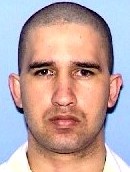
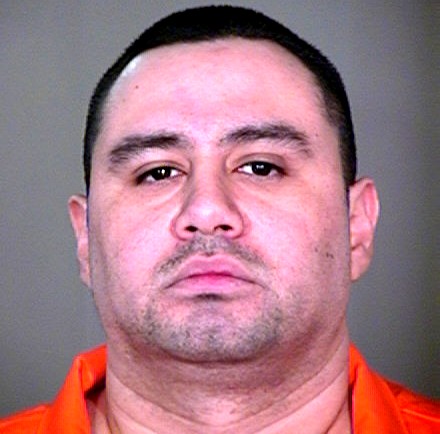
Edgardo Rafael Cubas
Murderer Robert Martines Perez
Murderer · USA · 1994
Name: Robert Martines Perez · Other name used in proceedings: Robert Martinez P…
15 victims
Robert Martines Perez
Murderer · USA · 1994
Name: Robert Martines Perez · Other name used in proceedings: Robert Martinez P…
15 victims
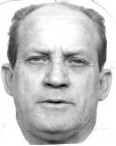 Billy Frank Vickers
Murderer · USA · 1993
Billy Frank Vickers Vickers was executed by lethal injection in Texas on Januar…
14 victims
Billy Frank Vickers
Murderer · USA · 1993
Billy Frank Vickers Vickers was executed by lethal injection in Texas on Januar…
14 victims
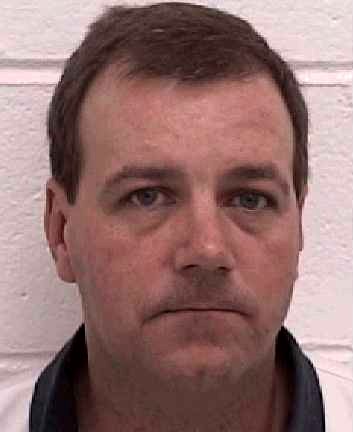 Samuel David Crowe
Murderer · USA · 1988
Samuel David Crowe was sentenced to death in Douglas County in November 1989. H…
1 victim
Samuel David Crowe
Murderer · USA · 1988
Samuel David Crowe was sentenced to death in Douglas County in November 1989. H…
1 victim
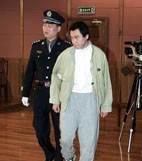 Chen Zhaofeng
Murderer · China · 2001
Chen Zhaofeng was born in Mudanjiang, a city in Northeast China’s Heilongjiang…
2 victims
Chen Zhaofeng
Murderer · China · 2001
Chen Zhaofeng was born in Mudanjiang, a city in Northeast China’s Heilongjiang…
2 victims
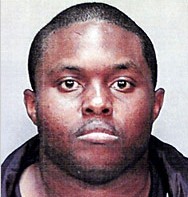 John B. Taylor
Mass murderer · USA · 2000
John B. Taylor was 36 years old at the time of the Wendy's Massacre. The killin…
5 victims
John B. Taylor
Mass murderer · USA · 2000
John B. Taylor was 36 years old at the time of the Wendy's Massacre. The killin…
5 victims
 Tausha Morton
Murderer · USA · 2004
Defendant: Tausha Morton (also referred to as Tausha Fields in court) · Place:…
1 victim
Tausha Morton
Murderer · USA · 2004
Defendant: Tausha Morton (also referred to as Tausha Fields in court) · Place:…
1 victim
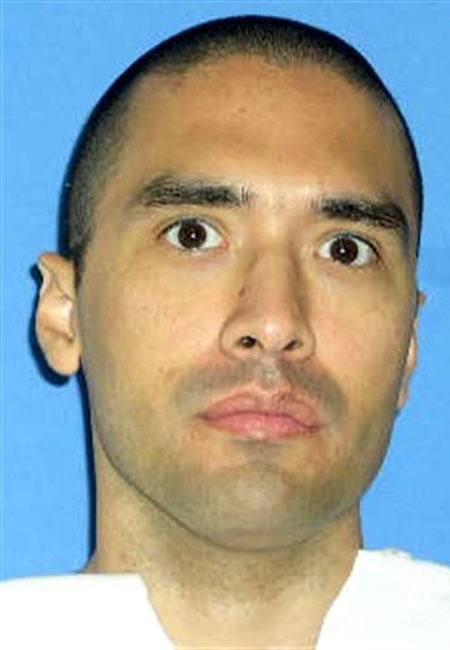 Rolando Ruiz
Murderer · USA · 1992
Rolando Ruiz was convicted of capital murder and was sentenced to death in Bexa…
1 victim
Rolando Ruiz
Murderer · USA · 1992
Rolando Ruiz was convicted of capital murder and was sentenced to death in Bexa…
1 victim
- Gender
- male
- Country
- USA
- Location
- Harris County, Texas, USA
- Date of birth
- February 7, 1979
- Age at first offence
- 23
- Characteristics
- kidnapping, rape, drug addict
- Victim profile
- Esmeralda Alvarado, 15 / Laura Ayala, 13 / Maria Teresa Rangel, 38, and Roxana Capulin, 24
- Method of murder
- Shooting
- Date(s) of murder
- January 19/March 10/May 31, 2002
- Years active
- 2002
- Date of arrest
- August 21, 2002
- Status
-
Sentenced to death
Sentenced to death on June 7, 2004
Case identification
Edgardo Rafael Cubas (also spelled Edgardo Rafael Cuba and Edgardo Rafael Cubas in different parts of the record) was identified as the appellant in the Court of Criminal Appeals of Texas opinion: “Edgardo Rafael Cubas, Appellant, v. The State of Texas.”
Background
Cubas was a Honduran national. He was arrested at 10:35 a.m. on August 21, 2002, and taken to the Houston Police Department homicide office for questioning. He had come to the United States in 1999 to live with his father. At the time of his arrest, he worked for a company that installed insulation material, lived in his own apartment, paid his own bills, owned a car, and was able to read in Spanish and speak a little English.
Cubas testified that he completed the seventh grade in Honduras and lived in the United States with his father. He testified that he did not understand his legal rights even when they were read to him in Spanish; they were “just words,” and he did not understand their significance because he did not know anything about the judicial system in the United States. Cubas also testified that he did not have access to a bed until 3:30 a.m. on August 22 and could not sleep because other prisoners were talking all night, while acknowledging he could have slept if he had wanted to do so.
A psychiatrist who examined Cubas testified at punishment that Cubas had an IQ of 78. Cubas introduced into evidence at the pretrial hearing a report of a polygraph examination he took on April 21, 2004. The polygraph examiner reported “no deception indicated” when Cubas said he did not understand the warnings, did not know he was being videotaped, and did not know his words would be used against him in court.
People
Appellant
- Edgardo Rafael Cubas (appellant)
Co-defendants and suspects
- Walter Alexander Sorto
- Eduardo Navarro
- A 15-year-old boy who was not identified because he was a juvenile
Victims
- Esmeralda Alvarado (15-year-old Hispanic female)
- Roxana Capulin (24)
- Maria Rangel (38)
- Laura Ayala (13-year-old; missing since March 10, 2002)
Other named individuals
- Officers Jesus Sosa and H. A. Chavez
- Officer Alfredo Mares
- Officer Alan Brown
- Officer Cecil Mosqueda
- Officer Xavier Avila
- Detective Avila (referred to as Officer Xavier Avila)
- Officer Mario Rodriguez
- Alise Valenzuela
- Cubas’s father, Fernando Cubas
- Lt. Murray Smith (Houston Police Department Homicide)
The offence
On January 19, 2002, in Harris County, Texas, Cubas and co-defendants kidnapped a fifteen-year-old Hispanic female and took her to an open field where they sexually assaulted her and shot her in the head, resulting in her death. The indictment alleged that Cubas shot and killed Alvarado while in the course of committing and attempting to commit aggravated sexual assault.
In the east end murders context, police described the case as involving rapes and murders, and Cubas, Sorto, and Navarro were linked to multiple victims through DNA evidence. In the case of the trial conviction at issue on direct appeal, Cubas was convicted of a capital murder committed in January 2002.
Investigation
Detectives investigating the east end murders found blood that turned out to be DNA of an unknown female. Investigators asked the Ayala family for samples of Laura Ayala’s DNA, and the samples were matched to scene evidence.
Police said the suspects were not cooperating with investigators and had not been charged in connection with Laura Ayala’s disappearance. Authorities also described evidence and investigation relating to other cases: the trio was arrested in February 2003 for the rapes and shooting deaths of Roxana Capulin, 24, Teresa Rangel, 38, and 15-year-old Esmerelda Alvarado on the east side of Houston. In November 2003, Sorto was convicted of the capital murders of Maria Rangel and Roxana Capulin.
A drop of blood found in Cubas’s father’s SUV was linked to Laura Ayala by DNA testing.
Police described Laura Ayala as a Hispanic female who was 4 feet tall and weighed about 90 pounds, with black, medium-length straight hair with brown highlights, and last seen wearing a blue-checkered dress. Ayala was abducted some time after 10:15 p.m. Sunday, March 10, behind her family’s apartment located at 7939 Sarita in southeast Houston. She disappeared after she walked behind her apartment complex to a gas station to buy a newspaper for a school project. Ayala’s mother later found her daughter’s shoes along with the newspaper on the street near the gas station, and the clerk at the station remembered selling her a newspaper. Volunteers searched on foot and horseback in various locations around the Houston area since her disappearance but had not found any clues.
Arrest and interrogation
Cubas was arrested at 10:35 a.m.
Statements and interviews
Cubas gave several videotaped statements to police on August 21 and 22. The record described that:
- In Cubas’s first videotaped statement, from 1:55 p.m. to 4:30 p.m. on August 21, he told Officers Jesus Sosa and H. A. Chavez that he and Walter Sorto saw a girl talking on a pay phone, that Sorto forced her into their car, and that they drove her to a secluded location and took turns raping her, but that Sorto was the one who shot and killed her.
- After Cubas agreed to show police where his gun was located, he left with Officer Alfredo Mares and two other officers at 5:30 p.m. Officers went to Cubas’s apartment complex and one other location.
- Shortly before 7:00 p.m., the officers took Cubas before a magistrate. After Cubas received statutory warnings, the officers took him to participate in a live lineup, bought him dinner at a fast-food restaurant, and drove him back to the Houston Police Department homicide office, where Mares interviewed him.
- Cubas gave a short videotaped statement to Mares at 9:33 p.m., in which he admitted his involvement in an extraneous robbery. Mares stopped the tape at 9:48 p.m. and started it again at 10:56 p.m. Cubas then confessed that he and Sorto had committed several robberies and shootings outside various “cantinas” in Houston. The interview concluded at 11:30 p.m.
- Officer Alan Brown transported Cubas to the City of Houston jail for the night. Brown picked up Cubas from jail at 8:00 a.m. on August 22 for a continuation hearing before the magistrate, and Cubas again received statutory warnings.
- Later that morning, Officer Cecil Mosqueda interviewed Cubas. Cubas gave a videotaped statement to Mosqueda from 10:50 a.m. to 2:00 p.m., in which he admitted his involvement in various extraneous offenses, including the rape and murder of two women in May 2002.
- Cubas gave a final videotaped statement regarding his involvement in the Alvarado case to Officer Xavier Avila at 5:29 p.m.; it ended at 6:27 p.m. In this final statement, Cubas again explained that he and Sorto saw a girl talking on a pay phone, that Sorto forced her into their car, and that they drove her to a secluded location and took turns raping her, but this time he admitted that he, not Sorto, shot the girl in the head and killed her.
Suppression hearing issues
Cubas filed a motion to suppress the statements, and the trial court held a pretrial hearing to determine admissibility.
Cubas argued his final videotaped statement to Avila was involuntary because he was deprived of sleep and “subjected to two full days of interrogation by rotating teams of police officers.” He asserted that he did not understand his rights and “truly believed his statements would not be used against him” because he was “a youth of limited intellect.” He also asserted that when Mosqueda interviewed him, Mosqueda promised him that he would not be charged for the crime.
Avila testified that he informed Cubas that the statement would be recorded, read Cubas his warnings in Spanish, and that Cubas initialed each of them and said he understood. Avila testified that Cubas waived his rights and agreed to give a voluntary statement, never asked for an attorney or to terminate the interview, and was provided a phone at the end of the interview when Cubas asked for “a chance to talk by telephone.”
The officers testified that Cubas appeared to understand the warnings and gave no reason to believe otherwise. Appellant appeared before a magistrate twice, with warnings read in English while an interpreter translated them into Spanish; Cubas indicated he understood his rights both times.
Mosqueda promise and key transcript excerpts
Cubas challenged Mosqueda’s statement. The transcript reflected:
- [MOSQUEDA]: Well, you all talked about the, the girl from . . . ? You spoke with an investigator about the girl from . . . from this year?
- APPELLANT: The one from this year?
- [MOSQUEDA]: Yes. APPELLANT: Yes.
- [MOSQUEDA]: You already talked about that, right? Um . . . In that one, you all used a what? What did you all use there?
- APPELLANT: A forty-five.
- [MOSQUEDA]: Okay. It’s like twelve twenty. Let’s see if . . . as I say, uh, think about it to see if you remember something that you all did. Like I said, you all already talked about the two girls, you already talked about the girl, you already talked about that one. You, you say that you don’t know anything about Laura Ayala.
Mosqueda then made the following comment:
I’m going to ask you some questions, let[’]s see if you remember. It’s ver [sic], very important, okay? I’m going to tell you something it’s that . . . everything that, that . . . if you don’t say or want to say this, eh, we just want to know. We’re not, not, not going to bring charges about this. Understand? We just want to know to clarify, okay? Because it seems that Walter already, already had been doing this a while. Do you understand me? But I want to know so that we can clarify because it’s several.
Mosqueda later asked about numerous unsolved cases. Appellant denied knowledge of these cases. Mosqueda testified that when he said, “We’re not . . . going to bring charges about this,” he “was referring to a different case,” specifically the Laura Ayala case.
At the conclusion of the hearing, the State informed the trial court it would not offer Cubas’s statement to Mosqueda into evidence. The trial court found the statement inadmissible because Mosqueda’s comment was “a textbook example of a promise.” The trial court made findings related to Avila’s warnings and concluded that Cubas understood them and intelligently waived his rights, freely, knowingly, and voluntarily entering the statement on videotape No. 6.
Trial
Charge and verdict
The appellate opinion stated that Cubas was convicted of a capital murder committed in January 2002 under Tex. Penal Code § 19.03(a). The trial court sentenced him to death based on the jury’s answers to special issues under Texas Code of Criminal Procedure Article 37.071, sections 2(b) and 2(e).
The indictment alleged that Cubas shot and killed Esmeralda Alvarado while in the course of committing and attempting to commit aggravated sexual assault.
Points of error on direct appeal
Cubas raised six points of error.
Point of error one: suppression of Avila statement
Cubas complained about admission of his final videotaped statement as involuntary, referencing sleep deprivation, two full days of interrogation, limited intellect, failure to understand rights, and a promise by Mosqueda. The appellate court overruled point of error one, stating that the jury was authorized to convict Cubas as a principal or as a party to the offense, and that even without Avila’s final statement, the jury could still have convicted him as a party to the offense.
Point of error three: Article 38.23 voluntariness instruction
Cubas argued that the trial court erroneously refused his request for an Article 38.23 jury instruction on voluntariness of his statements.
At trial, Cubas argued an exchange at the end of his videotaped statement to Sosa and Chavez raised a factual issue. The exchange was:
CHAVEZ: Okay. Look. This that you have told us about this case is the truth?
CUBAS: Yes.
CHAVEZ: It’s the whole truth? And you’re telling us this voluntarily, or why?
CUBAS: No. Voluntarily, no . . .
CHAVEZ: And why did you decide to give us the statement on this case?
CUBAS: Because I don’t think it serves anything me hiding it. You’re going to blame me for something that I don’t deserve.
CHAVEZ: Someone has threatened you?
CUBAS: No.
CHAVEZ: Since you have been here with us?
CHAVEZ: Have we promised you anything for you to tell us what you know about this case?
CHAVEZ: So then everything that you have told us is voluntary because you are here?
CHAVEZ: (unintelligible) Okay. This interview we’re going to finish now, okay? Right now it’s three twenty.
The appellate court overruled point of error three.
Points of error two and four: Vienna Convention and Article 38.23 suppression
Cubas alleged his consular rights under the Vienna Convention on Consular Relations were violated and therefore his statements should have been suppressed under Article 38.23.
The opinion quoted Article 36 of the Vienna Convention:
[I]f he so requests, the competent authorities of the receiving State shall, without delay, inform the consular post of the sending State if, within its consular district, a national of the State is arrested or committed to prison or to custody pending trial or is detained in any other manner. Any communication addressed to the consular post by the person arrested, in prison, custody or detention shall also be forwarded by the said authorities without delay. The said authorities shall inform the person concerned without delay of his rights under this sub-paragraph
Cubas argued the police failed to inform him “without delay” that he had a right to seek assistance from the Honduran consulate.
The opinion described:
- Cubas was arrested at approximately 10:35 a.m. on August 21 and arrived at the Houston Police Department homicide office at about 11:20 a.m.
- He gave his first videotaped statement from 1:55 p.m. to 4:30 p.m.
- He received statutory warnings from a magistrate shortly before 7:00 p.m.
- He gave a videotaped statement to Mares between 9:33 p.m. and 9:48 p.m. and another between 10:56 p.m. and 11:30 p.m. detailing extraneous offenses.
- He spent the night in jail and received statutory warnings from the magistrate again at 8:00 a.m. on August 22.
- He gave a videotaped statement to Mosqueda from 10:50 a.m. to 2:00 p.m.
- Avila testified he spoke to Cubas at approximately 5:20 p.m. on August 22 and that Cubas “said he didn’t need to contact them.”
- Cubas testified that Avila never informed him of his right to contact his consulate.
- Cubas gave his videotaped statement regarding the Alvarado case between 5:29 p.m. and 6:27 p.m.
- Officer Mario Rodriguez testified that he called the Honduran consulate at 5:17 p.m. on August 22, spoke to a person identified as Alise Valenzuela, and informed her that Cubas had been charged with capital murder.
- Rodriguez sent a fax at 5:58 p.m. informing the consulate that Cubas had been charged with capital murder.
- The record described that Rodriguez notified the Honduran consulate about thirty-one hours after arrest.
- The opinion stated that Cubas could not complain that police failed to tell him police could request notification of the consulate even without his request.
The appellate court concluded Rodriguez notified the Honduran consulate “without delay” and that Texas authorities complied with their obligations under Article 36. It also concluded the trial court did not err in refusing to suppress Cubas’s statements under Article 38.23.
The appellate court also described Cubas’s father’s testimony: Fernando Cubas testified that he went to the Honduran consulate on the morning of August 22 to ask for advice and was told that “the consulate couldn’t do anything concerning the laws of this country.”
Point of error five: mitigation special issue constitutionality
Cubas argued the mitigation special issue was unconstitutional because it “omits a burden of proof” and “makes impossible any meaningful appellate review of the jury’s determination.” He argued Articles 44.251 and 37.071, section 2(e) created infirmity under the Eighth Amendment.
The appellate court stated it had previously addressed and rejected these claims and declined to revisit them, overruling point of error five.
Point of error six: future-dangerousness special issue constitutionality
Cubas argued the future-dangerousness special issue was unconstitutional, citing Apprendi v. New Jersey, Ring v. Arizona, and Blakely v. Washington. He asserted the issue increased punishment beyond the statutory maximum and acted like a functional equivalent element of the crime that had to be proven to a jury beyond a reasonable doubt. He also argued “probability” impermissibly diluted the reasonable doubt standard.
The appellate court overruled point of error six.
Sentencing
Pursuant to the jury’s answers to the special issues set forth in Texas Code of Criminal Procedure Article 37.071, sections 2(b) and 2(e), the trial court sentenced Cubas to death. The case status field stated that Cubas was sentenced to death on June 7, 2004.
The appellate opinion also stated that the direct appeal to the Court of Criminal Appeals was automatic under Article 37.071, § 2(h).
Appeals
Cubas filed a direct appeal to the Court of Criminal Appeals of Texas. The appellate court affirmed the judgment of the trial court. The opinion reflected that on direct appeal the Court delivered the opinion delivered by Johnson, J., joined by Keller, P.J., Meyers, Price, Keasler, Hervey, Holcomb, and Cochran, JJ., and that Womack, J. concurred in the result.
The appellate opinion stated: “We affirm.” It also included a “Delivered: April 12, 2006” notation.
Outcome
Cubas’s conviction and death sentence were affirmed on direct appeal. The judgment of the trial court remained in effect.
Other details
The record described that:
- The statement that Cubas’s IQ was 78 came from a psychiatrist who examined Cubas at punishment.
- The trial court’s findings included that Officer Avila was “very professional on the stand and on the videotape” and that he carefully administered warnings, including asking how far Cubas went in school and whether Cubas preferred warnings in English or Spanish.
- The trial court found Cubas understood the warnings on videotape No. 6 and intelligently waived his rights.
- The trial court found time proximity was close between Cubas’s statement to Mosqueda and his statement to Avila.
- The trial court found the wording of the improper promise used “we” but that the promise referred to what Mosqueda was talking about involving Walter’s involvement, and therefore found Cubas would not have believed the promise carried over to Avila’s statement.

Spotted an error, or have more information about this case?