Toshihiko Hasegawa
Murderer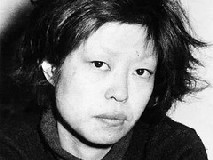 Hiroko Nagata
Murderer · Japan · 1972
Hiroko Nagata (Japanese leftist radical; also sometimes mistakenly referred to…
14 victims
Hiroko Nagata
Murderer · Japan · 1972
Hiroko Nagata (Japanese leftist radical; also sometimes mistakenly referred to…
14 victims
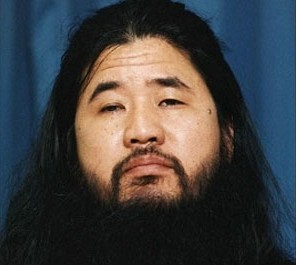 Shoko Asahara
Murderer · Japan · 1995
Shoko Asahara was the founder of Japan's controversial Buddhist religious group…
12 victims
Shoko Asahara
Murderer · Japan · 1995
Shoko Asahara was the founder of Japan's controversial Buddhist religious group…
12 victims
 Akiyoshi Umekawa
Murderer · Japan · 1963
Akiyoshi Umekawa ( 梅川 昭美 , Umekawa Akiyoshi , March 1, 1948 - January 28, 1979)…
5 victims
Akiyoshi Umekawa
Murderer · Japan · 1963
Akiyoshi Umekawa ( 梅川 昭美 , Umekawa Akiyoshi , March 1, 1948 - January 28, 1979)…
5 victims
 Beatrice Cenci
Murderer · Italy · 1598
Beatrice Cenci (6 February 1577 – 11 September 1599) was an Italian noblewoman.…
1 victim
Beatrice Cenci
Murderer · Italy · 1598
Beatrice Cenci (6 February 1577 – 11 September 1599) was an Italian noblewoman.…
1 victim
 Michael Nawee Blair
Murderer ? · USA · 1993
Michael Nawee Blair was sentenced to death for the 1993 murder of 7-year old As…
1 victim
Michael Nawee Blair
Murderer ? · USA · 1993
Michael Nawee Blair was sentenced to death for the 1993 murder of 7-year old As…
1 victim
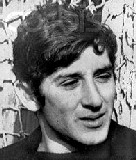 Milos Milosevic
Murderer · USA · 1966
Milos Milosevic (Serbian: Miloš Milošević) (July 1, 1941 – January 30, 1966) wa…
1 victim
Milos Milosevic
Murderer · USA · 1966
Milos Milosevic (Serbian: Miloš Milošević) (July 1, 1941 – January 30, 1966) wa…
1 victim
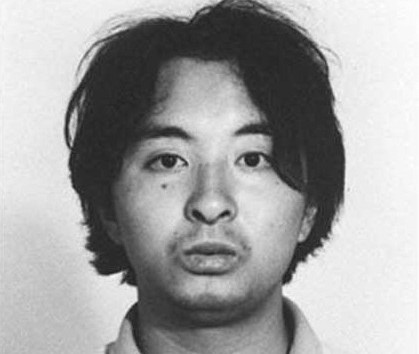 Tsutomu Miyazaki
Serial killer · Japan · 1988
Tsutomu Miyazaki was a Japanese serial killer. He murdered four girls aged betw…
4 victims
Tsutomu Miyazaki
Serial killer · Japan · 1988
Tsutomu Miyazaki was a Japanese serial killer. He murdered four girls aged betw…
4 victims
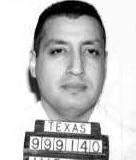 Jose Santellan
Murderer · USA · 1993
Jose Santellan, Sr. confronted his former girlfriend, Yolanda Garza, in 1993 an…
1 victim
Jose Santellan
Murderer · USA · 1993
Jose Santellan, Sr. confronted his former girlfriend, Yolanda Garza, in 1993 an…
1 victim
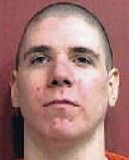 Douglas Turner
Homicide - Murderer · USA · 1987
Douglas Turner was a juvenile who was released from an alcohol treatment progra…
9 victims
Douglas Turner
Homicide - Murderer · USA · 1987
Douglas Turner was a juvenile who was released from an alcohol treatment progra…
9 victims
- Gender
- male
- Country
- Japan
- Location
- Aichi Prefecture, Japan
- Date of birth
- 1950
- Age at first offence
- 29
- Characteristics
- attempt to collect insurance money
- Victim profile
- Men
- Method of murder
- ???
- Date(s) of murder
- November 1979 - December 1983
- Years active
- 1979–1983
- Date of arrest
- —
- Status
-
Executed
Executed by hanging at the Nagoya Detention Center on December 27, 2001
Case summary
Toshihiko Hasegawa was executed by hanging at the Nagoya Detention Center on December 27, 2001. He was 51 at the time of his execution.
Timeline
- December 27, 2001 — Toshihiko Hasegawa was executed by hanging at the Nagoya Detention Center.
- Two days later — Toshihiko Hasegawa’s funeral was performed at a church in Nagoya.
- January 1983 — Akio, Masaharu Harada’s younger brother, was killed when he was 30 by Hasegawa and his accomplices.
- November 1979 — Hasegawa began killing three men.
- December 1983 — Hasegawa’s killing of the three men ended.
The offence
Hasegawa conspired with a friend to take out life insurance policies on three men they knew. From November 1979 to December 1983, he killed the three men and claimed massive payouts on the policies he had taken out on them.
Akio, Masaharu Harada’s younger brother, was killed in January 1983 by Hasegawa and his accomplices. Hasegawa had taken out a life insurance policy on Akio and had him killed in collusion with two accomplices to collect the money. Hasegawa and one of the accomplices also killed two other people.
Investigation
Justice Ministry sources said the execution ended a 13-month period since the last death sentence was carried out. The executions were the first to take place since Prime Minister Junichiro Koizumi assumed office in April.
Arrest
Hasegawa had been a killer on death row since the mid-'80s.
Trial
In his testimony at a district court hearing, Masaharu Harada said he hoped Hasegawa would receive the death penalty, saying: "I believe there can never be any other punishment other than the death penalty."
After Hasegawa was sentenced by the district court, he began writing Harada letters of apology.
Sentencing
Hasegawa was sentenced to death by the district court.
Appeals
The materials included a statement by Harada that he made repeated pleas to hold off carrying out Hasegawa’s death sentence and that he personally met the justice minister in 2001 and submitted a written petition, but the execution went ahead at the end of that year.
Outcome
Hasegawa was executed by hanging at the Nagoya Detention Center on December 27, 2001.
Aftermath
Two days after the execution, Hasegawa’s funeral was performed at a church in Nagoya, and about 70 people attended, including Masaharu Harada (61). Harada received an increased number of letters from Hasegawa, with some containing drawings of religious subjects drawn "to express my feelings of atonement." Harada threw the letters away unopened and unfolded one of the letters only once.
In the summer of 1993, just before Hasegawa’s sentence was finalized, Harada visited the Nagoya Detention House. Up until the moment he entered the interview room, Harada felt he might lose his temper with Hasegawa. Harada said: "I'm incredibly glad that you are so kind as to come here to meet me!" Harada said Hasegawa seemed filled with joy while conveying his gratitude, and Harada found his anger dwindling.
Even after the death sentence against Hasegawa was finalized, Harada visited the detention house three times under special permits to see the convict. Harada quoted Hasegawa as saying on one occasion: "Should I be allowed to get out of here, I would like to give your mother a massage, as I have learned massage techniques in my cell."
Harada said: "Although I had no intention of forgiving him, I wanted him to live and continue conveying his atonement with all his heart," and: "My mind changed as I became aware that nothing worthwhile could come from his execution."
Harada said he had more than 100 letters and several drawings made with a ballpoint pen from Hasegawa. In 2007, Harada founded an organization to encourage dialogue between crime victims and imprisoned criminals. Harada also advised a convict sentenced to die to apologize from the bottom of his heart to his victims.
Harada wrote an opinion piece in which he discussed the anguish and suffering he endured after the murder of his brother and his views on the death penalty system.
In his opinion, Harada said: "I am sorry for not to replying to you for so long," in a letter he wrote back to Hasegawa.
Harada said in his opinion: "I believe the enactment of this law is a definite step forward." He also stated: "But I am distressed that the basic law was enacted in relation to the revised Penal Code and the Criminal Procedure Code that incorporated measures to enforce more severe punishment on offenders." He said the Justice Ministry revision was made because the old laws "did not agree with the perceptions of crime victims." He stated: "I, however, am strongly against imposing more severe punishment."
Harada said he made repeated pleas to hold off carrying out Hasegawa’s death sentence and that his opinion and feelings were completely ignored, stating: "My opinion and feelings were completely ignored." He described it as unreasonable that officials of the same government office were moving to impose more severe punishment "in consideration for the feelings of victims." He said: "Even so, the execution went ahead at the end of that year."
Harada said that at the time of the murder, Hasegawa was his brother’s employer. He stated that during the initial trial he told the prosecution that he felt he deserved only the death penalty, and said: "The incident that took my brother's life also shattered my everyday existence." He said: "I blamed everything on Hasegawa and I felt my hatred grow daily." He later said: "But about 10 years later, I started thinking that I should learn more about the death penalty system." He stated that he wanted to meet Hasegawa and ask him why he killed his brother, and when he first met him he said: "I am sorry for what I did."
Harada wrote: "That is not to say that I forgave him." He said: "But by meeting him, I felt as though I had finally found the key to setting myself free." He said: "When a person kills another, how can the killer make up for the sin? I don't have the answer." He stated: "But when I heard that Hasegawa was drawing pictures as a way to atone, I wanted to believe him." He said: "It is my belief that people can compensate for their wrongdoings only when they are alive." He wrote: "The death penalty is too simplistic a way to settle crimes." He said: "As far as I am concerned, Hasegawa's execution did nothing to put my mind at ease." He stated: "On the contrary, I felt that it deprived me of my chance to get back on my feet again."
Harada said he thought bereaved families should have the right to personally meet "perpetrators." He argued that under the existing system they were virtually unable to make contact once the death sentence was finalized. He stated: "It contradicts the principle that people are innocent until they are proven guilty, because it is only after their guilt is established that suspects can be considered perpetrators." He said: "Furthermore, the court is not venue where defendants can speak freely about what they think and how they really feel." He said: "I think the current system should be revised to replace the death penalty with life imprisonment." He added: "That would allow families who lost loved ones to crime to meet with the offenders."
Harada wrote that when he gives street speeches calling for an end to the death penalty, people asked if he had ever considered the feelings of bereaved families, and he asked: "Do people think all crime victims want perpetrators to be put to death?" He wrote that he was asked why he used the honorific "kun" to address the person who killed his brother, and he said: "I felt like asking the person, "Do you hate him more than I do?"" He wrote: "People tend to decide what victims are feeling to suit themselves and in the process come to the conclusion that supporting more severe punishments is a gesture of sympathy." He stated: "This type of thinking makes me feel uneasy." He wrote: "Rather, I want people to listen to each individual victim to understand how each one of us thinks." He concluded: "I want society and government policies to reflect these various ideas as well as the true feelings of crime victims and their families."
Other details
Prime Minister Junichiro Koizumi assumed office in April. Justice Ministry sources said executions ended a 13-month period since the last death sentence was carried out. About 70 people attended Hasegawa’s funeral, including Masaharu Harada (61) and Akio’s family. Harada was a company employee.
Spotted an error, or have more information about this case?