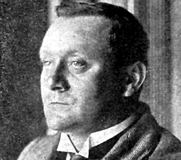
John Schrank
Attempted assassination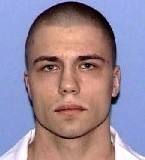 Clinton Lee Young
Murderer · USA
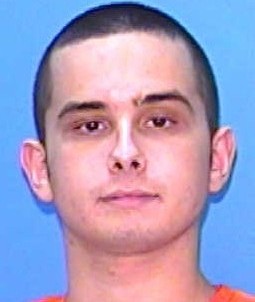
Clinton Lee Young (born July 19, 1983) was convicted of murdering two men in No…
2001 victims
Clinton Lee Young
Murderer · USA
Clinton Lee Young (born July 19, 1983) was convicted of murdering two men in No…
2001 victims
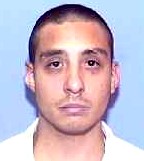 Ivan Abner Cantu
Murderer · USA
Name: Ivan Abner Cantu · TDCJ number: 999399 · Date of birth: 06/14/1973 · Age…
2000 victims
Ivan Abner Cantu
Murderer · USA
Name: Ivan Abner Cantu · TDCJ number: 999399 · Date of birth: 06/14/1973 · Age…
2000 victims
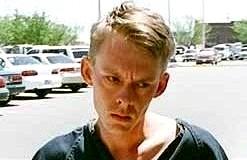 Michael John Yowell
Murderer · USA
Name: Michael John Yowell · TDCJ number: 999334 · Date of birth: 01/25/1970 · P…
1998 victims
Michael John Yowell
Murderer · USA
Name: Michael John Yowell · TDCJ number: 999334 · Date of birth: 01/25/1970 · P…
1998 victims
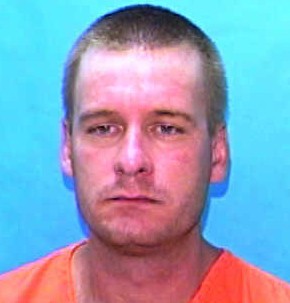 Michael Duane Zack
Murderer · USA
Michael Duane Zack was convicted and sentenced to death for the 06/13/96 murder…
1996 victims
Michael Duane Zack
Murderer · USA
Michael Duane Zack was convicted and sentenced to death for the 06/13/96 murder…
1996 victims
 Edward Brian Capetillo
Homicide · USA
Edward Brian Capetillo was a Latino male who was 17 years of age at the time of…
1995 victims
Edward Brian Capetillo
Homicide · USA
Edward Brian Capetillo was a Latino male who was 17 years of age at the time of…
1995 victims
 William Zeigler
Mass murderer · USA
William Thomas Zeigler Jr. was prosecuted in Florida for the murders of four pe…
1975 victims
William Zeigler
Mass murderer · USA
William Thomas Zeigler Jr. was prosecuted in Florida for the murders of four pe…
1975 victims
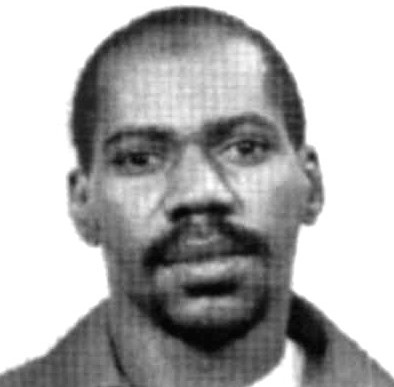 Johnny Townsend
Murderer · USA · 1983
Johnny Townsend was sentenced to death on March 8, 1985. The case involved aggr…
2 victims
Johnny Townsend
Murderer · USA · 1983
Johnny Townsend was sentenced to death on March 8, 1985. The case involved aggr…
2 victims
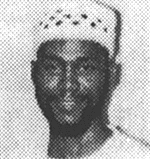 Tyrone Gilliam
Murderer · USA · 1988
Tyrone Gilliam was convicted in the murder of Christine Doerfler. Gilliam was e…
1 victim
Tyrone Gilliam
Murderer · USA · 1988
Tyrone Gilliam was convicted in the murder of Christine Doerfler. Gilliam was e…
1 victim
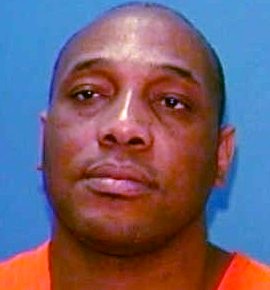 Rickey Roberts
Murderer · USA · 1984
Rickey Roberts was convicted of the murder of George Napoles and was sentenced…
1 victim
Rickey Roberts
Murderer · USA · 1984
Rickey Roberts was convicted of the murder of George Napoles and was sentenced…
1 victim
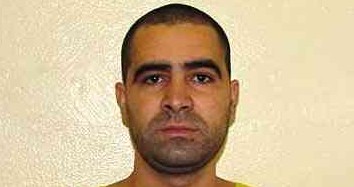 Miguel Angel Soto
Murderer · USA · 1999
Miguel Angel Soto was a convicted offender who was sentenced to death on August…
2 victims
Miguel Angel Soto
Murderer · USA · 1999
Miguel Angel Soto was a convicted offender who was sentenced to death on August…
2 victims
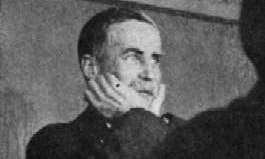 Herbert Rowse Armstrong
Murderer · United Kingdom · 1921
Herbert Rowse Armstrong (1869 - 31 May 1922) practised as a solicitor and was c…
1 victim
Herbert Rowse Armstrong
Murderer · United Kingdom · 1921
Herbert Rowse Armstrong (1869 - 31 May 1922) practised as a solicitor and was c…
1 victim
- Gender
- male
- Country
- USA
- Location
- Milwaukee, Wisconsin, USA
- Date of birth
- 1876
- Characteristics
- mentally ill
- Victim profile
- Theodore Roosevelt (United States ex-President)
- Method of murder
- Shooting
- Date(s) of murder
- —
- Years active
- —
- Date of arrest
- Same day
- Status
-
Found insane; sentenced to the Central State Mental Hospital in Waupun, Wisconsin, in 1914; remained there for 29 more years until his death from natural causes in 1943
Case record: John Schrank
Background
John Schrank was born in Bavaria in 1876. In 1889, he moved with his family to New York City. His parents soon died after they moved. To support himself, Schrank got a job working for his uncle, who owned a tavern in New York.
Schrank’s uncle and aunt died not long after. They left Schrank their possessions, which he promptly sold. He began traveling the east coast.
On an anniversary of President McKinley’s death, Schrank had a dream in which he saw the dead president lying in his coffin. The corpse rose and pointed to a figure in the robe of a monk who, upon closer examination, was none other than Theodore Roosevelt, President of the United States. President McKinley turned to face Schrank stating, "This is my murderer! Avenge my death!"
Schrank was described as being profoundly religious and a fluent Bible scholar whose debating skills were well-known around his neighborhood's watering holes and public parks. He wrote spare and vivid poetry and spent a great deal of time walking around city streets at night. It was also stated that he caused no documented trouble.
The offence
During the 1912 presidential election campaign, it was described that there was a serious split in the Republican Party between the conservative wing under President William Howard Taft and the liberal/reform wing under ex-President Theodore Roosevelt. After a bitter confrontation at the Republican Convention, Taft won renomination. Roosevelt led a bolt of his followers, who held a convention and nominated him for President on the ticket of the Progressive Party, nicknamed the "Bull Moose Party". It was stated that Taft and his supporters attacked Roosevelt for being power-hungry and seeking to break the tradition that U.S. Presidents only served up to two terms in office. It was also stated that News had circulated that Roosevelt was at the hotel.
On September 14, 1912, John Schrank was writing poetry in his home when he felt a tap on his shoulder. He turned around to see President McKinley behind him, stating "Do not let a murderer sit in the president's chair."
On October 14, 1912, while Theodore Roosevelt was campaigning in Milwaukee, Wisconsin, Schrank attempted to assassinate him. It was stated that he had been an opponent of a sitting President's ability to seek a third term in office. It was also described as unclear when his interest in domestic politics so flared that he would attempt to kill Roosevelt.
According to documents found on Schrank after the attempted assassination, Schrank had written that he was advised by the ghost of William McKinley in a dream to avenge his death, pointing to a picture of Theodore Roosevelt.
Schrank was described as having been following Roosevelt from New Orleans to Milwaukee, then going to the hotel where Roosevelt was dining.
Roosevelt was at the Gilpatrick Hotel at a dinner provided by the hotel's owner, a supporter. Schrank checked into a hotel in Milwaukee under the assumed name, "Albert Ross". He then proceeded to the Hotel Gilpatrick.
At 8PM, Roosevelt moved out of the hotel towards his automobile. It was described that he stood on the vehicle's floorboard to wave to the cheering crowd. At this moment, Schrank raised his pistol, aiming it at the former President's head. A spectator, Adam Bittner, saw the move and struck his harm downwards. The gun went off, firing a bullet that struck Roosevelt in the chest and knocked him down.
A mob tackled Schrank and began beating him. It was also stated that some people ran off to grab ropes to lynch him in the street. Roosevelt managed to rise to his feet and said, "Don't hurt the poor creature" as policemen ran into the crowd and dragged Schrank into the hotel.
Schrank’s later claim was that he had nothing against the man himself, and he did not intend to kill 'the citizen Roosevelt', but rather 'Roosevelt, the third termer.' He claimed to have shot Roosevelt as a warning to other third termers, and that it was the ghost of William McKinley that told him to perform the act.
Investigation / Arrest
After the gun went off, policemen ran into the crowd and dragged Schrank into the hotel. Schrank was not tried for the attempted assassination.
Trial
Sentencing
It was stated that doctors declared him insane after examinations, describing that he suffered from grandiose and insane delusions. Schrank was sentenced to the Central State Mental Hospital in Waupun, Wisconsin, in 1914.
It was also stated that he was not allowed to receive any visitors or communications from the outside world for the next thirty years.
Outcome
Roosevelt survived the wound. The bullet lodged in Roosevelt’s chest only after hitting both his steel eyeglass case and a 50-page copy of his speech he was carrying in his jacket. It was stated that Roosevelt decided the bullet could not have penetrated to his lung because he coughed no blood, and he declined suggestions that he go to the hospital, delivering his scheduled speech.
Roosevelt made his speech at the Milwaukee Auditorium. It was stated that he spoke for ninety minutes, sometimes managing no more than a whisper. His opening comments to the gathered crowd were:
Friends, I shall ask you to be as quiet as possible. I don't know whether you fully understand that I have just been shot; but it takes more than that to kill a Bull Moose. But fortunately I had my manuscript, so you see I was going to make a long speech, and there is a bullet - there is where the bullet went through - and it probably saved me from it going into my heart. The bullet is in me now, so that I cannot make a very long speech, but I will try my best. — Theodore Roosevelt, Address at Milwaukee, Wis., October 14, 1912
It was later discovered that the bullet struck his eyeglasses case and his speech manuscript before entering his chest, most likely saving his life. It was also stated that doctors determined that he was not seriously wounded and that it would be more dangerous to attempt to remove the bullet than to leave it in his chest. Roosevelt carried it with him until he died.
It was stated that both Taft and Democratic nominee Woodrow Wilson suspended their own campaigning until Roosevelt recovered and resumed his. Roosevelt made only two more speeches in the campaign. It was stated that Wilson bested both Taft and Roosevelt and won the Presidency.
Aftermath
Schrank remained in the Central State Mental Hospital in Waupun, Wisconsin, for 29 more years. He died from natural causes in 1943. It was also stated that Schrank died on September 16, 1943 of bronchial pneumonia.
While John F. Schrank was incarcerated, he wrote several letters to the doctor he was consulting at the Mental Hospital, Dr. Adin Sherman. The University of North Carolina at Wilmington possessed twenty of them. The letters were dated between 1914 and 1918 and documented the correspondence. The accession number in the Manuscripts Collection was 148.
His body was donated to the Medical School at Marquette University (now the Medical College of Wisconsin) for anatomical dissection.
Timeline
- 1889 — Schrank moved with his family to New York City.
- 1912-09-14 — Schrank was writing poetry in his home when he felt a tap on his shoulder and saw President McKinley behind him.
- 1912-10-14 — Schrank reached Milwaukee, checked into a hotel under the assumed name "Albert Ross", went to the Hotel Gilpatrick, and attempted to assassinate Theodore Roosevelt.
- 1914 — Schrank was sentenced to the Central State Mental Hospital in Waupun, Wisconsin.
- 1914-1918 — Schrank wrote letters to Dr. Adin Sherman.
- 1943-09-16 — Schrank died of bronchial pneumonia.
Other details
Schrank was described as wanting to shoot Roosevelt since he was running for a third presidential term. It was stated that he hoped shooting Roosevelt would send a warning message to any other presidents who wanted to try for a third term. After Roosevelt died in 1919, Schrank conceded that he was a great American and was sorry to hear of his death.
It was stated that Schrank told doctors of dreams that he was having. He also wanted to shoot Roosevelt as part of the influence he described.
It was stated that Schrank was initially sent to the Northern State Hospital for the mentally disturbed in Oshkosh, and later was transferred to the Central State Mental Hospital in Waupun, Wisconsin.
He remained there for 29 more years until his death from natural causes in 1943.
The publication references given included:
- Donovan, Robert J., The Assassins, New York, Popular Library, 1962, ch. 101-117: "The First Pillar".
- Gores, Stan, The attempted assassination of Teddy Roosevelt, The State Historical Society of Wisconsin, 1980.
Spotted an error, or have more information about this case?