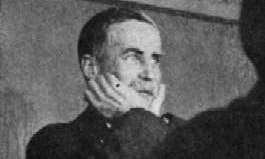
Herbert Rowse Armstrong
Murderer Albert Burrows
Murderer · United Kingdom · 1920
Albert Burrows (also named Albert Edward Burrows): married farm labourer who to…
4 victims
Albert Burrows
Murderer · United Kingdom · 1920
Albert Burrows (also named Albert Edward Burrows): married farm labourer who to…
4 victims
 Lock Ah Tam
Murderer · United Kingdom · 1925
Lock Ah Tam was 54 when he killed his wife and two daughters. He had been a suc…
3 victims
Lock Ah Tam
Murderer · United Kingdom · 1925
Lock Ah Tam was 54 when he killed his wife and two daughters. He had been a suc…
3 victims
 James Campbell
Murderer? · USA · 1997
September 1997 — James Campbell’s first trial ended with a hung jury. · January…
2 victims
James Campbell
Murderer? · USA · 1997
September 1997 — James Campbell’s first trial ended with a hung jury. · January…
2 victims
 David Stevenson
Murderer · USA · 1995
David Stevenson was sentenced to death on February 3, 2006. He was convicted fo…
1 victim
David Stevenson
Murderer · USA · 1995
David Stevenson was sentenced to death on February 3, 2006. He was convicted fo…
1 victim
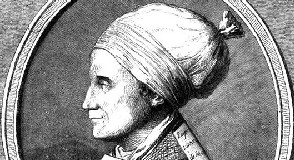 Antoine François Desrues
Murderer · France · 1777
Antoine François Desrues (1744–1777) was a French poisoner. Desrues was born at…
2 victims
Antoine François Desrues
Murderer · France · 1777
Antoine François Desrues (1744–1777) was a French poisoner. Desrues was born at…
2 victims
 Mark Wesley Bailey
Murderer · USA · 1998
Mark Wesley Bailey was convicted in Virginia for the capital murder of his two-…
2 victims
Mark Wesley Bailey
Murderer · USA · 1998
Mark Wesley Bailey was convicted in Virginia for the capital murder of his two-…
2 victims
- Gender
- male
- Country
- United Kingdom
- Location
- Hay-on-Wye, Wales, United Kingdom
- Date of birth
- 1869
- Age at first offence
- 52
- Characteristics
- poisoner, parricide
- Victim profile
- Katherine May Armstrong (his wife)
- Method of murder
- Poisoning (arsenic)
- Date(s) of murder
- February 22, 1921
- Years active
- 1921
- Date of arrest
- December 31, 1921
- Status
-
Executed
Executed by hanging at Gloucester Prison on 31 May 1922
Case record: Herbert Rowse Armstrong
Background
Herbert Rowse Armstrong (1869 - 31 May 1922) practised as a solicitor and was commonly claimed to be the only solicitor in Britain to have been hanged for murder. Major Armstrong practised in Hay-on-Wye on the border of England and Wales from 1906 until his arrest on 31 December 1921. He was known as the “Hay poisoner”.
Armstrong was born in 1870 at Newton Abbot, Devon. His parents were not particularly wealthy, and he obtained a good education through the support of relatives. He attended Cambridge University, where he was a spare Cox for the University Eight. He gained his law degree and became a solicitor in 1895.
He practised initially in Newton Abbot before moving to Liverpool. In 1906, while in Liverpool, he heard of a vacancy in the town of Hay, in Brecknock, for an opening as a managing clerk. He moved to Hay and put some of his savings into the partnership. When Mr. Cheese, the oldest of two partners died, Armstrong succeeded to the practice.
Armstrong married a friend from his Newton Abbot days, Miss Katerine Mary Friend, who was from Teignmouth. They moved into a house in a valley called Cusop Dingle, with the stream in the valley forming part of the border between England and Wales. They had three children in as many years, before moving into a larger house in 1910, also located in Cusop Dingle.
Armstrong was a keen gardener and was obsessed with eradicating garden weeds. He kept a stock of weed-killer, and used to buy arsenic and made up his own concoctions.
His premises in Broad Street, Hay, were part of a shop, with the remaining portion occupied by a firm of estate agents. Across the street were the offices of Mr. Griffiths, who was also a solicitor. Mr. Griffiths was Welsh, like the late Mr. Cheese, whereas Armstrong was a stranger to the town. Business was doing reasonably well, and Mrs. Armstrong had her own income of £2000.
With the outbreak of the First World War in August 1914, Armstrong, previously a member of the Territorials, was called up to the Army with the rank of Captain and was later promoted to Major. After a posting to France, he returned to the UK to look after his practice in Hay.
During this period, his business rival Mr. Griffiths became increasingly frail. Armstrong saw an opportunity to expand his business and offered to amalgamate the two practices, but Griffiths decided on other arrangements. In early 1919, just after Armstrong left the Army, Mr. Oswald Norman Martin joined Griffiths as a partner. Martin was invalided out of the Army after suffering a head wound affecting his facial muscles. At the end of 1920, Mr. Griffiths died.
Armstrong’s home life differed from the relative freedom he had enjoyed while in the Army. He was only just over 5 feet tall and 7 stones (98 lbs or 45 Kg) in weight and was dominated by his wife. Although Mrs. Armstrong was described as devoted as a wife and mother, she treated her husband and children with strictness. Armstrong was only allowed to smoke in one room and never outdoors, and he was not allowed to drink alcoholic drinks (except in other people’s houses when he had a cold). He was rebuked in public by his wife for keeping servants waiting, and she often called him away from parties because it was his bath night.
The offence
Armstrong was charged with the attempted murder of Oswald Martin, a rival solicitor.
Armstrong was found guilty of the murder of his wife at Hereford in April 1922. Mrs Armstrong’s body had been exhumed and revealed high levels of arsenic.
The final stage in the poisoning case was reached when Major Herbert Rowse Armstrong was executed at Gloucester Prison for the murder of his wife Katherine May Armstrong by arsenical poisoning on February 22nd 1921. The crime was committed at Cusop in Herefordshire.
Investigation
After Mrs. Armstrong’s death, the body was exhumed and arsenic was found. On 2 January 1922, Mrs. Armstrong was exhumed and the pathologist Bernard Spilsbury removed some samples before she was reburied. The samples were examined and found to contain 3½ grains of arsenic.
The authorities decided to take action on Dr. Hincks’s suspicions and investigators made discrete calls on Mr. and Mrs. Martin, Dr. Hincks, and Mr. Davies (the chemist and Martin’s father-in-law). Armstrong made numerous attempts to invite either Martin, or Martin and his wife, to visit Armstrong for tea during the period from Martin’s return to work until Christmas 1921. Martin, aware of the police investigations, repeatedly declined the invitations.
Arrest
Armstrong moved to Hay and practised until his arrest on 31 December 1921. On 19 January 1922, Armstrong was charged with the murder of his wife.
Trial
During the process of his 10 day trial in April 1922, Armstrong was kept in Gloucester Prison, and every day of the trial he was taken to court in Hereford.
The prosecution case was presented by the Attorney-General, Sir Ernest Pollock. Armstrong was represented by Sir Henry Curtis-Bennett. Armstrong selected Curtis-Bennett, a fellow Cambridge man, as “Cambridge always wins”. On the day before the trial started, Cambridge beat Oxford in the annual boat race by 4½ lengths.
The trial judge was Mr. Justice Darling, hearing his last murder case after a 25 year career. He was 73 years old at the time of the trial. Darling later said that the Armstrong case was one of the most interesting cases that he heard.
On 3 April 1922, a legal debate took place with the trial jury removed. The legal argument concerned the admission of evidence regarding the poisoning of Martin. Mr. Justice Darling ruled that evidence regarding the Martin case could be admitted. He stated in his summing up: “... that the Defendant had arsenic in his possession and that he would use it to poison a human being”.
During the trial, the defence claimed that Mrs. Armstrong had been suicidal and had committed suicide by swallowing the arsenic she had found, which her husband had purchased to kill his garden weeds. This was countered by the prosecution showing that Mrs. Armstrong was not capable of leaving her bed in the week before her death. The prosecution also presented that she had said to her nurse on the morning of the day that she died: “I am not going to die, am I? Because I have everything to live for - my children and my husband”.
The lady who had first met Armstrong in Christchurch and later in London three months after Mrs. Armstrong’s death testified for the prosecution that Armstrong had spoken to her about marriage. Bernard Spilsbury testified that the amount of arsenic in Mrs. Armstrong’s body could have only occurred through poisoning.
Mrs. Armstrong’s doctor, Dr. Hincks, testified that she could have administered any medicine herself on the day of her death.
Armstrong was described as a well educated and professional man who was also Worshipful Master of the Hay Lodge of Freemasons and a church-warden who read the lessons on Sundays. He was expected to testify in his own behalf. After completing his testimony and cross-examination, Armstrong was about to leave the witness box when the judge asked Armstrong to wait, as he had questions to put to Armstrong. The judge’s questions exposed inadequacies in Armstrong’s earlier replies.
The prosecution evidence included that Armstrong had made up some twenty small bags of arsenic to put into individual dandelion holes to kill weeds. The judge asked why he had done this, since it would have been easier to pour the poison straight from the original packet into holes in the ground. Armstrong replied: “I really do not know. At the time it seemed the most convenient way of doing it.”
The judge continued by asking why Armstrong, who was a solicitor, did not tell the police about this experiment, and why he did not tell the police earlier about the two packets found in his desk at home. Armstrong was described as floundering as the judge’s questions continued.
After the prosecution and defence had been completed, the judge summed up the case for the 12 man jury, which was composed of 8 farmers, a fruit grower and 3 professional gentlemen. The judge stated that the possession of the two bags of arsenic in Armstrong’s desk showed just possession of arsenic and nothing else. The main point was the state of Mrs. Armstrong in her last few days before her death at home.
Mr. Justice Darling reminded the jury that if it was wrong for him to have allowed the evidence of Martin’s poisoning, it was a matter for the Court of Criminal Appeal should Armstrong be found guilty.
Armstrong was found guilty of the murder of his wife and sentenced to death by hanging.
Sentencing
Armstrong was sentenced to death by hanging.
Appeals
On 16 May 1922, the Court of Criminal Appeal dismissed Armstrong’s appeal and ruled that Mr. Justice Darling was correct in his decision to allow evidence regarding Mr. Martin’s poisoning to be presented by the prosecution.
Outcome
On 31 May 1922, Herbert Rowse Armstrong was hanged at Gloucester Prison.
On the day before his execution, Armstrong wrote a letter: Gloucester Prison 30 May 1922. My dear Matthews My heart was too full today to say all I wished. Thank you, my friend, for all you have done for me. No one could have done more. Please convey also to all your staff my gratitude for the work they put in. No team could have worked more loyally or with more devotion to duty. Ever your faithful friend, (sgd). H Rowse Armstrong
The executioner was John Ellis, assisted by Edward Taylor.
Aftermath
The Armstrong children were taken care of by an aunt. The house was sold and its name changed.
Mr. Martin eventually became a prominent solicitor in Hay-on-Wye, and his health had been affected by the attempts on his life and the subsequent trial. He suffered from depression and became afraid of the dark. In 1924, Martin and his wife moved to East Anglia where he died shortly afterwards.
Timeline
- 31 December 1921 — Armstrong was arrested.
- 2 January 1922 — Mrs. Armstrong was exhumed; samples were found to contain 3½ grains of arsenic.
- 19 January 1922 — Armstrong was charged with the murder of his wife.
- 3 April 1922 — Legal debate took place over admission of evidence relating to Martin’s poisoning; Mr. Justice Darling ruled it could be admitted.
- 16 May 1922 — Court of Criminal Appeal dismissed Armstrong’s appeal.
- 31 May 1922 — Herbert Rowse Armstrong was executed by hanging at Gloucester Prison.


Spotted an error, or have more information about this case?