
Hubert Glenn Sexton
Murderer Russell Ellwood
Murderer · USA · 1991
Russell Ellwood was a former taxi driver. Authorities suspected him of killing…
20 victims
Russell Ellwood
Murderer · USA · 1991
Russell Ellwood was a former taxi driver. Authorities suspected him of killing…
20 victims
 Robert Martines Perez
Murderer · USA · 1994
Name: Robert Martines Perez · Other name used in proceedings: Robert Martinez P…
15 victims
Robert Martines Perez
Murderer · USA · 1994
Name: Robert Martines Perez · Other name used in proceedings: Robert Martinez P…
15 victims
 Billy Frank Vickers
Murderer · USA · 1993
Billy Frank Vickers Vickers was executed by lethal injection in Texas on Januar…
14 victims
Billy Frank Vickers
Murderer · USA · 1993
Billy Frank Vickers Vickers was executed by lethal injection in Texas on Januar…
14 victims
 Gilmar Guevara
Murderer · USA · 2000
Gilmar Alexander Guevara was a Hispanic male born on 10/05/1969. He was 31 when…
2 victims
Gilmar Guevara
Murderer · USA · 2000
Gilmar Alexander Guevara was a Hispanic male born on 10/05/1969. He was 31 when…
2 victims
 Robert Springsteen
Homicide ? · USA · 1991
Robert Springsteen IV (TDCJ number 999389) was the defendant. Springsteen was b…
4 victims
Robert Springsteen
Homicide ? · USA · 1991
Robert Springsteen IV (TDCJ number 999389) was the defendant. Springsteen was b…
4 victims
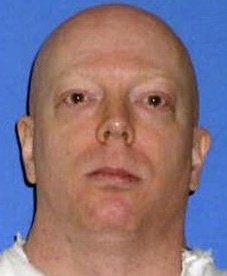 Eric Charles Nenno
Murderer · USA · 1995
Eric Charles Nenno was convicted of capital murder and rape for the rape and mu…
1 victim
Eric Charles Nenno
Murderer · USA · 1995
Eric Charles Nenno was convicted of capital murder and rape for the rape and mu…
1 victim
 Stephen Epperly
Murderer · USA · 1980
Stephen Epperly was convicted of first degree murder of Gina Renee Hall. Her bo…
1 victim
Stephen Epperly
Murderer · USA · 1980
Stephen Epperly was convicted of first degree murder of Gina Renee Hall. Her bo…
1 victim
 James Hairston
Murderer · USA · 1996
James Hairston was 27 years old and was of Grand Junction, Colo. James Hairston…
2 victims
James Hairston
Murderer · USA · 1996
James Hairston was 27 years old and was of Grand Junction, Colo. James Hairston…
2 victims
- Gender
- male
- Country
- USA
- Location
- Scott County, Tennessee, USA
- Date of birth
- June 1, 1971
- Age at first offence
- 29
- Characteristics
- abuse, child abuse, rape, history of mental illness
- Victim profile
- Stanley Goodman and Terry Sue Goodman
- Method of murder
- Shooting
- Date(s) of murder
- May 20, 2000
- Years active
- 2000
- Date of arrest
- 5 days after
- Status
-
Sentenced to death
Sentenced to death on June 30, 2001
Parties and case identification
Hubert Glenn Sexton was convicted in Tennessee for first degree murder of Stanley Goodman and Terry Sue Goodman. The case on direct appeal was before the Court of Criminal Appeals of Tennessee at Knoxville: State of Tennessee v. Hubert Glenn Sexton (December 7, 2010).
The appeal was from the Criminal Court for Scott County (No. 7685), Judge E. Shayne Sexton presiding. The opinion was delivered by Camille R. McMullen, Judge, with Joseph M. Tipton, P. J., and D. Kelly Thomas, Jr., J., joining.
Timeline
- May 20, 2000 (late evening) — Stanley Goodman, 36, and Terry Sue Goodman, 37, were shot and killed in their home in Scott County, Tennessee.
- February 2000 — Stanley Goodman telephoned Sexton and played a tape telling B.G. to make statements related to B.G.’s allegations.
- May 14, 2000 (week of) — Sexton questioned Christy Swallows regarding the investigation into the sexual molestation allegations.
- May 16, 2000 — Bradley County Department of Children’s Services was asked to respond to Black Fox Elementary School regarding allegations by B.G.; Sexton was confronted and gave an account denying the allegations; Detective Alvarez advised Sexton of Miranda rights and Sexton waived and signed a written waiver.
- May 21, 2000 (around 3:00 a.m.) — Clinton Daniel Mason saw Sexton and his wife for about ten minutes at their apartment.
- May 21, 2000 (around 8:30 a.m.) — Sexton came to Mason’s house and asked if Mason and his girlfriend wanted something to eat; on the way to Denny’s, Sexton confessed to killing Stanley Goodman.
- May 21, 2000 (around 8:00 or 9:00 a.m.) — Sexton and his wife visited Preston Adams at his room at the Budget Inn; Sexton made statements describing concealment and disposal actions after the murders.
- May 24, 2000 (Wednesday) — Detective Alvarez received a page that Sherry Sexton was attempting to get in contact; the recorded conversation occurred and a meeting was set.
- May 24, 2000 (11:00 p.m.) — Detective Alvarez and Special Agent Barry Brakebill met Sherry Sexton at the south precinct.
- May 25, 2000 (following day) — Officers arrested Sexton for the murders of Stanley Goodman and Terry Sue Goodman.
- May 22, 2000 — Dr. Sandra Elkins performed autopsies on Stanley and Terry Sue Goodman.
- June 1, 2000 (Thursday) — The Thursday, June 1, 2000 edition of the Independent Herald reported multiple facts about the case (as later quoted in the appellate decision).
- Thursday edition of Scott County News (after the preliminary hearing) — The Thursday edition of the Scott County News reported additional case information (as later quoted in the appellate decision).
- June 2001 — The trial was held; jury instructions were given during trial; the record reflects the trial time as June 2001.
- June 30, 2001 — Sexton was sentenced to death.
- December 7, 2010 — The appellate opinion was delivered.
Background
Stanley Goodman (36) and his wife, Terry Sue Goodman (37), were killed by gunfire in their home in Scott County, Tennessee. Their 13-year-old daughter, E.G., found their bodies in their bed.
B.G. was Sexton’s minor stepdaughter. Shortly before the killings, B.G. had reported to authorities that Sexton sexually abused her. One of the victims, Stanley Goodman, was B.G.’s biological father.
Sexton denied the allegations of sexual abuse. He believed that Stanley Goodman was responsible for B.G. falsely accusing him of sexual abuse. The evidence at trial showed Sexton shot and killed both victims while they were in their bedroom.
The offence
In the late evening of May 20, 2000, Stanley Goodman and Terry Sue Goodman were shot and killed in their home in Scott County, Tennessee.
The jury convicted Sexton of two counts of first degree murder arising from the deaths of Stanley and Terry Goodman.
During the attack:
- Detective Wade Chambers discovered six shell casings throughout the residence on the first day and later discovered three more shell casings.
- He was unable to determine how many times the victims had been shot.
- Dinah Culag, a forensic scientist with the TBI, examined nine shell casings and determined that all nine shell casings had been fired from the same firearm; she was unable to determine the type of firearm but determined the firearm was not a revolver.
Dr. Sandra Elkins, Knox County Medical Examiner and Director of the Autopsy Service at the U.T. Medical Center, performed autopsies on May 22, 2000:
- Stanley Goodman’s cause of death was multiple gunshot wounds to the head, with “four gunshot wounds to the head, all in the right facial region.”
- Terry Goodman’s cause of death was also multiple gunshot wounds to the head.
Investigation
Hope Tharp, a Child Protective Services team leader in Cleveland, Tennessee, responded to a courtesy request from the Scott County Department of Children’s Services to investigate allegations of sexual abuse of B.G. by her stepfather, Sexton.
Tharp learned that on May 16, 2000, the Bradley County Department of Children’s Services (DCS) was asked to respond to similar allegations B.G. had made to personnel at Black Fox Elementary School. Tharp interviewed B.G. and B.G.’s mother.
As a result of the reports and investigation, the decision was made to remove B.G. and two other children from the Sexton home. Tharp instructed members of B.G.’s family to come to her office that day at 4:00 p.m. Sexton and one child did not come. Tharp later went to the Sexton residence and encountered Sexton for the first time.
Tharp informed Sexton that B.G. had reported that he had sexually abused her and that “on that basis [DCS] had to file a petition for custody since the mother was not believing her.” Tharp told Sexton he would have to return to complete paperwork and be interviewed regarding the allegations.
Sexton was confronted with B.G.’s allegations, including forced fellatio, and denied that “any ‘of that stuff occurred.’” Sexton explained that B.G. was getting the information from her sister and her father.
Sexton stated that B.G.’s father, Mr. Goodman, had telephoned him in February 2000 and had Sexton listen to a tape. On the tape, Mr. Goodman was telling B.G. to say things related to her allegations. Sexton stated that B.G. “made all this stuff up. . . she's got it from her dad. . . . he put her up to it.”
Bradley County Sheriff’s Deputy Jerry Kyle Millsaps assisted Detective Alvarez and DCS. Millsaps observed that Sexton was upset and talking with his wife, Sherry Sexton, about “her family causing them problems all the time.” Millsaps also overheard Sexton state that:
- “he was not going to jail for child charges -- a child abuse charge. If I was to go to jail for anything, it would be murder.”
On May 16, 2000, Bradley County Sheriff’s Detective Tony Alvarez responded to a complaint initiated by a teacher at Black Fox Elementary School. Along with DCS, Alvarez spoke with B.G. regarding the allegation and later spoke with Sexton. Alvarez advised Sexton of Miranda rights; Sexton waived them and signed a written waiver.
Alvarez later had Sexton explain that B.G.’s biological father, Stanley Goodman, was behind the allegations. Sexton told Alvarez:
- “[the Appellant and his wife] had been staying up here with the Goodmans. For one reason or another, they decided to transfer back to Bradley County. Mr. Goodman was not too happy about that arrangement. And, as such, he was just getting the children to trump up some false allegations of improper sexual conduct.”
Later that week, Stanley Goodman contacted Alvarez. After a conversation with Stanley Goodman, Alvarez again met with Sexton. Alvarez informed Sexton of Stanley Goodman’s intent to file a petition to take custody of the children. Alvarez also asked about taking a polygraph test. Sexton refused. Sexton told Alvarez that Special Agent Skip Elrod had informed him that such tests could be fixed.
Preston Adams and Sexton rode back and forth to work together for eight to ten weeks while they worked on a construction project. Sexton told Adams about pending child abuse charges initiated by Stanley Goodman, and Sexton asked where he could purchase a handgun. Sexton told Adams that:
- “he was going to try to take care of the matter before it could escalate any further.”
On May 20, 2000, while working, Sexton told Adams that:
- “[Stanley Goodman] was coming down there and that he hadn't had any sexual contact with the children. And that -- but he wasn't going to let him come down there before he took care of that.”
Sexton and Adams left work around 12:30 p.m. Sexton drove Adams to the Budget Inn, where Adams was living at the time.
Around 6:00 p.m. on May 20, 2000, Sexton went to Maxi Muffler to visit Clinton Daniel Mason, a mechanic at the Cleveland store. Sexton asked Mason whether there was any extra work needed and asked for his gun, a .22 rifle. Sexton had purchased the weapon from Mason the previous year, and it was kept at the home of Mason’s mother. Mason and Sexton went to Mason’s mother’s home to obtain the weapon. At the Muffler Shop, Sexton told Mason he had to “take care of some business in Scott County.”
Vella Strunk lived near her brother, Stanley Goodman. E.G. lived with Stanley Goodman in Scott County. B.G. and her brother lived with their mother and Sexton in Bradley County.
Every Saturday night, Strunk and her family attended races in Scott County, and E.G. usually accompanied them. Rain caused races to be cancelled on May 20, 2000; the family returned home around 8:30 p.m. Strunk took E.G. home around 11:00 p.m. Strunk observed no lights were on in the house. After E.G. returned with coffee, Strunk went home.
Strunk telephoned Stanley Goodman the next morning and got no answer. Within ten minutes, E.G. called Strunk crying and told her that her father and stepmother were still in bed and “that they had blood on them.” Strunk drove to the home, discovered the bodies of Stanley and Terry Goodman, and called the police.
Around 3:00 a.m. on May 21, 2000, Mason saw Sexton and his wife for about ten minutes at their apartment; Mason described Sexton as being “drunk or something” and his wife as being upset.
Around 8:30 a.m. the same day, Sexton came to Mason’s house and asked if Mason and his girlfriend wanted to get something to eat. On the way to Denny’s restaurant, Sexton confided to Mason that he had killed Stanley Goodman. Mason stopped Sexton from revealing further details. Sexton and his wife visited Preston Adams at his Budget Inn room at around 8:00 or 9:00 a.m.; Sexton told Adams that:
- “the police had been there and ransacked his house. And . . . that he did commit those crimes. . . .”
Sexton told Adams the following details:
- [The Appellant said that] he stopped at the dollar store and he bought a hood and he bought sweats and bought gloves. And he had disposed of all hair follicles off of his body. And that after he had done the crime, he said that he had burnt all the clothes and he said that he burnt the stock of the gun and buried the rifle part. . . . He said he bought oversized shoes so that it would like that a bigger man had committed the crime. He also changed the tires on his vehicle, too.
- He told Adams that Stanley and Terry Sue Goodman were in their bedroom when he killed them.
Christy Swallows lived in the same trailer park as the Sextons and occasionally babysat their children. Swallows was also involved in an affair with Sexton.
During the week of May 14, 2000, Sexton questioned Swallows regarding the investigation into the sexual molestation allegations. Sexton told Swallows that Stanley Goodman had played a tape to him and said:
- “That bastard in Scott County did this.”
- “he would kill him for this.”
On the morning of May 21, 2000, Swallows was awakened by Sexton beating and banging on her windows and doors. Swallows described Sexton as frantic and scared. He stated that his wife had left him and added that her car was at the police station. Sexton later admitted that he had killed Stanley and Terry Goodman.
Arrest
On Saturday, May 20, 2000, Detective Alvarez received a call at his home from the 911 Center stating that Tennessee Bureau of Investigation (TBI) officers or agents wanted to speak with him because there had been a double homicide in Scott County.
On Wednesday, May 24, 2000, Detective Alvarez received a page that Sherry Sexton was attempting to get in contact with him. Detective Alvarez contacted Sherry Sexton and had the conversation recorded. Sherry sounded desperate and agreed to meet at the south precinct.
Detective Alvarez contacted Special Agent Barry Brakebill and advised him of the scheduled meeting with Sherry Sexton. At 11:00 p.m., Alvarez and Brakebill met Sherry Sexton. Thirty minutes into their discussions, Alvarez and Brakebill were advised that the Appellant was at the door. Sexton was upset, agitated, and wanted to speak with his wife. Sexton informed Alvarez that Sherry was upset and did not know what she was saying. Alvarez escorted Sexton to the side of the building while Brakebill removed Sherry Sexton to another location. Sherry Sexton was transported to a safe harbor home to spend the night.
The following day, officers arrested Sexton for the murders of Stanley Goodman and Terry Sue Goodman.
Trial
Guilt phase
A Scott County jury found Sexton guilty of two counts of first degree murder arising from the deaths of Stanley and Terry Goodman.
Jury verdicts were:
- Guilty of first degree murder of Stanley Goodman.
- Guilty of first degree murder of Terry Sue Goodman.
The trial record included statements from witnesses describing:
- Sexton’s upset demeanor and his discussion with his wife about child charges and potential murder consequences.
- Sexton’s denial of sexual abuse allegations and his claim that Stanley Goodman fabricated or prompted B.G.’s statements.
- Sexton’s procurement and obtaining of a .22 rifle.
- Sexton’s confession to Mason and statements to Adams describing disposal and concealment steps.
- Sexton’s statements to Swallows about blaming Stanley Goodman and threatening to kill him.
Evidence relating to child sexual abuse allegations
The prosecution sought to introduce evidence of specific allegations of sexual abuse to establish a motive for the murders.
The trial court conducted a pre-trial hearing and made findings in which it stated the case was not primarily a child sex case and it limited graphic testimony. The trial court ordered limiting instructions and restricted testimony about details.
During trial, Hope Tharp testified with graphic detail about what B.G. allegedly demonstrated and told Tharp, including:
- “[C]lose your eyes and open your mouth,” that she obeyed, and when she opened her eyes, “she saw the bad spot.”
- testimony that B.G. said she was made to put her mouth onto his penis and suck it, and that he made her put her hand on his penis and move it up and down. Sexton denied the allegations, and the jury received curative instructions limiting consideration of the accusation to motive.
The trial court issued the following curative instruction to the jury:
Ladies and gentlemen, during this trial there may be times that I give you what we call a jury instruction.
During the trial, it would be called a curative instruction. What that means is, I am going to give you a legal definition or an instruction concerning some evidence that you may or may not have heard. This is, at this time, a curative instruction concerning some of the evidence that Ms. Tharp gave you today. Please listen carefully. This will also be included at the final stage. . . . You have heard evidence that the Defendant was accused of sexual abuse of a child. The Defendant is not on trial for any offenses associated with child sexual abuse. You may not consider this evidence to prove the Defendant's disposition to commit the act of premeditated murder. This evidence can be considered by you only for the limited purpose of determining whether it provides motive. In other words, you may consider the accusation only as it tends to show a motive of the Defendant to commit the crime charged in this case. Such evidence of the accusation, if considered by you for any purpose, must not be considered for any purpose other than motive.
Miranda and interview statements
Detective Alvarez testified Sexton waived Miranda rights and signed a written waiver.
Sexton told Alvarez that:
- “Mr.
Polygraph testimony
Deputy Millsaps testified about a discussion where Sexton agreed to take a polygraph test. Detective Alvarez also testified about discussions regarding polygraph examinations, including that the test was offered and Sexton refused.
Testimony about Sherry Sexton
Officers testified about meeting Sherry Sexton at the south precinct. The appellate decision stated that no statement made by Sherry Sexton was introduced through the officers’ testimony, and the officers related their first-hand observations.
Evidence admitted
The appellate decision addressed multiple evidentiary issues including:
- Admission of a rifle that was not the murder weapon and was inoperable.
- Admission of evidence regarding an unrelated speeding arrest that was not a conviction.
- Admission of evidence retrieved during an automobile search; the appellate decision stated Sexton consented to the search.
- Admission of evidence relating to preparation of Sexton’s IRS tax forms and Sexton’s threat.
Shera Crowley testified that she prepared Sexton’s tax return on January 31, 2000, for two or three years, and that Sexton removed his daughter B.G. and added E.G. as a dependant. She testified that Sexton responded:
- “[I]f the son of a bitch ever tried to claim her or take her, he would blow his G.D. brains out.”
Crowley also testified that preparing the return in that manner was unusual and she asked whether Stanley Goodman was claiming E.G. She testified she took the threat seriously enough to convey it to Terry Sue Goodman and that Terry Sue Goodman was not concerned since Sexton had made similar threats in the past. Crowley testified that Sexton would probably receive an additional $1200 as a tax refund for claiming E.G. as a dependant.
Grounds raised on appeal during trial
Sexton appealed both convictions and death sentences, raising issues including:
- Motion for change of venue.
- Failure to properly admonish the jury before and during trial.
- Failure to adequately voir dire regarding extrajudicial information.
- Failure to excuse certain jurors for cause.
- Admission of allegations of child sexual abuse.
- Admission of testimony about Sexton’s willingness and later refusal to take a polygraph exam.
- Admission of statements made by Sexton’s wife.
- Admission of evidence of an unrelated rifle similar to the murder weapon.
- Admission of evidence of an unrelated speeding arrest.
- Admission of evidence allegedly unlawfully obtained from Sexton’s vehicle.
- Admission of evidence relating to preparation of Sexton’s IRS tax forms.
- Individual and cumulative prosecutorial misconduct.
- Sufficiency of convicting evidence.
- Verdict contrary to the weight of the evidence.
- Constitutionality of Tennessee’s death penalty scheme.
- Denial of motion for new trial based on cumulative error.
The appellate court affirmed the judgments of the trial court.
Sentencing
Penalty phase
During the penalty phase, the State presented testimony from Lamance Bryant, a teacher in Scott County. Bryant testified that Terry Sue Goodman was his sister and described her as “a very friendly, outgoing person” and having “a very friendly, outgoing person” and “a very friendly, outgoing person” and “a very friendly, outgoing person”? (Single distinct description in the record: Bryant described Terry Sue Goodman as “a very friendly, outgoing person” and said she had “a sweet spirit.”)
Bryant described Terry Sue Goodman’s injuries from a car accident in 1985 and how she overcame severe physical hindrances, including that she learned to walk and talk again and was never able to work again, but could walk without a walker on good terrain. Bryant testified that since her death there had been “a void that was not able to be described with words.”
E.G., described as the 14-year-old daughter of Stanley Goodman, testified about being close with her father and stepmother, fishing and gardening, and that since the murders she suffered from nightmares and difficulties being alone. E.G. blamed herself because the door to the Goodmans home was left unlocked for her. She testified she no longer felt as if she had a home.
Vella Strunk, Stanley Goodman’s sister, testified she was close to her brother and her life would never be the same without him. Strunk verified E.G. suffered from nightmares and was afraid to be alone.
Mitigation
Sexton presented testimony of three witnesses in mitigation:
- Lynn Sexton, wife of Sexton’s first cousin and first cousin of Sherry Sexton. She testified she had known Sexton for about twelve to thirteen years, that Sexton’s family lived with her for about six months without problems, and that Sexton later moved his family to a trailer park in Winfield in Scott County and then to Bradley County. She testified Sexton was a hard worker, not an alcoholic or drug user, and was not the type of person to commit murder. She described him as someone who would come to others’ aid, listen, and give advice.
- Karen Cooper. She testified she had known Sexton since he was three or four years old. She described Sexton’s childhood environment as unstable, with parents divorcing when he was six, and at age seven he was left with her sister-in-law and her husband. She testified Sexton moved a lot and that the longest stability was probably with her sister-in-law and husband; she estimated Sexton lived with six to eight different families before age eighteen. She recalled an incident where Sexton stepped off a school bus and realized that the family he was living with had moved. She testified Sexton had two older sisters and one younger brother and that his father had been in poor health with emphysema. She testified she believed his father did the best he could and was overwhelmed. She conceded Sexton’s father did not always approve of Sexton’s lifestyle. She testified she loved Sexton and believed he was able to do some good. She said Sexton was “no genius, but he's not stupid either.” She added that in her opinion Sexton was not manipulative.
- Dr. William D. Kenner, a physician with specialty training in psychiatry, child psychiatry, and psychoanalysis. He testified he was contacted to evaluate whether Sexton exhibited mental health symptoms. Kenner testified Sexton moved approximately twenty-six times before age eighteen and described effects such as losing attachment sense. He testified about average intelligence early in school, difficulty relating to others, and an attachment problem. Kenner testified about parental divorce when Sexton was six and mother leaving with another man. He testified Sexton’s father spent six months in an Army psychiatric hospital and later developed heart disease and chronic lung disease, which prevented holding the family together.
Kenner testified:
- “one of the things that happens to people when they get hurt psychologically is that they will often repeat that, even though they don't mean to.”
- “like the person who has an alcoholic parent. That person makes a pledge not to marry an alcoholic. Dr. Kenner stated that often this person will end up marrying an alcoholic. He described this as "reliving that kind of experience."”
- Sexton’s younger brother suffered from “mental retardation problems.”
- Kenner testified relatives had histories of mental illness or substance abuse and that impulsive behavior and mental illness run in families, with increased rate of substance abuse and family environment magnifying problems.
Kenner opined that:
- “regardless of the veracity of the allegations of sexual abuse, the Appellant would still fear his children being taken away from him”
- Sexton was amenable to rehabilitation and would do well in prison setting, with prison providing a type of “family.”
- prison life meant rules and consistency and that Sexton would be less likely to do harm inside than outside.
- Sexton could do something positive for society with life over death, and that Sexton’s children would not spend their lives feeling responsible for his execution. Kenner affirmed that Sexton did not satisfy the legal definition of insanity, and agreed Sexton did not suffer from a mental disease or defect other than a personality disorder.
Aggravating circumstance and death sentence
The jury retired to deliberate at 12:05 p.m., deliberations stopped for a lunch break, and at 2:29 p.m. returned to open court with its verdict.
For each count of first degree murder, the jury found:
- the statutory aggravating circumstance that the murder was committed for the purpose of avoiding, interfering with, or preventing a lawful arrest or prosecution of the defendant or another.
- that this aggravating circumstance outweighed any mitigating circumstances.
The jury imposed sentences of death for the murders of Stanley Goodman and Terry Sue Goodman.
Appeals
The Court of Criminal Appeals of Tennessee at Knoxville reviewed Sexton’s direct appeal of both convictions for first degree murder and his sentences of death and affirmed the trial court’s judgments.
The appellate decision addressed:
- Change of venue arguments.
- Jury admonitions and alleged jury communications.
- Voir dire regarding extrajudicial information and that eight jurors had heard something prior to trial but each asserted ability to follow the law and instructions.
- Failure to excuse jurors for cause, including list of challenged jurors; the appellate court held any possible error was harmless because the record did not show jurors impaneled were incompetent.
- Admission of allegations of child abuse, including analysis under Tennessee Rule of Evidence 404(b) and the Confrontation Clause issue raised under Crawford v. Washington.
- Admission of polygraph-related testimony.
- Admission of statements made by Sexton’s wife through officers and whether confrontation rights were infringed.
- Admission of an inoperable rifle not used as the murder weapon.
- Admission of evidence regarding an unrelated speeding arrest.
- Evidence obtained from Sexton’s vehicle; the appellate decision stated Sexton consented to the search.
- Evidence relating to preparation of Sexton’s IRS tax forms.
- Individual and cumulative prosecutorial misconduct, including specific arguments about closing and opening remarks and penalty phase analogies.
- Sufficiency of evidence and weight-of-the-evidence issues.
- Proportionality review under Tennessee Code Annotated section 39-13-206(c)(1), including arbitrariness, support for statutory aggravating circumstance, outweighing of mitigating circumstances, and proportionality.
Outcome
The Court of Criminal Appeals affirmed Sexton’s convictions for two counts of first degree murder and the resulting sentences of death imposed by the trial court.
The appellate court’s conclusion stated that:
- the sentence of death was not imposed in an arbitrary fashion,
- the evidence supported the jury’s finding of the statutory aggravating circumstance under T.C.A. § 39-13-204(i)(6),
- the aggravating circumstance outweighed mitigating circumstances beyond a reasonable doubt,
- and comparative proportionality review supported that the sentences were neither excessive nor disproportionate to penalties in similar cases.
Other details
E.G. was described as 14 years old in the penalty phase and 13 years old as the daughter who found the bodies in bed.
Mason described Sexton as “drunk or something” on the morning of May 21, 2000.
The appellate decision quoted multiple newspaper summaries used in the venue argument, including statements attributed to Sheriff Carson, and reported facts such as:
- “The victims sustained multiple gunshot wounds to the face with a .22 caliber weapon and were alone in their home when killed.”
- “Sheriff Carson revealed that Goodman had made child abuse allegations against the Appellant in an attempt to gain custody of the children and the Appellant said he was coming to Scott County to "take care of the problem." He also reportedly told his wife that he had committed the murders.” The appellate decision also quoted the Scott County News summary of prior hearing testimony including that Hope Tharp provided detailed testimony about allegations of child molestation, and that Deputy Jeremy Kyle Millsaps overheard discussions about a polygraph examination.
Spotted an error, or have more information about this case?