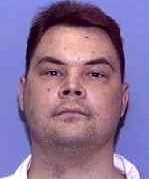
Robert Springsteen
Homicide ? Ryan Matthews
Homicide ? · USA · 1997
Ryan Matthews was an African American juvenile who was 17 years of age at the t…
1 victim
Ryan Matthews
Homicide ? · USA · 1997
Ryan Matthews was an African American juvenile who was 17 years of age at the t…
1 victim
 Roscoe Arbuckle
Homicide ? · USA · 1921
Roscoe Conkling Arbuckle, also known as Fatty Arbuckle (March 24, 1887 – June 2…
1 victim
Roscoe Arbuckle
Homicide ? · USA · 1921
Roscoe Conkling Arbuckle, also known as Fatty Arbuckle (March 24, 1887 – June 2…
1 victim
 Patrick Dils
Homicide ? · France · 1986
Patrick Dils was convicted and imprisoned for the murder of two children found…
2 victims
Patrick Dils
Homicide ? · France · 1986
Patrick Dils was convicted and imprisoned for the murder of two children found…
2 victims
 Gameel Al-Batouti
Mass murderer · USA · 1999
Gameel Al-Batouti (also rendered “Gamil ElBatouty” or “El Batouty” in U.S. offi…
216 victims
Gameel Al-Batouti
Mass murderer · USA · 1999
Gameel Al-Batouti (also rendered “Gamil ElBatouty” or “El Batouty” in U.S. offi…
216 victims
 Timothy McVeigh
Mass murderer · USA · 1995
Timothy James McVeigh (April 23, 1968 – June 11, 2001) was a United States Army…
168 victims
Timothy McVeigh
Mass murderer · USA · 1995
Timothy James McVeigh (April 23, 1968 – June 11, 2001) was a United States Army…
168 victims
 Jack Kevorkian
Homicide · USA · 1990
Jack Kevorkian (born May 26, 1928) was a controversial American pathologist. He…
130 victims
Jack Kevorkian
Homicide · USA · 1990
Jack Kevorkian (born May 26, 1928) was a controversial American pathologist. He…
130 victims
 Victor Tony Jones
Murderer · USA · 1990
Name: Victor Tony Jones · Date of birth: 05/01/61 · Court: Eleventh Judicial Ci…
2 victims
Victor Tony Jones
Murderer · USA · 1990
Name: Victor Tony Jones · Date of birth: 05/01/61 · Court: Eleventh Judicial Ci…
2 victims
 Timothy Tyrone Foster
Murderer · USA · 1986
Timothy Tyrone Foster was 29 when he was sentenced to death in Floyd County in…
1 victim
Timothy Tyrone Foster
Murderer · USA · 1986
Timothy Tyrone Foster was 29 when he was sentenced to death in Floyd County in…
1 victim
 Joseph Vacher
Serial killer · France · 1894
Joseph Vacher (November 16, 1869 – December 31, 1898) was a French serial kille…
11 victims
Joseph Vacher
Serial killer · France · 1894
Joseph Vacher (November 16, 1869 – December 31, 1898) was a French serial kille…
11 victims
 Billy Don Alverson
Murderer · USA · 1995
Billy Don Alverson was executed by lethal injection in Oklahoma on January 6, 2…
1 victim
Billy Don Alverson
Murderer · USA · 1995
Billy Don Alverson was executed by lethal injection in Oklahoma on January 6, 2…
1 victim
 Samuel Leonard Boyd
Murderer · Australia · 1982
Samuel Leonard Boyd was sentenced to 5 consecutives sentences of life imprisonm…
4 victims
Samuel Leonard Boyd
Murderer · Australia · 1982
Samuel Leonard Boyd was sentenced to 5 consecutives sentences of life imprisonm…
4 victims
- Gender
- male
- Country
- USA
- Location
- Austin, Travis County, Texas, USA
- Date of birth
- November 26, 1974
- Age at first offence
- 17
- Characteristics
- juvenile (17), rape, robbery
- Victim profile
- Eliza Thomas, 17; Amy Ayers, 13; and sisters Jennifer, 17, and Sarah Harbison, 15
- Method of murder
- Shooting
- Date(s) of murder
- December 6, 1991
- Years active
- 1991
- Date of arrest
- October 6, 1999 (8 years later)
- Status
-
Released
Sentenced to death on June 21, 2001; conviction overturned by the Texas Court of Criminal Appeals in 2006 on the basis of an unfair trial; the U.S. Supreme Court refused to reinstate the conviction in February 2007; released on June 24, 2009; on October 28, 2009 all charges were dismissed
Case identity
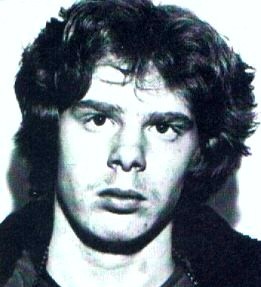
Robert Springsteen IV (TDCJ number 999389) was the defendant.
Background
Springsteen was born on 11/26/1974 and was received on 06/21/2001 at age 26. He was identified as male with white hair color (brown hair color noted), 5 ft 11 in height, 237 weight, and hazel eye color. He was listed as from Travis County, Illinois native county/state, and had a prior occupation listed as cook, drywall, food service, laborer. He had prior prison record: None. The age at the time of the offence was 17 and the date of the offence was 12/06/1991. Springsteen was described as a juvenile (17) and the characteristics list also included “Robbery” and “Rape.”
The offence
On 12/06/1991, Springsteen participated in a robbery at a yogurt shop in Austin. Four teenage girls who were working at the shop were shot to death and strangled in the incident. The yogurt shop was set on fire before the assailant(s) fled the scene.
The incident was referred to as “Yogurt Shop Murders,” relating to the deaths of four teenage girls in a yogurt shop in Austin, Texas on the night of Friday 6 December 1991, after which the yogurt shop they were in was set aflame. The bodies were discovered later that night.
Victims
- 13-year-old Amy Ayers (sometimes spelled Ayres)
- 17-year-old Jennifer Harbison
- 15-year-old Sarah Harbison
- 17-year-old Eliza Thomas
Circumstances at the scene
Shortly before midnight on Friday December 6, 1991, a patrolling Austin police officer noticed a fire coming from an “I Can’t Believe It’s Yogurt!” shop and reported it to the officer’s dispatcher. After the fire was extinguished, firefighters discovered four bodies. The bodies were bound and gagged, with three stacked on top of one another. Each victim had been shot in the head, leading police to determine they likely had died before the fire was started.
Just before the murders, the girls had been seen alive at the yogurt shop as late as 10:00 pm. They had planned a sleepover for that night.
Fire and discovery
After the flames were extinguished, firefighters made the discovery of four dead girls inside the shop. A CBS news crew was filming the initial responses of officers and investigators. The events included firefighters repeatedly going in and out of the shop for hours after the fire had been extinguished, and the arrival and departure of relevant officials. At almost 4am—nearly four hours after the call—the arrival of Department of Public Safety crime scene investigators was noted.
The gap in time and disruption inside the shop before evidence processing was described as helping create chaos that would affect investigations for the next nine years. Detective Hector Polanco was later implicated in issues about interrogation tactics in connection with coercion allegations, and Detective Hector Polanco was also described in relation to a separate 1988 case involving Christopher Ochoa and Richard Danziger.
Investigation
Investigation duration
The initial investigation spanned nearly eight years.
Evidence processing issues
It was stated that the efforts of crime scene investigators were not coordinated. It was stated that investigators failed to retain items from the shop for evidence, including an aluminum ladder and other items melted by the fire. It was stated that investigators failed to process certain areas of the property for physical evidence, including the shop’s bathrooms, the front door, and a large Dumpster situated just outside the shop’s back door. “No one ever pulled out everything that was in the Dumpster,” Rios testified. “We just looked at what was on top.” When asked whether investigators plotted the interior of the shop in a grid, Rios said investigators had not done so. In the end, the material stated that not one speck of physical evidence was logged that would link any of the three defendants to the scene of the crime.
Latent fingerprints were found on the lid of a cash register drawer. At least five hairs were recovered from the girls’ bodies or items of their clothing. After analysis by a FBI expert and DNA analysis of hairs by a private company, none of this evidence was linked to any of the victims, the defendants, or any of the other yogurt shop employees. DNA specialist William Watson testified that “There is DNA that cannot be attributed to the four victims or the four suspects,” and that unmatched hairs came from more than one source, stating: “Persons. These are from more than one individual.”
Open access at the scene was described as an evidentiary problem. The CBS cameras recorded what appeared to be unregulated access to the shop. Sgt. Jones was asked whether a log existed reflecting everyone who went in and out of the crime scene, and Jones said it was in the database, but no log was produced as evidence during trial. Upon further questioning, Jones said there were enough people that they “couldn’t control everything that was going out the doors.” In photographs taken at the shop, firefighters and other officials could be seen standing in the background.
It was stated that the list of “core facts” kept from the public to confirm real culprits was getting smaller and smaller. Detective John Jones testified: “Initially, information we would normally keep [confidential] was coming back to us with such frequency that we had to cross it off the list.”
Confessions and false confessions
Over fifty people, including Kenneth McDuff (on the day of his execution), confessed to the Yogurt Shop Murders. A confession in 1992 by two Mexican nationals, held by Mexican authorities, was soon disputed and finally ruled false.
A confession or detailed knowledge issue was described as including many confessions. It was stated that a confession in court was presented as a way to show the statements were made by someone with detailed knowledge of the crime. Defense lawyers were described as introducing only two such confessions into evidence, while other confessions were described as not being pursued.
Serial killer involvement mentioned
At the time of the murders, Kenneth Allen McDuff was described as a known serial killer in the area. McDuff had a history of multiple murders involving teenagers, but Austin Police said he had been ruled out of the Yogurt Shop Murders. McDuff was later convicted of and executed for the abduction and murder of Colleen Reed from a West 5th St. car wash on Sunday 29 December 1991.
Springsteen’s defense sought to introduce evidence about McDuff being in the area. Lynch ruled the McDuff evidence hearsay and would not be admitted.
Persons and other suspects
At trial, it was stated that DNA evidence had been tested against more than seventy people, including Robert Springsteen, Michael Scott, Maurice Pierce, and Forrest Wellborn, and it failed to match. Forrest Wellborn’s charges were dropped after an Austin Grand Jury failed to indict him. Charges were later dropped against Maurice Pierce. Only the cases against Scott and Springsteen went to trial.
1999 suspects arrested
On Wednesday 6 October 1999, police in Texas and West Virginia arrested four suspects in connection with the murders.
- Robert Burns Springsteen Jr., 24, was arrested in Charleston, West Virginia.
- Michael James Scott, 25, of Buda, Texas, was arrested in the Austin area.
- Maurice Pierce, 24, was arrested in Lewisville, north of Dallas.
- Forrest Wellburn, 23, was picked up in Lockhart, Texas, southeast of Austin.
Arrest and police interrogation context
Springsteen’s interrogation circumstances were described in detail around his confession in 1999. The interrogation room in the Charleston, W.Va., police department was described as having a table and three chairs, with a clock and a video camera. During the interrogation, Robert Springsteen was described as sitting in a straight-backed chair across from the door. Detective Robert Merrill alternately sat in front of the door or with his legs propped on the wall, blocking the exit. Detective Ron Lara sat across the table from Springsteen, leaning in and sometimes yelling at him, and at times an Alcohol Tobacco and Firearms federal agent Chuck Meyer sat across the table. It was stated that Springsteen denied involvement until after nearly four hours of interrogation, when he began to break down and admitted being involved in the murders.
Springsteen’s own testimony included statements about what he believed happened during questioning and his understanding of invoking rights.
Trial
Guilty verdict
After nearly 13 hours of deliberations over two days, a seven-man, five-woman jury reached a decision. At 4:05 pm, Judge Mike Lynch read the jury’s verdict: guilty of capital murder in the death of Amy Ayers. This prosecution was described as concerning only the murder of Amy Ayers.
Punishment phase and sentence
On Friday, June 1, the same jurors returned after nearly 11 hours of deliberation to deliver Springsteen’s punishment. Under Texas law as described, there were two possible penalties for capital murder: life in prison with a possibility of parole after 40 years or death by lethal injection. During the punishment phase, defense lawyers Bettis and Joe James Sawyer called no witnesses. Springsteen’s sentence was death by lethal injection.
The date of sentencing was recorded as June 21, 2001, when status states he was sentenced to death.
Jury and courtroom reactions (verbatim items)
A newspaper-related narrative described choked sobs from the gallery. It stated that jurors cried, covering their eyes and mouths, and consoling each other.
After the sentence was delivered, reporters asked for Springsteen’s reaction. Joe James Sawyer responded: “Not guilty,” replied Sawyer, “that’s what he says.”
During Springsteen’s testimony, Sawyer elicited his name and statements about rights and his decision to testify. The transcript included the following verbatim exchange (summarized transcript reproduced verbatim where quotation marks were present in the text):
- “Robert Burns Springsteen the fourth.”
- “Yes sir.”
- “Yes sir, you did.”
- “Well allegedly confess, yes sir.”
- “Yes I am.”
- “Approximately, yes sir, that’s correct.”
- “Yes it is.”
- “Yes we did.”
- “Well I believe it was two days later. But that was a true story.”
- “Yes sir. I would like to clarify.”
- “No sir. Never.”
- “Yes. Completely.”
- “Yes I sure did.”
- “I threw up.”
- “Yes sir.”
Quotes and verbatim testimony included in the record
Springsteen quote reported from trial proceedings (selection)
Springsteen was quoted contending his confession was coerced and denying involvement. The quoted remarks stated: “If I just make up a bunch of stories and tell them what they want to hear ... the evidence will show it couldn’t have been me,” said Springsteen.
Springsteen transcript excerpts (verbatim as provided)
Springsteen testified and provided extended remarks including the following verbatim lines:
- “If you are accusing me of something I would like an attorney present … I though that was enough to invoke my Fifth or Sixth Amendment, I don’t know that much about law … and they ignored me … I can’t quote verbatim … the next thing I remember they started asking me was, ‘Tell us about Mike.’”
- “I don’t know whether this is true or not, or whether I’m fooling myself,” Springsteen told his interrogators. “I’m so confused ...”
- “Yes I am.”
- “I threw up.”
- “Yes sir, you did.”
- “Not guilty,” replied Sawyer, “that’s what he says.”
- “There is DNA that cannot be attributed to the four victims or the four suspects,” DNA specialist William Watson told the jury.
- “Persons.
Appeals
2006 overturning
In 2006, the Texas Court of Criminal Appeals overturned Robert Springsteen’s conviction on the basis of an unfair trial.
Specific appellate reasoning described
The material stated that a 5-4 majority ruled that a co-defendant’s statement should not have been read to the jury in the 2001 trial of Robert Burns Springsteen IV. The majority opinion was authored by Judge Paul Womack. Judge Womack stated the issue was admission of the co-defendant’s statement despite the co-defendant not testifying and thus not being cross-examined by Springsteen’s lawyer. The record stated that a U.S. Supreme Court opinion from 2004 made it clear that statements taken by police during interrogations fell under the Confrontation Clause of the Sixth Amendment. The co-defendant’s statement contained details described as “chilling” including binding and gagging the girls, raping and shooting two of them in the head, and then using paper and lighter fluid to set the bodies on fire. The material stated that while the statement did not implicate Springsteen, prosecutors used it to show similarities with a confession given by Springsteen. The record listed judges who joined the majority: Tom Price, Cheryl Johnson, Charles Holcomb, and Cathy Cochran, and stated that Presiding Judge Sharon Keller wrote a dissent joined by judges Mike Keasler and Barbara Hervey, and that Judge Lawrence Meyers also dissented.
Presiding Judge Sharon Keller’s dissent included these verbatim remarks: “That confession was voluntary. (Springsteen) had no motive to confess falsely, and there was absolutely no reason for the jury to doubt the truthfulness of the confession. (Springsteen) knew that a .380 semi-automatic handgun was used in the murders, and this information was a closely guarded secret ... .”
U.S. Supreme Court refusal
The U.S. Supreme Court refused to reinstate the conviction in February 2007.
Post-conviction developments and DNA requests
2008 DNA tests request
On Wednesday 20 August 2008, defense lawyers for Michael Scott and Robert Springsteen requested DNA testing of alternative suspects. No matches against evidence found earlier that year were able to be found. Seven jurors from the trials stated they would not have convicted the men had this evidence been available at the time.
Bond release on June 24, 2009
On Wednesday 24 June 2009, Judge Mike Lynch decided, in response to a Travis County district attorney asking that one of the trials be continued, that defendants Robert Springsteen and Michael Scott be freed on bond pending their upcoming trials. At 2:50 PM on that day, both walked out of Travis County Jail with their attorneys.
A Travis County District Attorney statement included verbatim remarks beginning: “Today I requested a continuance in the case against Michael Scott, a defendant in the Yogurt Shop murders, whose trial was scheduled to begin on July 6th.” Judge Mike Lynch granted the continuance motion and released both defendants on personal bond. The district attorney statement described conditions on the bonds and included the verbatim lines: “Requesting a delay in the case was a difficult decision but one that I believe is the best course toward an ultimate successful prosecution of this important matter.” It continued with: “Knowing that Judge Lynch would release both defendants, we requested certain conditions on their bonds, requiring them to remain in Travis County and report to the Court any change of residence, to have no contact with the victims’ families or witnesses, that they not carry weapons or consume alcohol or illegal drugs, that they report to the Court on a routine basis and attend all court appearances.” It also included: “As we prepared for retrial, in March of 2008, we submitted various evidentiary items for what is called YSTR testing.” The statement described: “This test looks for male DNA only and is deemed to be the most accurate test for samples that are mixtures of female and male DNA, as in this case.” It continued: “Currently, it is clear to me that our evidence in the death of these four young women includes DNA from one male whose identity is not yet known to us.” And: “The defense asserts that the testing reveals more than one unknown male, but the evidence presented at the hearing on Thursday, June 18th contradicts that notion.” Further, it stated: “The reliable scientific evidence in the case presents one, and one only, unknown male donor.” Then: “Given that, I could not in good conscience allow this case to go to trial before the identity of this male donor is determined, and the full truth is known.” The district attorney also said: “I remain confident that both Robert Springsteen and Michael Scott are responsible for the deaths at the Yogurt Shop but it would not be prudent to risk a trial until we also know the nature of the involvement of this unknown male.” And: “My office and the Austin Police Department remain committed to these cases.” Then: “Their further investigation will continue to be a priority.” It concluded: “My commitment to the victims, their families and this community is that we will not give up until all of the people responsible for these terrible and tragic murders are brought to justice.”
October 28, 2009 dismissal
On October 28, 2009 all charges were dismissed against Scott and Springsteen.
Outcome
Springsteen’s capital murder conviction was overturned in 2006. The U.S. Springsteen was released on June 24, 2009. On October 28, 2009 all charges were dismissed.
Other details
Co-defendants listed on indictment but not convicted for this incident
The indictment listed co-defendants:
- Marcus Pierce
- Mike Scott
- Forrest Wellburn The record stated these named co-defendants had not been convicted of any offense relating to the incident.
Co-defendant convictions mentioned
Co-defendant Michael Scott was described as receiving a life sentence in 2003. The record also stated charges were later dropped against Maurice Pierce and dropped against Forrest Welborn after grand juries failed to indict him.
Death penalty procedural change mentioned in narrative
A governor commuted Springsteen’s death sentence to life last year by Gov. Rick Perry after the U.S. Supreme Court ruled that juvenile offenders could not be executed. This narrative was included alongside the later statement that the conviction was overturned and Supreme Court refused to reinstate.
Method and victim treatment details (as described in the narrative)
The material described binding, gagging, shooting in the head, strangulation with a cloth ligature, and the burning set by use of fire. The co-defendant statement described raping and using paper and lighter fluid to set bodies on fire; the record also described that Springsteen’s confession, in parts, included claims about attempting to rape one of the girls and about propping open the rear door with an empty cigarette pack or a small rock, and that after the crime, Scott threw up over a bridge.
The “second arcade” and Rocky Horror Picture Show details in Springsteen’s testimony
Springsteen testified about going to “The Rocky Horror Picture Show.” He said: “Yes sir. I snuck in.” He testified: “The person taking the tickets went to the soda counter and when he had his back turned, I went in.” He also testified about a second arcade, stating a timeline covering “8 p.m. to 12 midnight” and denying that a statement covered from the second arcade. He said: “No sir. This statement covers from 8 p.m. to 12 midnight.” He also testified about the time 11:40 and being at the mall, and he acknowledged that his handwriting supported that time.
Confession-related content in Springsteen testimony
Springsteen testified that he believed his requests for a lawyer were ignored. He testified that he invoked his right by telling police he wanted an attorney and that he believed he was not allowed to leave. He described that he later decided to end the interview when detectives finally read his rights and allowed invocation of attorney-client privilege. He testified: “Because the detective finally read my rights and was allowing me to invoke my attorney-client privilege.” He also testified about his understanding of Texas law versus what he believed about evidence matching.
Employment and sleep details in Springsteen testimony
Springsteen testified he worked two jobs and had less than six hours of sleep in three days. He described working as a midnight stock person at Kroger and short-order cook at the “Aires Eagles FOE” and gave timing including working from “5 p.m. until 8 a.m.” the next morning.
Defense strategy described in narrative
The record included narrative about defense counsel calling no witnesses during the punishment phase. It stated juror emotional reactions occurred after prosecutors called Amy Ayers’ father. It also included narrative about counsel’s response to reporters after the sentence.
Public statements included
Austin Police issued a statement that it “is confident in the guilt of Robert Springsteen” and will work with prosecutors to ensure he “continues to be held accountable for these horrific murders.”
A quote was attributed to Mary Kay Sicola: “It's been an exceptionally long wait to get a ruling. For all the reasons, for the sake of the integrity of our justice system, the sake of our community, I'm just so happy the court has finally issued a ruling,” she said.
A quote was attributed to Gunther Goetz: “That really struck a chord,” Goetz said. The record stated: “The rulings came down in such a way that we were just stripped of our defenses,” Sawyer said.
Confessions and interrogation expert remarks included
Dr. Richard Ofshe, called by the defense, was quoted describing false confessions: “It may seem hard to imagine an innocent person confessing to a crime that he or she did not commit, says Dr. Richard Ofshe,” but the specific quoted sentence given in the record was “but it happens, with improper, illegal use of interrogation tactics.” The record also stated Ofshe said: “Tactics were used that put him in a place of being considered the principal target [of the investigation]” and: “Or, it was communicated to him that [if he cooperated with the police] that he'd be considered a victim. So, Springsteen was put in a position where he had to choose.” It further included: “In my opinion,” said Ofshe, “yes.” It also included Ofshe’s statements about limitations: “I was severely limited in the testimony I might have given,” he said.
Prosecutor and evidence statements included
The record quoted the prosecutor’s statement asking for continuance and discussing YSTR testing and evidence involving a single unknown male donor. It also included the discussion that the state was not prepared to go to trial as scheduled and that the case would return to court August 12 (as stated in the narrative about the Wikipedia-linked snippet).
Spotted an error, or have more information about this case?