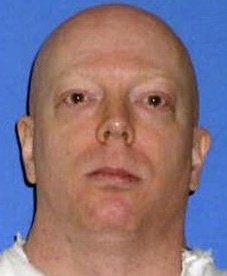
Eric Charles Nenno
Murderer Brian Kevin Rosenfeld
Murderer · USA · 1985
Brian Kevin Rosenfeld Brian Kevin Rosenfeld was sentenced to three concurrent l…
23 victims
Brian Kevin Rosenfeld
Murderer · USA · 1985
Brian Kevin Rosenfeld Brian Kevin Rosenfeld was sentenced to three concurrent l…
23 victims
 Russell Ellwood
Murderer · USA · 1991
Russell Ellwood was a former taxi driver. Authorities suspected him of killing…
20 victims
Russell Ellwood
Murderer · USA · 1991
Russell Ellwood was a former taxi driver. Authorities suspected him of killing…
20 victims
 Robert Martines Perez
Murderer · USA · 1994
Name: Robert Martines Perez · Other name used in proceedings: Robert Martinez P…
15 victims
Robert Martines Perez
Murderer · USA · 1994
Name: Robert Martines Perez · Other name used in proceedings: Robert Martinez P…
15 victims
 Billy Frank Vickers
Murderer · USA · 1993
Billy Frank Vickers Vickers was executed by lethal injection in Texas on Januar…
14 victims
Billy Frank Vickers
Murderer · USA · 1993
Billy Frank Vickers Vickers was executed by lethal injection in Texas on Januar…
14 victims
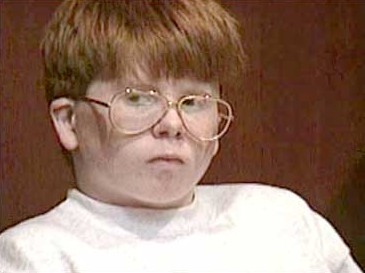 Eric Smith
Homicide · USA · 1993
Eric M. Smith was an incarcerated American criminal. Derrick Robie was a four-y…
1 victim
Eric Smith
Homicide · USA · 1993
Eric M. Smith was an incarcerated American criminal. Derrick Robie was a four-y…
1 victim
 Mary Nance Hanson
Murderer · USA · 2010
Mary Nance Hanson was accused of fatally shooting her former daughter-in-law. ·…
1 victim
Mary Nance Hanson
Murderer · USA · 2010
Mary Nance Hanson was accused of fatally shooting her former daughter-in-law. ·…
1 victim
 Michael Lee Wilson
Murderer · USA · 1995
Michael Lee Wilson was tried in Tulsa County District Court, Oklahoma, in Case…
1 victim
Michael Lee Wilson
Murderer · USA · 1995
Michael Lee Wilson was tried in Tulsa County District Court, Oklahoma, in Case…
1 victim
 Nicholas Sheley
Spree killer · USA · 2008
Nicholas Troy Sheley (born July 31, 1979) was an American ex-convict accused of…
8 victims
Nicholas Sheley
Spree killer · USA · 2008
Nicholas Troy Sheley (born July 31, 1979) was an American ex-convict accused of…
8 victims
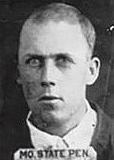 Harry & Jennings Young
Mass murderers · USA · 1932
Harry Young and Jennings Young took part in the “Young Brothers Massacre,” also…
6 victims
Harry & Jennings Young
Mass murderers · USA · 1932
Harry Young and Jennings Young took part in the “Young Brothers Massacre,” also…
6 victims
 Jerry Lynn McCracken
Mass murderer · USA · 1990
Jerry Lynn McCracken was an Oklahoma death row inmate executed by lethal inject…
4 victims
Jerry Lynn McCracken
Mass murderer · USA · 1990
Jerry Lynn McCracken was an Oklahoma death row inmate executed by lethal inject…
4 victims
- Gender
- male
- Country
- USA
- Location
- Harris County, Texas, USA
- Date of birth
- April 13, 1961
- Age at first offence
- 34
- Characteristics
- rape, rape?, rapist, pedophile, sexual abuse, sexual assault, serial rapist, abuse
- Victim profile
- Nicole Benton (female, 7)
- Method of murder
- Strangulation
- Date(s) of murder
- March 23, 1995
- Years active
- 1995
- Date of arrest
- 2 days after
- Status
-
Executed
Executed by lethal injection in Texas on October 28, 2008
Case overview
Eric Charles Nenno was convicted of capital murder and rape for the rape and murder of seven-year-old Nicole Benton in Hockley. Nenno lured Nicole Benton to his home, attempted to rape her, choked her to death after she cried and resisted, and then raped her repeatedly. He hid Benton’s nude body in the attic until neighbors went to police two days later, and he confessed to the murder under questioning. He led police to Benton’s body.
Nenno was executed by lethal injection in Texas on October 28, 2008, after his appeals were exhausted. The Texas Board of Pardons and Paroles voted unanimously against commuting his sentence to life.
Timeline
- 03/23/1995 — After drinking six beers after work, Nenno approached Nicole Benton while she was playing in a front yard and lured her to his home in Hockley. After he choked her to death, he raped her repeatedly. He hid Benton’s nude body in the attic and stuffed her clothing in a filing cabinet.
- Two days after 03/23/1995 — Neighbors went to police, told them about earlier accusations, and police questioned Nenno. Under questioning, he confessed and led police to Benton’s body.
- 01/18/96 — A Harris County jury convicted Nenno of capital murder.
- 02/01/96 — The District Court in Harris County sentenced Nenno to death.
- 06/24/98 — The Texas Court of Criminal Appeals affirmed the conviction and sentence.
- 10/16/98 — Nenno filed an application for state habeas corpus.
- 11/14/01 — On state habeas review, the Texas Court of Criminal Appeals denied relief.
- 10/18/02 — Nenno petitioned the federal courts for writ of habeas corpus relief.
- 01/13/04 — The federal district court dismissed Nenno’s case without prejudice.
- 02/11/04 — Nenno filed a successive application for state habeas corpus relief.
- 06/23/04 — The Texas Court of Criminal Appeals dismissed Nenno’s successive habeas.
- 08/20/04 — Nenno returned to federal court and petitions for habeas relief.
- 03/07/06 — The U.S. District Court denied habeas relief and denied a certificate of appealability.
- 04/03/06 — Nenno filed his notice of appeal.
- 06/06/07 — The Fifth Circuit Court of Appeals denied his application for a certificate of appealability.
- 03/24/08 — The U.S. Supreme Court denied certiorari review.
- 10/06/08 — Nenno petitioned for clemency with the Texas Board of Pardons and Paroles.
- 10/28/2008 — Nenno was executed by lethal injection in Texas; he was pronounced dead at 6:20 p.m. CDT.
Background
Nenno was described as a former plumbing supply salesman and a former plumbing supply salesman was executed for strangling and raping a seven-year-old girl. He was 33 at the time of the offense and 47 at the time of execution. The Harris County jury that considered the case deliberated for about 11 hours before deciding on the death penalty.
Nenno had no prior criminal record. Testimony at his punishment hearing indicated he had a history of pedophilia.
The State presented testimony from a nine-year-old girl who testified that Nenno had once inappropriately touched her. A detective testified that Nenno admitted to having sexual fantasies about little girls, including a recurring fantasy of having sex with his ex-girlfriend’s ten-year-old daughter. The State also presented testimony from an FBI agent who determined that Nenno was a pedophile, that he “would be an extreme threat to society,” and that he would be difficult to rehabilitate.
The offence
On March 23, 1995, after drinking six beers after work, Eric Nenno approached Nicole Benton, who was playing in a front yard, and lured her to his home. Once at his home, Nenno choked Nicole Benton and attempted to rape her. He strangled her to keep her quiet when she began to cry and resist. He then raped her repeatedly.
Nenno hid Benton’s nude body in the attic of the house and stuffed her clothing in a filing cabinet.
An autopsy confirmed that Nicole Benton was choked to death and that there had been attempted sexual assault before and after her death. Police found Benton’s clothes in the filing cabinet. Pieces of Benton’s hair were found on Nenno’s carpet, and Nenno’s DNA was found beneath the girl’s fingernails.
In his confession, Nenno admitted having sexual fantasies involving young girls for most of his life and raping and strangling the girl in his bedroom. He told police he hid her nude body behind boxes in his attic over his garage. The girl’s polka-dotted dress, glasses, and shoes were found in his filing cabinet.
During an account attributed to Nenno, he described taking Benton into his bedroom, attempting to have sex with her, choking her, and then having sex with her.
Investigation
When police questioned Nenno, he admitted to raping and murdering the child. Nenno had been the subject of prior neighborhood concern before the murder: a neighborhood resident told police they should talk to Nenno because he had tried to grab a six-year-old girl two years before, and charges were not filed in that incident.
During the investigation, police set up a command post and went door to door for information. When authorities approached Nenno, he said that someone like him, who fantasized about young girls, was likely behind the girl’s disappearance. Police later found Benton’s remains in Nenno’s home and Nenno was arrested.
Police showed Nenno the command post procedure. Nenno was asked what he thought happened to the girl. He responded that he thought she was abducted, raped, and murdered. When asked who he thought might have done it, he replied: “Someone like me.”
Arrest and questioning
Detectives Wedgeworth and Taber went to Nenno’s home at 17602 Bullis Gap several times on the afternoon of March 25, 1995. On the third visit, Nenno, dressed only in a white bath towel around his waist, answered the door. Nenno permitted the detectives to come inside, appeared very cooperative and willing to talk, and denied knowing or seeing Nicole Benton.
Nenno agreed to go to the command post and make a written statement. He was told that he was not under arrest and that he could leave at any time. At the command post, Detective Taber read Nenno the rights from a blue card provided by the Harris County District Attorney’s Office, and Nenno indicated he understood and agreed to talk.
During the command post interview, Nenno described his prior incident involving trying to lure a child into his house and removing her pants, and he stated he liked children. When asked directly whether he had taken, or was involved in taking, the complainant, Nenno denied it. Nenno stated he believed the child was kidnapped, raped, and murdered. When asked what kind of person would do something like that to a little girl, Nenno said someone like him.
Nenno agreed to submit to a polygraph examination. After the test was finished, the officer administering the test did not speak. Nenno said: “I failed it, didn't I?” The examiner told Nenno he needed to disclose where the girl was. Nenno told him: “I think she's still in the attic.” Nenno then said: “They're going to kill me for this, aren't they?”
Nenno gave written consent for police to search his home. The search recovered Benton’s body. Nenno was arrested.
After waiving his rights, Nenno executed a second consent to search his residence and accompanied officers to his home, where the victim’s body was recovered and Nenno was arrested.
At 2:30 a.m., Special Agent Young advised Nenno of his federal rights, and Nenno said he understood. Nenno did not ask for an attorney and agreed to make a statement. Nenno freely and voluntarily signed a waiver of rights that included: “I have read this statement of my rights and I understand what my rights are. I am willing to make a statement and answer questions. I do not want a lawyer at this time. I understand and know what I am doing. No promises or threats have been made to me and no pressure or coercion of any kind has been used against me.”
A written statement titled “Statement of Person in Custody of Eric Charles Nenno” was dated March 26, 1995, at 2:50 a.m., and Nenno initialed the written warnings and the waiver.
Trial
Conviction and sentence
On January 18, 1996, a Harris County jury convicted Nenno of capital murder. On February 1, 1996, the District Court in Harris County officially sentenced Nenno to death.
On automatic direct appeal, the Texas Court of Criminal Appeals affirmed the conviction and sentence. The opinion states that the District Court in Harris County, Denise Collins, convicted Nenno of capital murder and sentenced him to death, and that the Court of Criminal Appeals affirmed.
Issues on direct appeal and holdings
The direct appeal opinion in Nenno v. State, 970 S.W.2d 549 (Tex.Crim.App.1998) addressed and overruled multiple points of error, including:
- Future dangerousness: The Court found evidence supported an affirmative answer to the future dangerousness special issue for raping and murdering a seven-year-old girl.
- Statements and custody: The Court held Nenno was not “in custody” when he made statements, and his statements were voluntary.
- Prosecutor argument: The Court found the prosecutor did not engage in improper argument.
- Expert testimony: The Court held expert testimony regarding future dangerousness was sufficiently reliable to be admissible.
- Character evidence during penalty phase: The Court held evidence of Nenno’s encounter with another girl was admissible as character evidence during the penalty phase.
- Motions to suppress: Points involving his motion to suppress were overruled or rendered moot as described in the opinion.
- Magazines: The Court addressed admission of sexually explicit magazines found in a locked file cabinet.
- Closing argument: The Court overruled points of error regarding closing argument.
The opinion also includes verbatim quotations from Nenno’s oral and written statements, including:
“I remember her kicking and trying to fight back. I grabbed her up and put my left arm around her neck from behind. I started choking her to keep her quiet. She continued to struggle so I took her into the bathroom in my bedroom with her standing on her feet but with me dragging her. After we got into the bathroom, she stopped screaming but was still struggling. Then she stopped struggling in the bathroom. I think that she was dead.”
and:
Q. Detective Taber, you asked the defendant what he thought had happened to [the victim]?
A. Yes, I did.
Q. What was the response?
A. He said he felt that she was kidnapped, raped, and murdered.
Q. Did he make any statements about why a person would murder her?
A Yes.
Q. What did he say?
A. So no one would find out who did it.
Punishment phase
During punishment, expert testimony was presented by Kenneth Lanning, a Supervisory Special Agent in the Behavioral Science unit of the FBI who specialized in studying the sexual victimization of children. The Court summarized that Lanning concluded Nenno was a pedophile and that such a person was difficult to rehabilitate, and that a person matching the hypothetical would be an “extreme threat to society and especially children within his age preference.”
The State also used testimony from a nine-year-old girl about an incident in which Nenno grabbed and fixed her bicycle chain and patted her on her “butt,” making her feel mad and sad and crying. The Court held the evidence was admissible at the punishment stage and was not unfairly prejudicial under Rule 403.
The Court also addressed admission of sexually explicit magazines found in a locked file cabinet, along with the victim’s black and white polka dot dress and white panties. The Court found them relevant to show future dangerousness and sexual obsession, given their location near the victim’s effects.
In the punishment-stage argument dispute, the prosecutor argued: “He came to the conclusion basically that he had blanked out and was not aware of anything that had happened. If that was the real issue, why didn't we hear that on the guilt-innocence stage? If he didn't know right from wrong, that's a defense.” The trial court sustained the objection and instructed the jury to disregard the comment.
Witnesses and trial evidence references
The record described:
- testimony from a nine-year-old girl about inappropriate touching,
- detective testimony about Nenno’s admission of sexual fantasies involving little girls,
- FBI agent testimony categorizing Nenno as a pedophile,
- evidence described as including autopsy findings and physical evidence (clothes, hair, and DNA).
Sentencing
The jury sentenced Nenno to death. The trial judge sentenced Nenno pursuant to jury answers to special issues under Texas Code of Criminal Procedure Article 37.071 §§ 2(b) and 2(e), which included future dangerousness and mitigation determinations.
Nenno’s Harris County jury deliberated about 11 hours before deciding on the death penalty.
Appeals
State habeas corpus
- 11/14/01 — The Texas Court of Criminal Appeals denied relief on state habeas review.
Federal habeas corpus
- 01/13/04 — The federal district court dismissed the case without prejudice.
- 06/23/04 — The Texas Court of Criminal Appeals dismissed the successive habeas.
- 08/20/04 — Nenno returned to federal court for petitions for habeas relief.
- 03/07/06 — The U.S.
- 03/24/08 — The U.S.
The Fifth Circuit’s consideration of a certificate of appealability included two issues urged by Nenno:
- Whether a polygraph examiner’s deliberate silence after scoring Nenno’s polygraph amounted to psychological persuasion that made subsequent confessions involuntary.
- Whether condemned prisoners had a constitutional right to counsel providing effective assistance in state habeas proceedings.
The Court of Appeals refused to issue a certificate of appealability and dismissed the appeal: The appeal was DISMISSED.
Clemency
The Board voted unanimously against commuting his sentence to life.
Outcome
Eric Charles Nenno was executed by lethal injection in Texas on October 28, 2008. The lethal injection process began at the Texas Department of Criminal Justice Walls Unit, and Nenno was pronounced dead at 6:20 p.m. CDT after declining the opportunity to make a last statement.
Asked by the warden if he had a final statement, Nenno replied: “No, warden.”
He gasped four times and was pronounced dead.
Witnesses for Nicole Benton included her father, Buddy Benton, and her grandfather; Donald Benton and other family members also witnessed the execution. Nenno did not acknowledge them during the execution process.
Aftermath
A Harris County assistant district attorney, Joan Huffman, was quoted as saying: “Mr. Nenno was an evil person.”
In a recent interview from death row, Nenno said he could not apologize enough to his victim’s family and that nothing could excuse his crime. He told the Associated Press:
“My salvation is secure.”
“I know where I'm going when this is all over.”
When asked where that would be, Nenno replied: “Heaven.”
Nenno’s attorneys were described as saying he was exposed to toxic chemicals during a four-year duty tour that left him brain-damaged. Nenno said nothing could excuse his crime and that he was prepared to die.
A wrongful death lawsuit was filed four days after Nenno was convicted by Buddy Benton against Nenno and relatives who owned the house where Nenno lived. The allegations included that Nenno’s relatives knew or should have known about his deviant tendencies and should not have allowed him to live in a neighborhood with children. An investigation showed Nenno’s sister asked him to live in their house for two years while she and her husband were overseas in the U.S. Navy. Benton dropped the lawsuit in August 1996.
Nenno wrote an appeal for clemency to the Texas Board of Pardons and Paroles stating: “During the years that I have been imprisoned, I have often thought about the devastating grief and pain I caused Nicole Benton, her family, and friends,” and: “There is no excuse or rationale which would be sufficient to justify this heinous act of violence perpetrated by me.”
The Board declined the clemency petition.
Spotted an error, or have more information about this case?