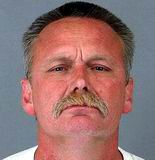
Shelby Shamblin
Homicide Jack Kevorkian
Homicide · USA · 1990
Jack Kevorkian (born May 26, 1928) was a controversial American pathologist. He…
130 victims
Jack Kevorkian
Homicide · USA · 1990
Jack Kevorkian (born May 26, 1928) was a controversial American pathologist. He…
130 victims
 Edward Charles Allaway
Homicide · USA · 1976
Edward Charles Allaway Edward Charles Allaway was found not guilty by reason of…
7 victims
Edward Charles Allaway
Homicide · USA · 1976
Edward Charles Allaway Edward Charles Allaway was found not guilty by reason of…
7 victims
 Clinton Bankston
Homicide · USA · 1987
15 August 1987 — Ann Morris (63), her sister Sally Nicholson (59), and Sally’s…
5 victims
Clinton Bankston
Homicide · USA · 1987
15 August 1987 — Ann Morris (63), her sister Sally Nicholson (59), and Sally’s…
5 victims
 David Oliver Cruz
Murderer · USA · 1988
David Oliver Cruz was convicted and sentenced to death for the August 1988 rape…
1 victim
David Oliver Cruz
Murderer · USA · 1988
David Oliver Cruz was convicted and sentenced to death for the August 1988 rape…
1 victim
 Bobby James Moore
Murderer · USA · 1980
Defendant: Bobby James Moore Victim: Jim McCarble The federal habeas corpus rel…
1 victim
Bobby James Moore
Murderer · USA · 1980
Defendant: Bobby James Moore Victim: Jim McCarble The federal habeas corpus rel…
1 victim
 Dale R. Anderson
Murderer · USA · 1978
Dale R. Anderson was sentenced to life imprisonment on May 11, 1990. Anderson d…
7 victims
Dale R. Anderson
Murderer · USA · 1978
Dale R. Anderson was sentenced to life imprisonment on May 11, 1990. Anderson d…
7 victims
 Brian Kevin Rosenfeld
Murderer · USA · 1985
Brian Kevin Rosenfeld Brian Kevin Rosenfeld was sentenced to three concurrent l…
23 victims
Brian Kevin Rosenfeld
Murderer · USA · 1985
Brian Kevin Rosenfeld Brian Kevin Rosenfeld was sentenced to three concurrent l…
23 victims
 Colin Richard Forman
Mass murderer · Australia · 1977
5 January 1977 — Colin Richard Forman carried out an aircraft suicide attack at…
4 victims
Colin Richard Forman
Mass murderer · Australia · 1977
5 January 1977 — Colin Richard Forman carried out an aircraft suicide attack at…
4 victims
 Philip Ray Workman
Murderer · USA · 1981
Name: Philip Ray Workman · Status: Executed by lethal injection in Tennessee on…
1 victim
Philip Ray Workman
Murderer · USA · 1981
Name: Philip Ray Workman · Status: Executed by lethal injection in Tennessee on…
1 victim
- Gender
- male
- Country
- USA
- Location
- Hemet, Riverside County, California, USA
- Date of birth
- 1964
- Age at first offence
- 16
- Characteristics
- juvenile (17), rape
- Victim profile
- Elizabeth Crossman, 67
- Method of murder
- Strangulation
- Date(s) of murder
- January 17, 1980
- Years active
- 1980
- Date of arrest
- February 2, 2011 (31 years after)
- Status
-
Life imprisonment
Sentenced to 25 years to life in prison on August 16, 2013
Case record: Shelby Shamblin
Background
Shelby Glenn Shamblin was a Homeland man. He was convicted in June of first-degree murder for the 1980 death of Elizabeth Crossman.
Elizabeth Crossman was 67 years old when she was killed in 1980. Her husband, Frank Crossman, found her lying naked and lifeless on the bedroom floor of their Hemet home and covered her with a blanket before calling the police. Elizabeth Crossman had been living in her home in Hemet on Florida Avenue. The house where Elizabeth Crossman was killed was later gone, and her husband died long ago.
Shelby Shamblin was 17 years old when prosecutors said he raped and strangled Elizabeth Crossman. He was tried as an adult though he was a minor when the crime occurred. At the time he was sentenced, Shelby Shamblin was 49 (in the sentencing article) and described as 50 years old (in the jury verdict article).
The case was described as a 33-year-old cold case.
The offence
Prosecutors said Shelby Shamblin raped and strangled Elizabeth Crossman inside her home. The victim died of strangulation.
The incident occurred on Jan. 17, 1980, a little before 6 p.m. Frank Crossman returned home from his RV sales lot, about 200 yards away on West Florida Avenue, and found his wife on her back with her clothing strewn about the room. Frank Crossman stated that he had no idea who would have murdered his wife.
Jewelry, credit cards, and cash were stolen. At the time of the killing, Frank Crossman’s home door was locked and curtains were closed. Frank Crossman found his wife’s wallet and $200 in cash missing. Her watch, jewelry, and eyeglasses also were taken.
The only sign of a struggle was torn clothes in the bedroom. Police believed the incident interrupted Elizabeth Crossman’s card game of solitaire.
Investigation
At the time of the murder, detectives had biological samples taken from the victim’s body. Frank Crossman told detectives he had hired the stepson of an employee to do odd jobs around the house and identified that person as Shamblin.
Detectives were unable to gather enough evidence to connect Shamblin to the murder at that time. Police could not test for DNA in 1980 and the case went cold.
In 2002, Hemet detectives forwarded biological samples in the murder to the Department of Justice for analysis. Results were entered in a national database of DNA profiles but did not result in any suspect for murder. In 2002, Hemet police reopened the case and submitted evidence for DNA testing. DOJ analysts contacted Hemet police in January to report that Shamblin’s DNA matched the samples. At the time of the 2002 submission, no match was found.
A break in the cold case came after police learned there was a DNA hit in January 2011. The DNA hit came from the Department of Justice crime lab’s database in Richmond. Capt. Rob Webb said: “There are certain cases we hold on to forever; we don't purge that. This was a bizarre case and a prominent family. We knew we had evidence to bring to the forefront.”
Investigators interviewed construction workers building an apartment complex nearby and other witnesses. Some witnesses reported seeing a scruffy-haired teenager in a blue windbreaker lingering near the house. Detectives interviewed several construction workers who reported a teenager loitering near the home and keeping a lookout.
Outside the home, detectives found a shoeprint on the patio that matched some found at an adjacent construction site.
After about a year, the case was declared cold.
Arrest
Police arrested Shelby Glenn Shamblin on Feb. 2, 2011, in connection with the Crossman murder.
A DNA match to semen taken from Elizabeth Crossman’s body led prosecutors to open the case against Shamblin. Shamblin was linked to the Hemet case after a DNA sample he was required to provide for a drug conviction matched DNA from the 1980 crime.
Hemet police Lt. Duane Wisehart said the DNA link came after the sample he was required to provide for a drug conviction in October was matched to DNA from the 1980 crime.
Shamblin’s DNA had recently been entered into the national system for the first time following a drug arrest at his Homeland residence in 2010. He was arrested in connection with the Crossman murder on Feb. 2, 2011.
Police learned of the DNA hit in January 2011, and less than a week later, police arrested Shamblin.
Police were able to notify Crossman’s only living daughter of the arrest. She did not want to comment publicly.
Trial
Testimony began Monday, June 17, 2013, in the trial of Shamblin at the Southwest Justice Center in Murrieta. The jury convicted Shamblin in June 2013.
The jury consisted of a 10-men, 2-women jury. After the verdict, jurors declined to be interviewed.
Deputy District Attorney Brandon Smith said the case was the oldest he has prosecuted. He also said he hoped the conviction would lead to consideration of reopening more cold cases.
“Clearly after 33 years, the only thing that could bring this case into being was DNA,” Brandon Smith said. “That’s why we’re here today.”
Prosecutor Brandon Smith said in his opening statement:
“For 33 years, Shelby Shamblin has had a secret,” prosecutor Brandon Smith told jurors in his opening statement at the Southwest Justice Center in French Valley. “A 17-year-old Shelby Shamblin murdered Elizabeth Crossman.”
“He beat her, he strangled her and he raped her,” Smith said. “I'm going to ask you to give Mrs. Crossman the justice she's been denied for 33 years.”
The defense attorney Amir Madjd told jurors in his opening statement that there was not enough evidence to convict Shamblin of first-degree murder:
“They can't show that Shelby Shamblin entered that residence with any kind of bad motive,” he said.
Shelby Shamblin pleaded not guilty to murder.
The incident occurred a little before 6 p.m. on Jan. 17, 1980. Frank Crossman sat in the kitchen while police investigated, according to Douglas Riesland, who was now retired. The last time he saw Elizabeth Crossman alive she was in the kitchen playing solitaire:
“He just sat there and stared at the table,” Riesland said.
Ronald Stoh, who knew Elizabeth as Betty, testified that he had lunch with the couple at their house that day. Stoh said:
“Betty loved cruises. They had been to Panama ... and they were planning another cruise,” he said.
Stoh said the Crossmans had married in the late 70s after both their spouses died of cancer. He said Elizabeth had been Frank’s landlady. Stoh said Elizabeth had no children of her own, but Frank had two daughters and a son.
During testimony, it was discussed that Shamblin had worked odd jobs for Frank Crossman and had drawn the attention of police previously because he and a friend had stolen a coin collection from the Crossmans’ other home. Detectives interviewed Shamblin at the time but he claimed to have been elsewhere the day of the killing. None of the witnesses picked him in a photo lineup.
The lead detective and forensic pathologist who performed the autopsy were described as gone.
Sentencing
Sentencing was scheduled for Aug. 16, 2013, and occurred on August 16, 2013.
Shelby Shamblin was sentenced today by judge Patrick Magers in Riverside Superior Court. He was sentenced to 25 years to life in prison.
Appeals
No appeals information was provided in the case material.
Outcome
A jury convicted Shelby Shamblin of first-degree murder in the 1980 slaying of Elizabeth Crossman.
Other details
Frank Crossman stated in court records that his home had the door locked and the curtains closed. Her wallet and $200 in cash were missing.
Shamblin had been reported as a runaway who had been missing for the week Frank Crossman was killed. In the weeks that followed, police interviewed Shamblin but he claimed he was at Rubidoux High School.
Police asked construction workers at a nearby apartment complex if they had seen anything. Witnesses reported seeing a male in his late teens with long, curly hair near the scene. However, a composite sketch yielded few tips.
After Shamblin’s arrest, Hemet police learned of the DNA hit in January 2011 and arrested him.
In 1980, biological samples were taken from the victim’s body, and the case later proceeded without a conclusive DNA testing capability at the time.
In the ensuing years, Shamblin was arrested on a number of drug charges and was in the process of completing drug-diversion programs, according to court records. He had been living in the San Jacinto Valley since the killing occurred, working odd jobs.
Hemet police Lt. Duane Wisehart delivered a news release about the DNA match leading to the arrest. Capt. Rob Webb was quoted about retaining cases and the nature of the investigation.
Spotted an error, or have more information about this case?