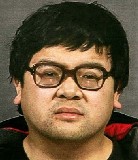
Sebastian Shaw
Murderer Brian Kevin Rosenfeld
Murderer · USA · 1985
Brian Kevin Rosenfeld Brian Kevin Rosenfeld was sentenced to three concurrent l…
23 victims
Brian Kevin Rosenfeld
Murderer · USA · 1985
Brian Kevin Rosenfeld Brian Kevin Rosenfeld was sentenced to three concurrent l…
23 victims
 Russell Ellwood
Murderer · USA · 1991
Russell Ellwood was a former taxi driver. Authorities suspected him of killing…
20 victims
Russell Ellwood
Murderer · USA · 1991
Russell Ellwood was a former taxi driver. Authorities suspected him of killing…
20 victims
 Robert Martines Perez
Murderer · USA · 1994
Name: Robert Martines Perez · Other name used in proceedings: Robert Martinez P…
15 victims
Robert Martines Perez
Murderer · USA · 1994
Name: Robert Martines Perez · Other name used in proceedings: Robert Martinez P…
15 victims
 Billy Frank Vickers
Murderer · USA · 1993
Billy Frank Vickers Vickers was executed by lethal injection in Texas on Januar…
14 victims
Billy Frank Vickers
Murderer · USA · 1993
Billy Frank Vickers Vickers was executed by lethal injection in Texas on Januar…
14 victims
 Lydia Sherman
Murderer · USA · 1864
Lydia Sherman was also known as “The Derby Poisoner.” She was born in 1824 in B…
10 victims
Lydia Sherman
Murderer · USA · 1864
Lydia Sherman was also known as “The Derby Poisoner.” She was born in 1824 in B…
10 victims
 Antoinette Frank
Murderer · USA · 1995
Defendant: Antoinette Frank (born April 30, 1971) Role: New Orleans police offi…
3 victims
Antoinette Frank
Murderer · USA · 1995
Defendant: Antoinette Frank (born April 30, 1971) Role: New Orleans police offi…
3 victims
 David Bain
Mass murderer ? · New Zealand · 1994
David Cullen Bain (born 27 March 1972) was a New Zealander who featured in one…
5 victims
David Bain
Mass murderer ? · New Zealand · 1994
David Cullen Bain (born 27 March 1972) was a New Zealander who featured in one…
5 victims
 Lloyd Massey
Murderer · USA · 2000
Lloyd Massey II was convicted of gunning down three Pleasantville men in an amb…
3 victims
Lloyd Massey
Murderer · USA · 2000
Lloyd Massey II was convicted of gunning down three Pleasantville men in an amb…
3 victims
 Walter Milton Correll
Murderer · USA · 1985
Walter Milton Correll Jr. was convicted of capital murder and robbery in Virgin…
1 victim
Walter Milton Correll
Murderer · USA · 1985
Walter Milton Correll Jr. was convicted of capital murder and robbery in Virgin…
1 victim
- Gender
- male
- Country
- USA
- Location
- Multnomah County, Oregon, USA
- Date of birth
- November 28, 1967
- Age at first offence
- 24
- Characteristics
- rape, robbery, drugs
- Victim profile
- Jay Rickbeil, 40, who had cerebral palsy / Donna Ferguson, 18, and Todd Rudiger, 29
- Method of murder
- St abbing with knife
- Date(s) of murder
- 1991 - 1992
- Years active
- 1991–1992
- Date of arrest
- February 1998
- Status
-
Life imprisonment
Sentenced to three life sentences without parole in 2000
Case record: Sebastian Shaw
Background
Sebastian Alexander Shaw was investigated in connection with the May 27, 1994, killing of Jenny Lin, a 14-year-old girl in Castro Valley. Alameda County officials investigated whether Shaw had anything to do with the killing beginning shortly after Jenny Lin was killed in 1994. They named Sebastian Shaw as a suspect in the Jennifer Lin homicide case, and they said they did not want to interfere with prior criminal prosecutions.
Alameda County officials said it had taken 12 years to name a prime suspect in the slaying. Alameda County officials said they waited until Shaw’s prosecution and sentencing in Oregon were complete before announcing him as a suspect.
Jenny Lin’s father, Jon Lin, found her body in the upstairs bathroom when he returned home from work. John Lin said he was not surprised by the announcement that Shaw was a suspect, and that they had been briefed by police throughout the investigation. Jon Lin also said that their feeling about the loss of their daughter never changed, and that they were grateful that police were able to make so much progress, but that it was not the end yet and there was still a lot of work for police to bring justice to Jenny.
Jenny Lin was described as a straight-A student with a dazzling smile who liked the band U2. She played both the piano and the viola. Her parents maintained the Jenny Lin Foundation, which sought to honor their daughter through community programs and keep the investigation alive. The foundation sponsored youth concerts and scholarships and maintained Lin’s annual memorial and candlelight vigil scheduled for Friday at Cull Canyon Middle School where she was an eighth grader to mark the 12th anniversary of her death. The foundation had a posted $100,000 reward for information leading to the arrest and conviction of Lin’s killer.
Investigators believed that Jenny’s killer had little or no previous contact with her. The FBI profile suggested the killer was someone from the community, someone who knew Jenny and her routine. The murder did not appear to be the work of a serial killer because no similar murders had been reported.
The Lins were described as among a growing number of parents of missing and murdered children who became activists seeking both justice and reconciliation with their loss.
The offence
The May 27, 1994, killing of Jenny Lin occurred in Jenny Lin’s Castro Valley home. Jon Lin found her body in an upstairs bathroom on the floor. She was bound with duct tape and stabbed to death. Jenny was described as being tied up naked and stabbed several times in the abdomen. The record also described that Shaw selected victims at random in the Oregon killings.
In the Oregon cases, the record described that all three victims had their throats slashed.
In the Portland killings described in the record, Jenny was said to be stabbed to death after being forced to remove her clothes. Investigators believed the suspect intended to sexually assault her but was frightened away.
In the 1992 killings described in the record, Shaw raped an 18-year-old woman and stabbed to death the woman and her companion. In the record, Jay Rickbeil was a paraplegic man with cerebral palsy who was selected at random and was killed by having his throat cut. The record described Shaw’s 1995 rape of a Southeast Portland woman as involving a 21/2-hour attack in which the survivor testified that Shaw threatened to kill her and had bound her, and she fought so ferociously that he gave up and fled.
Investigation
Alameda County investigators took a closer look at Shaw after eliminating other suspects and finding unspecified similarities between Jenny’s death and the Oregon killings.
The Federal Bureau of Investigation was called in and drew up a profile of the killer. Leads were chased down.
The record described that it took investigators 12 years to name a prime suspect in the slaying.
In the Oregon investigations, the record described that DNA evidence was used to connect Shaw to killings and a rape. The record stated that police were keeping an eye on Shaw as a Vietnamese refugee who had been arrested on car theft charges. Police waited outside the Safeway on Hawthorne Boulevard until Shaw flicked away a cigarette, and the DNA sample matched evidence from the 1992 murders and the rape. The record also stated that computer searches found another match to the July 2, 1991, murder of Jay Rickbeil. The record stated that Shaw had selected Rickbeil in 1991 as a possible target.
Arrest
The record stated that Portland police arrested Shaw, now 38, at 4:35 a.m. on Aug. 31, 1994, after finding him asleep in a green 1978 Pontiac Bonneville stolen during a burglary at a home on Broadmoor Drive in San Ramon. The record stated that police found a handgun in the front seat and two rifles in the trunk. The record also stated that the burglary occurred while the occupants were vacationing between May 30 and June 7, several days after Jenny’s death.
Portland police said Shaw had pornography and a “murder kit” that included a ski mask, surgical gloves, duct tape, knives, binoculars, and plastic handcuffs used by police. The record stated that Portland police released him after Contra Costa County officials declined to extradite him for car theft and local prosecutors declined to charge him with possession of stolen property.
The record stated that Portland police arrested Shaw again in 1998 after DNA obtained from a discarded cigarette butt linked him to the July 1992 killings of Donna Ferguson, 18, and Todd Rudiger, 29, and to the rape of a Portland woman in June 1995.
Trial
Oregon convictions and sentencing
The record described that Shaw pleaded guilty to the rape and the Ferguson and Rudiger killings in 2000 just before his trial was to begin. The record stated that he was sentenced to life in prison rather than death in the Rickbeil case. A Multnomah County jury decided Tuesday against sending serial killer Sebastian Alexander Shaw to Death Row for the July 1991 murder of a paraplegic man selected at random.
The record stated that the Circuit Court jury, which convicted Shaw, 37, of aggravated murder two weeks before the death penalty decision, deliberated about six hours Monday and Tuesday on how to punish him for cutting the throat of Jay Rickbeil, 40, who had cerebral palsy and used a wheelchair. The record stated that the death penalty required a unanimous vote. Instead, the six men and six women split 9-3 in favor of death, so Shaw would receive life in prison without the possibility of release.
The record stated that Circuit Judge David Gernant would sentence Shaw on May 9. The term was described as probably being tacked on to the two life sentences Shaw was serving for the 1992 murders of Donna Ferguson, 18, and Todd Rudiger, 29. The record stated that Ferguson had been raped.
The record stated that Shaw’s trial included discussion of science that finally led police to Shaw, and that DNA evidence pointed to an Asian American man. It also stated that by then, police were keeping an eye on Shaw and used the cigarette sample to obtain DNA.
The record described the jury verdict being delivered and stated that prosecutors Mark McDonnell and Ethan Knight argued that Shaw deserved the death penalty.
The record stated that Shaw wanted a promise that he would not face the death penalty in any future prosecutions. Prosecutors said no. The record stated that prosecutors then prepared for a trial despite a number of circumstances that almost prevented the trial, including that after delays in 2003 and 2004, prosecutors told Gernant they wanted the survivor of the 1995 rape to testify. The record stated that the judge feared her story would be inflammatory and barred it. The prosecution then asked for another delay, and Gernant threw out the case. The record stated that the Oregon Supreme Court overturned Gernant’s decision about the witness, and the case went before a jury in late March. The record described a six-week trial in which the jury learned about the science that led to the convictions.
The record stated that McDonnell delivered the news of the verdict to Rickbeil’s sister, Tamara Rickbeil of Klamath Falls. The record said she declined to comment. The record said Rudiger’s mother, Vickie Johnson of Gresham, expressed fury, and stated that “He got away with it. It’s all an act,” and “He’s a maniac. It’s like the detective in the case once told us -- it’s like talking to a reptile. The system failed us.”
Confession discussions and alleged exchanges
The record stated that Findling and Stahlman questioned Shaw in prison early the next year, hoping to answer why he decided to kill Donna Ferguson and Todd Rudiger. Findling told reporters: “We just wanted to know why he decided to kill Donna Ferguson and Todd Rudiger.” The record further quoted Findling: “He told us in a matter of fact way that he was angry at someone else but he thought he would get caught if he killed her. He picked Donna at random out of a checkout line.”
The record stated that Shaw calmly described the killings and the 1995 rape, and then said he committed other crimes, including an unspecified case in California that authorities thought might have been the Jenny Lin killing, Stahlman said.
Stahlman said: “It was just unnerving.” Stahlman also said: “I was a cop for 30 years, and he left a real impression on me. He had no sense of the suffering and horror that he was causing. It was like talking to a reptile .”
The record included a quote from Larry Findling: “He’s a cold customer who won’t tell you a thing.” Findling also said: “I hope the police in California have DNA on him because I don’t think Shaw will talk.”
The record stated that prosecutors and Shaw’s lawyer discussed a deal in which the death penalty might have been eliminated as a potential punishment if Shaw provided information about other crimes. Richard Wolf said: “They wanted to know what he knew, and then they would decide whether to take death off the table.” Wolf also said: “That kind of tells you why we went to trial.”
Multnomah County prosecutor Ethan Knight said they wanted a deal but couldn’t promise not to seek the death penalty without knowing what Shaw had to say. Knight said: “They wanted a guarantee that we couldn’t give.”
Sentencing
The record stated that Shaw was serving three life sentences in Oregon for murder and that he was serving three life sentences without parole in Oregon for three Portland-area killings, including a 1992 double murder and the 1991 slashing of Jay Rickbeil, and the gunpoint rape and attempted strangulation of a woman. The record also stated that in 2000 he pleaded guilty and was sentenced to two concurrent life sentences without the possibility of parole for the aggravated murder counts and to a 240-month consecutive sentence for the attempted aggravated murder count.
The record stated that Shaw was sentenced to three life sentences without parole in Oregon in 2000.
In the Oregon Supreme Court proceedings described in the record, the record stated that on March 9, 2001, the state charged Shaw with one count of aggravated murder for the death of Rickbeil, on the theory that Shaw intentionally and personally killed Rickbeil in July 1991 during the course of a first-degree burglary. The record also stated that on February 2000 Shaw pleaded guilty to two counts of aggravated murder for the deaths of Ferguson and Rudiger, and to one count of attempted aggravated murder for the attack on Pliska, and that the court sentenced him to two concurrent life sentences without parole for the aggravated murder counts and to a 240-month consecutive sentence for the attempted aggravated murder count.
Appeals
The record included Oregon Supreme Court appellate proceedings in “State of Oregon v. Sebastian Alexander Shaw,” with the procedural details that it was filed June 16, 2005, en banc, and it was on appeal from the Multnomah County Circuit Court, with David Gernant, Judge. It stated that the order of the circuit court dismissing the indictment and the judgment of acquittal were reversed and the case was remanded for further proceedings. It also stated that the cross-appeal was dismissed.
The record included discussion of whether the trial court erred by dismissing with prejudice an indictment charging defendant with aggravated murder after the state refused to proceed because it intended to appeal a pretrial evidentiary ruling. The record also included discussion of an Oregon Evidence Code ruling excluding the testimony of a certain state witness, Pliska, under OEC 403.
The record stated that the state sought to introduce evidence of defendant’s other crimes during the guilt phase, and that the trial court ruled the state could introduce evidence of the Rudiger and Ferguson murders during the guilt phase for noncharacter purposes, but could not prove those murders through the testimony of the fathers of Rudiger and Ferguson who had discovered the children’s bodies. The record stated that the trial court also ruled it would not permit the state to introduce evidence of the Pliska attempted murder upon relevance grounds and because “the fact that Ms. Pliska herself would be here to testify to this makes it more inflammatory and distracting.” The record stated that the trial court later ruled that the state could not prove the Pliska attempted murder through Pliska’s personal testimony because her personal testimony would be unfairly prejudicial under OEC 403. The record included a quotation from the trial court in explaining its ruling:
“* * * I think [that the evidence of defendant's attempted murder of Pliska] is in the same category as the Rudiger and Ferguson evidence with the exception that you want to put the victim on live. And that, I think, has the high potential of being an incendiary moment in the trial, and it's just going to be totally distracting. So, if you can do this without bringing her, and put on the same kind of evidence as to the crime in her house that you're putting on with Rudiger and Ferguson, I think my ruling would be the same. * * * I'm really concerned about that personal appearance in front of a jury. That's my only concern.”
The record stated that the trial court denied the state’s motion for a continuance to appeal the OEC 403 ruling and said:
“Well, in my view, this is not a pretrial ruling suppressing evidence. This is a motion in limine on the admissibility of evidence. It is not appealable. You may try to mandamus it, I suppose. * * * I've made it very clear that I'm not suppressing evidence. I have simply made an evidentiary decision as to the manner in which you may prove what you want to prove. I had agreed with you that you're entitled under 404 to prove what you want to prove. I have simply restricted the manner in which you want to do that because of the danger of unfair prejudice and inflaming the jury.”
The record also included the state’s assertion that unless it was able to introduce Pliska’s testimony during the guilt phase it was unable to proceed, and that the trial court then dismissed the indictment and entered a judgment of acquittal. The record quoted the trial court explaining the dismissal without prejudice:
“[The court:] I'm not dismissing with prejudice. I'm saying if I dismiss without prejudice[,] you are still free to re-file as a matter of procedure, are you not? ”
The record also included a quotation from the trial court when dismissing with prejudice later:
“Because of the state's inexcusable neglect in its handling of this prosecution * * * culminating in its claim of 'unable to proceed' less than 48 hours prior to the time of trial that had been scheduled for more than a year; because of the prejudice to this defendant of the difficulty of calling at some indefinite time in the future elderly or seriously ill witnesses who may not be alive at the time of a trial at some future indefinite date; because of the prejudice to the defendant, and thus to the people of the State of Oregon, who are paying for his defense, in re-scheduling defendant's expert witnesses, at more time and expense; because of the unnecessary expense borne by the people of the State of Oregon in calling 2500 of what turned out to be unnecessary jurors; because even a defendant already incarcerated on two true-life sentences is prejudiced by the stress of being charged in a death-penalty case that the state has declined to negotiate, and thus his right to a speedy trial is impinged by the state's neglect and the lengthy delay that the state invites by its April 21 claim of 'unable to proceed'; because in this case the public interest is adequately protected because defendant is already incarcerated on two true-life sentences, plus a consecutive 240-month sentence; and because 'rehabilitation' of this offender is not an issue -- IT IS HEREBY ORDERED, pursuant to ORS 136.120 and State v. Cheshier , 41 Or App 141, 597 P2d 839 (1979), that because 'the defendant appear[ed] for trial and the district attorney [was] not ready and [did] not show any sufficient cause for postponing the trial,' the accusatory instrument is hereby dismissed.”
The record stated that on appeal the Oregon Supreme Court concluded that ORS 138.060(2) authorized the state’s appeal, that ORS 136.120 did not authorize dismissal of the indictment, and that the OEC 403 ruling excluding Pliska’s testimony was reversed. It also stated that defendant’s cross-appeal was dismissed.
Outcome
Shaw was named as a suspect in the May 27, 1994, homicide case of Jenny Lin. Alameda County officials said Shaw had not been charged or arrested in connection with Jenny Lin’s case. Alameda County investigators said they had been working and were ready to confirm that Shaw was the sole focus of the investigation.
The record stated that Shaw was convicted in Oregon for killings and a rape, and that he was sentenced to life sentences without parole, and he had been sentenced to his third life term for cutting the throat of Jay Rickbeil on May 9, following a Multnomah County jury decision not to recommend the death penalty.
Other details
The record described Sebastian Alexander Shaw as born in 1967 in Vietnam and as “born Chau Quong HO 1967 in Vietnam.” The record also stated that he became a U.S. citizen in 1986 and joined the Marines. It stated that in 1990 he was honorably discharged for being overweight, and that in a diary seized by police, he described the discharge as devastating.
The record stated that after his discharge, he had a few brushes with the law. It also described that Shaw was fired from his job at Paragon Cable, and that he took out his rage on Rickbeil by slashing and severing his main neck artery and vein while the man lay in bed. The record also stated that some witnesses had died.
The record stated that in 1995, the rape involved a man with a handgun forcing his way into the apartment of Pliska, sexually assaulting her, binding her hands and feet together with electrical and telephone cords, and attempting to smother her with a pillow. The record stated that Pliska resisted and made enough noise to cause her assailant to flee.
The record stated that Ferguson and Rudiger were discovered stabbed to death in their home on July 20, 1992, and that both had their hands and feet bound together with electrical and telephone cords. It stated that forensic tests suggested Ferguson had been sexually assaulted, and that swabs tested positively for seminal fluid not belonging to Rudiger. It also stated that the police created a DNA profile from that seminal fluid and entered that profile into the OSP unsolved crimes database.
The record stated that after Shaw was arrested in Oregon for the rape and attempted murder of Pliska, pursuant to a search warrant police seized samples of Shaw’s blood and the DNA analysis matched DNA profiles of semen samples recovered from both Pliska and Ferguson.
The record stated that during his imprisonment, Shaw told authorities that he killed 10 or 12 other people. The record also stated that McDonnell said that if Shaw had agreed to tell everything he knew about those deaths, he could have avoided a death penalty trial in the Rickbeil case and been given another life sentence.
The record included Alabama County Sheriff Commander Greg Ahern and his comments that the similarities led to naming Shaw as a suspect and that they had been waiting until Oregon’s prosecution and sentencing were complete before announcing him as a suspect. Greg Ahern said: “The number of similarities between the investigations in Oregon and our investigation led to his naming,” and he said: “We've named Sebastian Shaw as a suspect in the Jennifer Lin homicide case.” Greg Ahern also said: “We did not want to interfere with any prior criminal prosecutions.” Greg Ahern also said: “We've named Sebastian Shaw as a suspect in the Jennifer Lin homicide case.” (quoted once in the record) and that they would confirm Shaw as the sole focus of the investigation.
The record included quotes from Ahern about waiting too long without enough information, and that until now there was too little information to link him to the crime and Shaw was being prosecuted in Oregon limiting Alameda County’s ability to work the case.
The record included quotes from Larry Findling and Michael Stahlman about Shaw’s confessions and about Shaw being unsettled and leaving a real impression. It also included a quote from Michael Stahlman: “I was a cop for 30 years, and he left a real impression on me.
The record stated that investigators had been forced to go public when a local TV reporter contacted Jenny’s parents and they confirmed Shaw was a suspect.
The record included that Alameda County prosecutors declined to discuss the case, and Ahern refused to discuss what evidence authorities had against Shaw.
The record listed investigators’ request for public information to call the sheriff’s 24-hour dispatch at 519-667-7721, Sgt. Scott Dudek at 510-667-7478, or the 24-hour anonymous tip line at 510-667-3622.
Spotted an error, or have more information about this case?