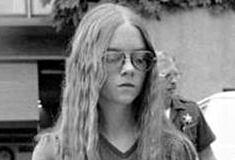
Brenda Spencer
Homicide Christine Falling
Homicide · USA · 1980
Christine Falling (1980-1982) was a 17-year-old babysitter from Perry, Florida.…
5 victims
Christine Falling
Homicide · USA · 1980
Christine Falling (1980-1982) was a 17-year-old babysitter from Perry, Florida.…
5 victims
 Roxanne Severcool
Homicide · USA · 1980
Defendant: Roxanne Severcool (juvenile offender) · Co-defendant: Robert Fadden…
3 victims
Roxanne Severcool
Homicide · USA · 1980
Defendant: Roxanne Severcool (juvenile offender) · Co-defendant: Robert Fadden…
3 victims
 Attina Cannaday
Homicide · USA · 1982
Attina Marie Cannaday was convicted in Harrison County Circuit Court of the kid…
1 victim
Attina Cannaday
Homicide · USA · 1982
Attina Marie Cannaday was convicted in Harrison County Circuit Court of the kid…
1 victim
 Bernadette Protti
Homicide · USA · 1984
Bernadette Protti was an American juvenile who murdered her classmate Kirsten C…
1 victim
Bernadette Protti
Homicide · USA · 1984
Bernadette Protti was an American juvenile who murdered her classmate Kirsten C…
1 victim
 Claudine Longet
Homicide · USA · 1976
Claudine Georgette Longet (born 29 January 1942) was a French singer, actress,…
1 victim
Claudine Longet
Homicide · USA · 1976
Claudine Georgette Longet (born 29 January 1942) was a French singer, actress,…
1 victim
 Janice Buttrum
Homicide · USA · 1980
Janice Buttrum was a seventeen-year-old caucasian woman. Demetra Faye Parker wa…
1 victim
Janice Buttrum
Homicide · USA · 1980
Janice Buttrum was a seventeen-year-old caucasian woman. Demetra Faye Parker wa…
1 victim
 John Gordon
Murderer? · USA · 1843
John Gordon (died February 14, 1845) was executed by hanging on February 14, 18…
1 victim
John Gordon
Murderer? · USA · 1843
John Gordon (died February 14, 1845) was executed by hanging on February 14, 18…
1 victim
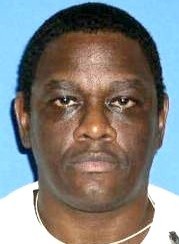 James Lewis Jackson
Murderer · USA · 1997
James Lewis Jackson was convicted of capital murder involving the strangling de…
3 victims
James Lewis Jackson
Murderer · USA · 1997
James Lewis Jackson was convicted of capital murder involving the strangling de…
3 victims
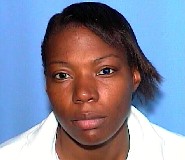 Latasha Pulliam
Murderer · USA · 1991
Latasha Pulliam received clemency from the Governor of Illinois in March 2003 f…
1 victim
Latasha Pulliam
Murderer · USA · 1991
Latasha Pulliam received clemency from the Governor of Illinois in March 2003 f…
1 victim
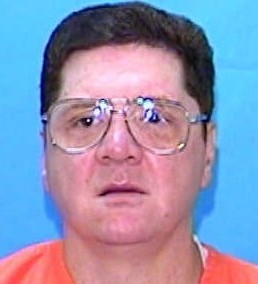 Richard Wallace Rhodes
Murderer · USA · 1984
Richard Wallace Rhodes (date of birth: 10/03/53) was tried in the Six Judicial…
1 victim
Richard Wallace Rhodes
Murderer · USA · 1984
Richard Wallace Rhodes (date of birth: 10/03/53) was tried in the Six Judicial…
1 victim
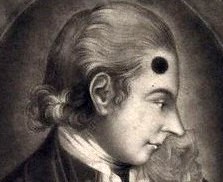 Rev. James Hackman
Murderer · United Kingdom · 1779
13 December 1752 — James Hackman was baptized at Gosport, Hampshire. · 1772 — H…
1 victim
Rev. James Hackman
Murderer · United Kingdom · 1779
13 December 1752 — James Hackman was baptized at Gosport, Hampshire. · 1772 — H…
1 victim
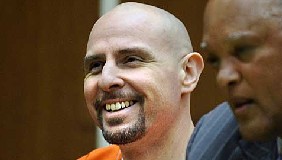 Timothy McGhee
Murderer · USA · 1997
Timothy Joseph McGhee was a northeast Los Angeles gang leader and a member of t…
3 victims
Timothy McGhee
Murderer · USA · 1997
Timothy Joseph McGhee was a northeast Los Angeles gang leader and a member of t…
3 victims
- Gender
- female
- Country
- USA
- Location
- San Diego, California, USA
- Date of birth
- April 3, 1962
- Age at first offence
- 17
- Characteristics
- juvenile, school shooting
- Victim profile
- Principal Burton Wragg, 53 (Principal) and Michael Suchar, 56 (Custodian)
- Method of murder
- Shooting (.22-caliber rifle)
- Date(s) of murder
- January 29, 1979
- Years active
- 1979
- Date of arrest
- Same day
- Status
-
Life imprisonment
Pleaded guilty; sentenced to 25 years to life in prison
Case overview
Brenda Spencer was convicted after a school shooting at Grover Cleveland Elementary School in San Diego, California. On January 29, 1979, Spencer killed two people and wounded nine after firing a .22-caliber rifle at the school from her family’s house across the street.
Background
Brenda Spencer was 16 years old at the time of the shooting. She lived in the San Carlos neighborhood of San Diego, California, in a house across the street from Grover Cleveland Elementary School, San Diego Unified School District. Spencer was described as 5' 2" tall, unusually thin, and having bright red hair; a classmate described her as “pretty crummy looking”. Teachers described her as introverted and said they sometimes inquired if she was awake.
The offence
On the morning of Monday, January 29, 1979, Spencer began shooting from her home at children waiting outside Cleveland Elementary School for Principal Burton Wragg to open the gates. She injured eight children, and Principal Burton Wragg was killed while trying to help the children. Custodian Mike Suchar was killed while trying to pull Wragg to safety. A police officer responding to a call for assistance during the incident was shot in the neck as he arrived.
Spencer fired thirty rounds of ammunition and later barricaded herself inside her home for nearly seven hours. During that time, she had a telephone conversation with a journalist, and she told police negotiators those she had shot made easy targets, and that she was going to “come out shooting”. Spencer later surrendered. Police officers found beer and whiskey bottles cluttered around the house and said Spencer did not appear to be intoxicated at the time of her arrest.
The widely quoted line Spencer gave during the incident was: “I just don't like Mondays.” Another formulation attributed to Spencer during telephone contact with a reporter was: “I don't like Mondays. This livens up the day.” Spencer later said she did not recall making the remark.
Investigation
During the incident, a reporter phoned houses near the school looking for information about what was going on and reached Spencer. Spencer “freely admitted that she was the one doing the shooting.” When asked why she was doing what she was doing, one of the things she was said to have told him was: “I don't like Mondays.” Spencer later told negotiators that the children were “easy pickings . . . like shooting ducks on a pond” and that she said she liked to watch them squirm after they were hit.
Arrest and custody
Spencer barricaded herself inside her home for nearly seven hours and surrendered. Police officers found beer and whiskey bottles cluttered around the house, but said she did not appear to be intoxicated at the time of her arrest.
Trial
Spencer was tried as an adult. She pleaded guilty to two counts of murder and assault with a deadly weapon.
Sentencing
Spencer was sentenced to 25 years to life in prison.
Aftermath
Parole and prison
Spencer remained in prison under the terms of her indeterminate sentence. In 1993, she became eligible for hearings to consider her suitability for parole. She was unsuccessful at four Board of Parole Hearings.
Spencer’s first Board of Parole Hearing was rejected, and at her first Board of Parole Hearing she said she had been a user of alcohol and drugs at the time of the crime. She also said tests showing she did not have drugs in her system when taken into custody must have been falsified.
At a hearing in 2001, Spencer said her father had beat and sexually abused her. The parole board chairman said that, as she had not previously told any prison staff about the allegations, he doubted whether they were true.
In 2009, the parole board ruled Spencer would be denied parole and would not be considered for the next 10 years. She would become eligible to have a Board of Parole Hearing in 2019.
During incarceration, Spencer was diagnosed as an epileptic. She received medication to treat epilepsy and depression while at the California Institution for Women in Chino, California.
At a 2005 parole hearing described as her third time her bid for parole had been rejected, a two-member parole board at the California Institution for Women in Chino ruled that she could not request parole again until 2009. Richard Sachs, San Diego County deputy district attorney, argued for Spencer’s continued incarceration and said: “It's a very good result and we're very happy,” and later: “She expressed remorse, but she came across as fragile, someone who's not all together,” and “She says she doesn't remember the crime and she provided no insight into what happened.” At that hearing, Spencer apologized for the shootings and said the board should consider a history of sexual abuse.
Attorney Carrie Hempel, who represented Spencer at the hearing, did not return phone messages seeking comment.
Charles Miller, a 9-year-old student on the day of the shooting who became a San Diego County probation officer, testified about how being shot had altered his life. Miller recalled losing his sense of security and well-being and said his body “going numb,” and Sachs summarized Miller’s account as “spoke of losing his sense of security and well-being seeing his principal and custodian gunned down, and then feeling himself being shot, and his body going numb,” and Sachs added: “She says she doesn't remember the crime and she provided no insight into what happened.”
Alcohol and ammunition
Police officers found beer and whiskey bottles cluttered around the house. Spencer’s father had given her a Ruger 10/22 semi-automatic .22 caliber rifle with a telescopic sight and 500 rounds of ammunition for Christmas 1978. Spencer later said: “I asked for a radio and he bought me a gun.” When asked why he might have done that, she answered: “I felt like he wanted me to kill myself.”
Other details
Prior and related incidents
In early 1978, staff at a facility for problem pupils, where Spencer had been referred due to truancy, informed her parents that she was suicidal.
During that summer, Spencer was arrested for shooting out the windows of the Cleveland Elementary School with a BB gun and burglary.
In December, a psychiatric evaluation arranged by her probation officer recommended Spencer be admitted to a mental hospital due to her depressed state, but her father refused to give permission.
Family and personal history
After her parents separated, Spencer lived with her father, Wallace Spencer, in virtual poverty; they slept on a single mattress on the living room floor.
Police later found half empty alcohol bottles throughout the house.
In 2001, Spencer accused her father of having drunkenly subjected her to beatings and sexual abuse. He said the allegations were not true.
Spencer was said to have self-identified herself as “having been gay from birth.”
A classmate described Spencer’s appearance as “pretty crummy looking”. Spencer excelled in photography, winning first prize in a Humane Society competition.
People killed and injured
Principal Burton Wragg was killed. Custodian Mike Suchar was killed. Eight students and a police officer were wounded.
Timeline
- January 29, 1979 — Spencer fired a .22-caliber rifle from her home across the street at Grover Cleveland Elementary School in San Diego, killing Principal Burton Wragg and custodian Mike Suchar and wounding eight students and a police officer.
- 1983 — Cleveland Elementary was closed due to declining enrollment.
- 1993 — Spencer became eligible for Board of Parole Hearings.
- 2001 — Spencer said her father had beat and sexually abused her during a parole hearing.
- 2005 — A state parole board rejected Spencer’s bid for freedom and ruled she could not request parole again until 2009.
- 2009 — The parole board ruled Spencer would be denied parole and would not be considered for the next 10 years, making her next eligibility for a Board of Parole Hearing in 2019.
Cultural references and follow-up events
Spencer was cited as the inspiration for the song “I Don't Like Mondays,” written by Bob Geldof for his band the Boomtown Rats and released later that year. A 2006 television documentary was also titled “I Don't Like Mondays.”
Almost exactly 10 years later, another shooting occurred at another school named Cleveland Elementary, in Stockton, California. Five students were killed and 29 were injured. Survivors described the event as a grim reminder and said they were “shocked, saddened, horrified” by the eerie similarities.
Spotted an error, or have more information about this case?