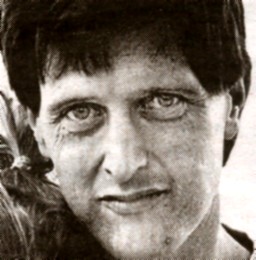
John Myles Sharpe
Murderer Carl Williams
Murderer · Australia · 2003
Carl Antony Williams (b. October 13, 1970) was an Australian convicted hitman a…
4 victims
Carl Williams
Murderer · Australia · 2003
Carl Antony Williams (b. October 13, 1970) was an Australian convicted hitman a…
4 victims
 Bandali Debs
Murderer · Australia · 1997
Bandali Michael Debs (born 18 July 1953) was an Australian murderer. Debs was f…
3 victims
Bandali Debs
Murderer · Australia · 1997
Bandali Michael Debs (born 18 July 1953) was an Australian murderer. Debs was f…
3 victims
 Robert Farquharson
Murderer · Australia · 2005
Robert Donald William Farquharson (born 1969) was an Australian father convicte…
3 victims
Robert Farquharson
Murderer · Australia · 2005
Robert Donald William Farquharson (born 1969) was an Australian father convicte…
3 victims
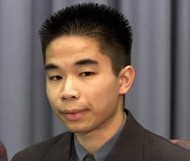 Sef Gonzales
Murderer · Australia · 2001
Sef Gonzales (born September 16, 1980) was an Australian man who was convicted…
3 victims
Sef Gonzales
Murderer · Australia · 2001
Sef Gonzales (born September 16, 1980) was an Australian man who was convicted…
3 victims
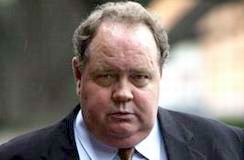 Bruce Burrell
Murderer · Australia · 1995
Bruce Allan Burrell was an Australian convicted double murderer who was sentenc…
2 victims
Bruce Burrell
Murderer · Australia · 1995
Bruce Allan Burrell was an Australian convicted double murderer who was sentenc…
2 victims
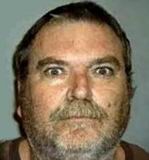 Francis Michael Fahey
Murderer · Australia · 2002
Francis Michael Fahey was sentenced to two life sentences with a minimum 25 yea…
2 victims
Francis Michael Fahey
Murderer · Australia · 2002
Francis Michael Fahey was sentenced to two life sentences with a minimum 25 yea…
2 victims
 Sukhwinder Dhillon
Serial killer · Canada / India · 1995
Sukhwinder Singh Dhillon was convicted of first-degree murder for fatally poiso…
5 victims
Sukhwinder Dhillon
Serial killer · Canada / India · 1995
Sukhwinder Singh Dhillon was convicted of first-degree murder for fatally poiso…
5 victims
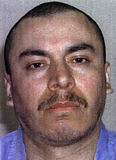 Arturo Juarez Suarez
Mass murderer · USA · 1998
Arturo Juarez Suarez was a ranch worker in Auburn, California. In July 1998, he…
4 victims
Arturo Juarez Suarez
Mass murderer · USA · 1998
Arturo Juarez Suarez was a ranch worker in Auburn, California. In July 1998, he…
4 victims
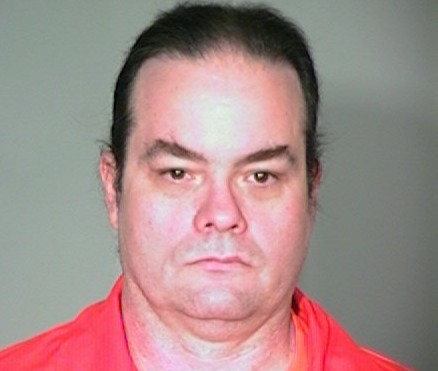 Jasper McMurtrey
Murderer · USA · 1979
Jasper Newton McMurtrey (also identified as Jasper McMurtrey). McMurtrey was a…
2 victims
Jasper McMurtrey
Murderer · USA · 1979
Jasper Newton McMurtrey (also identified as Jasper McMurtrey). McMurtrey was a…
2 victims
 Ignacio Cuevas
Murderer · USA · 1974
Ignacio Cuevas was executed in Texas by lethal injection on May 23, 1991, for h…
3 victims
Ignacio Cuevas
Murderer · USA · 1974
Ignacio Cuevas was executed in Texas by lethal injection on May 23, 1991, for h…
3 victims
 James Hanratty
Murderer · United Kingdom · 1961
James Hanratty was convicted of murder and rape and was executed by hanging at…
1 victim
James Hanratty
Murderer · United Kingdom · 1961
James Hanratty was convicted of murder and rape and was executed by hanging at…
1 victim
- Gender
- male
- Country
- Australia
- Location
- Melbourne, Australia
- Date of birth
- February 28, 1967
- Age at first offence
- 37
- Characteristics
- parricide, dismemberment
- Victim profile
- His pregnant wife, Anna Kemp Sharpe, 41, and their daughter Gracie, 20 months old
- Method of murder
- Spear gun
- Date(s) of murder
- March 23/27, 2004
- Years active
- 2004
- Date of arrest
- June 22, 2004
- Status
-
Life imprisonment
Sentenced to life imprisonment with a minimum non-parole period of 33 years on August 5, 2005
Case information
John Myles Sharpe was born on 28 February 1967 in Mornington and grew up in that area. He lived with his wife, Anna Kemp (a New Zealander), at various addresses in the Mornington Peninsula area. They married in October 1994. Anna was four years his senior.
Their daughter, Gracie Louise Sharpe, was born in August 2002. Gracie was found to be suffering from a congenital abnormality in her hips, requiring orthopaedic treatment by way of a corrective harness for the first three months of her life. She cried often and had difficulty sleeping, which placed strain on the relationship between Sharpe and his wife. After the harness was no longer required, Gracie still had difficulties in feeding and sleeping, for which Anna sought professional assistance. In November 2002, Gracie attended Hillview Maternity Unit of Peninsula Health complaining of being unable to cope and of feeling anxious, and subsequently had three in-patient admissions for respite to try to establish regular sleeping and eating patterns and to allay Anna’s own anxiety.
Sharpe was employed by the State Bank and later the Commonwealth Bank until 2002, when he resigned to go into a conveyancing business with a somewhat older friend with a view to taking over the business upon his retirement.
Timeline
- 19 March 2004 — A female friend of Anna stayed the night in the home at 116 Prince Street, Mornington; she noticed nothing untoward and described Anna as appearing happy.
- 21 March 2004 — Sharpe, Anna and Gracie went on the Mornington to Moorooduc steam train with other members of family for a picnic to celebrate a nephew’s birthday.
- 22 March 2004 — Anna took Gracie to her childcare centre in Mornington and returned for her at noon; Anna also telephoned her mother in New Zealand, and later arranged to meet a friend on Friday, 26 March; another friend telephoned Anna at home at 8.24pm and had a long, apparently normal conversation with her; the next day Anna phoned her private health insurance fund to enquire about adding her unborn baby to her health cover, which was the last known interaction between Anna and another adult human being apart from Sharpe before her death.
- 23 March 2004 — Sharpe retrieved a spear gun from the garage, returned to the bedroom and killed Anna with two spear shots; he then attempted to remove the spears the next day by unscrewing their shafts and later buried Anna in a shallow grave in the backyard.
- 25 March 2004 — Sharpe told two of Anna’s friends that she had left him but could be contacted on her mobile phone.
- 26 March 2004 — Sharpe did not take Gracie to childcare on this day, but on the following day (Friday) he did and told the staff that, as he and his wife had separated, she would not be attending again.
- 27 March 2004 — Sharpe put Gracie to bed in her cot; he drank several glasses of whisky and Coke; he retrieved and loaded the spear gun with a newly acquired spear and fired it into Gracie’s head, then fired multiple times until he killed her.
- 29 March 2004 — Sharpe created a false email using Anna’s name and email address and sent it to Anna’s brother in New Zealand; on the same day he went to Bunnings hardware store in Frankston and bought duct tape, poly tarps and an 1800w Homelite electric chain saw.
- 20 May 2004 — New Zealand police requested Victoria Police to conduct enquiries into the apparent disappearance of Anna Kemp and her daughter, Gracie.
- 22 June 2004 — Police arrested Sharpe; in the first interview he continued to deny any knowledge of their whereabouts, but after speaking to his family he admitted to both murders.
- 5 August 2005 — The Supreme Court of Victoria sentenced Sharpe to life imprisonment with a minimum non-parole period of 33 years.
- 2037 — Sharpe became eligible for parole in 2037.
Background
Sharpe met his wife, Anna Kemp, when they worked together at the Commonwealth Bank of Australia. They lived together in various locations around the Melbourne suburb of Mornington.
Gracie was born with hip dysplacia, a congenital abnormality in her hips that required orthopaedic treatment by a corrective harness for the first three months of her life. She cried often and had difficulty sleeping. Even after the harness was no longer required, Gracie continued to have difficulties in feeding and sleeping, and Anna sought professional assistance.
In 2003 Sharpe purchased a high-powered spear gun, and a second spear, from Sport Phillip Marine in Mornington. He did not previously show an interest in spear fishing, but he test fired the gun in his backyard in order to become familiar with its operation. Shortly after purchasing the spear gun, Sharpe moved to a home at 116 Prince Street, Mornington.
Sharpe later told police investigators that a subsequent pregnancy came as a surprise to him, and he told police he did not want another child. He began to resent Anna and the unborn child. Sharpe consulted a general practitioner, Dr Andrew Kotsimbos, in the weeks immediately before 23 March 2004 complaining of disturbed sleep patterns. He was prescribed sleeping tablets of two different types with little effect, and Dr Kotsimbos discussed the possibility of an underlying depressive illness. Dr Kotsimbos diagnosed depression after a consultation on 1 June 2004. By then Sharpe’s history included the false story of Anna’s having left him.
Sharpe’s parents and siblings had no criminal or anti-social histories. Sharpe had completed Year 12 but did not pass the examinations.
Dr Lester Walton, a forensic psychiatrist, examined Sharpe on two occasions while he was on remand. Dr Walton described Sharpe as socially inept, dependent, passive and a retiring individual who was unable or reluctant to confront problems. Dr Walton’s view was that Sharpe perceived irresolvable difficulties in his family situation and reached the conclusion that the only solution was to kill Anna and then Gracie. Dr Walton offered the opinion that the killings were “irrational”, although he found no evidence that Sharpe was suffering from any frank psychiatric illness. Dr Walton thought Sharpe was afflicted by a clinically significant depressive disorder prior to the killings, though not of very major proportions. When Dr Walton saw Sharpe on the second occasion, in April, he noted Sharpe was in a special unit at Barwon Prison and required close observation and special treatment because of suicidal tendencies consequent upon the depression.
Dr Walton considered that Sharpe having no prior convictions, and none for violence, was probably the most reliable predictor among unreliable predictors for future violence. Dr Walton thought it unlikely Sharpe would re-offend.
Mr Ian Joblin examined Sharpe on two occasions. Based on Sharpe’s history, information obtained from members of Sharpe’s family and perusal of the case documentation, Mr Joblin formed the opinion that leading up to the birth of Gracie Sharpe was in a fragile psychological state. Mr Joblin considered him inadequate, isolated and withdrawn with few appropriate social skills and few friends, dependent on his parents and lacking psychological resources to cope with stressors in his life, including marriage, the arrival of a child and his career change from bank officer to conveyancing business.
Mr Joblin agreed with Dr Walton that Sharpe was not psychotic at the time of the offences and should not be diagnosed with an anti-social personality disorder. Mr Joblin considered that the offences occurred not in a psychological vacuum but during a state of considerable psychological abnormality. Mr Joblin said Sharpe’s conduct in attempting to divert suspicion from himself became virtually an intellectual exercise, and that Sharpe was very aware of what he had done by the time of Mr Joblin’s second consultation.
The offence
Sharpe pleaded guilty to two counts of murder.
Murder of Anna Kemp
On 23 March 2004, Sharpe and Anna argued before retiring to bed about 10pm. Sharpe left the bed, retrieved the spear gun from the backyard garage and returned to the bedroom. He fired the spear into Anna’s head at point blank range from a distance of a few centimetres. Anna did not stop breathing, so Sharpe fired a second spear into her head, killing her. Sharpe covered Anna’s body in towels and went downstairs to sleep on a foldout sofa bed.
The next day Sharpe attempted to remove the spears from Anna’s head but failed at first, then unscrewed their shafts leaving the spear heads embedded. Sharpe buried Anna in a shallow grave in their backyard.
Sharpe later admitted to police he killed Anna because she was controlling and moody and that their marriage was unhappy, and he described feeling that he would be taking care of Gracie by himself “amongst all this madness”. In sentencing remarks, the court said the killings had involved premeditation and that the method was “singular in its barbarity”, noting Anna was pregnant.
Murder of Gracie Louise Sharpe
On 27 March 2004, Sharpe put Gracie to bed in her cot and then drank several glasses of whisky and Coke. He retrieved the spear gun from the garage, loaded it with a newly acquired spear and fired it at her head, penetrating her skull. With Gracie screaming loudly after suffering horrendous injury, Sharpe retrieved the two spear shafts which he had earlier removed from Anna’s head and returned to Gracie’s bedroom. He fired both into Gracie’s head, but withdrew one spear from Gracie’s head and fired again after realizing she was still alive, finally killing her.
Sharpe returned to Gracie’s bedroom the next morning, pulled the spears from her head while holding a towel in front of his face because he could not bear to look upon her. He wrapped her body in garbage bags and a tarpaulin and bound her with black duct tape. He disposed of Gracie’s body at the Mornington refuse transfer station, discarding the spear gun, the spears and some of her clothes and toys.
In the sentencing remarks, the court stated that the killing of Gracie occurred so that Anna’s first crime would not be discovered.
Investigation
After Anna was reported missing, police conducted a search of the Mornington landfill site for about three weeks and located both bodies. The remains were found and subsequent pathology examination at the Victorian Institute of Forensic Medicine largely corroborated Sharpe’s confession as to how the victims died and how he disposed of their bodies.
The sentencing remarks described extensive deception and efforts to mislead. Sharpe’s created false scenario involved Anna leaving for another man and taking Gracie. He engaged in activities including calls and withdrawals using Anna’s mobile phone and bank account, letters and false emails.
The sentencing remarks also stated that police conducted covert surveillance and observed Sharpe retrieving a credit card from a plastic bag hidden in bushes near a toilet block in Mornington, and observed him discarding possibly incriminating material in a garbage bin at Mount Martha.
A police statement said further testing was required to identify the remains found at the tip, and a newspaper report believed the remains were those of Anna Kemp.
Arrest
On 22 June 2004, police arrested Sharpe. During his first interview he continued to deny any knowledge of the whereabouts of Anna and Gracie. In a subsequent interview, after speaking to his family, he admitted to both murders.
Trial and sentencing
Sharpe appeared before the Supreme Court of Victoria and was arraigned. He pleaded guilty to the murders of Anna and Gracie.
The Supreme Court of Victoria sentenced him on 5 August 2005 to life imprisonment for the murders. The court fixed a minimum non-parole period of 33 years. The court stated that a period of 409 days had been served as pre-sentence detention and declared that this declaration and its effect be entered in the records of the court.
Sentencing remarks (verbatim excerpts)
The court told Sharpe:
“You were born on 28 February 1967 in Mornington and grew up in that area.”
The court also stated:
“As your plea of guilty has obviated the necessity for a trial, it is important that the details of these crimes be placed on the public record even though, as your counsel has properly conceded, they are perhaps, for many, too awful to contemplate.”
On remorse, the court said:
“Remorse is an elusive concept. A confession and a plea of guilty will not always denote its existence.”
On method and manner of killing Anna, the court stated:
“Your killing your wife was no impulsive act of desperation.”
“It was singular in its barbarity.”
On the killing of Gracie, the court stated:
“Gracie was a defenceless child for whom you had a legal and, more importantly, a moral responsibility and whatever your motive for killing Anna might have been, in Gracie’s case it was simply so that your first crime would not be discovered.”
On the court’s decision on sentence and non-parole eligibility, the court stated:
“The imposition of life sentences for each of these murders will be ameliorated in your case by the fixing of a non-parole period.”
Evidence of confession and police interview statements
Sharpe told police investigators he killed Anna because she was “controlling and moody” and their marriage was unhappy.
Sharpe told police:
“I was thinking of taking care or Gracie by myself and just amongst all this madness ... that's when I lost the plot”.
He also told police his marriage was unhappy and he said he believed he was “another person” when committing the murders; Dr Walton considered this to be dissociation of personality rather than hallucinations indicative of psychosis.
Sharpe appeared to have asked for information after the murders during media interviews, and later made admissions after his arrest.
Other details
After Anna’s death, Sharpe engaged in deception and continued efforts to create the impression that Anna had left him for another man and took Gracie. The deception involved forged and false communications including emails, letters and calls.
Sharpe sent a forged e-mail to Anna’s family in New Zealand to create the impression Anna was alive and well. Anna’s mother reported Anna’s disappearance to police in Dunedin.
Sharpe arranged for flowers in the name of Anna to be delivered to his mother-in-law on her birthday.
Sharpe gave media interviews and appeared on national television speaking about Anna and Gracie’s disappearance. In one of Sharpe’s quoted statements during those interviews he said:
“Anna, our marriage may be over but I still love you and you are the mother of our beautiful daughter Gracie, whom we both adore more than anyone else”.
During sentencing remarks, the court also discussed Sharpe’s earlier false statement, where Sharpe described the conversation on the Tuesday after the steam train family outing as occurring on the day he later confessed was the day he killed Anna.
Sharpe resided in protective custody while imprisoned due to threats on his life from fellow prisoners.
The case received major media attention in Australia and also in New Zealand. The murders were the focus of an episode titled “The Mornington Monster” in the 2005 Crime Investigation Australia series (Season 1), and the case appeared in books including “12 True Crime Stories that Shocked Australia” by Paul Anderson (2005) and “Criminal Profiling: An Introduction to Behavioral Evidence Analysis” 3rd ed. by Brent E. Turvey (2008). In August 2009, the case was again reviewed on the 60 Minutes programme “Unmasking the Truth” about human lie detectors.
Outcome
The Supreme Court of Victoria sentenced John Myles Sharpe to life imprisonment with a minimum non-parole period of 33 years on August 5, 2005. He became eligible for parole in 2037.
Spotted an error, or have more information about this case?