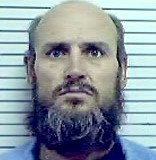
William Scott Smith
Serial killer Carl Eugene Watts
Serial killer · USA · 1974
Carl Eugene Watts (born November 7, 1953; died September 21, 2007), also known…
100 victims
Carl Eugene Watts
Serial killer · USA · 1974
Carl Eugene Watts (born November 7, 1953; died September 21, 2007), also known…
100 victims
 Rodney Alcala
Serial killer · USA · 1977
Rodney James Alcala (born August 23, 1943) was also known as Rodrigo Jacques Al…
100 victims
Rodney Alcala
Serial killer · USA · 1977
Rodney James Alcala (born August 23, 1943) was also known as Rodrigo Jacques Al…
100 victims
 Donald Leroy Evans
Serial killer · USA · 1975
Donald Leroy Evans (born July 5, 1957) was an American serial killer who murder…
60 victims
Donald Leroy Evans
Serial killer · USA · 1975
Donald Leroy Evans (born July 5, 1957) was an American serial killer who murder…
60 victims
 Michael Swango
Serial killer · USA · 1981
Michael Swango (Joseph Michael Swango) was a physician and American serial kill…
60 victims
Michael Swango
Serial killer · USA · 1981
Michael Swango (Joseph Michael Swango) was a physician and American serial kill…
60 victims
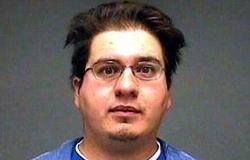 Efren Saldivar
Serial killer · USA · 1989
Efren Saldivar (born 30 September 1969) was an American serial killer who murde…
50 victims
Efren Saldivar
Serial killer · USA · 1989
Efren Saldivar (born 30 September 1969) was an American serial killer who murde…
50 victims
 Gary Ridgway
Serial killer · USA · 1982
Gary Leon Ridgway Ridgway was born 18-February-1949 in Salt Lake City, UT. He w…
49 victims
Gary Ridgway
Serial killer · USA · 1982
Gary Leon Ridgway Ridgway was born 18-February-1949 in Salt Lake City, UT. He w…
49 victims
 Rekha Kumari-Baker
Murderer · United Kingdom · 2007
Davina and Jasmine Kumari-Baker were murdered by their mother, Rekha Kumari-Bak…
2 victims
Rekha Kumari-Baker
Murderer · United Kingdom · 2007
Davina and Jasmine Kumari-Baker were murdered by their mother, Rekha Kumari-Bak…
2 victims
 Edward Paul Morris
Mass murderer · USA · 2002
Edward Paul Morris killed his wife and three children and dumped their bodies i…
4 victims
Edward Paul Morris
Mass murderer · USA · 2002
Edward Paul Morris killed his wife and three children and dumped their bodies i…
4 victims
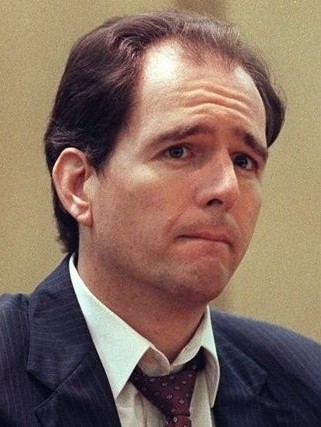 Danny Rolling
Serial killer · USA · 1989
Danny Harold Rolling was executed by lethal injection in Florida on October 25,…
8 victims
Danny Rolling
Serial killer · USA · 1989
Danny Harold Rolling was executed by lethal injection in Florida on October 25,…
8 victims
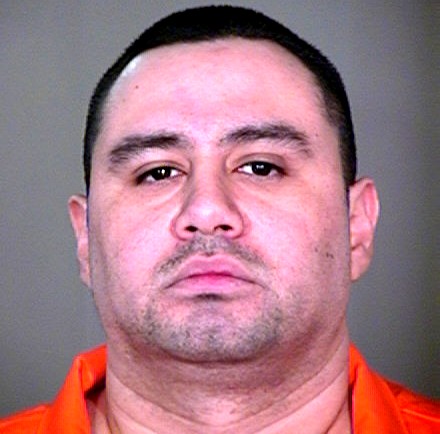 John Cruz
Murderer · USA · 2003
John Cruz was sentenced to death on May 10, 2005. Officer Patrick Kent Hardesty…
1 victim
John Cruz
Murderer · USA · 2003
John Cruz was sentenced to death on May 10, 2005. Officer Patrick Kent Hardesty…
1 victim
 Courtney Schulhoff
Homicide · USA · 2004
Courtney Christine Schulhoff was born on December 27, 1987 in Washington, D.C.…
1 victim
Courtney Schulhoff
Homicide · USA · 2004
Courtney Christine Schulhoff was born on December 27, 1987 in Washington, D.C.…
1 victim
 John Katehis
Homicide · USA · 2009
John Katehis was a 16-year-old and was tried for the fatal stabbing of radio jo…
1 victim
John Katehis
Homicide · USA · 2009
John Katehis was a 16-year-old and was tried for the fatal stabbing of radio jo…
1 victim
- Gender
- male
- Country
- USA
- Location
- Salem, Marion County, Oregon, USA
- Date of birth
- 1960
- Age at first offence
- 22
- Characteristics
- kidnapping, rape, rape?
- Victim profile
- Sherry Eyerly, 18 / Rebecca Darling, 21 / Katherine Redmond, 18
- Method of murder
- Strangulation
- Date(s) of murder
- 1982 - 1984
- Years active
- 1982–1984
- Date of arrest
- April 26, 1984
- Status
-
Life imprisonment
Sentenced to two consecutive terms of life imprisonment in 1984.
Case record: William Scott Smith
Background
William Scott Smith was a high school dropout and an unemployed fry cook.
In 1978, Smith was convicted on charges of "menacing" in Silverton, Oregon.
That same year, in nearby Salem, Oregon, Smith had a second-degree burglary conviction that earned him a one-year suspended sentence.
In 1979, Smith and another man were accused of second-degree sexual assault on an adult female victim. Smith was acquitted of the charge, while his companion went to jail.
Authorities in Boise, Idaho convicted Smith of indecent exposure during 1981.
A year later, Smith was questioned by Ada County sheriff's officers in the unsolved murder of 14-year-old Lisa Chambers.
The offence
On February 19, 1984, Rebecca Darling, 21, disappeared from her job on the graveyard shift at an all-night convenience store. A customer had seen her on the job around 3:20 a.m., but she was missing thirty minutes later, when another early shopper found the store deserted.
Darling's decomposed remains were found March 25, concealed in brush along the Little Pudding River, six miles northeast of town. Her remains were nude from the waist up, and Darling had been strangled with a piece of rope. Her hands were bound behind her back.
On April 7, 1984, police responded to reports of an abandoned car and traced it back to 18-year-old co-ed Katherine Redmond, who had borrowed the wheels from her roommate after a campus frat party. Redmond was last seen alive around 2:15 a.m., and she was found on April 11. Her nude body had been discarded four miles from the spot where Rebecca Darling was discovered.
Death had been induced by "traumatic asphyxiation," and Redmond's vagina was lacerated with some unknown foreign object.
Witnesses reported sightings of a late-1960s Pontiac station wagon in the area where Redmond's car was recovered, around the time she must have met her killer.
Another Salem resident reported being bumped by a similar car days earlier. The driver had invited the resident to leave her car and "check the damage," but he soon lost interest when she countered with suggestions that they both drive to a nearby gas station.
Investigation
Police focused on William Smith as their primary suspect by April 18, 1984.
Smith owned the right kind of car. In the early hours of April 7, he had called a tow truck to rescue him from a ditch near the place where Katherine Redmond's car was found.
Before detectives had a chance to move against him, Smith was incarcerated for 180 days after pleading guilty to a series of obscene and threatening phone calls.
Police saw no links between Smith and five other unsolved homicides that had plagued Salem since 1981.
A Salem mystery over the disappearance of a young pizza-delivery woman ended on December 18, 2007 with a plea by a convicted murderer, William Scott Smith. The victim was Sherry Eyerly.
Eyerly vanished on July 4, 1982 while delivering three large Domino's pizzas. The 18-year-old's car was found with the engine running near the address of the order—less than an hour after she left. The three pizzas were on the ground near her car. Volunteers searched for days but she never turned up.
Investigators in a cold case unit re-examined evidence and confronted Smith in prison, where he confessed.
Detectives said Smith and an accomplice planned to kidnap Eyerly and hold her for ransom.
Don Abar of the Marion County District Attorney's Office said:
"One of the facts that never came out publicly ... is that the next day after the abduction there was actually a ransom call that went into Domino's,"
Authorities said searches of the area did not turn up anything, likely because of significant flooding over the past 25 years. Eyerly's body has never been found.
Authorities said Smith reportedly told police he also hid Eyerly's body in the same area.
Arrest
On April 26, 1984, Smith was arraigned on two counts of first-degree murder in Salem.
Trial
Smith waived his right to a jury trial in July and was convicted on all counts by the presiding judge, drawing two consecutive terms of life imprisonment.
Sentencing
Smith drew two consecutive terms of life imprisonment in 1984.
He must complete a minimum of forty years before he is considered for parole.
On December 18, 2007, a plea deal resolved a 25-year-old murder mystery over the disappearance of Sherry Eyerly. As part of the plea deal, a third life sentence was added to the two Smith was already serving.
Appeals
William Scott Smith appealed the district court's denial of his 28 U.S.C. Sec. 2254 habeas corpus petition.
The case was titled William Scott SMITH, Petitioner-Appellant, v. Manfred MAASS, Superintendent, Oregon State Penitentiary, Respondent-Appellee.
United States Court of Appeals, Ninth Circuit. No. 93-35217.
Argued and submitted Jan. 7, 1994, and decided April 29, 1994.
Before: POOLE and TROTT, Circuit Judges, and KING, District Judge.
The memorandum concluded: AFFIRMED.
Smith contended that the trial court should have suppressed his un-Mirandized confession to his father, mother, and fiancee.
- Miranda warnings were not required because Smith's conversations with his family were not "custodial interrogations."
- The fiancee did not ask Smith about the murder; Smith volunteered his confession.
- The father encouraged Smith to confess, but he acted for personal reasons, not to assist the police.
- Smith's mother had no contacts with the police before she visited Smith.
- The relatives did not act as government agents.
Smith also contended that the state trial court improperly admitted a confession he made on April 24, after police elicited the confession following Smith's invocation of his right to counsel on April 23.
The memorandum recounted that:
- The April 23 interrogation lasted about an hour.
- Police never administered Miranda warnings.
- Smith told police that he did not want to talk and stated:
"[i]f you are going to charge me, arrest me and then you can get me an attorney."
- The police continued to interrogate him, talked about his need for professional help, he cried, he asked to return to his cell several times, an officer slapped the table and asked him to confess again, and the police returned him to his cell.
- Smith did not make any incriminating statements during April 23.
- On April 24, more than 24 hours after the April 23 interrogation, Smith's father and stepmother visited Smith and asked him if he were guilty and told him that if he were, he needed psychiatric help.
- Smith confessed first to his fiancee and then to his mother.
- During his conversation with his mother, his father came into the room and persuaded him to confess to the police.
- The father came out of the room and told the police that Smith wanted to confess if the Vancouver burglary charges were dropped.
- The charges were dropped, police read Smith his Miranda rights, and Smith waived them and confessed.
- He admitted he confessed because his father thought he should.
The memorandum held that police violated Smith's rights by continuing to interrogate him on April 23, but it found that Smith's subsequent initiation of contact and waiver were voluntary under the totality of the circumstances.
Smith argued that his decision to initiate contact and subsequent waiver were not voluntary because of promises of psychological help, the use of his family to elicit an emotional confession, exploitation of his "borderline mental condition," and extensive police contact including an April 23 interrogation that was conducted in violation of Miranda.
The memorandum held that:
- The promises of psychological help did not render initiation of contact and waiver involuntary.
- Smith's father's concern with psychological help did not contribute to an atmosphere of police coercion.
- The influence of Smith's family did not contribute to an atmosphere of coercion.
- Police involvement was not so pervasive that Smith's free will was overborne.
- A subsequent determination was made that any taint from police conduct was purged given that interrogation lasted a relatively short time, more than 24 hours elapsed, there was no police contact between the two interrogations, and Smith initiated police contact after striking a deal that police drop the Vancouver robbery charge.
Smith also contended that his subsequent confession was not voluntary and that an inculpatory statement is voluntary only if it is the product of a rational intellect and a free will. The memorandum stated that the test considered the totality of the circumstances and whether the statement was obtained by physical or psychological coercion or improper inducement such that his will was overborne. The memorandum concluded that additional promises of psychological help did not establish coercion that overbore Smith's will.
The memorandum noted that:
- Smith also raised a sixth amendment challenge, but his sixth amendment right to counsel had not attached.
- It concluded that habeas relief was not warranted and the decision was AFFIRMED.
Outcome
Smith was convicted in Salem and received two consecutive life sentences in 1984 for two counts of first-degree murder.
By 2007, Smith entered a guilty plea in connection with the disappearance of Sherry Eyerly.
Smith’s two life sentences for the sex slayings of two other young Salem women in separate attacks in 1984 were already serving, and a third life sentence was tacked on as part of the 2007 plea deal.
Other details
The case materials included a set of descriptors:
- SEX: M RACE: W TYPE: N MOTIVE: Sex. MO: Lust killer of females age 14-21
- DISPOSITION: Life term with 40-year minimum on two counts in Ore., 1984.
A photo caption included that:
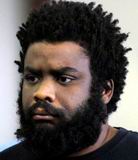
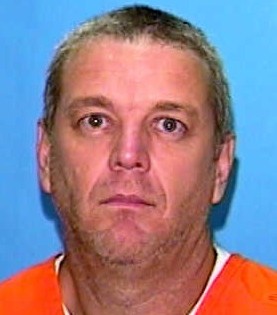
- 1984 photo of William Scott Smith, left, with Attorney Richard Stein.
- Sherry Eyerly was pictured in this file photo.
- She disappeared while delivering pizza in the Salem area in 1982.
Spotted an error, or have more information about this case?