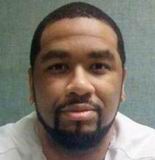
Johnnie Baston
Murderer Brian Kevin Rosenfeld
Murderer · USA · 1985
Brian Kevin Rosenfeld Brian Kevin Rosenfeld was sentenced to three concurrent l…
23 victims
Brian Kevin Rosenfeld
Murderer · USA · 1985
Brian Kevin Rosenfeld Brian Kevin Rosenfeld was sentenced to three concurrent l…
23 victims
 Russell Ellwood
Murderer · USA · 1991
Russell Ellwood was a former taxi driver. Authorities suspected him of killing…
20 victims
Russell Ellwood
Murderer · USA · 1991
Russell Ellwood was a former taxi driver. Authorities suspected him of killing…
20 victims
 Robert Martines Perez
Murderer · USA · 1994
Name: Robert Martines Perez · Other name used in proceedings: Robert Martinez P…
15 victims
Robert Martines Perez
Murderer · USA · 1994
Name: Robert Martines Perez · Other name used in proceedings: Robert Martinez P…
15 victims
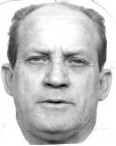 Billy Frank Vickers
Murderer · USA · 1993
Billy Frank Vickers Vickers was executed by lethal injection in Texas on Januar…
14 victims
Billy Frank Vickers
Murderer · USA · 1993
Billy Frank Vickers Vickers was executed by lethal injection in Texas on Januar…
14 victims
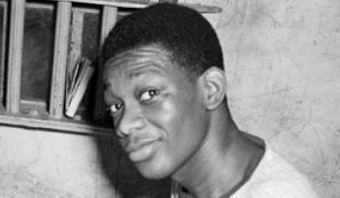 Willie Francis
Homicide · USA · 1944
Willie Francis (c. 1930 – May 9, 1947) was an African American sentenced to dea…
1 victim
Willie Francis
Homicide · USA · 1944
Willie Francis (c. 1930 – May 9, 1947) was an African American sentenced to dea…
1 victim
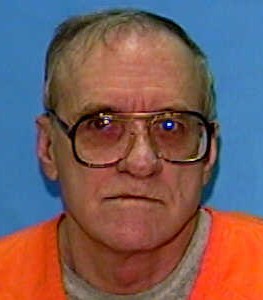 Lloyd Chase Allen
Murderer · USA · 1991
Lloyd Chase Allen was convicted and sentenced to death for the November 13, 199…
1 victim
Lloyd Chase Allen
Murderer · USA · 1991
Lloyd Chase Allen was convicted and sentenced to death for the November 13, 199…
1 victim
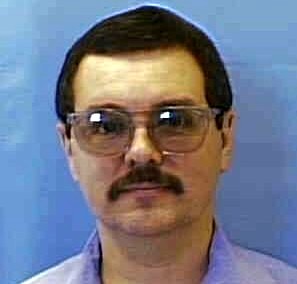 Donald Harvey
Serial killer · USA · 1970
Donald Harvey was known as an American serial killer and a self-professed “Ange…
87 victims
Donald Harvey
Serial killer · USA · 1970
Donald Harvey was known as an American serial killer and a self-professed “Ange…
87 victims
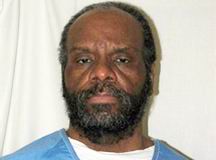 Albert G. Brown
Murderer · USA · 1980
Albert Greenwood Brown, Jr. (born August 18, 1954) Albert Greenwood Brown, Jr.…
1 victim
Albert G. Brown
Murderer · USA · 1980
Albert Greenwood Brown, Jr. (born August 18, 1954) Albert Greenwood Brown, Jr.…
1 victim
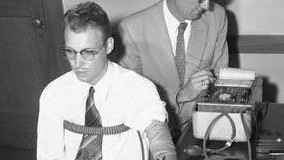 Burton Abbott
Murderer · USA · 1955
28 April 1955 — Stephanie Bryan, a 14-year-old girl, did not come home from sch…
1 victim
Burton Abbott
Murderer · USA · 1955
28 April 1955 — Stephanie Bryan, a 14-year-old girl, did not come home from sch…
1 victim
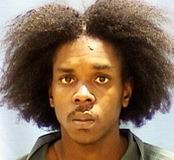 William Balfour
Murderer · USA · 2008
William Balfour was sentenced to three consecutive life sentences plus 120 year…
3 victims
William Balfour
Murderer · USA · 2008
William Balfour was sentenced to three consecutive life sentences plus 120 year…
3 victims
- Gender
- male
- Country
- USA
- Location
- Lucas County, Ohio, USA
- Date of birth
- February 18, 1974
- Age at first offence
- 20
- Characteristics
- robbery
- Victim profile
- Chong-Hoon Mah, 53 (shop owner)
- Method of murder
- Shooting (.45 handgun)
- Date(s) of murder
- March 21, 1994
- Years active
- 1994
- Date of arrest
- Several days later
- Status
-
Executed
Executed by lethal injection in Ohio on March 10, 2011
Case record: Johnnie Baston
Background
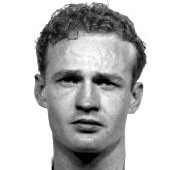
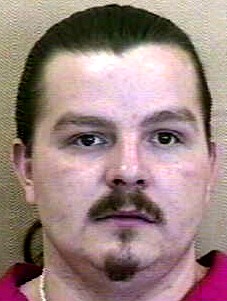
Johnnie R. Baston was the defendant. He was born February 8, 1974. He was 20 years old at the time the crimes were committed.
Chong-Hoon Mah was the victim. Chong-Hoon Mah was a former South Korean journalist who moved to Toledo and owned a downtown Toledo shop called Continental Wigs 'n Things. The shop sold sports gear, including team logo hats and jackets.
Chong Mah and his wife, Jin-Ju Mah, owned two retail stores in Toledo. Chong Mah managed the couple's downtown store, Continental Wigs N' Things. In addition to wigs, the store sold team logo hats and jackets.
The offence
In a rear storage room at Continental Wigs 'n Things, investigators found Chong Mah’s body. The body was shot once through the head, with investigators later determining he had been shot in the back of the head at a range of two to three inches.
The store had been robbed. The cash register was open and empty when Jin-Ju Mah arrived. Investigators believed that, in addition to the money in the cash register, the killer took team logo hats and “Starter” type jackets from the store.
Baston admitted participating in the robbery, but claimed that an accomplice named “Ray” (also referred to as “Ray-Ray” in Baston’s account) took Chong Mah into the back room and shot him. Baston denied having an intention to kill anyone and claimed that Ray acted without Baston’s prior knowledge.
Baston pleaded not guilty and elected to be tried before a three-judge panel.
Investigation
A single .45 caliber hollow-point slug was recovered behind wall paneling in the room where Chong Mah was shot. An autopsy revealed that Chong Mah had been shot in the back of the head at a range of two to three inches.
Investigators found clothing stolen from the store in an apartment that Baston was sharing with a friend after his adoptive mother, who was his biological aunt, threw him out of the house for taking the gun.
After news coverage of Chong Mah’s murder, an employee of a nearby club/bar reported that at approximately 11:45 a.m. on the day of the murder, she saw a man carrying a plastic bag walk across a parking lot near the wig shop. She said he was heavily dressed despite it being unseasonably warm that day, and that he was wearing a team logo jacket and another jacket draped over his shoulders. The employee said the man could have been Baston but she was unable to positively identify him.
A patron of a bookstore adjacent to or near the wig shop told police that he thought he heard a gunshot shortly before noon on March 21, 1994.
A few days after the murder, Patricia Chininis contacted the Toledo Police. Patricia Chininis’s daughter, Deana, was Smith’s girlfriend, and both women knew Baston. Patricia Chininis related that on the day before the shooting, Baston and Smith were at her house. In moving Baston’s jacket, she noticed it was unusually heavy. She felt the jacket, realized there was a gun in it, and told Baston and Smith never to come back to her house with a gun. Deana Chininis stated she previously saw both Smith and Baston with revolver-type guns and hollow-point bullets. She further said that a day or so after the murder, Baston offered to give Deana’s girlfriend a Starter jacket.
After receiving this information, police obtained a search warrant for Smith’s apartment, where Baston was staying. Police seized four sport logo hats and several Starter jackets. A wig store employee identified these articles as being similar to those the store carried. The employee, an African American, also recalled that three weeks prior to the killing three African American males were in the store acting suspiciously, and that one of them said to another: “No, it's a sister in here,” before they left. The employee identified Baston as one of the three.
Arrest
Baston was arrested in Columbus, Ohio, at a church function. He was carrying a .25 caliber semi-automatic pistol and had a .45 caliber semi-automatic revolver in his luggage.
In an interview with Columbus police shortly after his arrest, Baston admitted participating in the robbery of the wig shop, but denied shooting Chong Mah. According to Baston, Ray took Chong Mah into the back room and shot him. Baston denied any intention to kill anyone and claimed that Ray acted without Baston’s prior knowledge.
Baston was later carrying Starter jackets and sports hats that were consistent with those taken from the store, and the .45 caliber slug recovered at the crime scene matched those test-fired from the .45 caliber revolver seized from Baston.
Trial
Baston was indicted on two counts of aggravated murder and one count of aggravated robbery with a firearm specification.
Baston was charged with two counts of aggravated murder under Ohio law and with aggravated robbery with a firearm specification. Each aggravated murder count carried a capital specification pursuant to R.C. 2929.04(A)(7).
He waived his right to be tried by a jury.
During trial, William Nappins, a defense witness, testified that while on his way to an Alcoholics Anonymous meeting at approximately 11:45 a.m. on the morning of the murder, he saw a tall, dark-skinned African-American male emerge from either the wig store or the book store next to it. The man was dressed in black and carrying a bag. Nappins’s description of the man did not match that of Baston.
The defense argued that David Smith was the “Ray” named by Baston as the actual triggerman during his Columbus interrogation. The defense asserted that the presence of another gunman at the wig shop robbery created a reasonable doubt as to the capital specifications.
The three-judge panel found Baston guilty on all counts and specifications.
Baston was sentenced to death on one of the aggravated murder counts, and to terms of imprisonment for both the aggravated robbery and the gun specification.
Jury waiver and trial-phase evidentiary issues (appellate proceedings)
In his first proposition of law on direct appeal, Baston argued that a jury waiver in a capital case was not knowing, intelligent, and voluntary unless the defendant was aware of all the implications of the waiver. The discussion included reference to State v. Post (1987) and the presumption concerning bench trials, and Baston’s argument that the trial court should ensure he understood he was giving up meaningful appellate review by choosing a three-judge panel.
The direct appeal opinion described that it was undisputed the written waiver required by the Criminal Rules and Revised Code was properly executed, and that the presiding judge engaged in an extensive colloquy with Baston. The direct appeal opinion stated that the trial court specifically advised Baston about the right to a jury trial and how a three-judge panel would function, including unanimity requirements for guilt and sentencing, and that if even one judge did not think death was appropriate, it could not be imposed.
In Proposition of Law No. II on direct appeal, Baston argued that three evidentiary rulings deprived him of constitutional rights. Those issues included coroner testimony by Dr. Diane Scala-Barnett regarding distance from gunshot to wound, blood spatter patterns, and cause of death; a challenge to the panel’s allowance of prosecutor questioning of witness David Smith concerning a tape-recorded statement; and alleged error in questioning of witnesses by the three-judge panel.
The direct appeal opinion discussed that Dr. Scala-Barnett had been a forensic pathologist and deputy coroner since 1985, with responsibilities including scene investigations and medical-legal autopsies, and that counsel did not object to some aspects of her testimony when introduced. The opinion also described that the trial court sustained defense counsel’s objection to blood-spatter testimony, and that when the witness returned to blood spatter, counsel did not object. The direct appeal opinion concluded there was no prejudicial error in allowing Dr. Scala-Barnett’s testimony regarding cause of death and distance.
Regarding the tape-recorded statement, the direct appeal opinion described that the prosecutor questioned David Smith about contents of a tape-recorded statement after a ruling that the statement was inadmissible under Evid.R. 607, and that the trial court indicated it would allow the statement as a recorded recollection under Evid.R. 803(5). The direct appeal opinion described that the tape was played outside the presence of the panel, that the state sought to play the tape or provide a transcript but the court sustained an objection based on foundation, and that the tape and transcript were not admitted into evidence.
Sentencing
A penalty hearing followed conviction. The three-judge panel sentenced Baston to death on one of the aggravated murder counts.
In the direct appeal discussion, the opinion described that the trial court rejected mitigating factors except youth.
The direct appeal and habeas proceedings described mitigating evidence including that Baston was 20 years old when the crimes were committed and provided testimony and evidence regarding his history, character, and background.
The Ohio Supreme Court, in affirming, conducted an independent review required by R.C. 2929.05(A). It weighed the aggravating circumstance of murder during the course of an aggravated robbery against mitigating factors including youth and other evidence regarding history, character, and background. The Ohio Supreme Court concluded the nature and circumstances of the offense did not offer mitigating value, and that residual doubt was not an acceptable mitigating factor.
In habeas proceedings, the district court and appellate court addressed whether errors in the weighing process were cured by appellate reweighing. The Court of Appeals held that the reweighing of aggravating and mitigating factors by the Ohio Court of Appeals and the Ohio Supreme Court cured any alleged errors.
Appeals
Direct appeal (Ohio Supreme Court)
The case was State v. Baston, 85 Ohio St.3d 418, 709 N.E.2d 128 (Ohio 1999).
The Ohio Supreme Court affirmed Baston’s convictions and sentences, overruling all eight propositions of law raised by Baston in the direct appeal.
The direct appeal opinion addressed issues including:
- the jury waiver argument,
- trial phase witness and evidence issues,
- prosecutorial misconduct in penalty phase argument referencing elimination of a witness,
- urging the panel to disregard residual doubt,
- bias arguments based on alleged trial court opinion language,
- constitutionality arguments regarding Ohio’s capital sentencing scheme,
- proportionality review,
- and independent sentence review with statutory weighing.
The direct appeal opinion described that the prosecution’s penalty phase remarks improperly focused on “eliminate a witness” but concluded the prosecutor’s comments did not make a difference in the outcome because the panel found Baston guilty of the R.C. 2929.04(A)(7) specification and the independent appellate reweighing cured the defect.
Habeas corpus (federal)
Baston v. Bagley, 420 F.3d 632 (6th Cir. 2005) was the habeas appeal.
In habeas, the district court had denied the petition, and the Court of Appeals affirmed the denial. The Court of Appeals concluded that the appellate reweighing cured any alleged errors by the sentencing court, relying in part on Clemons v. Mississippi.
A dissenting opinion argued that the Ohio Supreme Court made a constitutional error by imposing a death sentence anew after reweighing and by not clearly taking requisite responsibility for the death sentence.
Outcome
Baston was executed by lethal injection in Ohio on March 10, 2011.
Final statement and last words (verbatim)
Baston made a final statement. The final statement included the following verbatim remarks:
"I would like to say to my family I am very sorry. I know this is not what they wanted to have happen. I hope they won’t be too bothered by what is taking place today. It is not their doing. Just the way things go. I hope my execution, that it will be the last, that people will open up. The victims in my case didn’t want me to be executed. They wanted life without parole. That should have been respected. That should have been respected by our governor . . . I made a bad decision and I hope my family can move on and find some comfort and peace. I would like to say I’m sorry to my family. I made a bad decision. I want you to reach out to my children. I love them so much. I want you to tell them stories about me. I want them to know the good things about me, even through my time in prison I wanted to better myself, encourage others. Remind them of that. My daughter, she’s quiet, a lot like me. Just like me. I want you to watch her. If she talks, listen. I want to thank all the members of my church, my friends who petitioned, letters, faxed, Twittered, hopefully, to the governor, to show mercy. For a long time I didn’t see a lot of value in myself. It wasn’t until this moment till I had to go through this ordeal that I have seen so much love from so many people. Letters from people all over the world, and even Ohio. I appreciate every last letter, I appreciate every last card, every last prayer, every last encouragement. I was hoping I didn’t cry. "
The statement also included:
"Dear heavenly father, I have sinned, and I repent of my sins, I pray for forgiveness. As I close my eyes on the light of this world, I hope to open my eyes to the light in heaven."
As Baston’s brother responded:
"It's OK. It's OK," said his brother, Ron Baston. "You can cry."
In the execution proceedings, the record included additional direct quotation:
"I want you to tell them stories about me," Johnnie Baston said. "I want them to know the good things about me. Even through my time in prison, I wanted to better myself, encourage others. Remind them of that. "My daughter, she's quiet, a lot like me. Just like me. I want you to watch her. If she talks, listen."
The record also included:
"I was hoping I didn't cry," he said. "It's OK. It's OK if you cry," said another brother, Richard Baston.
Other details
- Inmate information listed included: Inmate#: OSP #A308-174; Inmate: Johnnie R. Baston; County of Conviction: Lucas County; Date of Offense: 02-01-1993; Case Number: CR94-5682; Victim: Chong Mah; Date of Sentencing: February 24, 1995; Presiding Judge: William J. Skow, Charles J. Doneghy, J. Ronald Bowman; Prosecuting Attorney: Thomas Tomczak, Mary Sue Barone; Institution: Ohio State Penitentiary.
- The convictions were listed as AGG MURDER (Death), AGG ROBBERY (10-25 Yrs).
- In the direct appeal, the Supreme Court discussed that Baston had raised eight propositions of law, and that none were found meritorious, resulting in affirmance of convictions.
- In habeas proceedings, the Court of Appeals affirmed denial of habeas relief and held that appellate reweighing cured alleged errors in the sentencing process.
- The habeas record described that Baston was sentenced to death for the robbery and murder of Chong Mah, with proceedings including the independent reweighing by the Ohio Court of Appeals and the Ohio Supreme Court.
Spotted an error, or have more information about this case?