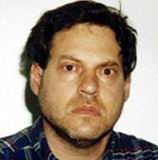
Robert Yale Shulman
Serial killer Glen Edward Rogers
Serial killer · USA · 1993
Glen Edward Rogers was a spree killer whose cross-country rampage in 1994-95 le…
70 victims
Glen Edward Rogers
Serial killer · USA · 1993
Glen Edward Rogers was a spree killer whose cross-country rampage in 1994-95 le…
70 victims
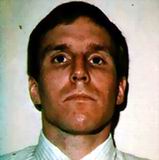 Michael Swango
Serial killer · USA · 1981
Michael Swango (Joseph Michael Swango) was a physician and American serial kill…
60 victims
Michael Swango
Serial killer · USA · 1981
Michael Swango (Joseph Michael Swango) was a physician and American serial kill…
60 victims
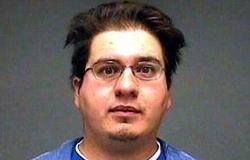 Efren Saldivar
Serial killer · USA · 1989
Efren Saldivar (born 30 September 1969) was an American serial killer who murde…
50 victims
Efren Saldivar
Serial killer · USA · 1989
Efren Saldivar (born 30 September 1969) was an American serial killer who murde…
50 victims
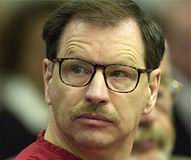 Gary Ridgway
Serial killer · USA · 1982
Gary Leon Ridgway Ridgway was born 18-February-1949 in Salt Lake City, UT. He w…
49 victims
Gary Ridgway
Serial killer · USA · 1982
Gary Leon Ridgway Ridgway was born 18-February-1949 in Salt Lake City, UT. He w…
49 victims
 Charles Cullen
Serial killer · USA · 1984
Charles Cullen (born February 22, 1960) was a former nurse and the most prolifi…
45 victims
Charles Cullen
Serial killer · USA · 1984
Charles Cullen (born February 22, 1960) was a former nurse and the most prolifi…
45 victims
 Donald Lee Jackson
Murderer · USA · 1986
Donald Lee Jackson was formerly of Columbus. In 2008, Donald Lee Jackson Jr., a…
1 victim
Donald Lee Jackson
Murderer · USA · 1986
Donald Lee Jackson was formerly of Columbus. In 2008, Donald Lee Jackson Jr., a…
1 victim
 Charlotte Corday
Murderer · France · 1793
Marie-Anne Charlotte Corday d'Armont (July 27, 1768 – July 17, 1793), known by…
1 victim
Charlotte Corday
Murderer · France · 1793
Marie-Anne Charlotte Corday d'Armont (July 27, 1768 – July 17, 1793), known by…
1 victim
 Robert Brian Waterhouse
Murderer · USA · 1966
Robert Brian Waterhouse was convicted of the first-degree murder of Deborah Kam…
2 victims
Robert Brian Waterhouse
Murderer · USA · 1966
Robert Brian Waterhouse was convicted of the first-degree murder of Deborah Kam…
2 victims
 Jerry Walter McFadden
Murderer · USA · 1986
Jerry Walter McFadden nicknamed himself "Animal". He was a former telephone cab…
3 victims
Jerry Walter McFadden
Murderer · USA · 1986
Jerry Walter McFadden nicknamed himself "Animal". He was a former telephone cab…
3 victims
 Melbert Ray Ford
Murderer · USA · 1986
Melbert Ray Ford, Jr. was convicted in Newton County, Georgia, of murdering his…
2 victims
Melbert Ray Ford
Murderer · USA · 1986
Melbert Ray Ford, Jr. was convicted in Newton County, Georgia, of murdering his…
2 victims
- Gender
- male
- Country
- USA
- Location
- Westchester County/Suffolk County, New York, USA
- Date of birth
- March 28, 1954
- Age at first offence
- 37
- Characteristics
- dismemberment, crack addict, rape?, torture, police officer
- Victim profile
- Lori Vasquez, 24 / "Jane Doe" (a woman who was never identified) / "Jane Doe" / Lisa Ann Warner, 18 / Kelly Sue Bunting, 28 (prostitutes)
- Method of murder
- Hitting with a hammer / Beating with a baseball bat
- Date(s) of murder
- 1991 - 1995
- Years active
- 1991–1995
- Date of arrest
- April 6, 1996
- Status
-
Died in custody
Sentenced to death in 1999; resentenced to life without parole after New York's death penalty was overturned in 2004; died in prison on April 13, 2006
Case information
Robert Yale Shulman (March 28, 1954 – April 13, 2006) was an American serial killer.
He was a postal worker from Hicksville, New York on Long Island.
Timeline
- December 7, 1994 — Jane Doe Medford’s nude body was discovered in a blue Rubbermaid garbage can on Long Island Avenue near a road’s edge amid other debris at the edge of the road on the way from the Suffolk County Department of Public Works garage in Yaphank to a jobsite in the Town of Medford.
- April 6, 1995 — Lisa Ann Warner’s second dismembered nude female body was discovered at a recycling plant in Brooklyn on a conveyor belt that was halted before its contents would have been deposited into a compactor.
- December 11, 1995 — A woman’s nude body with both of her hands cut off just above the wrist was discovered in a dumpster located in the parking lot of a sheet metal company on Old Walt Whitman Road in Melville, New York.
- December 13, 1995 — Suffolk County Homicide Detective Joseph White went to an address in Hollis, Queens, and talked to three women who identified the victim as Melani, later identified as Kelly Sue Bunting.
- December 14, 15 and 16 — Detective Joseph White canvassed motels patronized by prostitutes looking for information.
- January 2, 1996 — Kathleen W. escorted Detective White to a house in Hicksville where a 1983 blue Cadillac was parked in the driveway.
- January 3, 1996 — Dawn V. escorted Detective White to the house in Hicksville with a 1983 blue Cadillac in the driveway.
- January 4, 1996 — Detective White contacted Sears’s loss prevention office in Boston to confirm sleeping bag exclusivity and to inquire about defendant’s brother’s history with Sears as a customer.
- January 4, 1996 — Detective White initiated surveillance of the Hicksville residence, and the police took photographs of a white male leaving the house and the car he drove away.
- January 6, 1996 — Roxanne L. identified the photographs and told Detective White that the man worked the night shift at the post office; that his brother lived in the Hicksville residence; and that he was angry at Melani for “beat[ing] him out of” some coke that she had bought for him.
- January 14, 1996 — Camille M. selected defendant’s photograph from a photo array of ten individuals, and the blue Cadillac registered to defendant’s brother was selected from a photo array of eight vehicles.
- January 16, 1996 — Detective White approached postal authorities for information about work schedules of both defendant and his brother.
- January 20, 1996 — At about 2:28 P.M., Detective White observed the white male previously identified by Kathleen W., Dawn V. and Roxanne L. drive another white male from the Hicksville residence to the train station.
- January 25, 1996 — Maggie D. selected defendant’s photograph and the blue Cadillac registered to defendant’s brother as the car he was driving.
- January 26, 1996 — Detective White met with Virginia S. who described a white male who picked her up in the vicinity of Jamaica Avenue in a blue Cadillac about four times and took her back to his place in Nassau County, including her recollection of tools and baking soda; she selected defendant’s photograph and the photograph of the car registered to defendant’s brother.
- February 12, 1996 — Ann H. recounted her single encounter with defendant; she identified defendant and the car registered to defendant’s brother; she described his room in the rear of the Hicksville residence as “filthy.”
- March 21, 1996 — Crime laboratory personnel photographed the security booth and vacuumed and performed tape lifts just after defendant completed his shift and left.
- March 22, 1996 — The canine unit checked six cars parked on a street near the train station with the “cadaver dog”; the dog reacted positively to one car, the blue Cadillac registered to defendant’s brother.
- March 25, 1996 — Detective White met with personnel from the crime lab to discuss findings regarding trace evidence recovered in connection with the bodies and at the security booth where defendant worked.
- April 6, 1996 — Police arrested defendant near his Hicksville residence.
- April 7 and April 8, 1996 — Police executed a search warrant for defendant’s room; the room was photographed, partially disassembled, and transported to various divisions of the crime lab.
- March 2, 1999 — A Suffolk County Court jury convicted Robert Shulman of first-degree murder in Long Island’s first capital murder case since a new death penalty law was enacted.
- March 4, 1999 — A Suffolk County Court jury convicted Shulman of first-degree murder in Long Island’s first capital murder case since a new death penalty law has been enacted.
- May 7, 1999 — A jury recommended the death penalty for Shulman.
- June 3, 1999 — The day Shulman was scheduled to be formally sentenced to death by Suffolk County Court Judge Arthur Pitts.
- October 26, 2005 — The state’s highest court upheld the conviction of serial killer Robert Shulman, but vacated his death sentence.
- November 18, 2005 — Shulman was resentenced to life in prison without parole.
- October 25, 2005 — The appellate judgment modified the sentence by vacating the sentence of death imposed upon conviction of murder in the first degree and remitting to County Court for resentencing.
- April 13, 2006 — Shulman died in prison on April 13, 2006.
The offence
Shulman was convicted of murdering and dismembering three prostitutes between 1994 and 1995, with the murders committed in “separate criminal transactions … committed in a similar fashion” (Penal Law 125.27[1][a][xi]).
Victims and body discoveries
The victims named in the case included:
- Kelly Sue Bunting, 28, of Hollis, Queens, whose body was found in December 1995 in a trash bin in Melville, Long Island.
- Lisa Ann Warner, 18, of Jamaica, Queens, whose body was found in April 1995 at a Brooklyn trash recycling plant.
- An unidentified woman, whose mutilated body was found in December 1994 on a roadside in Medford.
Jane Doe Medford was described as a victim whose nude body was partially covered with plastic bags and had a white towel or bath mat wrapped around her head. The victim’s left leg was severed midway between the knee and groin area; both arms had been amputated; and she had serious blunt force trauma to the face, head, eye, nose and mouth. The victim’s left arm displayed a tattoo consisting of a red heart and a banner with the name “Adrian,” and she remained identified only as “Jane Doe Medford” despite extensive efforts by police.
The victim identified as Lisa Ann Warner was missing her legs; her right arm was cut off at the shoulder; and her left arm, severed above the wrist, displayed what appeared to be a self-administered tattoo depicting two small crosses. Her head and torso were stuffed in a black plastic bag and her face was badly battered.
For the victim found in Melville, the victim was nude and had both hands cut off just above the wrist; she suffered severe head trauma. The body was found in a dumpster in the company parking lot after the discovery process started with a misplaced lottery ticket. A blood-soaked white tee shirt was near her head; a blue brassiere was also near her head; and her left breast bore a tattoo with the name “Melani,” with what appeared to be two flowers with their stems intertwined. A powdery white substance was visible on her corpse, later identified as principally calcium carbonate.
Investigation
Dismemberment discoveries and identifying leads
An employee of the Suffolk County Department of Public Works on Long Island Avenue from the Department’s garage in Yaphank to a jobsite in the Town of Medford noticed what appeared to be a brand-new blue Rubbermaid garbage can lying on its side amidst other debris at the road’s edge. Stopping his pickup truck, he thought “somebody had dumped a bad load of meat.”
He discovered the woman’s remains. Police described the visible baking soda.
For the Brooklyn recycling plant discovery, employees halted the conveyor belt before the contents would have been deposited into a compactor, tied into a bale and transferred to a landfill.
For the Melville discovery, an employee and co-worker rummaged through the dumpster after locating what looked like a quilt and a brand-new sleeping bag partially encased in plastic garbage bags; they discovered a human foot protruding and later identified the victim as Melani and then as Kelly Sue Bunting.
Police released a physical description and a photograph of the tattoo to the news media because there was no way to fingerprint the victim.
Police work tracing the suspect
Detective Joseph White relied on:
- Women who identified Melani as Kelly Sue Bunting and who last saw her getting into an older model blue Cadillac driven by a white male.
- Several women providing consistent statements about a white male driving a blue Cadillac who solicited prostitutes along Jamaica Avenue, took women not to a motel but to a residence in Nassau County, lived in a rear room entered through a screened-in porch, and asked women to “cook” powdered cocaine into crack using baking soda and water.
- Detective White obtaining consistent statements from five different women: Dawn V., Kathleen W., Roxanne L., Virginia S. and Ann H.
- Detective White’s confirmation from Sears that only Sears sold the sleeping bag brand used in Kelly Sue Bunting’s case, and Sears employee indication about defendant’s brother being a post office employee and a member of a postal credit union.
- Detective White learning defendant had obtained a Sears credit card in July 1995 (never used), and that defendant and his brother were post office employees and members of the postal credit union.
Detective White established the 1983 blue Cadillac was registered to defendant’s brother. The investigation included surveillance of the Hicksville residence and photographic identification by multiple witnesses.
Detective White also checked work schedules through a postal inspector, learned that defendant did not work as scheduled on December 7, 1994 and December 8, 1995, and used time correlations between the surveilled movements of the two men and work schedules and location.
Canine evidence and trace evidence
A cadaver dog “reacted positively” to the blue Cadillac registered to defendant’s brother. The record described canine unit procedures in which the officer did not know in advance which car was the object of suspicion.
Crime lab trace evidence detected with both bodies included:
- worn and debris-laden light blue carpet fibers,
- orange carpet fibers,
- cat hairs,
- foam padding,
- and jute carpet backing.
The same items were detected in sweepings and tape lifts from the security booth where defendant worked. The laboratory technician told Detective White that there was a “strong associative connection” among the five items.
Arrest and police interactions
Police arrested defendant near his Hicksville residence on April 6, 1996. Detective White advised him of his Miranda rights, which he waived.
Detective White showed defendant a photograph of Kelly Sue Bunting during transport. The record stated defendant made several incriminating statements while simultaneously denying responsibility for her death.
When detectives asked defendant to talk about prostitutes, he replied that “they hate and kill people.” When asked further that he killed people too, he responded that “he was paying the officers’ salaries, that he was a good citizen who paid taxes while the girls committed crimes and did not pay taxes, yet no one locked them up.”
Arrest and confessions
Defendant gave four written statements describing the circumstances of the killings of:
- Kelly Sue Bunting,
- Jane Doe Medford,
- and Lisa Warner.
He agreed to give hair, blood and saliva samples.
Defendant claimed that after smoking crack with Melani, he blacked out and later awakened to find her lying face down on the floor with blood everywhere, including by her head and on both his hands. He claimed he used tools stored on the screened-in porch to saw off her hands so “no one could identify her.” He claimed he wrapped her body in plastic garbage bags and two sleeping bags and put the body in the trunk of his brother’s car, along with her clothes and a small brown paper bag containing her severed hands. He claimed that he discarded the paper bag in a garbage can at a fast-food restaurant and the clothes in a dumpster at another location, and threw the body away in a dumpster at a factory near the Mid-Island post office where he once worked.
He claimed that there was a lot of blood to clean up in his room and that he disposed of a blood-stained greenish blue carpet. He stated he wished that he had cut out Melani’s tattoo once he read in the newspaper that she had been identified by it.
In his own handwriting, defendant inscribed three photographs from the Bunting investigation (two of the dumpster where Kelly Sue Bunting’s remains were discovered; one of her body at the morgue) with statements admitting to his dismemberment and disposal, and he signed his name.
Defendant admitted he killed Jane Doe Medford in his room but again claimed he had blacked out after smoking crack, only to awaken and find her dead and bleeding from the face and head. He claimed that to prevent identification he used an axe and a hacksaw to dismember her body, threw away the axe and hacksaw afterwards, and disposed of her body parts “all over the place,” discarding her belongings in various dumpsters. He claimed that because he could not dispose of her remains immediately, he sprayed her remains with an air freshener and sprinkled them with baking soda to mask the odor of decomposition.
Defendant acknowledged, inscribed and signed photographs related to the killing of Lisa Ann Warner. He admitted that he killed all the victims in his room at the Hicksville residence.
Defendant stated he picked up Lisa Ann Warner along Jamaica Avenue, returned to his room, smoked crack with her, blacked out and awakened to find her dead from head wounds, and that he dismembered her body and disposed of body parts and clothes in different locations. The record also stated defendant admitted to hitting her with a hammer.
When a detective suggested defendant should “Get away from the lie about blacking out, [which was] just not believable,” defendant agreed, stating he had not blacked out but instead had “just lost control” and sometimes felt anger and rage.
He recounted killing Jane Doe Medford with a baseball bat, Kelly Sue Bunting with a dumbbell, and Lisa Ann Warner with a hammer. He threw out these makeshift weapons immediately afterwards because he would always think “it’s not going to happen again.” He reiterated he cut off his victim’s limbs in his room and discarded body parts in multiple locations to foil identification.
Based upon post-arrest confessions, police searched defendant’s room on April 7 and April 8, 1996, photographing and disassembling it and transporting it to crime lab divisions. The record stated they found evidence of drug use, baking soda, calcium carbonate, air fresheners, carpet cleaners, and hundreds of apparent bloodstains on walls, ceilings, and surfaces of practically every freestanding item. DNA analyses were described as consistent with the DNA profiles of Jane Doe Medford, Lisa Ann Warner and Kelly Sue Bunting.
Trial
Conviction
A Suffolk County Court jury convicted Shulman of first-degree murder in Long Island’s first capital murder case since a new death penalty law was enacted.
The appellate decision described that:
- the jury convicted defendant of several offenses, including one count of first-degree murder for intentionally causing the death of three women in “separate criminal transactions … committed in a similar fashion” (Penal Law 125.27[1][a][xi]),
- and because the People filed a notice of intent to seek the death penalty, a separate sentencing proceeding followed in which the jury concluded unanimously that defendant should be executed.
Defendant appealed directly to the court.
Jury selection disputes and publicity
Defendant contended probable cause was lacking for arrest, and that trial court errors occurred involving juror challenges and jury exposure to publicity. The appellate opinion addressed:
- for cause challenges to prospective jurors S.C., S.R., T.V., and J.C.,
- mid-trial publicity about an article headline reading “Link to Two More Victims,” and the trial court’s decision not to ask jurors about that headline.
“Similar fashion” jury instruction dispute
Defendant argued that the trial court erred in instructing the jurors about first-degree “similar fashion” murder and in rejecting requests to disregard postmortem conduct when determining “similar fashion.” The appellate opinion determined the judgment should be modified by vacating the sentence of death but affirming the convictions.
The appellate opinion described the statutory provision under Penal Law § 125.27(1)(a)(xi) and the language requiring similar fashion.
The trial court instructed the jurors with the following definitions:
“By way of guidance, I offer you the following legal definitions to aid you in your determination on this element. When a series of crimes are committed in a similar fashion, they have a similar modus operandi.
Modus operandi refers to the method used in the commission of the crime.
When crimes have a similar modus operandi, their method of commission is said to follow a repetitive pattern. A pattern is a reliable sample of traits, acts or other observable features.
Similar means merely corresponding. Resembling in many respects, somewhat like, having a general likeness, although allowing for some degree of difference.”
The appellate opinion stated that postmortem conduct could be relevant and described that, in all three underlying murders, defendant brought the women to the room where he lived and killed them by repeatedly beating them about the face and head with a heavy, blunt object (a baseball bat for Jane Doe Medford, a dumbbell for Kelly Sue Bunting, and a hammer for Lisa Ann Warner), then hacked off the victim’s hands or limbs and disposed of the bodies in garbage receptacles. It also stated that defendant threw away severed hands or limbs as trash in locations away from where he disposed of the bodies to inhibit identification.
Sentencing
Death sentence recommendation and sentence
The appellate record described that because the People filed a notice of intent to seek the death penalty, the jury unanimously concluded that defendant should be executed in the separate sentencing proceeding.
A jury recommended the death penalty on May 7, 1999.
Shulman’s death sentence was vacated in the appellate decision by vacating the sentence imposed on the conviction of murder in the first degree and remitting for resentencing.
Resentencing
The record described that Shulman was resentenced to life without parole after New York’s death penalty was invalidated in 2004.
The record also described a resentencing outcome in which Shulman chose to leave the courtroom during the statement by John Bunting, and a judge’s rejection of a request for 25 years to life.
Appeals
Shulman brought a direct appeal. The appellate decision stated:
- developments before the court’s decision in People v LaValle (3 NY3d 88 [2004]) required that the sentence of death be set aside,
- the court agreed under People v Mateo and similar reasoning that the death sentence was no longer at issue and should be set aside,
- while the convictions were affirmed.
The appellate decision described that it vacated the sentence of death imposed upon conviction of murder in the first degree and remitted to County Court for resentencing.
Mid-trial publicity and juror challenges discussed on appeal
The appellate decision concluded there was no error in:
- the denial of for cause challenges to prospective jurors S.C., S.R., T.V., and J.C.,
- and the trial court’s handling of mid-trial publicity regarding the Newsday headline “Link to Two More Victims.”
Outcome
The convictions were affirmed while the death sentence was vacated and resentencing occurred.
Shulman died in prison on April 13, 2006.
Other details
Westchester County additional murders
The narrative included that Shulman was awaiting trial in Westchester County for the murders of two other women. It also stated he pleaded guilty to murdering two other women:
- Lori Vasquez, 24, of Brooklyn, whose body was dumped in a trash bin on Belknap Avenue in Yonkers.
- Another unidentified woman whose body was found in another Yonkers trash bin in June 1992.
It was also described that he faced a sentence of life in prison for the Westchester murders.
Brother and related proceedings
Shulman’s brother was mentioned in connection with helping dispose of bodies and related guilty pleas, including that Shulman’s brother, Barry Shulman, had pleaded guilty in Suffolk County Court to helping dispose of bodies on Long Island, and was scheduled to be sentenced on Jan. 21 to up to two years in prison. The record stated the brother faced similar charges in Westchester but was not expected to be sentenced to any further time because of his guilty plea.
The appellate discussion stated that at no point did a brother-in-law make court appearances in defendant’s case and that he resigned from the Suffolk County District Attorney’s Office and moved to Nevada shortly after defendant’s arrest and months before the start of jury selection.
Key quotations preserved
- “somebody had dumped a bad load of meat.”
- “Vengeance is mine, sayeth the Lord,” said Ruth Brown, of York, Pa.
- “Even though man took away the death penalty, he deserved it, and he got it. ... I feel it's the Almighty's justice system.”
- “This defendant was a killing machine,” said (jury-related remark preserved without a speaker’s first/last name in the provided text).
- “The jury was right on the mark in its decision.”
- “God knows I didn't do this,” Shulman said in court today.
- “That gives me peace of mind.”
- “I was only able to bury the parts of my daughter that the police could find,” said John Bunting.
- “He cut her up in little pieces, and threw them around the city like they were pieces of meat.”
- “I will find peace when I get the news that you are no longer breathing,” Bunting said in a statement read by the prosecutor.
- “I hope to God it will be soon.”
- Detective Joseph White recorded the statement attributed to defendant about the role of prostitutes: “they hate and kill people.”
- Defendant’s response about paying officers’ salaries and taxes: “he was paying the officers’ salaries, that he was a good citizen who paid taxes while the girls committed crimes and did not pay taxes, yet no one locked them up.”
- Detective White recorded the statement attributed to defendant about identification of Melani: “so no one could identify her.”
- Detective’s remark during confrontation: “Get away from the lie about blacking out, [which was] just not believable.”
- Defendant’s response: “just lost control.”
- Defendant’s remark about weapon disposal: “it’s not going to happen again.”
- Virginia S.’s recollection included the item: “[a]lways had baking soda around to cook his drugs.”
- Prosecutor and trial court statements about the headline included the trial court’s quotation: “I am inclined to go along with the prosecutor's view, that if I were to inquire of the jurors about this, that I would simply be highlighting it for them and might, in fact, invite them to inquire from other people who may have read the paper or even to go back and look at the paper themselves, so I'm inclined to deny defendant's request at this time.”
- Trial court stated: “[t]he headline reads, Link to Two More Victims.”
- Defense counsel application quoted: “Your Honor, I would ask the Court to inquire of the jurors and make sure that none of them have read the headline inadvertently or [that] anyone discussed with them what appeared in the newspaper with respect to the [Newsday] article . . .. I think it was very, very prejudicial and potentially very damaging to defendant if the jurors by some way indirectly or directly found out about the information that's contained not in the article but just the headline, which is an extremely provocative headline, and I would ask the Court to make some inquiry of the jury with regard to this exhibit”
- Prosecutor’s remark quoted: “all it really is doing is calling attention to the article.”
- Prosecutor’s remark quoted: “there's been articles written about the case since the hearings began and not with respect to any particular article would we specifically ask the jurors if they read a particular article and read a particular headline, and I just think all it does is really highlight the article and . . . peak [sic] their curiosity.”
- The appellate record included quoting the trial court’s jury instruction definitions for “similar fashion” (included above).
Spotted an error, or have more information about this case?