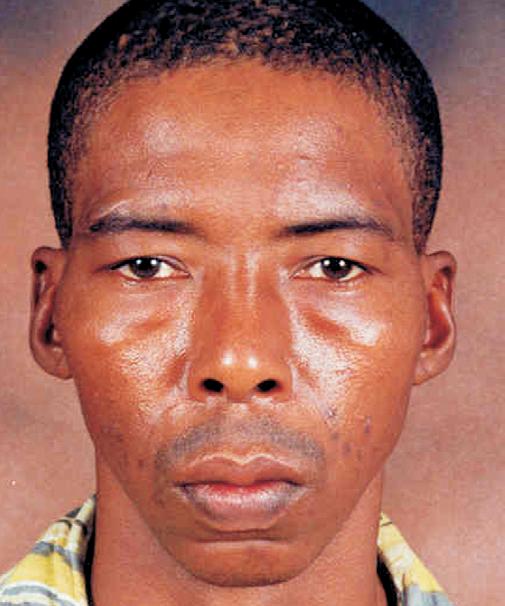
Samuel Sidyno
Spree killer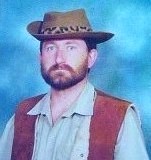 Barend Strydom
Spree killer · South Africa · 1988
Barend Hendrik Strydom was a former policeman who was described as a right-wing…
8 victims
Barend Strydom
Spree killer · South Africa · 1988
Barend Hendrik Strydom was a former policeman who was described as a right-wing…
8 victims
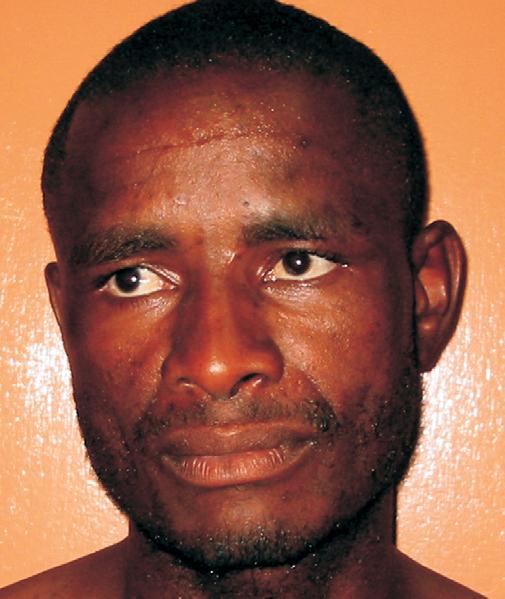 Elias Chauke
Spree killer · South Africa · 2002
Elias Chauke was accused of a spate of killings and rapes that occurred over tw…
5 victims
Elias Chauke
Spree killer · South Africa · 2002
Elias Chauke was accused of a spate of killings and rapes that occurred over tw…
5 victims
 Petrus Madiba
Spree killer · South Africa · 2012
Petrus Madiba was a 29-year-old farmworker who was described as a serial killer…
9 victims
Petrus Madiba
Spree killer · South Africa · 2012
Petrus Madiba was a 29-year-old farmworker who was described as a serial killer…
9 victims
 Anthony Grandison
Murderer · USA · 1983
Anthony Grandison was an American drug dealer and murderer. He was convicted of…
2 victims
Anthony Grandison
Murderer · USA · 1983
Anthony Grandison was an American drug dealer and murderer. He was convicted of…
2 victims
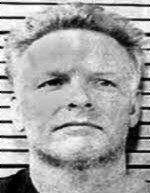 James Hicks
Serial killer · USA · 1977
James Hicks pled guilty to two counts of murder. He was sentenced to 10 years i…
3 victims
James Hicks
Serial killer · USA · 1977
James Hicks pled guilty to two counts of murder. He was sentenced to 10 years i…
3 victims
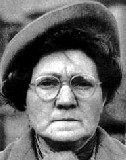 Louisa Merrifield
Murderer · United Kingdom · 1953
Louisa May Merrifield was a housekeeper and companion who was executed for murd…
1 victim
Louisa Merrifield
Murderer · United Kingdom · 1953
Louisa May Merrifield was a housekeeper and companion who was executed for murd…
1 victim
 Simon Peter Nelson
Mass murderer · USA · 1978
Simon Peter Nelson was a man whose wife had left him. He had six children and s…
6 victims
Simon Peter Nelson
Mass murderer · USA · 1978
Simon Peter Nelson was a man whose wife had left him. He had six children and s…
6 victims
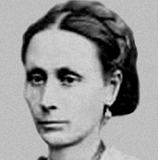 Lydia Sherman
Murderer · USA · 1864
Lydia Sherman was also known as “The Derby Poisoner.” She was born in 1824 in B…
10 victims
Lydia Sherman
Murderer · USA · 1864
Lydia Sherman was also known as “The Derby Poisoner.” She was born in 1824 in B…
10 victims
 Clyde Smith
Murderer · USA · 1992
Clyde Smith was a Black male who was scheduled to be executed on February 15, 2…
2 victims
Clyde Smith
Murderer · USA · 1992
Clyde Smith was a Black male who was scheduled to be executed on February 15, 2…
2 victims
- Gender
- male
- Country
- South Africa
- Location
- Pretoria, Gauteng Province, South Africa
- Date of birth
- 1962
- Age at first offence
- 36
- Characteristics
- serial rapist
- Victim profile
- Two women, Paulinah Ledwaba and Elizabeth Senwamadi, youths Ronald Maoka and Emmanuel Mavuka, and three youths who have not been identified
- Method of murder
- Strangulation
- Date(s) of murder
- November 1998 - January 1999
- Years active
- 1998–1999
- Date of arrest
- January 6, 1999
- Status
-
Life imprisonment
Sentenced to seven life terms in prison (minimum 40 years) on September 6, 2000
Case record: Samuel Sidyno
Background
Samuel Sidyno was a serial killer whose murders involved the Pretoria Zoo area.
During his trial before Judge Johan van der Westhuizen, a picture emerged of Sidyno luring women and youths between the ages of 12 and 19 to a desolate hill not far from the Pretoria city centre. He lived nearby, in a room at a water tower close to the Pretoria Zoo. In the densely bushed area of Capital Park hill, Sidyno assaulted and strangled two women and five youths in a killing spree lasting less than three months before the first body was discovered by a school janitor.
Sidyno’s sentencing judge described him as a dangerous man and said it would be unwise to ever let him loose again. The judge recommended Sidyno serve at least 40 years of his sentence before being considered for parole and declared him “impossible to rehabilitate.”
Sidyno was 35 at sentencing and was described as 37 in the proceedings reported before sentencing.
The offence
Sidyno killed two women and five boys.
Paulinah Ledwaba and Elizabeth Senwamadi were murdered, and Ronald Maoka and Emmanuel Mavuka were among the male victims. Prosecutor Christo Roberts also alleged the murders included two unidentified boys, a man known only as Oupa, and another two boys: Tsholofelo Maoka and Emmanuel Mavuka. The decomposed body of one boy, known as Mannetjie, was discovered on a hill in Pretoria North, while the rest were discovered on a hill near Pretoria Zoo. The cause of death of the last group of bodies could not be determined because most bodies were in an advanced state of decomposition.
Sidyno used his hands to squeeze the life out of his victims after luring them to his “lair” on a lonely hill north of the city. His victims were found in close proximity to each other near the Pretoria Zoo.
The victims were found ritualistically placed on their stomachs, covered with branches, and with their shoes removed and placed neatly next to the bodies. A macabre pattern appeared in the way he left victims on their stomachs with shoes removed and bodies covered with branches. The bodies were also arranged in a similar manner, and Sidyno pointed out seven different scenes to the police in or very near to the places where the bodies were actually found.
Many of the youths had their underpants removed and then replaced. Sidyno’s confession described how he strangled each victim until they stopped moving.
Forensic and investigative links described at trial
DNA evidence linked Sidyno to the death of Paulinah Ledwaba. A DNA expert testified that a DNA sample taken from Sidyno was an “almost perfect match” to a semen sample taken from a T-shirt thrown over the body of Paulinah Ledwaba. Sidyno’s blood and semen, mixed with Ledwaba’s blood, was also found on a piece of tissue paper near her body.
Forensic pathologist Hendrik Scholtz performed an autopsy on Ledwaba’s body and said her death was caused by strangulation. Scholtz said bruises around her neck suggested she had probably been strangled with something like a piece of clothing and that abrasions on Ledwaba’s body indicated she had been moved after her death.
Pathologist Marcel Naude testified that Elizabeth Senwamadi, whose body was discovered in the veld near the zoo in December 1998, died of strangulation. Although Senwamadi’s body was severely decomposed, a piece of material was found wrapped around the neck and there were signs of damage to the neck muscles.
Scholtz also examined the bodies of the boys, including three who were never identified. He said a strange feature in some cases was that the underpants had been removed but the trousers replaced and zipped up. The bodies were between three weeks and three months old when found and were mostly severely decomposed. In one case, the skull was no longer attached to the body and in another wild animals had started eating the body. Scholtz said the fact that the bodies were covered with branches made it difficult to determine the time of death.
Investigation
Prosecutor Christo Roberts said the bodies were discovered in quick succession after the first one came to light. The bodies were found in similar circumstances: on their stomachs, covered with branches, and with shoes removed and placed neatly next to the bodies.
Roberts said Sidyno’s DNA was found on a T-shirt and tissues near the body of Ledwaba. A belt and snuff box that Sidyno’s possession had been “in her possession before she disappeared” were found in a tower in Capital Park, where Sidyno had lived. When arrested, Sidyno was wearing denim pants later identified as belonging to Ledwaba.
Roberts said Sidyno subsequently pointed out several murder sites in Capital Park to police and that one of the bodies was discovered in the process. A few days later Sidyno made a similar confession to a magistrate.
At trial, Superintendent M H van Rooyen testified that Sidyno voluntarily pointed out six murder scenes on a hill in Capital Park behind the Pretoria Zoo where Sidyno claimed to have killed and left bodies of his victims. The skull of one of the bodies was discovered under a bush during the pointing-out, but only after Sidyno lifted the branches with which the decomposed body was covered.
Police also reported that Sidyno was wearing leg irons and handcuffs when he pointed out the murder scenes and fell on rough terrain. Sidyno maintained his innocence and alleged police had assaulted him and forced him to make the statement.
Arrest and custody
Sidyno was arrested on January 6, two days after the body of a fourth victim was found on a hill close to Pretoria’s zoo. Police set up 24-hour surveillance on Capital Hill, and at about 4am the suspect was found strolling about; police picked him up for questioning.
Sidyno appeared in court on charges of murder and the case was postponed to the end of February.
During earlier proceedings, the Pretoria High Court admitted as evidence a confession made by alleged Capital Park serial killer Samuel Sidyno to police. Judge Johan van der Westhuizen was presented with notes of a statement made during a “pointing-out” to the police, despite claims by Sidyno that police had assaulted him and forced him to make the statement.
Sidyno claimed earlier in the week that police had murdered the victims and that he “could have been the eighth body.” He claimed about 15 policemen had taken turns to hit and kick him but could not point out any of his alleged attackers and could not explain why a photograph taken after the pointing-out showed no signs of the alleged assault. Sidyno said he was Afrikaans-speaking and did not need an interpreter.
Trial
Sidyno pleaded not guilty to murdering two women and five boys between November 1998 and January 1999. He also denied guilt on two charges of rape and two of robbery.
The trial before Judge Johan van der Westhuizen involved evidence on murder scenes and testimony about forensic links. The court accepted Sidyno’s confession made during the “pointing-out,” despite claims that police had assaulted him and forced him to make the statement.
Confessions and claims during proceedings
In Sidyno’s statement before the magistrate, described in detail, he said he strangled each victim until they stopped moving. From Sidyno’s confession, it appeared the victims had been murdered after arguments about small sums of money or because they had “bothered” Sidyno.
Sidyno claimed he had sex with two female victims before strangling them. He had taken the jeans of one of the female victims, and he was wearing her jeans during his arrest. Some of her possessions were found in his room.
Sidyno gave a rambling and often incoherent account of alleged daily torture sessions by up to 15 policemen aimed at getting a confession. Sidyno claimed he knew nothing about the murders and suggested the police must have murdered the seven people, and that he might well have been number eight. The state paraded almost the entire Pretoria murder and robbery unit before him, but he could not point out his alleged attackers.
During a prior appearance, Sidyno told the Pretoria High Court he knew nothing about a number of bodies found on a hill near Pretoria Zoo in January last year. Sidyno, who pleaded not guilty to seven murder, two rape and two robbery charges, repeatedly told the court he “knew nothing” about any of the murders. He tried to tell the court of an alleged assault by police, but the judge said he would get a chance to do so in due course.
Van der Westhuizen rejected claims by Sidyno’s counsel that he must be suffering from a mental illness, despite the fact that a state psychiatrist found him to be normal and able to stand trial. The judge said Sidyno made a poor impression on the court and told obvious lies and that Sidyno’s evidence was lively and enthusiastic without indicating he was suffering from a mental illness or defect.
Sidyno was convicted of murdering Paulinah Ledwaba and stealing her jeans. Sidyno was linked to Ledwaba by DNA evidence taken from semen and blood found on and near her body. Although there was no DNA to link Sidyno to the rest of the bodies because most were in a severely decomposed state, the judge said similar facts linked all of the cases.
The judge convicted Sidyno for the murders of Elizabeth Senwamadi, two youths—Ronald Maoka and Emmanuel Mavuka—and three youths who could not be identified. Sidyno could not be found guilty of raping his two female victims because there was no positive evidence to the effect.
Sidyno claimed the two female victims consented to sex with him, but started arguing about payment, which was why he murdered them.
Rape classification at trial
Although there was not enough evidence to classify Sidyno as a sadistic sexual murderer, the sentencing judge described him as very dangerous, describing his murders as cruel and cold-blooded without remorse. The sentencing judge also referred to a macabre pattern in the way he left victims on their stomachs with shoes removed and bodies covered with branches.
Sentencing
On September 6, 2000, Sidyno was sentenced in the high court to seven life terms.
Judge Johan van der Westhuizen said Sidyno’s “cold-blooded and cruel” murder spree in late 1998 and early 1999 involved seven murders. The judge said Sidyno was a dangerous man and it would be unwise to ever let him loose again, recommending Sidyno serve at least 40 years of his sentence before being considered for parole.
The sentencing judge said Sidyno hunted those he considered easy prey, and all the victims were defenceless and seemed to have been poor. The judge said all indications were that Sidyno would have continued his murderous spree if he had not been caught.
The judge described a macabre pattern in the way Sidyno left the victims on their stomachs with their shoes removed and bodies covered with branches.
A sentencing judge also said Sidyno was “impossible to rehabilitate.”
Outcome
Sidyno was sentenced to seven life terms (minimum 40 years) on September 6, 2000.
The sentencing judge said Sidyno would be eligible for parole in forty years.
Other details
Sidyno was earlier described as being released on parole after serving three-and-a-half years of a sentence of four years and 90 days for rape, assault and robbery, after which the Department of Correctional Services deemed him fit to be freed on parole nine months before completing his sentence. Police arrested him on suspicion that he was a serial murderer who went on a killing spree from December 1998 to January 6.
During his time in prison, Sidyno was charged with assault and possession of dagga. A correctional services representative, Russel Mamabolo, insisted Sidyno earned his parole and said: “He wasn’t problematic in prison.”
Senior Superintendent Rudi van Olst, head of the Pretoria murder and robbery unit, said police were confident Sidyno was linked to the murders and described police’s arrest as “the fastest arrest ever in connection with serial killings” within 48 hours of beginning an intensive investigation. Van Olst said: “A lot of investigations still have to be done ... but at the end of the day this case is going to be strong.”
The initial victim, a woman, was found on December 14 and police treated the case as an isolated incident of murder. Her body was so badly decomposed that police reconstructed her face to identify her. On the second morning of 1999, two more bodies were found on the hill. These were men in their late teens. A fourth body was found later that afternoon. By January 4, police established there was a serial killer on the loose, and a team of 10 detectives found a fifth victim, a woman, on January 4, while 24-hour surveillance was set up on Capital Hill.
Police belief stated Sidyno was acting alone despite the discovery of the sixth victim after his arrest. Police said the sixth body was badly decomposed.
Police also announced the possibility that hills around Pretoria could be littered with remains of more victims after a seventh body was found January 16, 1999, by a group of children hiking in Mountain View in the Magaliesberg. Van Olst said: “By taking into account certain similarities between the murder scenes at Capital Hill and the recent one, we can say beyond reasonable doubt that it is the work of the serial killer Samuel Sidyno. The modus operandi is very similar to the Capital Hill murders.”
Spotted an error, or have more information about this case?