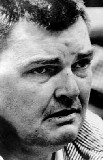
Simon Peter Nelson
Mass murderer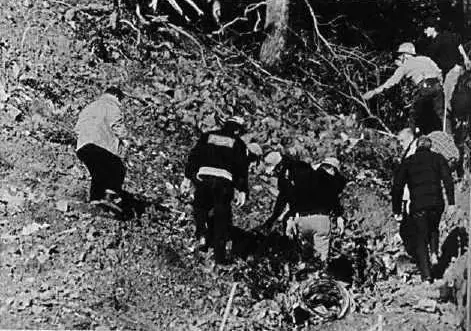 David Burke
Mass murderer · USA · 1987
David Augustus Burke (May 18, 1952–December 7, 1987) was an employee of USAir,…
43 victims
David Burke
Mass murderer · USA · 1987
David Augustus Burke (May 18, 1952–December 7, 1987) was an employee of USAir,…
43 victims
 James Huberty
Mass murderer · USA · 1984
James Oliver Huberty was a 41-year-old unemployed security guard. He was born i…
21 victims
James Huberty
Mass murderer · USA · 1984
James Oliver Huberty was a 41-year-old unemployed security guard. He was born i…
21 victims
 Ronald Gene Simmons
Mass murderer · USA · 1987
Ronald Gene Simmons was a retired United States Air Force sergeant. Over the Ch…
16 victims
Ronald Gene Simmons
Mass murderer · USA · 1987
Ronald Gene Simmons was a retired United States Air Force sergeant. Over the Ch…
16 victims
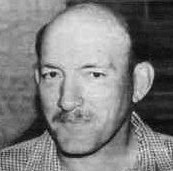 Patrick Henry Sherrill
Mass murderer · USA · 1986
Patrick Henry Sherrill Patrick Henry Sherrill committed suicide by shooting him…
14 victims
Patrick Henry Sherrill
Mass murderer · USA · 1986
Patrick Henry Sherrill Patrick Henry Sherrill committed suicide by shooting him…
14 victims
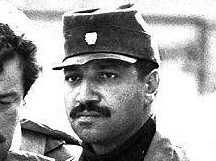 George Emil Banks
Mass murderer · USA · 1982
George Emil Banks was an American mass murderer and a former Camp Hill prison g…
13 victims
George Emil Banks
Mass murderer · USA · 1982
George Emil Banks was an American mass murderer and a former Camp Hill prison g…
13 victims
 Jerry White
Murderer · USA · 1981
Jerry White was the appellant, petitioner, and defendant in multiple proceeding…
1 victim
Jerry White
Murderer · USA · 1981
Jerry White was the appellant, petitioner, and defendant in multiple proceeding…
1 victim
 Albert DeSalvo
Serial killer · USA · 1962
Albert DeSalvo (November 3, 1931 - November 25, 1973) was a serial killer activ…
13 victims
Albert DeSalvo
Serial killer · USA · 1962
Albert DeSalvo (November 3, 1931 - November 25, 1973) was a serial killer activ…
13 victims
 Sandra Bridewell
Murderer? · USA · 1982
Sandra Bridewell used multiple names and aliases, including Sandra Camille (Pow…
2 victims
Sandra Bridewell
Murderer? · USA · 1982
Sandra Bridewell used multiple names and aliases, including Sandra Camille (Pow…
2 victims
 Sara María Aldrete
Serial killer · Mexico · 1987
Sara María Aldrete (born September 6, 1964 in Matamoros, Tamaulipas, Mexico) wa…
15 victims
Sara María Aldrete
Serial killer · Mexico · 1987
Sara María Aldrete (born September 6, 1964 in Matamoros, Tamaulipas, Mexico) wa…
15 victims
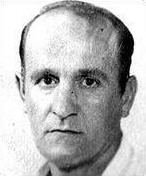 Christos Kendiras
Murderer · Greece · 2000
Christos Kendiras was 48 when he hijacked a bus carrying 33 Japanese tourists.…
2 victims
Christos Kendiras
Murderer · Greece · 2000
Christos Kendiras was 48 when he hijacked a bus carrying 33 Japanese tourists.…
2 victims
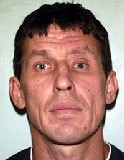 Viktor Dembovskis
Murderer · United Kingdom · 2005
Viktor Dembovskis was convicted of murdering Jeshma Raithatha, 17, in 2005 afte…
1 victim
Viktor Dembovskis
Murderer · United Kingdom · 2005
Viktor Dembovskis was convicted of murdering Jeshma Raithatha, 17, in 2005 afte…
1 victim
- Gender
- male
- Country
- USA
- Location
- Rockford, Illinois, USA
- Date of birth
- October 2, 1931
- Age at first offence
- 47
- Characteristics
- parricide, domestic dispute, domestic violence
- Victim profile
- Jenny, 12; Simon Peter III, 10; Andrew, 8; Matthew, 7; Roseann, 6; and David, 3 (his children)
- Method of murder
- Beating with a rubber headed mallet - St abbing with a hunting knife
- Date(s) of murder
- January 7, 1978
- Years active
- 1978
- Date of arrest
- Same day
- Status
-
Imprisoned
Sentenced to 100 to 200 years in prison
Case record: Simon Peter Nelson
Background
Simon Peter Nelson was a man whose wife had left him. He had six children and sought to change his wife’s decision to leave. He pursued reconciliation attempts, but Ann would not return to Simon with their six children.
On January 6, 1978, Nelson went to where his wife was staying and asked her to come home with him. When she refused, he lost his temper and beat her. He stopped once the police showed up.
Nelson later told police that he had killed his six children in Rockford, Illinois. He said he did it “get even” with his wife.
Nelson did not defend himself at the trial and received a sentence of life.
The offence
Nelson killed his six children while they were in their beds in their home in Rockford. The children were Jennifer, 12; Simon, 10; Andrew, 9; Matthew, 8; Roseann, 5; and David, 3. Officers found all six children dead in their beds.
Nelson beat each child about the head with a rubber headed mallet and then stabbed each child with a hunting knife.
Nelson also mutilated the family dog so badly that officers thought it was “a piece of flesh from one of the bodies.”
After killing the children, Nelson drove to Milwaukee and beat his wife, who was seeking a divorce.
Investigation
Police initially thought the events were a simple domestic dispute. After Nelson was arrested on an aggravated battery charge and taken in for questioning about the night’s events, he looked up and told police that he had killed his six children in Rockford, Illinois.
At the house, officers found that Nelson was not “bullshitting.” Officers found all six children dead in their beds.
Arrest
Nelson was arrested on an aggravated battery charge after police showed up at the motel where he confronted his wife.
Trial
Nelson chose not to defend himself at trial. He received a sentence of life.
Nelson was convicted of murder. He was sentenced to 100 to 200 years in prison.
Sentencing
Nelson received a sentence of life at trial.
Nelson was later described as serving 100 to 200 years for one of the worst cases of filicide, the murder of one’s children.
Appeals
No appeals were described.
Parole and prisoner review board decisions
Nelson repeatedly sought parole through the Illinois Prisoner Review Board.
Early eligibility and denials
Nelson first became eligible for parole in 1986.
He was denied parole multiple times. In 2005, the parole board voted unanimously to keep Nelson in prison.
In 2004, the board denied him parole, and he was not scheduled for another hearing until 2007. He sued for a new hearing, alleging the board failed to swear him in last year. The board held a new hearing rather than fight the lawsuit.
As of the 2005 hearing, he had been denied 14 times and would have needed the votes of eight members to be released.
Board decisions in 2005
In a parole hearing in January 1978 referenced as taking place in January 1978, the Illinois Prisoner Review Board ruled unanimously against Nelson’s request for parole. The board ruled that Nelson would not have another shot at parole until 2008. Board member Craig Findley said Nelson was a model prisoner.
Findley said he credited Nelson with making the case that he formed a strong relationship with God while behind bars. Findley said parole did not justify release and that society could not accept release of a person who had served less than five years for the death of each of his children.
The board discussed that parole would be a miscarriage of justice “totally,” and Norman Sula said, “I think our board has enough common sense to realize that based on the crime — murdering his six children — and based on the sentence that the court gave him — 100 to 200 years.”
Board member Craig Findley said: “We deal not in the spiritual, but the temporal world here, and I believe society could not accept the release of a person from prison having served less than five years for the death of each of his children,” and he also said: “Five years for the life of an innocent child — Mr. Nelson will not have my vote this year; he will not have my vote in three years.”
Board decisions in 2008
In 2008, the Illinois Prisoner Review Board voted unanimously to deny Nelson’s request for parole after Milton Maxwell, a board member who interviewed Nelson in early June, urged them to keep Nelson locked up.
Maxwell said: “How could a sane person kill six innocent kids? I don’t even pretend to have an answer.”
The board voted 13-0 to postpone Nelson’s next possible parole date for three years, so he would not be eligible for release again until 2011.
Craig Findley said: “Almost alone among inmates in custody, he deserves to die in prison,” and also said: “There are not many I would say that about. But this is a crime that can’t be forgiven. He can never be released.”
It was stated that the board denied him parole at least 15 times.
Outcome
Nelson remained imprisoned under the sentence described as 100 to 200 years in prison.
The Illinois Prisoner Review Board denied Nelson parole requests in 2004, 2005, and in 2008, and postponed the next possible parole date by three years in 2008.
Aftermath
Nelson expressed remorse during a parole hearing described as occurring at the Graham Correctional Center.
In a parole-related proceeding expected to rule May 13 on Nelson’s request for parole, Nelson said he benefited from intensive anger management therapy during 26 years behind bars. He said: “So nothing of any kind of a violent nature is ever going to happen in my life again,” and he also said: “I think that demonstrates that if I can make a commitment to something, I carry it through,” and “If you did choose to parole me, you wouldn’t have to worry about my life out there, because I would be following Christ. He lives inside me.”
Nelson had anger management therapy during 26 years behind bars. The hearing took place at the Graham Correctional Center, a medium-security prison in Graham. It was described as 42 miles south of Springfield.
An unshackled Nelson faced Nancy Bridges-Mickelson, the Parole Board member, across a desk in a cinderblock room inside the prison facility.
Nelson’s third wife, Jewell Friend, sat beside him. Friend was described as a former dean of academic affairs at Southern Illinois University in Carbondale. Friend said she met Nelson while teaching college courses at Menard Correctional Center, a maximum-security prison where Nelson previously was held.
Friend said: “He probably has one of the best minds, intellects, that I’ve ever encountered,” and she also said: “And I think that probably is why I married him.”
Friend said her community, Johnson City, Tenn., was eager for Nelson’s “homecoming,” and later acknowledged that she told only her closest friends Nelson is incarcerated.
Nelson’s second wife, Ann, the mother of the six deceased children, divorced him after the murders.
Nelson said he was married the first time in the early 1950s when he served in the Air Force. Bridges-Mickelson walked Nelson through steps of his life from his birth in Elgin to two teachers and his work as a law clerk at the Graham prison.
Nelson acknowledged murdering his children near the end of his testimony, which lasted 1 and 1/2 hours, when Bridges-Mickelson asked him directly whether he knew what he had done. Nelson said: “Yes,” and then he said: “I killed my children,” and “With a mallet and a knife,” and he expressed remorse.
He said: “I almost feel guilty for the fact that I’m regaining my moral compass. I’ve put myself back together,” and he said: “The remorse that I feel gets deeper the more I learn about what the weaknesses were that allowed this to happen.”
Nelson apologized and said: “If I could change history and there not be a crime, that would be my greatest wish. I can’t do that. I do apologize to my family and friends, the Rockford community and everyone else that’s been hurt by this event.”
Nelson would not articulate the specifics of his crime despite Bridges-Mickelson’s repeated efforts to push him toward details. He insisted he experienced “amnesia” during the murders and said: “I just remember bits and pieces of sheer horror.”
Nelson blamed his father for planting anger he carried through the 1978 murders. After his father committed suicide in 1954, Nelson said he made the mistake of reading his father’s diary. He said he discovered his father blamed his own family for his “despondency.”
Nelson said he never experienced “a grieving process” related to his father, that his own anger “lay hidden all these years” and that he never resolved his anger “until after I was incarcerated.”
Nelson said the last thing he remembered before the murders was a phone call from his wife Ann seeking a divorce. He said she told him: “I don’t love you anymore.” He said: “That’s when the lights went off in my mind,” and “I snapped. And I felt like it was my dad all over again.”
He said he heard voices and “saw things” that he knows did not exist. He said he felt his dead father’s presence at the crime scene. He said: “All I remember is being split somehow and my father being present - and again, this is irrational - and my telling him not to go up the stairs,” and he also said: “This was after I had imagined that I killed myself.”
It was stated that after killing his children plus the family dog, Nelson drove to a Milwaukee hotel where Ann was staying, and Milwaukee police officers interrupted Nelson beating his wife.
In early June at the Graham Correctional Center, Milton Maxwell interviewed Nelson. It was stated that Nelson told Maxwell Friend died of aggressive stomach cancer in October 2005, and that Nelson was unsure whether he should be paroled.
It was also stated that Nelson’s job as a clerk in the prison law library, which he held since the 1980s, proved he could be productive.
Other details
Nelson was described as a Rockford man.
Milton Maxwell was a board member who interviewed Nelson in early June.
The Parole Board members referenced included Craig Findley and Norman Sula, and Nancy Bridges-Mickelson was the parole board member in one hearing.
It was stated that Friend and Nelson met while she was teaching at Menard Correctional Center in Chester, and they married in 1982. Friend was described as a former administrator at Southern Illinois University Carbondale.
Nelson was described as “Nelson, 73” in the 2005 parole denial context.
The record described Nelson’s children in multiple name/age orderings. The names listed were Jennifer, Simon, Andrew, Matthew, Roseann and David, with ages attributed to each child in those passages.

Spotted an error, or have more information about this case?