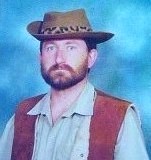
Barend Strydom
Spree killer Samuel Sidyno
Spree killer · South Africa · 1998
Samuel Sidyno was a serial killer whose murders involved the Pretoria Zoo area.…
7 victims
Samuel Sidyno
Spree killer · South Africa · 1998
Samuel Sidyno was a serial killer whose murders involved the Pretoria Zoo area.…
7 victims
 Petrus Madiba
Spree killer · South Africa · 2012
Petrus Madiba was a 29-year-old farmworker who was described as a serial killer…
9 victims
Petrus Madiba
Spree killer · South Africa · 2012
Petrus Madiba was a 29-year-old farmworker who was described as a serial killer…
9 victims
 Elias Chauke
Spree killer · South Africa · 2002
Elias Chauke was accused of a spate of killings and rapes that occurred over tw…
5 victims
Elias Chauke
Spree killer · South Africa · 2002
Elias Chauke was accused of a spate of killings and rapes that occurred over tw…
5 victims
 Sinedu Tadesse
Murderer · USA · 1995
Sinedu Tadesse (1974 - May 28, 1995) was a junior at Harvard University when sh…
1 victim
Sinedu Tadesse
Murderer · USA · 1995
Sinedu Tadesse (1974 - May 28, 1995) was a junior at Harvard University when sh…
1 victim
 Antonio Mantovani
Serial killer · Italy · 1983
Antonio Mantovani was born in Trevenzuolo (Verona) in 1957 and was known as the…
4 victims
Antonio Mantovani
Serial killer · Italy · 1983
Antonio Mantovani was born in Trevenzuolo (Verona) in 1957 and was known as the…
4 victims
 Javier Cruz
Murderer · USA · 1991
Javier Cruz was convicted of capital murder in October 1992 for strangling Loui…
2 victims
Javier Cruz
Murderer · USA · 1991
Javier Cruz was convicted of capital murder in October 1992 for strangling Loui…
2 victims
 Gerald Wayne Bivins
Murderer · USA · 1991
Gerald Wayne Bivins · January 16, 1991 — Bivins and two other men committed mul…
1 victim
Gerald Wayne Bivins
Murderer · USA · 1991
Gerald Wayne Bivins · January 16, 1991 — Bivins and two other men committed mul…
1 victim
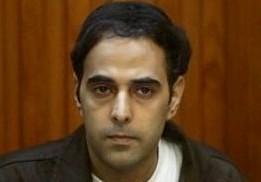 Yigal Amir
Murderer · Israel · 1995
Yigal Amir (born May 23, 1970) was the Israeli assassin of the Prime Minister o…
1 victim
Yigal Amir
Murderer · Israel · 1995
Yigal Amir (born May 23, 1970) was the Israeli assassin of the Prime Minister o…
1 victim
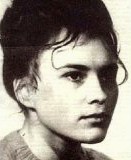 Olga Hepnarová
Mass murderer · Czechoslovakia · 1973
June 30, 1951 — Olga Hepnarová was born in Prague. · 1964 — She attempted suici…
8 victims
Olga Hepnarová
Mass murderer · Czechoslovakia · 1973
June 30, 1951 — Olga Hepnarová was born in Prague. · 1964 — She attempted suici…
8 victims
- Gender
- male
- Country
- South Africa
- Location
- Pretoria, Gauteng Province, South Africa
- Date of birth
- 1975
- Age at first offence
- 13
- Characteristics
- white supremacist, history of mental illness
- Victim profile
- A black woman / Six black people a n d an Indian man
- Method of murder
- Shooting ( 9 mm pistol)
- Date(s) of murder
- November 8/15, 1988
- Years active
- 1988
- Date of arrest
- November 15, 1988
- Status
-
Released
Sentenced to death on May 25, 1989; South African government declared a moratorium on capital punishment in 1990; released in 1992 by President F W de Klerk as one of 150 political prisoners; granted amnesty by the Truth and Reconciliation Commission after the first democratic elections in 1994
Case record: Barend Strydom
Background
Barend Hendrik Strydom was a former policeman who was described as a right-wing extremist and a white extremist. He was also known as the “Wit Wolf” and described himself as the self-styled leader of a movement he called the “Wit Wolwe”.
At the time of the crimes, Strydom was twenty-three years old. He later claimed to have attended a veldschool in Standard 8, where he said he had been warned against the communist system as well as drug and alcohol abuse. He also claimed that his views were encouraged by his father, Mr Nic Strydom, an ex policeman, an elder in the Nederduits Hervormde Kerk, and a former regional leader of the Heidelberg Afrikaaner Weerstands beweging (AWB).
Strydom said he began to read books on politics in South Africa and attended right-wing meetings, and he described them as the only true political movements, unlike what he said was lying to the people by the Nationalist government. He said he saw some reform movements introduced by the government as a sell-out. He also said he began to fear that South Africa was going to the communists and that his interest in politics stemmed from internal fear that the government could not ensure a good future and that the older generation were becoming tired of fighting the enemy.
After graduating from police college, Strydom was stationed at Nigel. On one occasion he said he saw the corpse of a white nurse killed during a riot. He said this made a marked impression on him and served to confirm his worst fears that the country was at war and blacks, whom he described as threatening the survival of whites, were the enemy. Strydom said that as far as he was concerned, blacks threatened the survival of all on the planet, and he claimed there had been a decrease in the oxygen level in central Africa because blacks removed the trees there.
Some time later, he said he attended a motorcar accident in which a black man had been decapitated. He said he had a photograph of himself taken holding the man’s head aloft and that he had wanted the picture, plus the words “ANC beware!”, printed in the police magazine, Servamus. He said he was prevented from doing this and that he was investigated by the security branch regarding his involvement in right-wing politics. He said: “I was approached by the security branch about 30 times,”.
Strydom decided to take matters into his own hands in the latter half of 1988. A week before the Strijdom Square massacre, he visited the Voortrekker Monument to pray and re-enact the Blood River vow. He said: “I prayed and asked the lord to show his will and to see I was not hindered in carrying out the deeds...”. He then drove to Wheeler’s Farm squatter camp at De Deur near Vereeniging, where he said he shot dead one woman and wounded another. He described this as a practice run to see if he was mentally and physically capable of shooting people.
After the shooting, Strydom camped on a farm at Heidelberg where he prayed and meditated for two days, which he said he did to see if God was happy with his plan. He said: “I got no sign to indicate I must not carry on,” he added. He then drove into central Pretoria and shot dead eight innocent people four days later.
Strydom said he claimed that he was a Christian, meditated and prayed for a number of days before committing the crime, and later claimed that God gave him no sign that he must not carry on with his plans.
Strydom’s engagement and marriage occurred while he was on death row. He and his wife later lived in Gauteng.
His father, Mr Nic Strydom, later claimed in court that he had planted religious and right-wing political views in his son’s heart. Mr Nic Strydom also maintained that his son was a dedicated churchgoer and a person who strongly believed in God. Mr Nic Strydom said: “I explained to him that, according to the Bible, each nation should have its own church and religion, which Hendrik accepted whole heartedly.” It was also Mr Strydom’s belief that blacks were animals. Mr Nic Strydom said: “Blacks are not human beings according to the Bible, and many books I have read, and in my eyes they are animals. Many books Hendrik and I have read state, among other things, that Jews of today are not whites, blacks are animals and all whites stem from the Israelites,” Mr Strydom added.
Strydom said his schoolwork had suffered and his marks had deteriorated, and he said this related to his political involvement and dedication to the Herstigte Nationale Party, the Conservative Party and the AWB. He said after matriculating in 1984, he joined the police force. He said he became more aware of the enemy, especially people belonging to left-wing organizations such as the United Democratic Front and the so-called Workers Union and their affiliated organizations, which he described as African National Congress front movements. He described the actions taken by the government to combat internal rebellion as ineffective.
Strydom also said he saw some of the reform movements introduced by the government as a sell-out and that he feared that South Africa was going to the communists.
The offence
On the afternoon of 15 November 1988, twenty-three year-old Barend Hendrik Strydom donned camouflage-style army fatigue, loaded his 9 mm pistol, and set out for central Pretoria. He was carrying a further two magazines and 200 loose bullets. At around 3 p.m. he parked his car in Prinsloo Street and walked to Strjdom Square, described as specially chosen for its links to Prime Minister J.G. Strydom, who was said to have strong apartheid ideals. He began shooting any black person who got in his way.
After shooting one man outside the State Theatre, he crossed Church Street and headed towards Prinsloo Street. On the corner of Church and Prinsloo Streets, he shot two more people. One of his victims was a man standing in the street; another was a woman sitting inside a taxi. Strydom carried on walking down Prinsloo Street and shot a number of innocent pedestrians as he went. He turned down Struben Street and entered Sato Engineering, went to a counter, and began to reload a magazine.
Strydom later explained: “It was important to keep moving during the operation to keep the element of surprise”, he explained. “I ran and looked around searching for blacks. I did not look at their faces...”.
During the shooting spree, Pretoria saw Strydom murder eight people and wound a further sixteen. He was described as having laughed as he shot to death six blacks and an Indian man and wounded sixteen more. The case record states he was later convicted of eight murders and sentenced to death.
After shooting, Strydom was arrested by several policemen after being disarmed.
Investigation and arrest
Mr Simon Mukondoleli, a private investigator who became a South African hero after he stopped a 1988 shooting spree by a white extremist, followed Strydom into the shop at Sato Engineering on 15 November 1988, pretending to be a customer. Simon Mukondoleli was described as a 32-year-old taxi driver at the time. He walked up and tapped Strydom on the shoulder, saying:
“Excuse me baas, but that baas is calling you,” he said.
When Strydom looked round, Mukondoleli snatched the gun from the counter and pointed it at him. Strydom raised his hands and said:
“You've got me,” he said.
Strydom and Mukondoleli then walked out into the street together where several policemen arrested Strydom.
Strydom said: “I am king of the Wit Wolwe,” just before being taken away in a police car.
Lieutenant Viljoen was named as the investigating officer. After being told that he had killed five or six people, Strydom replied:
“I shot badly”.
Lieutenant Viljoen said:
“He said that he felt nothing for the victims,”
On 27 May 1989, Mukondoleli was presented with a R3 000 reward by the police for his heroic action in disarming Strydom and preventing further loss of life. The case record states Mukondoleli received a number of death threats for his effort.
Trial
The so-called Wit Wolwe trial began on Monday, 15 May 1989, at the Pretoria Supreme Court. The courtroom was packed to capacity on every day of the nine-day hearing, and large crowds marshalled by a contingent of riot police gathered outside the courthouse.
Strydom was charged with eight counts of murder, 16 charges of attempted murder, and one of pointing a firearm. He pleaded not guilty.
On the first two days, the State called a number of witnesses to the stand but no one appeared for the defence. By the end of the trial, 33 people had appeared for the State and 4 for the defence.
On Wednesday, 17 May, Mr Justice Louis Harms found Strydom guilty on all counts and called for arguments in mitigation of sentence. On the following day, Strydom declared: “I see what I did as totally correct,”. He further said:
“If I had to do it again I would do the same thing”.
When questioned about the Wit Wolwe movement, Strydom maintained that it had been established in February 1986 but would give no further details. Police claimed investigations indicated that the Wit Wolwe was merely a figment of Strydom’s imagination. When it was put to him that he was bragging in an attempt to make himself important, Strydom denied this.
On 25 May, Court C was packed with Strydom’s family, friends and supporters, including an elderly couple in traditional Voortrekker dress, over an hour before Strydom was due to appear. When he was brought up from the cells, he was warmly greeted by well-wishers. His stepmother, Mrs Daphne Strydom, kissed him on the cheek after embracing him and said proudly:
“Jy's 'n boer.” (You're a farmer).
Strydom, described as the self-styled leader of the Wit Wolwe, was sentenced to death eight times. A short gasp was the only sound heard in the courtroom when sentence was passed. Minutes later, he was whisked away to the Pretoria Central Prison.
Outside the courthouse, a smiling Mrs Strydom told pressmen that she “felt good” and was proud of being a boer. She cried: “Die Vierkieur hooq,” and “(The Vierkieur was the name of the flag of the independent Boer republic called for in the Transvaal in the late nineteenth century.)”.
Some people waiting outside the court believed the sentence to be appropriate. Mr Jospeh Mongale of Soshanguve claimed that the outcome of the trial would restore faith in South Africa's judicial system and said that the outcome was fair and most expected just that. Miss Belina Khumalo, described as one of Strydom’s victims, said she thought justice had been done.
Mr M. Motsheka, identified as the Transvaal chairman of the National Association of Democratic lawyers, issued a cautionary note and said:
“He is a victim of apartheid and the crimes he committed and the sentence imposed on him are the product of apartheid. Sentencing Strydom to death will not cure the evil of apartheid.”
In a press interview given a few days after sentencing, Mr Nic Strydom told reporters:
“I'm proud of Hendrik because he sacrificed himself for his beliefs. He is an honest man and I respect him for that. He killed for love the love of a nation.”
Sentencing
Strydom was sentenced to death on 25 May 1989. The record states he was sentenced to death eight times by Mr Justice Louis Harms.
Appeals
No appeals were described.
Outcome
The South African government declared a moratorium on capital punishment on 2 February 1990. No executions have been carried out since that date.
Hendrik Strydom remained on death row until he was granted amnesty following the 1994 democratic elections.
The record states that the South African government declared a moratorium on capital punishment in 1990 and that Strydom was released in 1992 by President F W de Klerk as one of 150 political prisoners. It further states that Strydom was granted amnesty by the Truth and Reconciliation Commission after the first democratic elections in 1994.
Under a deal between the former government and the African National Congress, Strydom was granted amnesty in 1992, along with African National Congress bomber Robert McBride.
Aftermath
A series of bomb attacks were made in July 1990 against the home and business premises of Democratic Party councillor Mr Clive Gilbert, the home of a National Party member of the Johannesburg City Council Mr Jan Burger, and on a synagogue in Rosettenville. The record states that an English-speaking man who contacted The Citizen newspaper claimed that the Wit Wolwe were responsible.
The record states that many people saw parallels between the Strydom trial and that of another famous patriot Sydney Robert Liebbrandt. It stated that in 1943 Sydney Robert Liebbrandt, a boer rebel, was sentanced to death for treason. It stated that although Sydney refused to give evidence at any stage in the trial, he claimed he had acted for Volk and Fuhrer and gave the Nazi salute when he first entered the court, to which several spectators responded. The record states that after being sentanced to death, Liebbrandt shouted loudly and clearly:
“I greet death”.
The record also states that Strydom acknowledged Liebbrandt as one of his heroes.
On 2 October 1989, Strydom became engaged to Miss Karin Rautenbach, a twenty-two year-old final-year student at Pretoria Teachers Training College. The romance started with an exchange of letters after Strydom's conviction and sentence. The record states that Miss Rautenbach put the engagement ring on her own finger since she was separated from her fiance by a glass partition. The record states that they were married on 27 November 1989 while Strydom was on death row at Pretoria Central Prison. After a twenty-minute ceremony, the couple were allowed their first physical contact in the presence of a prison warder. After a “half-hour honeymoon” Strydom was returned to his cell.
When the new Mrs Strydom was asked how she felt about not being able to have children, the record states she said:
“As things stand now, a black majority rule is inevitable. We must accept that black revolutionaries will seek revenge like in most former colonies. When that happens I do not want my children to fall prey to them. Without complete freedom and self-government for white people of this country there is no future for the next generation.”
Mrs Trudy Rautenbach, identified as the bride's mother, was proud of her daughter and said her son-in-law “Was, a fine boer boy full of character”.
The record states that after an internal investigation at Pretoria Teachers' Training College into Karin's activities, no action was taken against her.
The record also states that Barend Strydom April 30, 1999 Simon Mukondoleli, described as a private investigator and South African hero for stopping the 1988 shooting spree, was fatally shot by two men in downtown Pretoria. It states that Mukondoleli intervened on November 15, 1988, when white extremist Barend Strydom began shooting passers-by in a square in Pretoria. The record states that Strydom began shooting passers-by in a square, laughed as he shot to death six blacks and an Indian man, and wounded 16 more. It states Mukondoleli followed the gunman into a shop where he was reloading his weapon at a counter and disarmed him. It states that Strydom, self-appointed leader of a radical organisation he called the “Wit Wolwe”, was convicted of eight murders and sentenced to death. It states that he was granted amnesty in 1992 under a deal between the former government and the African National Congress. It states that amnesty was granted along with African National Congress bomber Robert McBride.
The record further states that Strydom and his wife are presently living in Gauteng.
Quotes
“I am king of the Wit Wolwe,”
“He said that he felt nothing for the victims,” Lieutenant Viljoen, the investigating Officer, said.
“It was important to keep moving during the operation to keep the element of surprise”, he explained. “I ran and looked around searching for blacks. I did not look at their faces...”.
“Die Vierkieur hooq,”
“I see what I did as totally correct,”
“I prayed and asked the lord to show his will and to see I was not hindered in carrying out the deeds...”.
“I got no sign to indicate I must not carry on,” he added.
“Was, a fine boer boy full of character”.
Spotted an error, or have more information about this case?