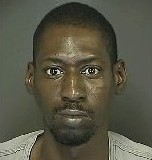
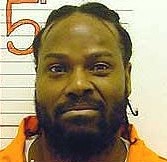
Michael Anthony Simmons
Mass murderer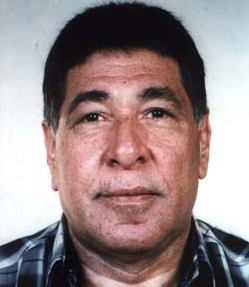 Gameel Al-Batouti
Mass murderer · USA · 1999
Gameel Al-Batouti (also rendered “Gamil ElBatouty” or “El Batouty” in U.S. offi…
216 victims
Gameel Al-Batouti
Mass murderer · USA · 1999
Gameel Al-Batouti (also rendered “Gamil ElBatouty” or “El Batouty” in U.S. offi…
216 victims
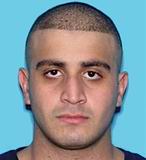 Omar Mateen
Mass murderer · USA · 2016
Omar Mir Seddique Mateen was an American mass murderer who killed 49 people and…
49 victims
Omar Mateen
Mass murderer · USA · 2016
Omar Mir Seddique Mateen was an American mass murderer who killed 49 people and…
49 victims
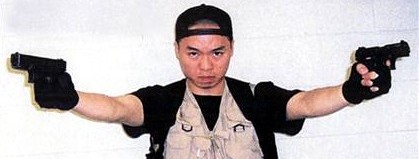 Seung-Hui Cho
Mass murderer · USA · 2007
Seung-Hui Cho was a mass murderer who shot and killed 32 people and wounded man…
32 victims
Seung-Hui Cho
Mass murderer · USA · 2007
Seung-Hui Cho was a mass murderer who shot and killed 32 people and wounded man…
32 victims
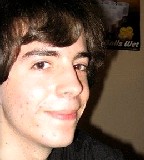 Adam Lanza
Mass murderer · USA · 2012
Adam Lanza, 20, fatally shot twenty children and six adult staff members in a m…
27 victims
Adam Lanza
Mass murderer · USA · 2012
Adam Lanza, 20, fatally shot twenty children and six adult staff members in a m…
27 victims
 Eric Harris
Mass murderer · USA · 1999
Eric Harris committed suicide by gunshot to the roof of the mouth on April 20,…
13 victims
Eric Harris
Mass murderer · USA · 1999
Eric Harris committed suicide by gunshot to the roof of the mouth on April 20,…
13 victims
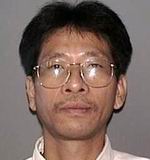 Jiverly Wong
Mass murderer · USA · 2009
December 8, 1967 — Jiverly Antares Wong was born. · late 1980s — Wong first cam…
13 victims
Jiverly Wong
Mass murderer · USA · 2009
December 8, 1967 — Jiverly Antares Wong was born. · late 1980s — Wong first cam…
13 victims
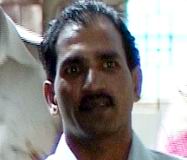 Mahanand Naik
Serial killer · India · 1994
Mahanand Naik was a three-wheel rickshaw driver from Ponda in the Indian state…
18 victims
Mahanand Naik
Serial killer · India · 1994
Mahanand Naik was a three-wheel rickshaw driver from Ponda in the Indian state…
18 victims
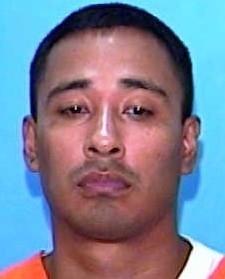 Joel Diaz
Murderer · USA · 1997
Name: Joel Diaz · Date of birth: 06/13/73 · Case citation / opinion: Supreme Co…
1 victim
Joel Diaz
Murderer · USA · 1997
Name: Joel Diaz · Date of birth: 06/13/73 · Case citation / opinion: Supreme Co…
1 victim
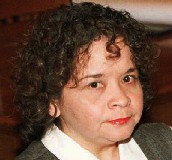 Yolanda Saldivar
Murderer · USA · 1995
Yolanda Saldívar (born September 19, 1960) was convicted in 1995 for the murder…
1 victim
Yolanda Saldivar
Murderer · USA · 1995
Yolanda Saldívar (born September 19, 1960) was convicted in 1995 for the murder…
1 victim
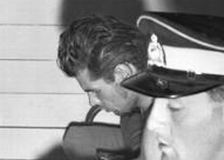 Robert Raymond Cook
Mass murderer · Canada · 1959
Robert Raymond Cook (also known as Bobby Cook): convicted murderer; eldest son…
7 victims
Robert Raymond Cook
Mass murderer · Canada · 1959
Robert Raymond Cook (also known as Bobby Cook): convicted murderer; eldest son…
7 victims
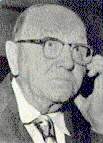 Frederick Edel
Murderer · USA · 1926
Frederick W. Edel was an ex-convict and habitual criminal. Edel was charged wit…
3 victims
Frederick Edel
Murderer · USA · 1926
Frederick W. Edel was an ex-convict and habitual criminal. Edel was charged wit…
3 victims
 Rick Forsyth
Mass murderer · USA · 1993
Defendant: Rick Forsyth (Rick Wayne Forsyth) Victims: Jolene Forsyth (age 39) a…
6 victims
Rick Forsyth
Mass murderer · USA · 1993
Defendant: Rick Forsyth (Rick Wayne Forsyth) Victims: Jolene Forsyth (age 39) a…
6 victims
- Gender
- male
- Country
- USA
- Location
- Charleston County, South Carolina, USA
- Date of birth
- April 26, 1965
- Age at first offence
- 41
- Characteristics
- parricide, history of mental illness, mentally ill
- Victim profile
- His wife, Detra Rainey, 39, and her children William Lee Rainey, 16; Hakiem Rainey, 13; Malachi Robinson, 8; and Samenia Robinson, 6
- Method of murder
- Shooting
- Date(s) of murder
- September 30, 2006
- Years active
- 2006
- Date of arrest
- Same day
- Status
-
Found mentally unfit to stand trial on June 20, 2008; confined indefinitely in a secure state mental hospital
Case details
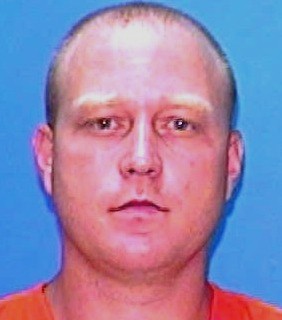
Michael Anthony Simmons was charged with the killings of his wife and her four children. On June 20, 2008, a judge found Simmons mentally unfit to stand trial and ordered that he be confined indefinitely in a secure state mental hospital.
Timeline
- June 20, 2008 — The court found Simmons mentally unfit to stand trial and confined him indefinitely in a secure state mental hospital.
- June 21, 2008 — Relatives reacted angrily to the ruling.
- Oct 1, 2006 — Simmons was charged in all five murders and was denied bond on 5 counts of murder.
- Oct 2, 2006 — Police identified five people shot to death in their mobile home in the Ferndale neighborhood of North Charleston.
- Oct 4, 2006 — Coverage described Simmons’ prior violent past, including the 1987 cab-driver beating and related hospitalisation.
The offence
Police said five people were shot to death in a mobile home on Marson Street in the Ferndale neighborhood of North Charleston.
Investigators said the victims were:
- Detra Rainey, 39 years old
- William Rainey, 16-year-old
- Hakiem Rainey, 13-year-old
- Malachi Robinson, 8-year-old
- Samenia Robinson, 6-year-old
Authorities said all five murders occurred between 3 a.m. and 5:45 a.m. on Saturday and that police found the bodies about 1:43 p.m. on Saturday.
Investigators thought Simmons shot the family in the early morning and then hung around the house. Neighbors reported seeing Simmons sitting on his porch for much of the day, almost until the moment North Charleston police arrived. Some said he looked fidgety.
Police said the killings came to light after Simmons invited a woman into his home with the offer of a cigarette, possibly for the purpose of having sex with her. The woman walked inside, saw the bodies, and ran from the home to call police.
Police said Simmons was captured leaving the scene with the handgun used to kill all five people.
Investigation
North Charleston police Sgt. Kelly Spears spent about four hours interviewing Simmons after the killings. Spears said Simmons seemed coherent and capable at the time, and she saw nothing suggesting dementia. Spears said Simmons seemed a bit more calculating than the average suspect.
A psychiatric evaluation done one week after the killings showed Simmons was coherent and was able to describe events leading up to his arrest, but his mental state deteriorated markedly in the months that followed.
Multiple psychiatric evaluations found Simmons fearful, guarded, and constricted, with a “severely impaired mental status,” according to a report by forensic psychiatrist Leonard Mulbry.
Arrest and detention
Simmons appeared via video link from the Charleston County Jail and was being held without bond.
Police say Simmons was captured leaving the scene with the handgun used to kill all five people.
Simmons’ arrest record dated back to 1984 and included arrests and convictions of several violent crimes over the last 20 years.
Trial
On June 20, 2008, Circuit Judge Kristi Harrington tried to question Simmons in court, but Simmons displayed erratic behavior and did not respond appropriately. Simmons hunched over with tears and sweat rolling down his cheeks, shook his head and pumped his leg, and stared blankly at his lawyer.
The judge determined that Simmons was mentally unfit to stand trial in the killings of his wife and her four children in 2006.
Sentencing
Simmons was not sentenced in a criminal trial after the unfitness ruling. Instead, the judge ordered that he be confined indefinitely in a secure state mental hospital.
Appeals
No appeal outcome was stated.
Outcome
Simmons was found mentally unfit to stand trial on June 20, 2008 and was confined indefinitely in a secure state mental hospital.
Prosecutors remained skeptical. Solicitor Bruce Durant said prosecutors were skeptical, particularly since Simmons’ dementia set in after his arrest. Durant said mental health tests conducted for prosecutors and the defense agreed on the dementia diagnosis. Durant said: “The psychiatrists are driving the bus on this one, and we're just passengers hanging on.”
Relatives were also angry. Charles Thompson, Rainey’s brother-in-law, said: “He's playing a game, that's all it is,” as he left the courtroom. Another relative replied with a grimace: “He needs to man up to what he's done.” Nicole Rainey Pruitt said: “It's just an act.”
Simmons’ public defender Beattie Butler said the judge made the only decision possible given Simmons’ precarious mental state. Butler said: “He is profoundly confused,” and said Harrington’s decision reflected Simmons’ inability to comprehend the charges against him or assist in his defense. Butler also said there was clear evidence from brain scans that Simmons suffered a stroke while he was in jail. Butler said Simmons did not even realize he was in jail, and that dementia and resulting damage left him unable to comprehend the charges or assist in his defense.
A forensic psychologist’s report said Simmons could not remember the killings or even the fact that he had a family.
Other details
Victim and family details
Victims’ relatives described the impact of the killings.
Melba Thompson said Simmons had always been short-tempered, violent, and trigger-happy. She recalled one instance in which Simmons pointed a gun at her husband during an anniversary party.
Christan Rainey, who lost his mother and four siblings in the shootings, was in Baton Rouge, La., where he attended school and worked as a Wal-Mart manager. Christan said he had been saving vacation days and money to return to Charleston to attend his stepfather’s trial, and he was crushed that it would not happen. Christan said: “I just feel like he's getting the easy way out.” He also said: “If you do something like he did, I don't care what happens after. You should still be held responsible .”
Charges described in connection with prior cases and bond ruling
Simmons was denied bond on 5 counts of murder.
Court documents referenced that Simmons lived in the home with Rainey and her children, although it was not clear what his relationship was to the family. Charleston County Coroner Rae Wooten said Simmons was not the father of any of the children.
Simmons’ prior history described in the narrative
The narrative described a violent past including:
- theft of a go-kart in his teens and tearing around the streets before being hit by a bus, which put him in a body cast for more than a year
- a leg injury that left him with a permanent limp
- a July 1984 arrest following an argument at a club on Savage Road in which he was accused of beating two men with a broom handle; a police report said the victims later declined to press charges
- an February 1986 accusation of hitting a man in the face and head with a pipe, followed by conviction of assault and battery of a high and aggravated nature
- On Aug. 12, 1987, Simmons and an accomplice beat and robbed a disabled cab driver by pummeling the one-legged man with his own crutches, splintering them, stealing his wallet, and leaving him bleeding in the woods near Orleans Road
- After his arrest for that crime, Simmons tried to commit suicide in the Charleston County jail
Authorities sent Simmons to the State Hospital in Columbia, where he was diagnosed as mildly retarded but competent to stand trial for the attack on the cab driver. The narrative said Simmons’ public defender at the time told The News and Courier that Simmons suffered visual and audio hallucinations as a result of the vehicle accident years earlier. The narrative also said Simmons was convicted in January 1988 of charges stemming from that attack.
The narrative said Simmons was released from the hospital later in 1987 and returned to the county jail to face pending criminal charges of armed robbery, assault and battery with intent to kill and second-degree burglary, and that he was convicted of those charges the following year, 1988.
Mental health history described
The narrative said Simmons was admitted to a mental hospital once before, in 1987, and reported a history of hallucinating and hearing voices at that time. Tests suggested he had mild mental retardation. Mulbry’s report said Simmons’ mother told doctors that Simmons’ father had a history of mental illness and that several other family members had died from mental illness.
Relationship and background in the narrative
The narrative described that Detra Rainey and Simmons were childhood sweethearts who grew up near each other. It said Rainey moved on with her life during the time Simmons was in prison and had four children with other men.
It said Simmons and Rainey resumed their romance soon after Simmons’ release from prison in August 2004. By early 2005, Rainey told her church pastor that she wanted to marry Simmons. The Rev. James Yarsiah said he did counseling with them for four months and “I didn't see any red flags.” Yarsiah said Simmons took an active role in the church’s premarital counseling sessions covering domestic issues such as finances, child rearing and marital conflict.
The narrative said Yarsiah married the couple in a ceremony at St. Andrew's Episcopal Church in West Ashley on Sept. 10, 2005. It said all of Rainey’s children participated, with Samenia Robinson as flower girl and Malachi Robinson as ring bearer, and that her three oldest boys were groomsmen. Yarsiah said the couple’s first year of marriage was happy and that Rainey and the children usually came to church services without Simmons. Yarsiah said: “Let God be the judge.”
Spotted an error, or have more information about this case?