
Rick Forsyth
Mass murderer Gameel Al-Batouti
Mass murderer · USA · 1999
Gameel Al-Batouti (also rendered “Gamil ElBatouty” or “El Batouty” in U.S. offi…
216 victims
Gameel Al-Batouti
Mass murderer · USA · 1999
Gameel Al-Batouti (also rendered “Gamil ElBatouty” or “El Batouty” in U.S. offi…
216 victims
 Timothy McVeigh
Mass murderer · USA · 1995
Timothy James McVeigh (April 23, 1968 – June 11, 2001) was a United States Army…
168 victims
Timothy McVeigh
Mass murderer · USA · 1995
Timothy James McVeigh (April 23, 1968 – June 11, 2001) was a United States Army…
168 victims
 Julio Gonzalez
Mass murderer · USA · 1990
Julio Gonzalez was sentenced to 174 twenty-five-year sentences (a total of 4,35…
87 victims
Julio Gonzalez
Mass murderer · USA · 1990
Julio Gonzalez was sentenced to 174 twenty-five-year sentences (a total of 4,35…
87 victims
 David Burke
Mass murderer · USA · 1987
David Augustus Burke (May 18, 1952–December 7, 1987) was an employee of USAir,…
43 victims
David Burke
Mass murderer · USA · 1987
David Augustus Burke (May 18, 1952–December 7, 1987) was an employee of USAir,…
43 victims
 George Jo Hennard
Mass murderer · USA · 1991
George Jo Hennard carried out a mass killing at a Luby’s Cafeteria in Killeen,…
23 victims
George Jo Hennard
Mass murderer · USA · 1991
George Jo Hennard carried out a mass killing at a Luby’s Cafeteria in Killeen,…
23 victims
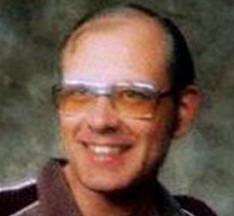 James Huberty
Mass murderer · USA · 1984
James Oliver Huberty was a 41-year-old unemployed security guard. He was born i…
21 victims
James Huberty
Mass murderer · USA · 1984
James Oliver Huberty was a 41-year-old unemployed security guard. He was born i…
21 victims
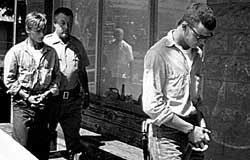 Leonard Maine
Spree killer · USA · 1967
Leonard Maine was convicted in connection with multiple violent offences involv…
4 victims
Leonard Maine
Spree killer · USA · 1967
Leonard Maine was convicted in connection with multiple violent offences involv…
4 victims
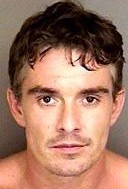 Jeremy Jones
Serial killer · USA · 1992
Name: Jeremy Jones · Aliases/identities mentioned: John Paul Chapman · Age (as…
21 victims
Jeremy Jones
Serial killer · USA · 1992
Name: Jeremy Jones · Aliases/identities mentioned: John Paul Chapman · Age (as…
21 victims
 Michael Wayne McGray
Serial killer · Canada/USA · 1985
Michael Wayne McGray was a Canadian serial killer who claimed to have killed 16…
16 victims
Michael Wayne McGray
Serial killer · Canada/USA · 1985
Michael Wayne McGray was a Canadian serial killer who claimed to have killed 16…
16 victims
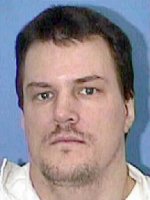 Troy Albert Kunkle
Murderer · USA · 1984
Troy Albert Kunkle was convicted of capital murder and sentenced to death for t…
1 victim
Troy Albert Kunkle
Murderer · USA · 1984
Troy Albert Kunkle was convicted of capital murder and sentenced to death for t…
1 victim
 Eugene Wallace Perry
Murderer · USA · 1980
Eugene Wallace Perry v. A.L. Lockhart, Director, Arkansas Department of Correct…
2 victims
Eugene Wallace Perry
Murderer · USA · 1980
Eugene Wallace Perry v. A.L. Lockhart, Director, Arkansas Department of Correct…
2 victims
 Tyrone Leroy Fuller
Murderer · USA · 1988
Tyrone Leroy Fuller Tyrone Leroy Fuller was scheduled to be executed after 6 p.…
1 victim
Tyrone Leroy Fuller
Murderer · USA · 1988
Tyrone Leroy Fuller Tyrone Leroy Fuller was scheduled to be executed after 6 p.…
1 victim
- Gender
- male
- Country
- USA
- Location
- Norwalk, Iowa, USA
- Date of birth
- June 30, 1950
- Age at first offence
- 43
- Characteristics
- parricide
- Victim profile
- Jolene Forsyth, 39 , three of her children, Brian, 18; Nikki, 17, and Jessica, 11 , and two children Mrs. Forsyth was baby sitting, Martina Napodano, 9, and Helen Napodano, 7
- Method of murder
- Shooting - Strangulation
- Date(s) of murder
- June 14, 1993
- Years active
- 1993
- Date of arrest
- Same day (suicide attempt)
- Status
-
Life imprisonment
Sentenced to six sentences of life imprisonment in 1994
Case information
Defendant: Rick Forsyth (Rick Wayne Forsyth) Victims: Jolene Forsyth (age 39) and her children: Brian (age 18), Nikki (age 17), Jessica (age 11); and two additional children of Jolene’s boyfriend who were present in the home: Martina Napodano (age 9) and Helen Napodano (age 7). Other person injured in the home: Rick Forsyth (estranged husband of Jolene Forsyth), age 42, was found critically wounded with a self-inflicted gunshot to the head. Place: Forsyth home in Norwalk.
Timeline
- June 13, 1993 — Jolene’s daughters, Martina Napodano (9) and Helen Napodano (7), spent the night in Jolene’s care.
- June 14, 1993 — At approximately 12:30 p.m., Jolene’s brother Kevin Rinehart entered the Forsyth home and found the bodies of Jolene, Brian, Nikki and Jessica in the master bedroom. Forsyth was found in the master bedroom suffering from gunshot wounds to the head and wrist.
- April 1993 — Forsyth was charged with harassment for making numerous hang-up phone calls to Jolene and was scheduled to appear for trial on that charge on June 28, 1993.
- May 6, 1993 — The police apprehended Forsyth when he was prowling around Jolene’s home (testimony established this apprehension occurred in September 1992; see below for that date-stated fact). Forsyth was found in contempt of court on May 6, 1993, for entering Jolene’s property on two occasions in violation of the restraining order.
- August 1, 1993 — As punishment for the May contempt, Forsyth was ordered to serve fourteen days in jail by August 1, 1993.
- September 1992 — The police apprehended Forsyth when he was prowling around Jolene’s home.
- Monday, June 14, 1993 — Friends of Mary Jolene Forsyth and her children went to the home when their phone calls went unanswered and found six people dead and Richard Forsyth seriously injured.
Background
Rick Forsyth was the estranged husband of Jolene Forsyth. Jolene had filed a dissolution action in early 1992 and obtained a restraining order against defendant. The parties were separated and Jolene and three children (Brian, Nikki, and Jessica) resided with her in the family home in Norwalk, Iowa. The parties’ fourth child, Eric, had died in 1990 following a bicycle accident. The evidence at trial indicated that defendant had not coped well with Eric’s death and behaved obsessively with respect to the family’s preservation of Eric’s memory.
Martina Napodano and Helen Napodano were the daughters of Mark Napodano, the man Jolene was dating in June 1993. Since Mark Napodano had an early appointment scheduled for the next day, Martina and Helen spent the night of Sunday, June 13, 1993, in Jolene’s care. In June 1993, Martina and Helen were on summer vacation from Gary Elementary School in West Chicago and were visiting their father, Mark Napodano, in Des Moines. The divorce between Napodano and Page Brady (the girls’ mother) had been finalized in May by a Minnesota court. At the time, Martina and Helen were in the home only by chance.
Forsyth’s marriage to Jolene had gone downhill toward divorce court after the death of their 7-year-old son Eric in a bicycle accident last year. The evidence also described that Forsyth resisted Jolene’s efforts to obtain a divorce and had threatened his family’s safety.
The offence
Six people were found shot to death and/or strangled and suffocated in the Forsyth home in Norwalk. Jolene and Brian had been shot to death. Nikki had been strangled and Jessica had been suffocated. Forensic evidence suggested the family members had been killed in other rooms of the home and had been placed in the master bedroom after their deaths.
The Napodano girls were shot to death and were found in a downstairs bedroom. Autopsies showed that five of the victims, including the Napodano sisters, were shot with a small-caliber revolver, and 11-year-old Jessie Forsyth had been strangled, according to Iowa authorities.
Investigation
Jolene’s brother Kevin Rinehart entered the Forsyth home at approximately 12:30 p.m. on Monday, June 14, 1993, and found the bodies in the master bedroom. Forensic evidence suggested the placement of the bodies in the master bedroom after their deaths.
Two apparent suicide notes were found after the murders: one in the rented room where defendant lived and the other in the Forsyth home. A handwriting expert testified that the handwriting on each note was that of defendant. The note found in defendant’s rented room repeatedly expressed his desire to stop all of the pain and save his family so they could be together. The note referenced his son Eric’s death and his wish to “save all of us after Eric’s death” so there would be “no more pain.” At one point the note expressed an apology (“I'am (sic) sorry”) but stated “I have to have my family” (emphasis in original). The second note, found at the scene of the murders, mentioned Eric and included four references that the family would now be together forever. The note also contained an apology and an apparent request for God to forgive defendant for the deaths of the two Napodano girls. At the conclusion of this note was a list of people and phone numbers, presumably individuals whom defendant thought should be contacted when the bodies were discovered.
A Norwalk police officer testified that a gun looked like defendant’s gun which the Norwalk police department had taken into custody during part of 1991. All nine empty casings found at the crime scene were fired from that gun. Defendant was found at the scene with a gun in his possession and had gunpowder residue on his hands.
Evidence described included an alleged blood type found outside the upstairs bathroom at the Forsyth house that did not match any of the victims, defendant, Mr. Napodano, or Mr. Rinehart. There was evidence the blood sample was very saturated and had the smell of urine.
Evidence also addressed the absence of blood on Jessica’s hair, the blood trail between the bed in the master bedroom and defendant’s blood-stained jeans, and the lack of blood trails given the number of bodies moved throughout the house. The record described theories for blood absence and explained how blood-stained materials in the master bedroom were theorized to have been used by defendant to transport bodies.
Arrest / custody
After being found critically wounded, Forsyth was hospitalized. Dr. Souza testified he had performed a psychiatric evaluation of defendant and found defendant was aware of his legal circumstances and had the ability to comprehend his current legal situation. Officer Hosey, an officer who guarded defendant while he was hospitalized, testified he heard defendant have a phone conversation with his father and defendant explained he understood the State was attempting to make a case against him for killing his wife and children.
Trial
Convictions
Forsyth was convicted by an Iowa jury in April 1994 of first-degree murder for the deaths of his estranged wife, his three children, and two children of his wife’s boyfriend. The convictions were on six counts of first-degree murder.
Competency to stand trial
Prior to trial, Forsyth filed an application for a hearing to determine his competency to stand trial. He argued he had sustained amnesia as a result of the gunshot wound to his head and was unable to appreciate the charges against him, understand the proceedings, or effectively assist in his defense. Pursuant to Iowa Code section 812.3, a competency hearing was held. The district court found defendant was suffering from amnesia with respect to the events of June 13 through June 15, and the amnesia was probably permanent. The court concluded defendant understood the charges and their consequences and was able to communicate with counsel and assist in his defense. The court found defendant competent and ordered him to stand trial.
Admission of evidence: Jolene’s journal
The trial court admitted Jolene’s journal pursuant to Iowa Rule of Evidence 804(b)(5). The journal was kept at the instruction of her dissolution attorney to record incidents when defendant called, visited, or followed her and her family.
Exclusion of evidence
The trial court excluded evidence Forsyth wished to introduce regarding a purported motive Kevin Rinehart had to kill Jolene and her children and to be biased against defendant. Kevin and his wife, Diana, were involved in dissolution proceedings at the time of the murders, and the issue of custody of their children was in dispute. The trial court excluded the evidence, and the appellate review found no abuse of discretion in the exclusion because the evidence was unsubstantiated hearsay of a highly prejudicial nature with little relevance to the case.
Sentencing
Forsyth was sentenced to six sentences of life imprisonment in 1994.
Appeals
Iowa Court of Appeals (February 28, 1996)
Defendant Rick Forsyth appealed from the judgment and sentences entered following his convictions on six counts of first-degree murder. The Iowa Court of Appeals affirmed.
Forsyth challenged:
- the sufficiency of the evidence to support the convictions;
- the trial court’s finding he was competent to stand trial;
- the admission of his wife’s journal into evidence; and
- the exclusion of evidence regarding his wife’s relationship with her brother, Kevin Rinehart.
Sufficiency of the evidence
The court reviewed the evidence in a light most favorable to the State. It found sufficient evidence supported the convictions. It recounted evidence of restraining order violations and contempt, threats made to Jolene and the children, stalking-type conduct, and the discovery of defendant at the scene with a gun and gunpowder residue on his hands. It also recounted the suicide notes that were written by defendant and described as strongly implicating him, including:
- the desire to “save all of us after Eric’s death” and “no more pain,”
- the statement “I have to have my family” (emphasis in original),
- and the second note’s inclusion of references to God forgiving defendant for the deaths of the two Napodano girls.
The court also addressed defendant’s arguments about blood evidence, including the absence of blood on Jessica’s hair, the alleged presence of an outside blood type that did not match any victims or related individuals, and the absence of blood trails. It concluded these issues did not undermine the sufficiency of the evidence and that unresolved aspects of the evidence were not sufficient to overcome the overwhelming evidence of defendant’s guilt.
Competency
The Iowa Court of Appeals affirmed the district court’s finding that defendant appreciated the charges and understood the proceedings and could effectively assist in his defense despite amnesia. It stated that amnesia about events surrounding a charge did not automatically render defendant incompetent to stand trial.
Journal admissibility
The court found the parties strongly disputed the trustworthiness of Jolene’s journals. It also held that even if the journal were erroneously admitted, any error was harmless because most entries were duplicative of testimony offered at trial and admission did not prejudice defendant.
Exclusion of evidence
The Iowa Court of Appeals affirmed the exclusion of the evidence regarding Kevin Rinehart’s alleged motive and alleged bias, finding unsubstantiated hearsay of a highly prejudicial nature with little relevance.
The Iowa Court of Appeals concluded “AFFIRMED.”
Post-conviction relief and federal habeas proceedings (Eighth Circuit)
Forsyth appealed in federal court after Iowa post-conviction proceedings were rejected. The Iowa Court of Appeals rejected claims that he had been denied effective assistance of counsel due to counsel’s failure to adequately argue he was competent to stand trial and raising a factual defense rather than one based on insanity or diminished responsibility. The Iowa Court of Appeals also rejected claims that appellate counsel was ineffective for failing to raise these issues on appeal. The appellate rejection was cited as Forsyth v. Iowa, 03-1378, 2004 WL 1161614 (Iowa Ct.App. May 26, 2004).
After exhausting remedies under Iowa law, Forsyth filed suit in federal district court for a writ of habeas corpus under 28 U.S.C. § 2254 alleging ineffective assistance of trial and appellate counsel. The United States Court of Appeals for the Eighth Circuit affirmed.
Outcome
- Forsyth’s convictions were affirmed on direct appeal by the Iowa Court of Appeals.
- Forsyth’s sentence was six sentences of life imprisonment in 1994.
- The Eighth Circuit affirmed the district court’s denial of habeas corpus relief.
Other details
People and roles
- Jolene Forsyth (age 39): defendant’s wife; found shot and strangled/suffocated victims included her.
- Rick Forsyth (age 42): defendant; estranged husband; found critically wounded with self-inflicted gunshot to the head.
- Brian (age 18), Nikki (age 17), Jessica (age 11): Jolene’s children; found dead in the master bedroom.
- Martina Napodano (age 9) and Helen Napodano (age 7): additional victims; found shot to death in a downstairs bedroom.
- Kevin Rinehart: Jolene’s brother; entered the home and found the bodies.
- Mark Napodano: Martina and Helen’s father; Jolene was dating him in June 1993; he left Martina and Helen with Forsyth and her three children on Sunday night.
- Page Brady: Martina and Helen’s mother; divorce finalized in May by a Minnesota court.
- Diana Rinehart: Jolene’s sister-in-law; described defendant’s calls becoming more frequent and characterizations of defendant as “obsessed.”
- Cindy Rinehart: Jolene’s sister-in-law; overheard a telephone conversation defendant had with his daughter Nikki.
- John Rinehart: Jolene’s brother; overheard defendant tell Jolene: “[y]ou are bringing this all on yourself. If you don't quit, I will kill you and the others.”
- Jessica’s former teacher: reported that defendant told her he would kill Jolene and the children before there would be a divorce.
Quoted statements
- In an obituary notice prepared by Yurs-Peterson Funeral Home in Batavia, the parents stated: “Martina and Helen will be dearly missed by their many friends and family who loved them deeply. Although Martina and Helen were sisters, they also were best buddies to the very end.”
- A note found in defendant’s rented room stated: “I'am (sic) sorry” and “I have to have my family” (emphasis in original).
- The Iowa Court of Appeals recounted a quote from defendant to Jolene overheard by John Rinehart: “[y]ou are bringing this all on yourself.
- Dr. Souza described that Forsyth was aware of his legal circumstances and could communicate with his counsel aside from amnesia. Dr. Olsen stated that if a defendant is amnesic for the events surrounding an alleged crime, “it is impossible to determine whether he understood the nature and quality of his actions or whether he had the mental capacity to know the difference between right and wrong.”
- At the post-conviction relief hearing, trial counsel stated: “[I]n my personal dealings with Rick, there was never any indication of the type of delusional thinking [that he demonstrated] at the time he was in the hospital. It was also explained to me that with the passage of time, the healing, those symptoms would go away, and they did. He was aware that his wife and children were dead all the time I dealt with him.”
Psychological and medical evaluations
Forsyth’s amnesia was described as preventing him from remembering much of what occurred on June 13-15, including events related to the murders. Dr. William Robert McMordie, a clinical neuropsychologist, interviewed Forsyth four times in June and July of 1993, altogether spending about seven and one-half hours with him. Dr. McMordie informed trial counsel that, in his professional opinion, Forsyth was competent to stand trial and that Dr. McMordie’s evaluation did not support an insanity defense.
Dr. Loren Olson, a psychiatrist, saw Forsyth on about ten occasions while he was in the hospital following the murders and before he was indicted. Dr. Olson testified that Forsyth understood the gravity of his legal situation and that it was impossible to determine from amnesia whether he understood the nature and quality of his actions or had mental capacity to know right from wrong.
Dr. Mark Souza, a psychiatrist, testified that Forsyth’s amnesia was real and would prevent him from testifying about the events of June 14, 1993, and that Forsyth was aware of his legal circumstances with no other impairment affecting communication with counsel besides amnesia. Dr. Souza also stated that he could not form an opinion to a reasonable degree of medical certainty about possible insanity or diminished responsibility because Forsyth had no memory of his mental state and the other available evidence was insufficient.
Dr. Michael Taylor, a psychiatrist retained by the state, evaluated Forsyth on October 8, 1993, and opined Forsyth was not suffering from any type of mental disease or defect at the time of the murders and was capable of distinguishing between right and wrong at that time. Dr. William S. Logan, a forensic psychiatrist, interviewed Forsyth for about six hours on October 5, 2001, and reviewed documents; he opined Forsyth was not competent to stand trial and suffered from a major depressive disorder complicated by psychotic features at the time of the murders, preventing him from being able to tell the difference between right and wrong or to appreciate the nature and quality of his conduct.
Prior mental-health and disciplinary context mentioned in the federal appeal
A psychological report following the murders indicated that Forsyth had received psychotherapy since 1977 for anger and violent impulses, marital and family problems, and general depression. It was stated that after Forsyth’s youngest son died in a bicycle accident in 1990, he was placed on an anti-depressant medication in addition to ongoing counseling.
After Forsyth pleaded guilty to assaulting his sixteen-year-old son with a paddle in 1991, the school board asked Dr. Taylor to evaluate whether Forsyth should be reinstated as a bus driver; Dr. Taylor reported no evidence of any psychiatric disorder and recommended reinstatement. The psychologist that Forsyth was seeing noted in December 1992 that Forsyth had been chronically depressed for at least one year. Forsyth completed a Minnesota Multiphasic Personality Inventory (MMPI II) test in May 1993; the results were evaluated by two psychologists in 1993 and 2003 and both said the results were not consistent with either major depressive disorder or any other major psychiatric illness.
Trial counsel and defensive strategy (federal appeal)
The Eighth Circuit described trial counsel’s strategy as pursuing factual innocence rather than insanity or diminished responsibility, and it referenced exculpatory evidence including: a blood stain not matching any victim or defendant, medical examiner testimony suggesting one person could not have committed all the murders, a tape-recorded conversation in which Mrs. Forsyth’s boyfriend and father of the two non-Forsyth children told his ex-wife he had killed their children, and initial claims by defendant’s brother-in-law about shooting and being shot in return. The federal appeal also described that counsel did not pursue mental defect defenses based on expert opinions available at the time.
Dates and case identifiers
- Iowa Court of Appeals opinion date: February 28, 1996.
- Eighth Circuit opinion date: August 08, 2008.
- Eighth Circuit case: Forsyth v. Ault II, Ricky Wayne Forsyth v. John Ault II, Warden, Anamosa State Penitentiary, No. 07-2839.

Spotted an error, or have more information about this case?