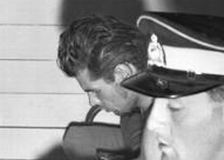
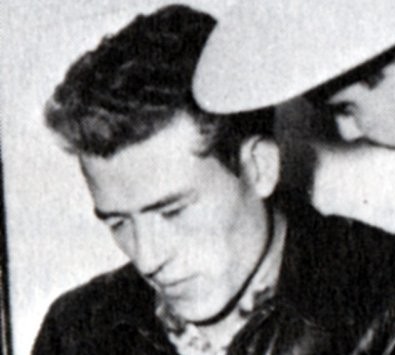
Robert Raymond Cook
Mass murderer Victor Ernest Hoffman
Mass murderer · Canada · 1967
Victor Ernest Hoffman (born 1946; died May 21, 2004) was found not guilty by re…
9 victims
Victor Ernest Hoffman
Mass murderer · Canada · 1967
Victor Ernest Hoffman (born 1946; died May 21, 2004) was found not guilty by re…
9 victims
 Marc Lepine
Mass murderer · Canada · 1989
Marc Lépine committed a shooting at the École Polytechnique engineering school…
14 victims
Marc Lepine
Mass murderer · Canada · 1989
Marc Lépine committed a shooting at the École Polytechnique engineering school…
14 victims
 Roger Warren
Mass murderer · Canada · 1992
Roger Warren was convicted of 9 counts of second-degree murder in connection to…
9 victims
Roger Warren
Mass murderer · Canada · 1992
Roger Warren was convicted of 9 counts of second-degree murder in connection to…
9 victims
 Thomas Selmayr
Murderer · Germany · 2011
March 21, 2011 — Police investigated the deaths of two girls, aged eight and 11…
2 victims
Thomas Selmayr
Murderer · Germany · 2011
March 21, 2011 — Police investigated the deaths of two girls, aged eight and 11…
2 victims
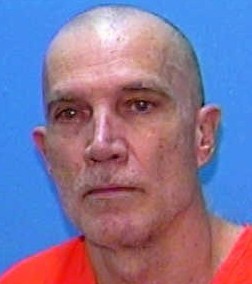 James Franklin Rose
Murderer · USA · 1976
James Franklin Rose was convicted of kidnapping (Count I) and first-degree murd…
1 victim
James Franklin Rose
Murderer · USA · 1976
James Franklin Rose was convicted of kidnapping (Count I) and first-degree murd…
1 victim
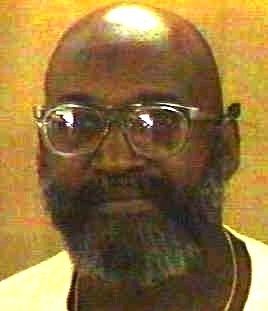 David Junior Brown
Murderer · USA · 1980
David Junior Brown changed his name in prison after his conversion to Islam. Du…
2 victims
David Junior Brown
Murderer · USA · 1980
David Junior Brown changed his name in prison after his conversion to Islam. Du…
2 victims
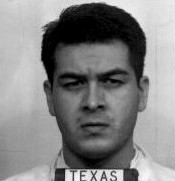 Johnny Joe Martinez
Murderer · USA · 1993
Johnny Joe Martinez was convicted of capital murder for the robbery and murder…
1 victim
Johnny Joe Martinez
Murderer · USA · 1993
Johnny Joe Martinez was convicted of capital murder for the robbery and murder…
1 victim
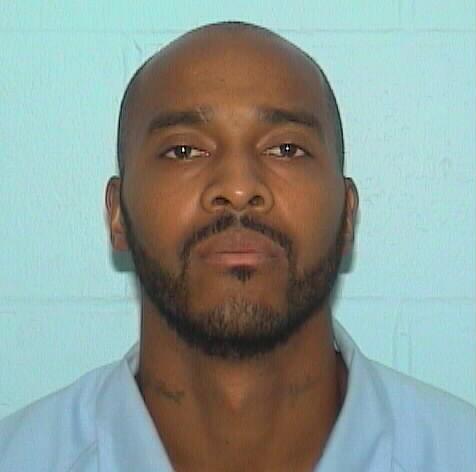 Anthony Townser
Murderer · USA · 1993
Anthony Townser Anthony Townser was sentenced to 75 years in prison in Illinois…
3 victims
Anthony Townser
Murderer · USA · 1993
Anthony Townser Anthony Townser was sentenced to 75 years in prison in Illinois…
3 victims
- Gender
- male
- Country
- Canada
- Location
- Stettler, Alberta, Canada
- Date of birth
- 1938
- Age at first offence
- 21
- Characteristics
- parricide, murder for hire, murder-suicide
- Victim profile
- His father, Raymond Cook, his stepmother, Daisy May Cook, and his five siblings, aged 3 to 9 years
- Method of murder
- Shooting
- Date(s) of murder
- June 25, 1959
- Years active
- 1959
- Date of arrest
- 2 days after
- Status
-
Executed
Executed by hanging in the Fort Saskatchewan gallow s on November 14, 1960
Case record
People
- Robert Raymond Cook (also known as Bobby Cook): convicted murderer; eldest son of Raymond and Daisy May Cook; defendant in the murder of his family
The offence
In 1959, police discovered Raymond and Daisy May Cook and their five children shot and bludgeoned to death in the garage of their Stettler home. The killings involved the slaying of Cook’s father, stepmother, and five siblings.
Investigation
Evidence led police to Robert Raymond Cook, who had been released from prison only days before the crime. Cook was apprehended on suspicion and admitted to the Ponoka Mental Institution for psychiatric evaluation. He escaped from the institution and was recaptured several days later following a manhunt.
During the course of the investigation and subsequent proceedings, the outcome left questions unanswered including:
- the actual time of the murder
- the fact that the money was never found
- that one of the murder weapons, a shotgun, did not belong to anyone in the household
Arrest
The RCMP searched for Cook and, during the night of July 11, 1959, more than 100 RCMP officers and two tracking dogs searched for him. Cook was captured at a pig farm near Bashaw, 80 km from Edmonton. He was apprehended with his father’s papers in his possession.
Trial
Cook faced trial over the murders of his family.
First trial and appeal leading to a new trial
The first trial was held in Red Deer and was presided over by Justice Peter Greschuk. Cook was found guilty at that trial, but the verdict was appealed and a new trial was ordered by the Appellate division because Justice Greschuk refused the testimony of one of the witnesses.
Second trial
The second trial was held in Edmonton and was presided over by Justice Harold Riley.
At trial, Cook took the stand to recount his movements in the days just prior to the murders in an attempt to establish his alibi. Cook described visiting the Commercial Hotel in Edmonton and checking in. He stated that he got a car by stealing it from a lot on the south side out the Calgary Trail. He detailed driving to Bowden, near Red Deer, to recover some money he had hidden there in 1957, and then driving back to Edmonton and returning the car to the same lot from which he had taken it.
Cook also described that later that evening he caught up with his father as his father got off work; they had “a few beers” and both returned home to Stettler.
Cook’s lawyer, Frank Dunne, asked Cook to describe his relationship with his family. Cook replied it was warm and friendly, and Cook testified about his father being a mechanic and a partnership discussion in which his father supposedly wanted to open a garage in BC and, in exchange for $4,300, would sign over title of the family’s 1958 station wagon to his son.
Cook stated that his father agreed and handed him his wallet after Cook asked for his driver’s license because he had misplaced his. Cook stated that the possessions in his possession—his father’s wallet—would “come back to haunt him.”
Cook testified that his family intended to pack up that very night, June 25th, and go to BC, while he headed to Edmonton to buy an Impala convertible.
During cross-examination, Crown Counsel J.W Anderson cross-examined Cook and established that Cook lied to the car salesman. Anderson questioned Cook about jeopardizing his new freedom to commit a petty crime, about his father accepting stolen money, and about how Cook could explain the family’s plan to pack that night, take public transit to BC, but still give him the family’s car.
Anderson also asked why Cook could not give plausible answers regarding how the family could travel without a wallet and ID and emphasized that Cook’s father had promised a neighbour he would help move furniture the next day. The defence insisted the case was circumstantial.
The defence argued that there were only two sets of fingerprints in the house—those of the mother and one of the children—even though seven people lived there. The defence also argued about timing, noting that RCMP estimated the murders occurred at midnight while Cook was in Edmonton, 200 km away, only 90 minutes later.
Justice Riley reminded the jury that the burden of proof lay with the Crown, and stated that circumstantial evidence, to be conclusive, must complete a chain of facts or links that leads to beyond reasonable doubt, and that if a link was missing then the evidence was not valuable.
Trial outcome
Cook was described as around 22 years old and was found guilty of murdering his family and sentenced to death. The trial had lasted six days, and a six-person jury deliberated for 32 minutes.
A clerk asked:
"Gentlemen of the jury, have you arrived at verdict?"
There was absolute silence in the courtroom. The jury foreman answered:
"We have"
The foreman then delivered the verdict:
"Guilty."
Sentencing
Following convictions, Cook was sentenced to death.
Appeals
Cook’s first conviction was appealed. A new trial was ordered by the Appellate division because Justice Greschuk refused the testimony of one of the witnesses.
Outcome
Cook was led from his cell at Fort Saskatchewan, Alberta, to the execution chamber. He was pronounced dead at 00:18. He was the last person to be hanged in Alberta.
Aftermath
Seven years later, Parliament amended the criminal code to allow a maximum penalty of life imprisonment except for a case of murder of police officers or prison guards. In 1976, the death penalty was abolished in Canada.
Spotted an error, or have more information about this case?