Washington Goode
Murderer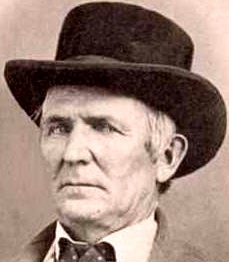 John Doyle Lee
Murderer · USA · 1857
Name: John Doyle Lee Lifespan: September 12, 1812 - March 23, 1877 Legal outcom…
120 victims
John Doyle Lee
Murderer · USA · 1857
Name: John Doyle Lee Lifespan: September 12, 1812 - March 23, 1877 Legal outcom…
120 victims
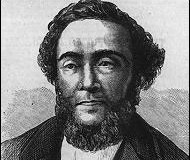 Edward Rulloff
Murderer · USA · 1845
Edward Rulloff was executed by hanging on May 18, 1871. His execution followed…
3 victims
Edward Rulloff
Murderer · USA · 1845
Edward Rulloff was executed by hanging on May 18, 1871. His execution followed…
3 victims
 Isaac Wood
Murderer · USA · 1855
Isaac L. Wood was a Livingston Republican mentioned in July 1858 execution cove…
2 victims
Isaac Wood
Murderer · USA · 1855
Isaac L. Wood was a Livingston Republican mentioned in July 1858 execution cove…
2 victims
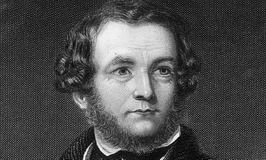 Thomas Simpson
Murderer · USA · 1840
Thomas Simpson was fatally shot at a wilderness camp in the U.S. territory of M…
2 victims
Thomas Simpson
Murderer · USA · 1840
Thomas Simpson was fatally shot at a wilderness camp in the U.S. territory of M…
2 victims
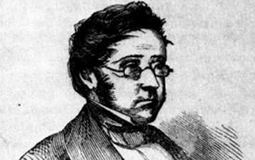 John White Webster
Murderer · USA · 1849
John White Webster (May 20, 1793–August 30, 1850) was born in Boston, Massachus…
1 victim
John White Webster
Murderer · USA · 1849
John White Webster (May 20, 1793–August 30, 1850) was born in Boston, Massachus…
1 victim
 Stephen Wayne Anderson
Serial killer · USA · 1970
May 24, 1979 — Stephen Wayne Anderson escaped from Utah State Prison. · May 26,…
8 victims
Stephen Wayne Anderson
Serial killer · USA · 1970
May 24, 1979 — Stephen Wayne Anderson escaped from Utah State Prison. · May 26,…
8 victims
 Michael Benge
Murderer · USA · 1993
Michael Benge (male, white) was convicted in Butler County of aggravated murder…
1 victim
Michael Benge
Murderer · USA · 1993
Michael Benge (male, white) was convicted in Butler County of aggravated murder…
1 victim
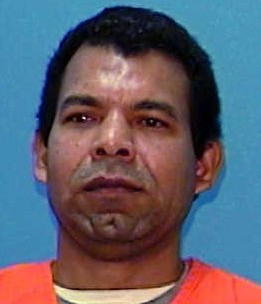 Pedro Hernandez-Alberto
Murderer · USA · 1999
Name: Pedro Hernandez-Alberto · Date of birth: 01/15/63 · Florida Supreme Court…
2 victims
Pedro Hernandez-Alberto
Murderer · USA · 1999
Name: Pedro Hernandez-Alberto · Date of birth: 01/15/63 · Florida Supreme Court…
2 victims
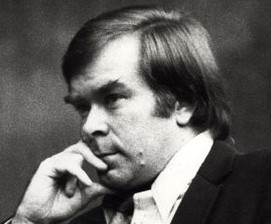 Richard Cottingham
Serial killer · USA · 1967
Richard Francis Cottingham was a serial killer from New Jersey who operated in…
6 victims
Richard Cottingham
Serial killer · USA · 1967
Richard Francis Cottingham was a serial killer from New Jersey who operated in…
6 victims
 Albert Edward Matheson
Murderer · United Kingdom · 1957
Albert Edward Matheson was employed as a handyman at a hall in Newcastle, where…
1 victim
Albert Edward Matheson
Murderer · United Kingdom · 1957
Albert Edward Matheson was employed as a handyman at a hall in Newcastle, where…
1 victim
- Gender
- male
- Country
- USA
- Location
- Boston, Massachusetts , USA
- Date of birth
- 1820
- Age at first offence
- 28
- Characteristics
- jealousy, argument
- Victim profile
- Thomas Harding (his fellow seaman)
- Method of murder
- St abbing with knife
- Date(s) of murder
- June 28, 1848
- Years active
- 1848
- Date of arrest
- —
- Status
-
Executed
Executed by hanging in Massachusetts on May 25, 1849
Overview
Washington Goode (1820–1849) was an African American sailor who was hanged for murder in Boston in May of 1849.
The offence
Goode’s case involved the death of Thomas Harding. Goode was friends with Mary Ann Williams, whom he considered to be his girlfriend though she was married. At the same time, Thomas Harding was friends with Williams and also considered her to be his girlfriend. On the night of Wednesday, June 28, 1848, an argument broke out between Thomas Harding and Washington Goode regarding a handkerchief that Harding had given to Williams. Sometime thereafter, Thomas Harding was dead of a blow to the head and a knife wound between the ribs.
Investigation
No one saw Goode crack Harding’s skull or stab him between the ribs. Several witnesses at the trial testified that they saw a person fitting Goode’s description in the area of the crime. When he was arrested, Goode was in possession of a knife whose blade measured ten or eleven inches. Harding’s stab wound was measured at nine inches deep.
Arrest
Washington Goode was promptly arrested for the murder of his fellow seaman, Thomas Harding.
Trial
Washington Goode’s trial began on January 1, 1849. Because it was a capital case, the trial was held before the Supreme Judicial Court presided over by Chief Justice Lemuel Shaw. The evidence used by District Attorney Samuel D. Parker to build his case against Goode was largely circumstantial. Goode was defended by two distinguished attorneys: William Aspinwall (who had not previously defended a capital case) and Edgar F. Hodges, who assisted Aspinwall. Aspinwall and Hodges argued that their client was innocent, denouncing the testimony of the prosecution’s witnesses and casting doubt on the circumstantial evidence presented by Samuel Parker. During Hodges’s closing argument, he began to discuss the inappropriateness of capital punishment in Massachusetts. Samuel Parker objected, and Chief Justice Shaw told Parker he was out of order to discuss the appropriateness of justice of the death penalty. The jury deliberated for only thirty-five minutes before finding Goode guilty of murder. On January 15, 1849, Chief Justice Lemuel Shaw sentenced Goode to death. Goode was to be hanged on May 25, 1849.
Sentencing
Chief Justice Lemuel Shaw sentenced Washington Goode to death on January 15, 1849. Goode’s execution was scheduled for May 25, 1849.
Appeals
No appeals are described.
Debate over capital punishment and petitions for clemency
Goode’s case came amid a national debate over capital punishment and became a rallying point for Boston’s opponents of the death penalty who hoped to save him from the gallows. Meetings were held in several Massachusetts cities and towns in support of Washington Goode. The Massachusetts Society for the Abolition of Capital Punishment appointed a committee to advocate on Goode’s behalf. Volunteers for the committee included his attorneys Aspinwall and Hodges, as well as Wendell Phillips, Charles Spear, Walter Channing, Samuel May, Robert Rantoul, Jr., Ellis Gray Loring, James Freeman Clarke, Frederick Douglass, and other politicians, ministers, and reformers. One meeting was chaired by Amasa Walker and took place on Good Friday, April 6, 1849, at the Tremont Temple. Attendees were addressed by Reverend William H. Channing, Wendell Phillips, and Reverend James Freeman Clarke. Speakers urged attendees to sign a petition to have Goode’s death sentence commuted on grounds that society, by its neglect, prejudice, and injustice, had in fact made Goode into a murderer and was now using him as an example. The petition drive continued across the state, with committee meetings held in all the principal towns to collect signatures. More than twenty four thousand signatures were obtained. In all, 130 petitions from Massachusetts communities were compiled. One document titled “Protest of 400 inhabitants of Concord against the execution of Washington Goode” was preserved in the materials of the Thoreau Institute at Walden Woods. The petition later known as the “Prostest of 400...against the execution of Washington Goode” included signatures from 400 citizens of Concord, Massachusetts, including Henry David Thoreau, two of his sisters—Sophia Thoreau and Helen D. Thoreau—his mother Cynthia D. Thoreau, and Ralph Waldo Emerson. William Lloyd Garrison, editor of The Liberator, became involved in the debate over commutation. In The Liberator, Garrison argued that the verdict relied on “circumstantial evidence of the most flimsy character...” and feared that the determination of the government to uphold its decision to execute Goode was based on race. Garrison wrote: “Let it not be said that the last man Massachusetts bore to hang was a colored man!” Parker Pillsbury used the pages of the Semi-Weekly Republican and The Liberator to plead for commutation. The activists involved in the protest relied heavily on the question of race to play a large role in saving Goode from the gallows. Through his case, reformers sought to express opposition to the death penalty and to racism. Despite calls to spare Goode’s life, including an application by his counsel to commute his sentence, Governor George N. Briggs refused to commute Goode’s death sentence. Goode’s execution was described as a turning point in the early nineteenth-century campaign to abolish the death penalty in Massachusetts. Because no person had been hanged in Boston since 1836, opponents of the death penalty had thought this showed a shift in public’s attitude away from capital punishment. Despite that, Goode was executed as scheduled on May 25. Reformers concluded that Goode was executed due to racial prejudice and orthodox religion.
Hanging
In the days before the scheduled hanging, Goode repeatedly professed his innocence to the clergymen who entered his prison cell. On the night before the hanging, Goode attempted suicide by swallowing large pieces of tobacco and paper and slashing the veins in his arms with a piece of glass. When the prison guards entered his cell, he had already lost a considerable amount of blood. The prison doctor stopped the bleeding, saving his life so he could suffer a more terrible death the next day. On May 25, Goode was carried to the gallows at 9:30am by prison guards who strapped him to a chair. A large crowd gathered in the rain to watch the event inside the walls of the Leverett Street Jail. At 9:45am, Goode was placed strapped to the chair on the platform over the drop. The sheriff placed a white hood over Goode’s head and adjusted the rope around his neck. The sheriff read the warrant signed by the Governor, and then the trap door sprang open. Goode plunged several feet. Twenty-five minutes later, doctors examined the body and pronounced him dead. Goode’s body was turned over to his uncle, George Myres, who took it back to his house to prepare for the funeral. Over one thousand people paraded through the tenement where Goode’s body laid, escorting it to the South Burying Ground where it was laid to rest in one of the city’s tombs.
Background
Washington Goode was born in 1820 in Mercersburg, Pennsylvania. He lived for a time in Chambersburg, Pennsylvania. There was some discrepancy about the date and place of Goode’s birth. Goode claimed he was born in Pennsylvania. His uncle George Myres claimed Goode was born in Baltimore, Maryland and was 28 years of age in 1849, which would have made his birth year 1821. Myres claimed that 15-year-old Washington accompanied him to Boston in 1836. After settling among the city’s small black population, Goode began working as a servant on board ships that sailed from Boston. Myers rarely saw his nephew while he was in port in Boston because Goode preferred to hang out in the North End section of Boston known as the “Black Sea”. By 1848, Goode was a seaman who had reportedly served as second cook on board the steamer William J. Pease and also as a cook aboard the barque Nancoockee. Goode was known to be friends with Mary Ann Williams, whom he considered to be his girlfriend although she was married. Goode protested his innocence to the last. General Zachary Taylor was described as having become the twelfth president of the United States. Goode reportedly fought for General Zachary Taylor in the Florida War and was with General Taylor through all the Florida War. A newspaper notice of his hanging described him as “a colored man” and stated: “Washington Goode, a colored man, was hung at Boston on Friday, for the murder of Thomas Harding.” The notice also described: “He made a desperate attempt the night previous to commit suicide by cutting the veins of his arm with glass, and swallowing tobacco and tarred rope.” It further stated Goode was “only 20 [sic] years of age”. His protest of innocence to the last was included in the widely reported account of his trial and execution. General Taylor is mentioned in connection with Goode’s participation in the Florida War, while a separate discrepancy about age in 1849 was attributed to George Myres.
Timeline
- Wednesday, June 28, 1848 — An argument broke out between Thomas Harding and Washington Goode regarding a handkerchief that Harding had given to Mary Ann Williams.
- January 1, 1849 — Washington Goode’s trial began.
- January 15, 1849 — Chief Justice Lemuel Shaw sentenced Goode to death.
- April 6, 1849 — A Good Friday meeting chaired by Amasa Walker took place at the Tremont Temple to advocate for commutation.
- May 25, 1849 — Washington Goode was executed by hanging at the Leverett Street Jail in Boston, Massachusetts.
Other details
A newspaper notice included that his hanging took place at Boston on Friday and identified Thomas Harding as the murdered man. Goode’s execution was described as taking place inside the walls of the Leverett Street Jail. After doctors pronounced him dead, his body was taken by George Myres for funeral preparation. The signatures and petition documents were described as being compiled across Massachusetts communities, including a Concord petition preserved at the Thoreau Institute at Walden Woods. The final status of commutation was that Governor George N.

Spotted an error, or have more information about this case?