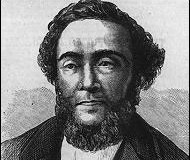
Edward Rulloff
Murderer Isaac Wood
Murderer · USA · 1855
Isaac L. Wood was a Livingston Republican mentioned in July 1858 execution cove…
2 victims
Isaac Wood
Murderer · USA · 1855
Isaac L. Wood was a Livingston Republican mentioned in July 1858 execution cove…
2 victims
 Thomas Simpson
Murderer · USA · 1840
Thomas Simpson was fatally shot at a wilderness camp in the U.S. territory of M…
2 victims
Thomas Simpson
Murderer · USA · 1840
Thomas Simpson was fatally shot at a wilderness camp in the U.S. territory of M…
2 victims
 John White Webster
Murderer · USA · 1849
John White Webster (May 20, 1793–August 30, 1850) was born in Boston, Massachus…
1 victim
John White Webster
Murderer · USA · 1849
John White Webster (May 20, 1793–August 30, 1850) was born in Boston, Massachus…
1 victim
 Kenneth Manuel Stewart
Murderer · USA · 1991
Kenneth Manuel Stewart Jr. was sentenced to death and was executed by electrocu…
2 victims
Kenneth Manuel Stewart
Murderer · USA · 1991
Kenneth Manuel Stewart Jr. was sentenced to death and was executed by electrocu…
2 victims
 Joshua Durcho
Mass murderer · USA · 2009
Joshua Durcho was an Oklahoma man accused of strangling his ex-girlfriend and h…
5 victims
Joshua Durcho
Mass murderer · USA · 2009
Joshua Durcho was an Oklahoma man accused of strangling his ex-girlfriend and h…
5 victims
 Eddie Lee Mosley
Serial killer · USA · 1973
Eddie Lee Mosley was found incompetent to stand trial for murders and was commi…
16 victims
Eddie Lee Mosley
Serial killer · USA · 1973
Eddie Lee Mosley was found incompetent to stand trial for murders and was commi…
16 victims
 Ion Rîmaru
Serial killer · Romania · 1970
Ion Rîmaru (or, in newer spelling, Râmaru; October 12, 1946–October 23, 1971) w…
4 victims
Ion Rîmaru
Serial killer · Romania · 1970
Ion Rîmaru (or, in newer spelling, Râmaru; October 12, 1946–October 23, 1971) w…
4 victims
 Clifton McCree
Mass murderer · USA · 1996
Clifton McCree was a black man who had worked for the city as part of a beach c…
5 victims
Clifton McCree
Mass murderer · USA · 1996
Clifton McCree was a black man who had worked for the city as part of a beach c…
5 victims
- Gender
- male
- Country
- USA
- Location
- New York, USA
- Date of birth
- J uly 9, 1819
- Age at first offence
- 26
- Characteristics
- parricide, robbery
- Victim profile
- His wife, Harriet Schutt, and three-months old daughter / Frederick A. Mirick (dry goods clerk)
- Method of murder
- Striking in the head with a pestle / Shooting
- Date(s) of murder
- June 23, 1845 / August 17, 1870
- Years active
- 1845–1870
- Date of arrest
- August 17, 1870
- Status
-
Executed
Executed by hanging on May 18, 1871
Case record: Edward Rulloff
Status / outcome
Edward Rulloff was executed by hanging on May 18, 1871. His execution followed a sentence to hang that had been set after appeals and a resentencing.
Timeline
- June 23, 1845 — Harriet Schutt was last seen, and a young girl in the home later reported no hint of an impending journey; Rulloff’s wife and three-months old child disappeared after activity in the Rulloff home.
- December 31, 1843 — Edward H. Rulloff married Harriet Schutt.
- May 18, 1871 — Rulloff was taken to the gallows; he executed and died at 11:40 A.M.
- March 3, 1871 — Rulloff was sentenced to be hanged.
- January 4, 1871 — Rulloff’s trial began.
- January 1871 — The trial was held in Binghamton.
- April — Rulloff was taken to Elmira to be resentenced and his hanging was set for a new date of May 18.
- Spring of 1857 — Rulloff escaped from prison, after being described as having inside help.
- 1856 — A warrant was issued for Rulloff on suspicion of the murder of his wife.
- 1870 — Rulloff was sentenced to death for the murder of a store clerk in Binghamton, New York.
- August 17, 1870 — After a fire bell alarm, three men hurried down to the Chenango River; two companions were lost in the water and drowned.
- July 6, 1870 — A man walking to work crossed the bridge over the Chenango River and saw something bobbing in the current; he and another resident later fetched the sheriff when they saw the fully-clothed body of a man.
- Wednesday (early morning hours) — Two burglars entered Halbert’s dry goods store, waking two clerks sleeping in their quarters, and a third man emerged.
Background
Edward Rulloff (also written Edward H. Rulloff; sometimes Rulofson or Rulloffson) was born in 1819 or 1820 and died in 1871. He was described as a noted philologist and criminal.
Rulloff was born near St. John, New Brunswick, to German immigrants. As a youth, he served a two-year jail sentence for embezzlement before moving to Ithaca. He arrived in Ithaca, Tompkins County, New York, in 1841 or 1842. He was self-educated and excelled in linguistics.
In 1869, he presented his theory of language origins, The Method of Languages, to the American Philological Association. He believed that his book, "Method in the Formation of Language", would prove definitive.
He was accused of many crimes during his lifetime, including beating his wife and daughter to death and also poisoning his sister-in-law and niece. He spent time in prison on several occasions but was released due to a dearth of evidence against him. He moved about Upstate New York, Pennsylvania, and Ohio for several years.
Rulloff was described as about 51 years old; five feet, nine inches high; weighing about 170 or 180 pounds. He had an extremely large head, black eyes, black hair, and a beard slightly tinged with grey. Visitors noticed his small, sensitive hands and striking personality. His eyes were described as shining “like diamonds” when he was animated.
Rulloff’s unorthodox views on religion did not increase public sympathy for him. While in jail awaiting execution, a reporter asked if he believed in Providence, and he replied:
“That is a wonderful question, sir,” he replied, “I have this conviction: that religion must be a matter of faith and not of knowledge; that God's decrees are inscrutable.”
Rulloff was the brother of photographer William Rulofson.
The offence
Crime involving Halbert brothers’ dry goods store (Binghamton)
In the early morning hours, burglars entered the Halbert and Brothers dry goods store. The clerks sleeping in the quarters over the store were Gilbert S. Burrows and Frederick A. Mirick (also referred to in another narration as Merrick). A third man emerged during the break-in.
The narrative described the following sequence:
- A young clerk, Mirick/Merrick, grabbed a pistol to warn the clerks and threw a stool.
- A third man threw a chisel at Burrows, temporarily rendering him senseless; Burrows revived and then assisted Mirick in fighting off the burglars.
- Mirick grabbed one man, holding him bent painfully over the counter.
- The third man held up a gun and fired at Burrows, missing, then shot Mirick at close range in the head.
- Mirick died instantly.
- Burrows ran out to hail the police as the burglars fled.
A sheriff and townspeople later gathered to view the drowned men’s corpses.
The drowned bodies were described as having been delivered for photographs, embalmed, and clothing searched for identification items. Townspeople reported that one eye had been gouged out by a hook used to drag a body in.
Frederick Merrick was described as having given his life protecting the merchandise, particularly expensive silks.
Victim
The murder victim named in the offence description was Frederick A. Mirick / Frederick Merrick, described as a clerk. The material also described other bodies as “other two robbers,” recovered from the river, but the only named murder victim in the store incident was Mirick/Merrick.
Investigation
Discovery of bodies in the Chenango River
In the early morning of Friday, July 6, 1870, a man walking to work in Binghamton, New York, crossed the bridge over the Chenango River and saw something bobbing in the current. He signaled another resident. They investigated and found the fully-clothed body of a man face down in shallow water. They towed the body and fetched the sheriff; the man was described as having drowned.
Later, another man spotted a second lumpy object; he rowed toward it, and discovered a second body.
As word spread, townspeople believed that two, perhaps three, men had broken into the Halbert brothers’ dry goods store and killed the night guard, and that two had been spotted going toward the river to escape, apparently drowning.
Identification and evidence used at trial
Within twenty-four hours of the murder, a man identified as Edward H. Rulloff was captured by railroad tracks leading out of town, and the bodies of the other two robbers were recovered from the Chenango River.
Shoes belonging to Rulloff’s accused man were found with burglar tools left in the store. The shoes were described as being easily identified because Rulloff had two toes missing, amputated after they were frozen when he escaped from jail in Ithaca several years before. When captured, he had blood on his hat and shirt.
Rulloff’s association with the two robbers was traced back to New York City and described as of long standing. The surviving clerk described the identification of the third burglar before the court.
Investigators described items taken from burglars’ pockets, including: “six keys, a letter to one Henry Wilson, and a scrap of paper with the name and address of William Thornton, an attorney in Brooklyn.” In addition, an item called “Napoleon’s Oraculum, or Book of Fate” was found in the pocket of one burglar, described as offering a method for answering questions about one’s future via channeling an unknown source of energy through dots and lines.
A pair of men’s Oxfords, described as specially made and utilized for a deformed left foot, was found in the cellar. The drowned burglars’ feet were described as normal and intact, and the shoes did not belong to the drowned burglars. Later, after Rulloff had been located and brought back to town, he was made to try on the shoe pair, and the pair fit him.
A train ticket to Batavia was described as found in Rulloff’s pocket, as it was described as being in the pockets of the two dead men as well.
Investigators prepared to track down items taken from the burglars, and pursued a first meeting with Brooklyn-based attorney William Thornton. Thornton identified one of the dead burglars as Billy Dexter and provided an address. A woman affirmed the identification and offered an associate’s name, Edward Howard. She identified that man from a photo of Rulloff. Investigators then found where Rulloff had lived and used a key from his effects to open the door, which yielded circumstantial information, including burglary tools and items tied to the two burglars. Investigators also picked up a manuscript that Rulloff had been working on, described as later becoming part of the case, and identified the other burglar as Albert Jarvis.
Arrest / capture
After the murder, the narrative described that within twenty-four hours of the murder, Edward H. Rulloff was captured by railroad tracks leading out of town. The material also described an earlier attempt where a stranger was captured by young men after jumping in front of a train and being forced to accompany them back to town, placed in jail with two other suspects. In that sequence, the stranger gave a name to a grand jury as Charles Augustus and then changed it to George Williams. Rulloff’s identity was recognized by a man who had recalled that Rulloff had once been accused of murdering his wife and child. Rulloff admitted his identity.
After the identity was recognized, he was returned to his former cell with more secure locks, in the narrative that followed.
Trial
Court and charge details
The trial was held in Binghamton in January 1871. The jury was described as taking six hours to decide on a guilty verdict for the case in which Rulloff was sentenced to hang on March 3rd; appeals postponed the execution.
Rulloff was charged with burglary and first-degree murder. The press reported his suspicious demeanor and crafty eyes. The material described that the trial began on January 4, 1871 and was covered fully by the New York Times and local papers, with reporters noting there were far too many people in the room.
Evidence presented
The prosecution’s evidence included identification by Gilbert S. Burrows of Rulloff as the third burglar. Burrows recounted his experience, and Rulloff asked questions to try to shake Burrows’s confidence. Burrows insisted he got a good look and that Rulloff was the man.
A handwriting analysis was described as used to connect Rulloff to one of the two dead burglars via a note found in a drowned man’s pocket. Rulloff’s massive handwritten tome was said to be included as evidence in the proceedings.
The judge ruled there was sufficient evidence of complicity among the three men to accept that Rulloff had been part of the fatal incident, and it remained to be proven he was the shooter.
The jury’s deliberation was described as involving several votes.
Defence
Rulloff’s defense was described as questioning whether he had even been in town during the incident and suggesting that any shooting he might have done was to save Jarvis from Merrick’s vicious attack. The defence strategy also included that evidence could have been planted.
Rulloff’s defense was described as stating he had informed Merrick that they would not hurt him, but that Merrick attacked ferociously and that Rulloff had to do something. The defence also included Rulloff’s claim that it was actually Jarvis who shot Merrick, but given the position described, it seemed unlikely to listeners.
Rulloff called no character or alibi witnesses on his own behalf, and both sides summarized their cases with the defence giving a largely emotional appeal.
Verdict and sentencing date
Upon returning, the jury foreman pronounced Rulloff guilty of first-degree murder. The judge asked Rulloff if there was any reason not to pronounce a sentence of death, and Rulloff said he would rather not speak at present.
Rulloff was sentenced to hang on March 3, 1871.
Appeals
The material stated that appeals postponed the execution.
Rulloff was taken to Elmira to be resentenced in April, and his hanging was set for a new date, May 18.
The material also stated that “the Court of Appeals reversed his conviction on a technicality; the absence of his daughter’s corpse.” It also stated that a technicality related to the absence of the daughter’s corpse arose after his earlier sentencing, and the reversal occurred on that basis.
Resentencing / final disposition steps
In April, Rulloff was taken to Elmira for resentencing. Crowds gathered at Elmira to catch a glimpse of him. Crowds crowded around the train as it stopped at Waverly, Owego, and finally at Binghamton.
At the resentencing in Elmira, Rulloff made a last desperate effort to save his life and admitted he was one of the three thieves who had broken into the store, but blamed the murder on one of his companions who had died in the attempt to cross the river. The material described that this confession likely reduced lingering doubt, and that the Binghamton newspapers had “no questions.”
Execution
On May 18, 1871, Rulloff was taken to the gallows in Binghamton. The material described that he requested his body be locked into a vault until his brother came to claim it.
On the gallows, he was described as urging:
“hurry it up. I want to be in Hell in time for dinner.”
The material also described alternative accounts that he had “nothing at all” to say. Another account described him demanded of his jailer:
“You won't have any prayers nor any damned nonsense down there, will you?”
His wishes were said to be respected, and he went quietly to the scaffold. He declared that he had “nothing to say,” and his last words were:
“I can't stand still,”
The hanging occurred at about 11:30 of the morning. The material described the weight being dropped, his body jerking up, and his neck broken. A physician stood by and took his pulse: after five minutes it was 92 beats per minute; after eight minutes it was 84; after ten minutes it was down to 44; no pulse was discernable after ten minutes, and he was pronounced dead.
The material described that his execution was the last public hanging in New York.
Aftermath
Body disposition and public display
After death, a death mask of plaster was made of his face, and his body was put on display for a morbid crowd. One local newspaper estimated that almost 6,600 saw the corpse and not more than 600 were local people.
When a brother from Pennsylvania failed to claim the body, it was buried in Potter’s Field. The narrative stated that later his brain was secured for Professor Burt Green Wilder of Cornell University.
His brain was described as over 59 ounces and described as the largest on record by Burt Green Wilder. The narrative stated it was displayed as part of the Wilder Brain Collection, pickled in formalin in a glass jar, and part of the reduced collection. The material also stated it could be seen on display at the psychology department at Cornell University in Ithaca, New York (and also mentioned Uris Hall at Cornell).
Other claims and commemorations
The narrative described that Cornell professor Burt Wilder declared Rulloff’s brain the largest on record. It also stated that a tavern in Ithaca bears Rulloff’s name and uses his likeness, offering his history as the “learned murderer.”
The material also stated that Mark Twain wrote a letter to the editor of the New York Tribune proposing “A Substitute for Rulloff.” The material quoted Twain’s satirical framing, including Twain’s belief that capital punishment was still believed in, but proposing a substitute.
Mark Twain wrote:
“A Substitute for Rulloff.”
It also quoted Twain:
“For it is plain that in the person of Rulloff one of the most marvelous intellects that any age has produced is about to be sacrificed, and that, too, while half the mystery of its strange powers is yet a secret. Here is a man who has never entered the doors of a college or a university, and yet, by the sheer might of his innate gifts has made himself such a colossus in abtruse learning that the ablest of our scholars are but pigmies in his presence... ”
And:
“Every learned man who enters Rulloff's presence leaves it amazed and confounded by his prodigious capabilities and attainments.”
The material also stated that Mark Twain hoped to arouse public support for commuting Rulloff’s sentence, and that New York Governor John T. Hoffman rejected all appeals for clemency.
Additional narrative details included in the case
The material included extensive background on a dispute over his earlier murder conviction connected to the wife and child, describing that he was convicted of abduction of his wife because murder could not be proved without bodies, and later convicted again for murder when his wife and child were missing but their bodies were not recovered, and that a court of appeals set aside a verdict on the grounds that murder could not be proved since bodies were never recovered.
The material described Harriet Schutt last being seen on June 23, 1845, and that Rulloff was questioned persistently about their whereabouts, after which he fled to Geneva, then Rochester, then Buffalo, and finally was captured by his brother-in-law in Cleveland. It also described the earlier conviction and sentence to ten years in Auburn State prison, and the re-arrest and trial in Ithaca, plus subsequent legal reversal for technical grounds involving absence of bodies.
The material also included the statement that “Rulloff’s daughter” was said to have been found and alive and well, being raised by Rulloff’s brother in Pennsylvania, 25 years old, running a hotel in Parker’s Landing. The name was not revealed in the provided narrative.
Other details
- A $500 reward was described as being issued at once for Rulloff’s apprehension; later the reward was upped to $1,250.
- The material described jail security measures after a visitor with questions for Rulloff was reported; it also described that Al Jarvis’s father was fired and replaced and that locks were changed after a locksmith demonstrated how easy it was to pick locks.
- The material described Rulloff as being “known also by ‘Seurio’ (Times) or ‘Leurio’ (Bailey).”
- The material described that Rulloff began destroying all that he had written while in the cell, but his manuscript remained safely beyond his reach in a bank vault.
- The material included a quote attributed to Rulloff:
- The material described that Rulloff began correspondence with scholars and feared how journalists would portray him.
- The material included press-related quote about Rulloff when he complained about treatment he received from the press:
“He is a man entirely devoid of the finer sensibilities of human nature, brutish and crime-hardened to the last degree possible, and incapable of appreciating or comprehending the motives that prompt the press to sustain law and order.”
“…you cannot kill an unquiet spirit.”
- The material described that a reporter from the New York Sun reported public opinion was so outraged that the attorney for the defense was threatened and defense witnesses were intimidated.
- The material stated that Rulloff’s final physical description included being hooded, with struggle for breath for several minutes, and his heart beat for over twenty minutes before he died.
- The material included names linked to the story: Halbert and Brothers dry goods store; Halbert brothers; Sheriff; district attorney Peter Hopkins; prosecutor Daniel Dickenson; attorney Francis M. Finch; wealthy brother who hired George Becker; Becker teamed up with Charles L. Beale; and jailer and a reporter associated with his question on Providence.
- The material listed family relationships and persons involved in earlier disappearances: Harriet Schutt; daughter Priscilla; Will Schutt; Amelia (Will Schutt’s wife); and a sister-in-law and niece in accusations of poisoning (names not provided in the supplied narrative).

Spotted an error, or have more information about this case?