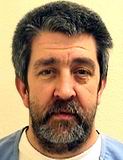
Mitchell Carlton Sims
Murderer Brian Kevin Rosenfeld
Murderer · USA · 1985
Brian Kevin Rosenfeld Brian Kevin Rosenfeld was sentenced to three concurrent l…
23 victims
Brian Kevin Rosenfeld
Murderer · USA · 1985
Brian Kevin Rosenfeld Brian Kevin Rosenfeld was sentenced to three concurrent l…
23 victims
 Marvin Gray
Murderer · USA · 1975
Marvin Gray was convicted killer who claimed responsibility for 23 slayings and…
23 victims
Marvin Gray
Murderer · USA · 1975
Marvin Gray was convicted killer who claimed responsibility for 23 slayings and…
23 victims
 Yahweh ben Yahweh
Murderer · USA · 1980
Yahweh ben Yahweh was born and legally named Hulon Mitchell Jr. (October 27, 19…
23 victims
Yahweh ben Yahweh
Murderer · USA · 1980
Yahweh ben Yahweh was born and legally named Hulon Mitchell Jr. (October 27, 19…
23 victims
 Russell Ellwood
Murderer · USA · 1991
Russell Ellwood was a former taxi driver. Authorities suspected him of killing…
20 victims
Russell Ellwood
Murderer · USA · 1991
Russell Ellwood was a former taxi driver. Authorities suspected him of killing…
20 victims
 Ernesto Picchioni
Murderer · Italy · 1944
March 12, 1949 — He was sentenced to life in prison. · 2016 — The case record l…
16 victims
Ernesto Picchioni
Murderer · Italy · 1944
March 12, 1949 — He was sentenced to life in prison. · 2016 — The case record l…
16 victims
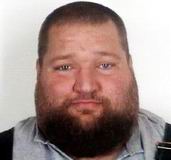 Harlan Drake
Murderer · USA · 2009
September 11, 2009 — James Lawrence Pouillon was shot dead in front of Owosso H…
2 victims
Harlan Drake
Murderer · USA · 2009
September 11, 2009 — James Lawrence Pouillon was shot dead in front of Owosso H…
2 victims
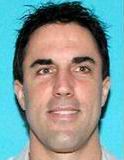 Darren Mack
Murderer · USA · 2006
Darren Mack (born January 31, 1961) became the subject of an international manh…
1 victim
Darren Mack
Murderer · USA · 2006
Darren Mack (born January 31, 1961) became the subject of an international manh…
1 victim
 Nancy Seaman
Murderer · USA · 2004
Nancy Seaman was born on May 13, 1952. She was a teacher at Longacre Elementary…
1 victim
Nancy Seaman
Murderer · USA · 2004
Nancy Seaman was born on May 13, 1952. She was a teacher at Longacre Elementary…
1 victim
- Gender
- male
- Country
- USA
- Location
- South Carolina/California, USA
- Date of birth
- 1960
- Age at first offence
- 25
- Characteristics
- armed robbery, torture, domestic violence, sexual abuse, incest, child abuse, alcohol, drug addict, escape
- Victim profile
- Gary Melkie and Chris Zerr (employees at a Domino's restaurant) / John Steven Harrigan, 21 ( Domino's Pizza deliveryman)
- Method of murder
- Shooting - Ligature strangulation/Drowning
- Date(s) of murder
- December 3/10, 1985
- Years active
- 1985
- Date of arrest
- December 25, 1985
- Status
-
Sentenced to death
Sentenced to death in California and South Carolina; conviction affirmed by the California Supreme Court in a 6-1 opinion on June 28, 1993; the Ninth U.S. Circuit Court of Appeals denied Sims’ petition for a writ of habeas corpus on September 21, 2005
Case information
Name: Mitchell Carlton Sims Also known as: “a human ashtray”; “Jeff Richardson”; “Mitch” (as stated during a phone call)
Other accused: Ruby Padgett
Timeline
- 1961 — Mitchell Sims’s mother, Mildred, married Arnold Cranford.
- 1984 — Reiner ousted Robert Philobosian, a Deukmejian pal, from the Los Angeles District Attorney’s office in the 1984 election.
- Fall 1985 — Sims’s employment with Domino’s Pizza had been terminated.
- November 15, 1985 — Sims was hired as a delivery driver by another Domino’s in Hanahan, South Carolina.
- December 3, 1985 — Sims invaded a Domino’s restaurant in Hanahan, South Carolina, holding two employees at gunpoint and torturing both before he shot them, execution-style.
- December 8, 1985 — Sims and Padgett ended up in Glendale, California.
- December 9, 1985 — Spiroff was on duty with delivery drivers Edward Sicam and John Harrigan; at 11:03 p.m., a telephone order was taken for delivery to Room 205 of the Regalodge Motel.
- December 10, 1985 — The Domino’s deliveryman John Harrigan was killed in Glendale, and Sims and Padgett later went to the Domino’s restaurant in Glendale; they stole money and left two employees bound in a cooler.
- December 11, 1985 — Sims and Padgett were hiding in Las Vegas.
- December 21, 1985 — Harrington’s stolen pickup was recovered from the parking lot of a casino.
- December 25, 1985 — Sims and Padgett were arrested in Las Vegas, and Sims was taken to the Clark County jail.
- December 26, 1985 — A Las Vegas police investigation included interviews involving Sims, and an edited version of a December 26 interview tape was later admitted in the guilt phase.
- Feb. 4 — Deukmejian announced he was denying the extradition request because he did not want the evidence there to get stale.
- February 1986 — A California governor agreed in February 1986 to allow Sims to be tried in California, asserting Glendale’s priority in placing the killers on trial.
- May 20, 1987 — Mitchell Sims was convicted of Harrington’s murder.
- June 28, 1993 — The California Supreme Court affirmed the death sentence in a 6-1 opinion.
- Aug. 12, 1988 — Sims was returned to South Carolina to face trial there.
- May 12, 1989 — The Aiken (South Carolina) Standard’s issue described a guilty verdict on both murder counts, and a count of armed robbery, the previous day.
- 1991 — The South Carolina Supreme Court affirmed a death sentence in 1991.
- September 21, 2005 — The Ninth U.S. Circuit Court of Appeals denied Sims’ petition for a writ of habeas corpus.
Background
Mitchell Carlton Sims had described himself as “a human ashtray” and amused friends by stubbing out cigarettes on his bare chest. Self-mutilation was described as only one of his pastimes, and Sims cultivated a deep interest in the occult.
Sims had been disgruntled in connection with Domino’s Pizza. His employment with the Domino’s chain had been terminated in the fall of 1985. Sims and Ruby Padgett developed a deep hatred for the nationwide chain of Domino’s Pizza restaurants.
Sims was described as a drifter from South Carolina, and he was 25 years old.
The offence
Hanahan, South Carolina — armed robbery and killings
On December 3, 1985, Sims invaded a Domino’s restaurant in Hanahan, South Carolina, where he had recently worked, holding two employees at gunpoint and torturing both before he shot them, execution-style. One victim was killed outright; the other—shot four times—managed to reach a police station, naming Sims as the gunman before he collapsed.
The charge was described as double murder when the second victim died a week later. Sims and Padgett were already settled in Glendale, California, lining up their next crime.
In the later penalty-phase evidence, the Hanahan shootings were described as occurring less than one week before the Glendale crimes:
- Just after 2 a.m. on December 4, Gary Melkie appeared in the lobby of the Police Department about three blocks away, dressed in his uniform with a telephone cord dangling from one of his wrists and bleeding profusely from gunshot wounds to his head and neck. A paramedic responded and Melkie was placed in an ambulance. En route to the hospital, the ambulance detoured to the parlor where another shooting had been reported.
- There, the police had found Chris Zerr, a delivery driver, lying on the floor covered with blood; his hands were tied behind his back with a telephone cord. Chris Zerr died shortly thereafter from a gunshot wound to the head.
- $1,164 had been taken from cash drawers.
- At the hospital, the paramedic asked Melkie who had shot him and Melkie responded, “Sims. Mitch Sims.” Melkie also repeated that response to a police officer, and Melkie said that Sims worked for Domino’s. Melkie died after surgery.
- Melkie had suffered four gunshot wounds to the head and neck; a bullet casing was removed from his tongue; and a fifth bullet exited from his head and was recovered from a wall at the parlor.
Sims was described in the Glendale case materials as having sought revenge for his employment dispute with his boss withholding part of a bonus, and as having told his then-girlfriend that he wanted to use explosives to kill the boss.
Glendale, California — armed robbery, attempted murder, and murder of a deliveryman
Sims and Ruby Padgett ended up in Glendale, California on December 8, 1985. On the afternoon of the next day, a man and woman went to a Sears store in Glendale and bought a package of socks, underwear, a clothesline, and a knife.
On December 9, 1985, Spiroff was on duty with delivery drivers Edward Sicam and John Harrigan. At 11:03 p.m., Brian Scarlett, an off-duty Domino’s employee visiting Spiroff, took a telephone order from a man with a southern accent. The caller asked for the pizza to be delivered to Room 205 of the Regalodge Motel. The motel was a three-minute drive from the parlor. Harrigan, who was twenty-one years old, left the parlor at 11:26 p.m. in his Toyota truck to make the delivery.
Around 11:45 p.m., Sims and Padgett went into the Domino’s. Spiroff recognized them from the day before. Sims pointed a gun at Sicam and ordered Spiroff and Sicam into a back office. When Spiroff warned Sims that a delivery driver was due back at any moment, Sims took off his sweater to reveal a Domino’s shirt with Harrigan’s name tag and chuckled, “No, I don’t think so.”
Sims found a bank deposit bag which he gave to Padgett; Padgett emptied the parlor’s cash drawers. Sims told her to watch for fingerprints, and she began wiping the tables and cash drawers at his direction. Sims ordered Spiroff and Sicam to stand in the corner of the office and aimed his gun directly at them.
Richard Wagner, an off-duty Domino’s employee, arrived at the parlor with his wife. Sims told Spiroff to go to the front counter, threatening to shoot Sicam unless Spiroff cooperated. Spiroff asked Wagner for his order instead of acknowledging him as a friend. Sims took an order over the phone, identifying himself as “Mitch” to the customer. Sims told the Wagners to wait in the car for their pizza.
After Sims gave the Wagners their pizza, they drove off and, suspecting a burglary, called police.
Sims decided to take Spiroff and Sicam, one at a time, into the walk-in cooler. The cooler was 8 feet by 12 feet, with a 3-tier rack against the left wall. The temperature was kept at 32 to 40 degrees.
Sims tied Spiroff’s hands tightly behind his back with one end of a rope, looped the other end over the rack, and lifted Spiroff’s arms painfully high by pulling down on the rope. This forced Spiroff to stand on his tiptoes to ease tension in the rope. When Spiroff complained, Sims replied, “Shut up. At least you live.”
Sims wrapped the end of the rope around Spiroff’s neck and tied it so tightly with a knot in back of the neck that Spiroff would strangle if he stopped standing on his tiptoes. Sims asked Spiroff when the cooler would be opened the following day. Spiroff said at 11 a.m. Sims replied that, by then, he and Padgett would be in San Francisco. When Spiroff asked Sims about Harrigan, Sims said that Harrigan had been tied up at the motel and would be found after Spiroff was found.
Sims then brought Sicam into the cooler and bound him in the same manner. When Sicam said he was choking, Sims responded, “You are alive.”
Sims closed the cooler and left at 12:15 a.m. with Padgett. While standing on the toes of one foot, Spiroff tried to knock over cartons so they could stand on them and relieve some pressure around the neck, but the rope tightened as he moved. Eventually he succeeded in knocking a box over; later Spiroff blacked out.
Responding to Wagner’s call, Glendale police officers arrived at 12:30 a.m. They found Spiroff and Sicam in the cooler. One of them told the officers their assailant was wearing Harrigan’s shirt and that Harrigan had not returned. Officers went to the Regalodge, got the key and registration card to Room 205, which was registered to Sims, and found Harrigan’s dead body in the bathtub.
The bathtub was full of water and Harrigan’s body was submerged under the water on his right side with his back parallel to the side of the tub. Cold water was running at full blast onto the back of Harrigan’s neck, with his head immediately under the spout about one inch below the water line. The drain plug was broken but the tub was filled with water up to the overflow valve. Harrigan’s wrists were bound behind his back; his ankles were bound; and his feet and hands were “hogtied” together behind his back. His head was covered with a pillow case secured with a rope ligature around the neck. A washcloth had been placed inside his mouth, held in place by a sock tied around his head.
Dr. Joseph Cogan, the state's forensic pathologist, performed the autopsy and determined that the cause of death was ligature strangulation based on the depth of the furrow around the decedent’s neck and hemorrhages on the inner eyelids indicating extreme pressure and that Harrigan was alive when the neck ligature was applied because it obstructed blood flow to the head and brain. Cogan opined that Harrigan lived for no more than ten minutes after the neck ligature was applied and that the ligature in itself was enough to kill Harrigan. Cogan could not rule out the possibility that drowning contributed to Harrigan’s death because Harrigan was found fully submerged in a bathtub of water with a gag in his mouth and frothy pulmonary edema in the trachea and bronchi.
No money, wallet, or car keys belonging to Harrigan were found in the room. The phone lines had been cut. Although the room had been wiped clean with a wet towel, Sims’s fingerprints were found inside a toilet paper roll and in a telephone book on the page listing “pizza.” The knots used to tie up ligatures on Harrigan’s neck were identical to those used to tie up Spiroff and Sicam. The rope used to bind Harrigan, Spiroff, and Sicam was similar to the clothes line sold to the young couple at the Glendale Sears the day before Harrigan’s murder.
Police believed Sims and Padgett lured Harrigan to their room, robbed and killed him, and then went to the pizza restaurant. They allegedly stole $2,000 and left two employees bound hand and foot.
Investigation and arrest
Sims and Padgett were apprehended in a Las Vegas motel on December 25 by Las Vegas police acting on an anonymous tip. A fully loaded .25 caliber pistol was found under the mattress. Police recovered a Los Angeles Times article entitled “Delivery Man Slain While Making Run” and a yellow page torn from a Las Vegas telephone book listing Domino's Pizza establishments. Harrigan’s pickup truck, with a Domino's shirt bearing Harrigan’s name tag inside, was also found in Las Vegas about twenty miles from the motel.
Sims was taken to the Clark County jail. Officers Jonathan Perkins and Gary Montecuollo of the Glendale Police Department met with him in an interview room. Sims acknowledged his understanding of Miranda rights and signed a written form indicating that he did not waive his rights. As Perkins gathered his papers and stood up to leave, Sims asked what was going to happen to him from that point on and indicated he would like to go to South Carolina rather than California. During the conversation, Sims told Perkins, “I had to kill that boy” and “He would have identified me.”
At the end of the interview, Perkins told Sims that Sims would have to initiate any further conversation about the investigation, which Sims did the next day. Perkins tape recorded this interview, which included Sims’s statement: “I just got drunk, and I didn't know what the fuck I was . . . I knew I was doing it, but I shouldn't have done it.”
After Perkins readvised Sims of his Miranda rights, Sims said he had worked for Domino's Pizza in South Carolina and that he and Padgett traveled by bus from that state to Glendale, where they rented room 205 at the Regalodge. He told Perkins they had gone to Domino's for directions to a drugstore, and to Sears to buy a knife. He said that the next day they returned to Domino's for a pizza; at that point Sims ended the interview.
In a separate account of the arrest, Sims and Padgett were arrested without incident early Wednesday by detectives in Las Vegas. Detectives were tipped by a citizen who recognized photographs from news reports. Sims made no attempt to hide his identity despite registering under the name “Jeff Richardson.” Sims calmly announced to police, “I'm Mitchell Carlton Sims,” and placed his hands behind his back to be handcuffed. Inside the motel room police found a firearm.
Trial
Charges found by the jury (Glendale)
The jury found Sims guilty of one count of first degree murder with two special circumstances findings: that Sims committed the murder while lying in wait and during the commission of a robbery. The jury also found two counts of attempted murder and three counts of robbery. The jury also found that Sims used a firearm during the commission of each offense.
Sims did not testify.
Guilt phase evidence and defense theory
The December 25 statements and an edited version of the tape of the December 26 interview were admitted in the guilt phase.
A forensic pathologist, Dr. Robert Bucklin, testified for Sims. Bucklin testified that the white, frothy material in Harrigan’s larynx and trachea indicated that he had drowned, while the furrow and hemorrhages could have resulted from the posture of Harrigan’s head rather than asphyxia; Bucklin also testified that strangulation might have contributed to Harrigan’s death.
A private criminalist, Stephen Schliebe, testified that a piece of rope tied as the ligature would not cause loss of consciousness.
Sims’s theory of defense was that Harrigan was alive when Sims put him in the bathtub and left with Padgett, and that Sims lacked the intent to kill Harrigan, Spiroff, or Sicam.
Penalty phase evidence
At the penalty phase, the prosecution introduced evidence that Sims robbed and shot to death two Domino’s Pizza employees in Hanahan, South Carolina less than one week before the Glendale crimes. The penalty-phase evidence included the unedited version of the tape of Sims’s December 26 statement to Perkins being admitted and played for the jury.
In that portion of the statement, Sims recounted that he had robbed a Domino’s Pizza parlor in South Carolina before going to California.
Mitigating evidence presented at penalty phase
The defense presented mitigating evidence through multiple witnesses who testified about Sims’s brutal family background of physical, sexual, and emotional abuse.
- Sims’s mother, Mildred, testified that Sims only saw his natural father on two or three occasions during his childhood. Mildred said she married Arnold Cranford in 1961. She testified she had three children with her first husband and two with Cranford. She testified that Cranford had a drinking problem and became violent and sexually abusive when intoxicated. Mildred testified that Cranford raped Sims when he was seven years old and forced Sims to engage in oral sex with him over the years. Mildred testified that when Sims was sixteen, Cranford made him have sexual intercourse with his mother; “They both cried during the incident.” She testified that on another occasion, Cranford forced Sims to have intercourse with his older sister Merlon. Mildred testified that Cranford repeatedly told Sims that Sims was “no good” and a bad person. She testified that Sims began drinking heavily at fourteen and attempted suicide by drowning as an adolescent.
- Merlon testified to repeated incidents of physical and sexual abuse affecting her and other children. Merlon said every night was a nightmare and that “[i]t ain't never going to leave me alone.” Merlon testified that Cranford would drag her out of bed, force her to strip, and then beat her, tie her to a bed, fondle her, and occasionally have sexual intercourse with her. She testified Cranford brought men home and forced her to have sex with them. She also attempted suicide several times. She testified Cranford threatened to kill the children if they told anyone about what he did.
- Merlon testified that when Sims was sixteen, Cranford forced Sims’s younger stepsister, Margaret, to undress and lie beside him in bed. She testified that he began to fondle her and told her he was going to have sex with her, and Sims called the police. Merlon testified that Cranford was arrested and convicted.
- Sims’s brother Eddie testified that he watched Cranford force Sims to have sex with Cranford on many occasions and heard Cranford having sex with Margaret in the next room. Eddie also tried to commit suicide and said that Sims tried to lift up his spirits.
- Sims’s other siblings did not testify, but evidence showed that Margaret ran away from home and began taking drugs, and that Eddie’s brother Jimmy was a career army officer.
- Sims’s wife, Theresa, had known Sims since she was nine. They were married when Sims was twenty and she was sixteen. Theresa testified about various jobs that Sims had held and said he became withdrawn and depressed whenever he was promoted at work. Theresa testified that Sims engaged in extensive substance abuse and that he suffered a sense of worthlessness and guilt from the incestuous act with his mother. Theresa testified they had three children who “worship” Sims and lived for his phone calls and letters. Theresa testified about Sims’s affair with a co-worker while working at Domino’s and his return to Theresa, and she testified that he left Theresa again when he met Padgett. Theresa testified that Sims told her he was no good for her and did not want to pull her and the boys down with him. She testified that at her urging he saw a counselor and cried as he recounted the abuse he had suffered.
- Sims’s mother, sister, and stepbrother, as well as his wife, testified that Sims was sensitive and continued to be a good, supportive father to his three children.
Dr. William Vicary, a psychiatrist, testified that Sims suffered from chronic depression and alcohol and drug abuse. Vicary stated Sims had long-standing feelings of inadequacy, low self-esteem, despair, shame, and humiliation. Vicary explained that individuals who have suffered a lot of verbal and physical abuse tend to be crippled from a psychological point of view and have trouble later in life, becoming violent, abusive adults.
On cross-examination, Vicary admitted Sims had never been diagnosed as mentally ill and that his depression was not severe.
At the conclusion of the penalty phase, the jury fixed the punishment at death.
Sentencing
Sims was convicted on May 20, 1987 of Harrington’s murder. A 1-month-later recommendation resulted in the death penalty. On September 11, 1987, he was formally sentenced to die in the gas chamber at San Quentin.
His accomplice, Ruby Padgett, was given a life sentence, without possibility of parole.
Appeals
The California Supreme Court affirmed the death sentence in a 6-1 opinion on June 28, 1993.
The Ninth U.S. Circuit Court of Appeals denied Sims’ petition for a writ of habeas corpus on September 21, 2005. The appellate ruling addressed that a defendant whose confession was obtained in violation of Miranda rights was not deprived of due process in the guilt or penalty phase where the other evidence was overwhelming, and it described harmless error beyond a reasonable doubt.
The Ninth Circuit described that it was settled law that erroneous admission of a confession could be harmless when the remainder of the prosecution evidence was so strong that there was no reasonable possibility the outcome would have been different.
The dissent described grounds for a new penalty proceeding. Senior Judge Betty B. Fletcher argued that Sims was entitled to a new trial as to penalty and wrote:
“The prosecution’s use of these statements prejudiced Sims’s capital sentencing proceeding in two ways. First, the use of Sims’s statements reflecting his intent to kill Harrigan completely foreclosed any residual doubt argument Sims might have mounted with respect to his intent to kill.... Second, the prosecutor used Sims’s statements as the foundation of his extensive argument that Sims lacked remorse.”
The case was identified as Sims v. Brown, 03-99007.
Other details
Extradition and multi-state proceedings
The Glendale prosecution and South Carolina extradition disputes were described as involving a request by Gov. Dick Riley to the governor of California. It was described that Riley “called the governor of California Tuesday,” Dec. 31, 1985, asking that the suspects be extradited to his state.
A quoted DA letter included:
“I believe that the interests of justice would be served if these defendants are held accountable in a manner that is both timely and appropriate. Therefore, although this action is unprecedented, I am pleased to honor your request….”
A spokesman for Deukmejian responded:
“[I]t is crystal clear to us that governors make decisions regarding extraditions, and not district attorneys.”
The narrative also included that Deukmejian announced he was denying the extradition request on Feb. 4 because he did not want the evidence there to get stale, and it described Reiner’s reaction as “dumbfounded.”
Thomas Elias’s column was described as taking Reiner’s part, including that:
“decided that there was a far greater chance that the two alleged killers would be executed if convicted in South Carolina than if they stood trial here first.”
The narrative also described that Deukmejian’s decision impeded chances to obtain a death penalty due to the possibility of a prior conviction being used at the penalty phase, and quoted Garcetti as saying:
“greatly impedes our chances of successfully obtaining a death penalty” verdict in the Los Angeles case because if there were a prior conviction in South Carolina, it could be used at the penalty phrase.
The narrative also described that Deukmejian’s action did not impede reaching a death verdict in California, that Sims and Padgett were convicted in Los Angeles Superior Court, and that Sims received a death sentence while Padgett received life without parole.
An Associated Press dispatch described Sims being returned to South Carolina on Aug. 12, 1988 to face trial there, and the Aiken (South Carolina) Standard issue of May 12, 1989 described a guilty verdict on both murder counts, and a count of armed robbery, the previous day.
The South Carolina Supreme Court affirmed a death sentence in 1991.
Additional details mentioned in appellate materials
It was described that prosecutors “predominantly relied on the depraved way in which Sims perpetrated his series of killings and attempted killings.” The Ninth Circuit noted that in South Carolina Sims had tied up the victims and shot them multiple times, and that in Glendale he “chuckled as he told Spiroff and Sicam that Harrigan would not be returning, pointed a gun at Spiroff and Sicam in the corner of the office before Wagner’s entrance, and laughed and joked with people in the store as he took pizza orders at the front counter,” then “hanged Spiroff and Sicam in the cooler in a manner that promised a slow, agonizing, and painful death.”
The Ninth Circuit also described that Las Vegas police found that Sims had torn a listing of Domino’s establishments from the yellow pages of the phone book.
The appellate ruling described a quote related to Sims’s statement being used in argument:
“Had to Kill” — the judge said that the prosecutor’s reference to Sims’ possibly inadmissible statement that he “had to kill” Harrigan “added nothing to the prosecutor’s point—that the circumstances of Harrigan’s death were especially heinous.”
Identified individuals and their roles (Glendale)
- John Harrigan — Domino’s deliveryman; twenty-one years old; killed.
- Ruby Padgett — accomplice.
- Kory Spiroff — assistant manager; hostage and survived.
- Edward Sicam — delivery driver; hostage and survived.
- Richard Wagner — off-duty Domino’s employee; arrived with his wife; later called police.
- Brian Scarlett — off-duty Domino’s employee who took a phone order.
- Tom Thate — Glendale Police Sgt.; provided an extradition comment in the narrative.
- Carrie Miller — assistant manager of the Las Vegas motel who identified Sims at arrest in the narrative.
Identified individuals and their roles (Hanahan penalty-phase evidence)
- Gary Melkie — assistant manager; shot and died.
- Chris Zerr — delivery driver; shot and died.

Spotted an error, or have more information about this case?