
Vincent Sims
Murderer Russell Ellwood
Murderer · USA · 1991
Russell Ellwood was a former taxi driver. Authorities suspected him of killing…
20 victims
Russell Ellwood
Murderer · USA · 1991
Russell Ellwood was a former taxi driver. Authorities suspected him of killing…
20 victims
 Robert Martines Perez
Murderer · USA · 1994
Name: Robert Martines Perez · Other name used in proceedings: Robert Martinez P…
15 victims
Robert Martines Perez
Murderer · USA · 1994
Name: Robert Martines Perez · Other name used in proceedings: Robert Martinez P…
15 victims
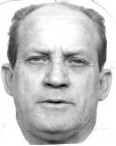 Billy Frank Vickers
Murderer · USA · 1993
Billy Frank Vickers Vickers was executed by lethal injection in Texas on Januar…
14 victims
Billy Frank Vickers
Murderer · USA · 1993
Billy Frank Vickers Vickers was executed by lethal injection in Texas on Januar…
14 victims
 Marilyn Mulero
Murderer · USA · 1992
Marilyn Mulero was charged in Cook County, Illinois, with four counts of murder…
2 victims
Marilyn Mulero
Murderer · USA · 1992
Marilyn Mulero was charged in Cook County, Illinois, with four counts of murder…
2 victims
 Melissa Friedrich
Murderer · Canada · 1991
Melissa Friedrich was also known as Melissa Stewart and Melissa Ann Weeks (also…
1 victim
Melissa Friedrich
Murderer · Canada · 1991
Melissa Friedrich was also known as Melissa Stewart and Melissa Ann Weeks (also…
1 victim
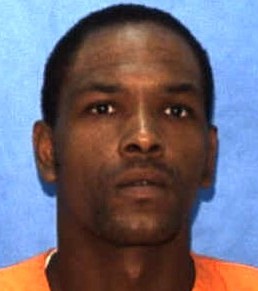 Richard Henyard
Murderer · USA · 1993
Richard Henyard was convicted by a jury in the Circuit Court, Lake County, Flor…
2 victims
Richard Henyard
Murderer · USA · 1993
Richard Henyard was convicted by a jury in the Circuit Court, Lake County, Flor…
2 victims
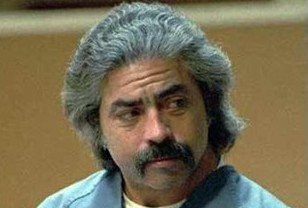 Richard Allen Davis
Murderer · USA · 1973
Richard Allen Davis was sentenced to death on August 5, 1996. Richard Allen Dav…
2 victims
Richard Allen Davis
Murderer · USA · 1973
Richard Allen Davis was sentenced to death on August 5, 1996. Richard Allen Dav…
2 victims
 Uthai Dechawiwat
Murderer · Thailand · 2008
Uthai Dechawiwat — Thai police officer and former sergeant; defendant. · Leo De…
2 victims
Uthai Dechawiwat
Murderer · Thailand · 2008
Uthai Dechawiwat — Thai police officer and former sergeant; defendant. · Leo De…
2 victims
- Gender
- male
- Country
- USA
- Location
- Shelby County, Tennessee, USA
- Date of birth
- November 5, 1971
- Age at first offence
- 25
- Characteristics
- robbery
- Victim profile
- Forrest 'Chip' Smith Jr., 42
- Method of murder
- Shooting ( .22 caliber revolver)
- Date(s) of murder
- April 5, 1996
- Years active
- 1996
- Date of arrest
- One week later
- Status
-
Sentenced to death
Sentenced to death on May 1, 1998
Timeline
- April 5, 1996 — Forrest Smith arrived home from work around 10:00 p.m. and found Vincent Sims and Sims's cousin, Brian Mitchell, in the process of burglarizing his home.
- April 17, 2001 — JANICE M. HOLDER, J., delivered the opinion of the court.
- May 1, 1998 — Vincent Sims was sentenced to death.
- August 31, 2001 — The defendant's sentence of death was scheduled to be carried out, unless otherwise ordered by the Court or proper authority.
Background
Vincent Sims killed Forrest “Chip” Smith Jr., 42, when Smith walked in on a burglary at his Memphis home. Sims dropped his beeper at the scene, leading to his arrest.
The offence
On April 5, 1996, around 10:00 p.m., Forrest Smith arrived home from work and found Vincent Sims and Sims's cousin, Brian Mitchell, burglarizing his home.
Mitchell testified that Sims called him earlier in the evening asking for help in moving a big screen television from a house Sims had burglarized. Sims picked up Mitchell in a borrowed Toyota Camry belonging to Sims's girlfriend. They drove to Smith's house, parked the car under the carport, and loaded the big screen television in the trunk. Sims and Mitchell were in the house disconnecting a computer when Smith arrived.
Smith parked his Jeep in the driveway to block the other vehicle's exit. When Smith entered the house, Sims and Mitchell ran outside but were unable to get the Camry out of the driveway. Sims went back into the house while Mitchell remained outside.
Mitchell testified that he heard Sims yelling at Smith to give Sims the keys to the Jeep. Mitchell then heard eight or nine gunshots fired inside the house.
Sims returned carrying Smith's .380 caliber chrome pistol and the keys to the Jeep. Sims was holding his side and told Mitchell that he had been shot. Sims threw Mitchell the keys to move the Jeep, and the two fled the scene in the Camry.
Mitchell testified that Sims told him that Sims and Smith fought over the .380 caliber pistol and that Sims had shot Smith. Sims told Mitchell that Sims had to kill Smith because Smith had seen Sims's face. Sims instructed Mitchell not to talk to anyone about what had happened and later threatened Mitchell's life after they were in custody.
Investigation
Patricia Henson, Smith's girlfriend, arrived at the home shortly after the shooting, sometime between 10:00 and 10:30 p.m. Smith was lying on the kitchen floor in a pool of blood but was conscious and asked Henson to call 911.
Smith told Henson and Officer Donald Crowe that there had been a robbery and that Smith had been shot in the head.
Officer Crowe testified that Smith was bleeding from several parts of his body, appeared to have been shot more than once, and was in severe pain.
After paramedics treated Smith on the scene, he was transported to the hospital and died approximately four and a half hours later.
Forensic pathologist Wendy Gunther performed the autopsy on Smith. She testified that Smith suffered a gunshot entry and exit wound to his head. Part of the bullet entered Smith's brain and lodged in his skull above his right eye, and the other piece exited in front of his right ear.
Smith also suffered multiple blows to his head, neck, shoulders, arms, sides, back, and buttocks. The bruising indicated Smith had been struck with a long, narrow, rod-shaped object at least a quarter inch wide. Gunther estimated that Smith had been struck at least ten times but probably many more. She stated that the blows were very hard as evidenced by the immediate bruising on Smith's body.
Gunther testified that Smith suffered at least six blows to his head, one of which fractured his skull at the back of his head.
Dr. Steven Symes, a forensic anthropologist, opined that the head injury inflicted after the gunshot wound to Smith's head.
Gunther testified that the cause of death was a combination of all of the injuries, and that the gunshot wound to the head was the worst injury and would by itself have caused death.
Sims dropped his beeper at the scene, and officers recovered from Smith's carport a beeper later identified as belonging to Sims.
Officers also recovered the broken license plate frame from Maxwell's car and other ammunition evidence from the scene, including bullet fragments and cartridge cases.
Arrest
Mitchell testified that after Sims and Mitchell were in custody, Sims later threatened Mitchell's life. Sims was arrested at Tiffany Maxwell's place of employment on the Tuesday after the shooting, per Maxwell's testimony.
Trial
Charges and convictions
Vincent Sims was convicted of especially aggravated burglary and first degree premeditated murder in the shooting death of Forrest Smith.
The jury convicted Sims of especially aggravated burglary and first degree premeditated murder.
Evidence of premeditation
Sims contended that the State failed to prove premeditation beyond a reasonable doubt. The court reviewed the evidence in the light most favorable to the State and held the evidence was sufficient to establish premeditation.
The court held:
- “Evidence of procurement of a weapon is probative to prove premeditation.”
- The jury could infer premeditation from motive.
- Repeated blows were supportive of premeditation, while noting a counterpoint case that repeated blows alone were not alone sufficient.
- Calmness immediately following a killing could be evidence of a cool, dispassionate, premeditated murder.
- Sims acted with determination to burglarize Smith's home and to avoid being identified as the perpetrator.
- Sims intentionally killed Smith to eliminate Smith as a witness to the crime.
Self-defense instructions
Sims contended that the trial court's instructions on self-defense were inadequate. The trial court denied Sims's request for a general self-defense instruction and instructed the jury under Tenn.Code Ann. § 39-11-611(b).
The court later held:
- The trial court was correct in finding that evidence did not support the requested instruction on self-defense.
- The trial court erred in giving the instruction addressing the presumption of self-defense because the victim, not the defendant, was acting in defense of his residence.
- The error was harmless.
The trial court instruction under Tenn.Code Ann. § 39-11-611(b) stated:
Any person using force intended or likely to cause death or serious bodily injury within their own residence is presumed to have held a reasonable fear of imminent peril of death or serious bodily injury to self, family or a member of the household when that force is used against another person, not a member of the family or household, who unlawfully and forcibly enters or has unlawfully and forcibly entered the residence, and the person using the force knew or had reason to believe that an unlawful and forcible entry occurred.
The court also discussed Tenn.Code Ann. § 39-11-611(d) and noted that no version of the facts supported lawful self-defense because Sims provoked lethal force by burglarizing Smith's home and there was no basis for finding Sims attempted to abandon the encounter.
Lesser-included offenses (appendix)
The defendant contended that the trial court erred by failing to instruct the jury on voluntary manslaughter and criminally negligent homicide as lesser-included or lesser grade offenses. The Court of Criminal Appeals concluded that there was no evidence in the record supporting those lesser-included offenses and that the trial court did not err. The Court of Criminal Appeals also held that if any error occurred, it was harmless.
The Court of Criminal Appeals described that under the revised Tennessee law, a defendant was only entitled to instructions on lesser-included offenses, and then applied a two-part test:
- whether any evidence exists that reasonable minds could accept as to the lesser-included offense, and
- whether the evidence is legally sufficient to support a conviction for the lesser-included offense.
The Court of Criminal Appeals found no evidence supporting the lesser-included offenses of voluntary manslaughter and criminally negligent homicide.
Felony-murder instruction (appendix)
The defendant contended the trial court erred by granting the state's special request that a felony participant is responsible for any death that ensues as a result of the felony. The Court of Criminal Appeals disagreed, stating the trial court specifically instructed the jury on elements of premeditated murder and that the jury is presumed to follow the trial court's instruction. The Court of Criminal Appeals concluded that the special instruction was not error and noted it was unnecessary.
The trial court's instruction stated:
When one enters into a scheme with others to commit a burglary or a theft and a killing ensues, all participants in the burglary or theft may be held responsible for the death, regardless of who actually committed the murder and whether the killing was specifically contemplated by the others. As long as the defendant intended to commit the burglary or theft and a killing resulted during the attempt to perpetrate the burglary or theft, each defendant is responsible for the murder, regardless of whether he intended for the victim to die or participated in the act of murder.
Sentencing
Sims was sentenced to twenty years on the especially aggravated burglary conviction and was sentenced to death for the first degree murder conviction. The sentences were ordered to run consecutively.
Prior convictions evidence at penalty stage
The State presented evidence through Jennifer Gadd, an employee with the Criminal Court Clerk's Office, that Sims had two prior convictions for aggravated assault.
The State also submitted all evidence from the guilt phase in support of its position in the penalty phase.
Mitigation evidence
The defense presented five mitigation witnesses: Sims's mother, father, brother, and two aunts. Family members testified that Sims was a good child who never got into trouble until sometime in his teens and that Sims had close relationships with his family.
One aunt, Mary Gardner, worked at the Shelby County Correctional Facility and testified that Sims was a model prisoner while incarcerated there.
Cross-examination of mitigation witnesses
On cross-examination, the State was allowed to question mitigation witnesses regarding Sims's prior convictions for theft in 1990, aggravated assault in 1991, and aggravated burglary in 1993.
The jury returned a verdict finding aggravating circumstances:
- the defendant was previously convicted of one or more felonies involving the use of violence against a person;
- the murder was especially heinous, atrocious, or cruel;
- the murder was committed for the purpose of avoiding, interfering with, or preventing the arrest or prosecution of the defendant; and
- the murder was committed during the commission of a burglary or theft.
Tenn.Code Ann. § 39-13-204(i)(2), (5), (6), (7).
The jury found that these aggravating factors outweighed any mitigating circumstances and sentenced Sims to death.
Aggravating circumstance: prior violent felony
The Supreme Court discussed the statutory aggravator and addressed Sims's claim that the prior violent felony aggravator was improperly applied because the statutory elements of aggravated assault did not necessarily involve the use of violence. The court noted Sims previously pleaded guilty and was convicted of aggravated assault under Tenn.Code Ann. § 39-13-102 and that a trial judge found the aggravated assault under the particular subsection did not necessarily involve the use of violence because it could be committed by intentionally or knowingly causing a victim to reasonably fear imminent bodily injury by use or display of a deadly weapon.
The trial judge considered underlying facts outside the jury's presence and allowed the State to present evidence to the jury that Sims was convicted previously of two counts of aggravated assault. The Supreme Court held that the trial judge must examine facts underlying a prior felony when statutory elements may be satisfied either with or without proof of violence and found the evidence sufficient to support the jury's finding of the prior violent felony aggravator.
Impeachment of mitigation witnesses (analysis)
The Supreme Court addressed Sims's argument that cross-examination and impeachment of mitigation witnesses with prior convictions was improper and that the trial court failed to weigh probative value against prejudicial effect.
The Supreme Court held that trial judges were not required to strictly follow Tennessee Rules of Evidence in ruling on admissibility during capital sentencing proceedings, and it concluded that any error in failing to follow the procedure was harmless.
Exclusion of mitigating hearsay evidence
During the penalty phase, when Sims's mother answered affirmatively that she spoke with Sims regarding the incident, the defense began to ask:
“Has he expressed-”
The trial judge sustained the State's objection on grounds that her statement was hearsay and self-serving. Sims argued that limitation on mitigating evidence of remorse was improper. The Supreme Court agreed with the general principle that otherwise admissible evidence should not be excluded during a capital sentencing hearing based on hearsay, but it held the issue was waived for failure to make an offer of proof or raise the assignment of error in a motion for a new trial.
Prosecutorial misconduct (specific deterrence argument)
During closing argument, the prosecutor made the following statement:
The only verdict that is proper in this case and again, I do not say this to demean your job, but the only proper verdict that this defendant has earned, that he deserves, that all his life he's been crying out for, sentence me to death, because if you don't stop me, if you don't stop me, I'm going to take somebody else away from you. I'm going to take away a valued member of this community if you don't stop me.
The Supreme Court discussed the issue of waiver for failing to object and found any error harmless.
Heinous, atrocious, or cruel aggravator
The Supreme Court addressed whether the evidence supported the “especially heinous, atrocious, or cruel” aggravator in that it involved torture or serious physical abuse beyond that necessary to produce death. It held that evidence supported both torture and serious physical abuse beyond that necessary to produce death.
The court described that Smith suffered a gunshot wound to the back of his head, multiple blows to the head, neck, shoulders, arms, sides, back, and buttocks, and bruising suggesting multiple impacts with a long, narrow, rod-shaped object. Gunther estimated Smith was struck at least ten times but probably many more and that one head blow fractured Smith's skull at the back of his head. Dr. Symes opined the head injury was inflicted after the gunshot wound.
The Supreme Court also held the jury instruction issue did not merit relief, addressing the disjunctive form and unanimity argument by reference to State v. Keen.
Appeals
On direct appeal, the Court of Criminal Appeals affirmed Sims's convictions and sentences.
In the Supreme Court proceedings, the Court designated issues for oral argument, including:
- whether evidence was sufficient to support first degree premeditated murder;
- whether the trial court erred in refusing to charge the law of self-defense;
- whether the record supported the aggravating circumstance that the defendant had been previously convicted of a felony whose statutory elements involve violence to the person;
- whether the trial court erred in allowing the State to cross-examine defense witnesses at the sentencing hearing about prior criminal convictions;
- whether the trial court erred in refusing to allow the defendant to present hearsay evidence at the sentencing hearing;
- whether prosecutorial misconduct during closing argument at the sentencing phase denied constitutional rights;
- whether evidence supported the (i)(5) aggravating circumstance that the murder was especially heinous, atrocious, or cruel in that it involved torture or serious physical abuse beyond that necessary to produce death;
- whether the jury instruction on (i)(5) denied a unanimous jury finding; and
- whether the sentence should be upheld under mandatory review under Tenn.Code Ann. § 39-13-206(c)(1).
The Supreme Court found no merit to Sims's arguments and affirmed the Court of Criminal Appeals in all respects. The Supreme Court stated that Sims raised no assignments of error related to the especially aggravated burglary conviction and found no plain error requiring reversal of that conviction.
Outcome
The Supreme Court affirmed Sims's first degree premeditated murder conviction and especially aggravated burglary conviction and affirmed the death sentence.
The Supreme Court stated that the sentence of death was affirmed and shall be carried out on the 31st day of August, 2001, unless otherwise ordered by this Court or proper authority.
The Supreme Court also stated that, finding no plain error related to Sims's conviction and sentence for especially aggravated burglary, it affirmed that conviction and sentence.
It further stated that costs of the appeal were taxed to the State because Sims was indigent.
Other details
Sims's cousin Brian Mitchell testified about the burglary and shooting. The record included multiple participants and witness accounts:
- Mitchell described Sims yelling for Jeep keys and then hearing eight or nine gunshots.
- Mitchell described Sims returning with Smith's .380 caliber chrome pistol and the keys to the Jeep, and fleeing in the borrowed Toyota Camry.
- Mitchell testified Sims told him Sims had to kill Smith because Smith had seen Sims's face, instructed Mitchell not to talk, and later threatened Mitchell's life after they were in custody.
- Sims's girlfriend, Tiffany Maxwell, testified that Sims was visibly upset and had blood on his shirt, that Sims refused to go to the hospital, and that Sims claimed someone attempted to rob him.
- Maxwell noticed a “deep scar” injury on Sims's side and treated it herself.
- Maxwell testified that the following morning Sims and Maxwell took Maxwell's car to be washed and detailed, that the license plate frame on her car was broken, and that they attended an Easter Sunday church service the next morning.
- Maxwell testified Sims behaved normally with nothing unusual occurring until the following Tuesday when Sims was arrested at her place of employment.
- Sims gave Mitchell a letter to deliver to Mitchell's attorney after they were in custody.
- In the letter, Sims recalled events surrounding the burglary and murder, alleged that Smith fired at Sims and Mitchell as they fled, and alleged Smith was accidentally shot in a struggle over the .380 caliber pistol.
- Mitchell testified that portion of Sims's letter was untrue, and Mitchell maintained no shots were fired until Sims went back into the house to get Smith's keys to the Jeep.
- The Supreme Court noted the bullet removed from Smith's brain was a .22 caliber bullet and police recovered fragments from three or four .22 caliber bullets at the scene, as well as a bullet fragment from a probable .380 caliber bullet and five fired .380 caliber cartridge cases.
- Mitchell testified he saw Sims with a long barrel .22 caliber revolver with a brown handle earlier in the evening, though he did not see Sims with the revolver during the burglary.
- Mitchell testified he saw something protruding under Sims's shirt.
The Supreme Court also described and included analysis of comparative proportionality review under Tenn.Code Ann. § 39-13-206(c)(1), including means and manner of death, motivation, place of death, premeditation, provocation, justification, and effects on non-decedent victims, and also compared factors including prior criminal history, age, race, and gender, role, cooperation with authorities, remorse, and capacity for rehabilitation.
The Supreme Court listed cases it considered in proportionality review, including: King v. State; State v. Cribbs; State v. Howell; State v. McCormick; State v. Barber; State v. McNish; State v. King; State v. Harbison; State v. Caruthers; and State v. Campbell.
The Supreme Court concluded that the penalty was not disproportionate to the penalty imposed for similar crimes.
The Supreme Court panel noted opinions:
- JANICE M. HOLDER, J., delivered the opinion of the court, joined by E. RILEY ANDERSON, C.J., and FRANK F. DROWOTA, III and WILLIAM M. BARKER, JJ.
- Adolpho A. Birch, Jr., J., dissented in part from imposing the death penalty on comparative proportionality review grounds.
- A concurring and dissenting opinion was noted, and the opinion section included multiple named Justices involved in the final disposition.
The sentence of death was ordered to be carried out unless otherwise ordered by the Court or proper authority.

Spotted an error, or have more information about this case?