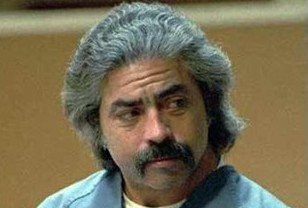
Richard Allen Davis
Murderer Ervil LeBaron
Murderer · USA · 1972
Ervil Morrell LeBaron (1925 to August 16, 1981) was the leader of a polygamous…
35 victims
Ervil LeBaron
Murderer · USA · 1972
Ervil Morrell LeBaron (1925 to August 16, 1981) was the leader of a polygamous…
35 victims
 Marvin Gray
Murderer · USA · 1975
Marvin Gray was convicted killer who claimed responsibility for 23 slayings and…
23 victims
Marvin Gray
Murderer · USA · 1975
Marvin Gray was convicted killer who claimed responsibility for 23 slayings and…
23 victims
 Yahweh ben Yahweh
Murderer · USA · 1980
Yahweh ben Yahweh was born and legally named Hulon Mitchell Jr. (October 27, 19…
23 victims
Yahweh ben Yahweh
Murderer · USA · 1980
Yahweh ben Yahweh was born and legally named Hulon Mitchell Jr. (October 27, 19…
23 victims
 Charles Manson
Murderer · USA · 1969
Charles Milles Manson (born November 12, 1934) was an American criminal and mus…
9 victims
Charles Manson
Murderer · USA · 1969
Charles Milles Manson (born November 12, 1934) was an American criminal and mus…
9 victims
 Carroll Edward Cole
Serial killer · USA · 1948
Carroll Edward Cole, also known as “Eddie,” was born in Sioux City, Iowa on May…
15 victims
Carroll Edward Cole
Serial killer · USA · 1948
Carroll Edward Cole, also known as “Eddie,” was born in Sioux City, Iowa on May…
15 victims
 Arif and Farman Ali
Cannibals · Pakistan · 2011
Mohammad Arif Ali and Mohammad Farman Ali were brothers from the town of Darya…
0 victims
Arif and Farman Ali
Cannibals · Pakistan · 2011
Mohammad Arif Ali and Mohammad Farman Ali were brothers from the town of Darya…
0 victims
 David Dobson
Homicide · Canada · 1982
David James Dobson was born in 1965 and was from Mississauga, Ontario. He was 1…
1 victim
David Dobson
Homicide · Canada · 1982
David James Dobson was born in 1965 and was from Mississauga, Ontario. He was 1…
1 victim
 Akira Nishiguchi
Spree killer · Japan · 1963
Akira Nishiguchi (西口 彰, Nishiguchi Akira) was a Japanese serial killer and frau…
5 victims
Akira Nishiguchi
Spree killer · Japan · 1963
Akira Nishiguchi (西口 彰, Nishiguchi Akira) was a Japanese serial killer and frau…
5 victims
 Earl Mitchell Forrest
Murderer · USA · 2002
Earl M. Forrest was drinking in December 2002 when he went to Harriet Smith's h…
3 victims
Earl Mitchell Forrest
Murderer · USA · 2002
Earl M. Forrest was drinking in December 2002 when he went to Harriet Smith's h…
3 victims
 Michael Miller
Murderer · USA · 1987
Michael Miller was sentenced to death in November 1988 in Walton County for the…
1 victim
Michael Miller
Murderer · USA · 1987
Michael Miller was sentenced to death in November 1988 in Walton County for the…
1 victim
- Gender
- male
- Country
- USA
- Location
- Sonoma County, California, USA
- Date of birth
- June 2, 1954
- Age at first offence
- 19
- Characteristics
- kidnapping, rape, convicted rapist, alcohol, drug addict, history of mental illness
- Victim profile
- Marlene Voris, 18 (his girlfriend) / Polly Klaas, 12
- Method of murder
- Shooting / Strangulation
- Date(s) of murder
- October 12, 1973 / October 1, 1993
- Years active
- 1973–1993
- Date of arrest
- November 30, 1993
- Status
-
Sentenced to death
Sentenced to death on August 5, 1996
Case record: Richard Allen Davis
Status
Richard Allen Davis was sentenced to death on August 5, 1996.
Background
Richard Allen Davis was born June 2, 1954, in San Francisco. He was the third of five children. His parents were Bob and Evelyn Davis, and both were alcoholics. His mother was a strict disciplinarian and was believed to have punished Davis for smoking by burning his hand. His parents divorced when Davis was 11.
After their divorce, Bob Davis, a longshoremen, won custody of all five children because of the mother’s alleged immoral conduct in the presence of the children, according to a probation report on Davis. Davis moved around frequently, living in Chowchilla, Fremont, and San Francisco. Much of his childhood was spent in the small village of La Honda.
Bob Davis remarried three times, and Davis resented all of his stepmothers. Although Davis wanted custody when the marriage dissolved, his father was sometimes unable or unwilling to care for the children, so they shuttled between their parents and between paternal and maternal grandparents.
Bob Davis was reported to have been mentally unstable and to have suffered from hallucinations. He was reported to have taken a gun outside the home and shot at mirages. At an early age, Davis tortured and killed animals. Ruth Baron, mother of one of Davis’s childhood friends, said: "He would douse cats with gasoline and set them on fire. He made a point of letting people know he carried a knife, and he used to find stray dogs and cut them."
Davis’s younger sister, Darlene, remembered him differently. She said: "Rick brought me up," and added: "He cooked and cleaned. He was my father and my mother."
By his teens, Davis was already deeply involved in crime. He told a psychiatrist that stealing was a sure way to relieve whatever "tensions" were building up inside of him. He dropped out of high school in his sophomore year. At 17, Davis was before a judge, who told him he could either go to the California Youth Authority or join the U.S. Army; he chose the Army.
Stationed in Germany, Davis worked as a military truck driver and resumed committing petty crimes. The Army eventually caught up with him, and he received a less than honorable discharge after 13 months of service. His arms were covered with black tattoos, many of them of spider webs.
Other incidents before the offence
On October 12, 1973, Davis went to a party at the home of 18-year-old Marlene Voris, whom he claimed was his girlfriend. Voris was found dead of a gunshot wound that night, and the police concluded she had taken her own life. There were no less than seven suicide notes at the scene. Davis later claimed Voris shot herself "almost in his presence" and that he had been traumatized by it. Others, including Ruith Baron, believed Davis murdered Voris.
A few weeks after Voris’s death, Davis was arrested for attempting to pawn items he had stolen. He confessed to a string of burglaries in La Honda but said he was motivated at least sometimes by hunger. He served six months in the county jail.
Five weeks after his release, on May 13, 1974, Davis was arrested for another burglary. He was sentenced to six months to fifteen years in prison and served a little more than two years.
Davis’s arrest record included:
- March 6, 1967: at age 12, Davis had his first contact with law enforcement when he was arrested for burglary in Chowchilla, where he lived with his grandmother.
- May 24, 1967: Davis was arrested again for forging a $10 money order, and he was briefly in Juvenile Hall before his father moved him and his siblings to La Honda.
- November 15, 1969: Davis was arrested for the burglary of a La Honda home.
- November 16, 1969: his father turned Davis and his older brother over to juvenile authorities for incorrigibility.
- September 15, 1970: Davis was arrested for participating in a motorcycle theft. A probation officer and judge accepted his father’s suggestion that he enlist in the Army to avoid being sent to the California Youth Authority.
- July 1971: Davis entered the Army. His military record reflected infractions for AWOL, fighting, failure to report, and morphine use.
- August 1972: Davis received a general discharge from the military.
- February 12, 1973: Davis was arrested in Redwood City for public drunkenness and resisting arrest. He was placed on one-year summary probation.
- April 21, 1973: Davis was arrested in Redwood City for being a minor in possession of liquor, burglary, and contributing to the delinquency of a minor. He was charged with trespassing, and the trespassing charge was later dismissed.
- August 13, 1973: Davis was arrested in Redwood City leaning against hedges extremely intoxicated and released upon sobriety.
- October 24, 1973: Davis was arrested in Redwood City on traffic warrants.
- Between April and October: Davis was implicated in more than 20 La Honda burglaries. A probation officer reported that residents were so angry at him that he might be in danger if he returned to La Honda. He pleaded guilty to burglary and was sentenced to six months in county jail and placed on three years’ probation.
- May 13, 1974: Davis was arrested for burglarizing South San Francisco High School.
- Davis was sent to the California Medical Facility, Vacaville, for a 90-diagnostic study. A county probation officer recommended prison, but proceedings were suspended when Davis enrolled in a Veterans Administration alcohol treatment program. Davis quit on the second day.
- September 16, 1974: Davis was sentenced to one year in county jail for the school burglary. He was allowed to leave jail to attend a Native American drug and alcohol treatment program. He failed to return, leaving behind two angry fellow inmates who had given Davis money to buy drugs and bring the contraband back to jail.
- March 2, 1975: after being released, two inmates tracked Davis down and shot him in the back. Davis was rearrested on a probation violation for failing to return to jail. Davis later testified against the inmates, earning him the epithet of "snitch" from fellow inmates. He was placed in protective custody.
- April 11, 1975: Davis was arrested for parole violation.
- July 11, 1975: Davis was arrested for auto theft and possession of marijuana and received a 10-day jail sentence.
- August 13, 1975: probation was revoked after Davis was arrested for San Francisco burglary and grand theft. He was sentenced to a term of from six months to 15 years in prison.
- August 2, 1976: Davis was paroled from Vacaville.
- September 24, 1976: Davis abducted Frances Mays, a 26-year-old legal secretary, from the South Hayward BART station and attempted to sexually assault her. She escaped and hailed a passing car in which California Highway Patrol Officer Jim Wentz was riding. Wentz arrested Davis.
- December 8, 1976: Davis was transferred to Napa State Hospital for psychiatric evaluation after he tried to hang himself in a cell at Alameda County Jail. He later admitted he faked the suicide attempt to be sent to a state hospital so he could more easily escape. He was mistakenly admitted as a voluntary patient rather than a prisoner.
- December 16, 1976: Davis escaped from Napa State Hospital and went on a four-day crime spree in Napa. He broke into the home of Marjorie Mitchell, a nurse at the state hospital, and beat her on the head with a fire poker while she slept. He broke into a car to kidnap Hazel Frost, a bartender, as she climbed into her Cadillac outside a bar. When she saw he had bindings, she rolled out of the car, grabbed a gun from beneath the seat, and fired six shots at the fleeing Davis.
- December 21, 1976: Davis broke into the home of Josephine Kreiger, a bank employee, in La Honda. He was arrested by a San Mateo County sheriff’s deputy hiding in brush behind the home with a shotgun.
- June 1, 1977: Davis was sentenced to a term of one to 25 years in prison for the Mays kidnapping. A sexual assault charged was dropped as part of a plea bargain. He later received concurrent terms for the Napa crime spree and the La Honda break-in.
- March 4, 1982: Davis was paroled from the Deuel Vocational Institute in Tracy.
- November 30, 1984: with new girlfriend-accomplice Sue Edwards, Davis pistol-whipped Selina Varich, a friend of Edwards’s sister, in her Redwood City apartment and forced her to withdraw $6,000 from her bank account. Davis and Edwards made a successful escape.
- March 22, 1985: Davis was arrested in Modesto when a police officer noticed a defective taillight. Davis and Edwards were charged with robbing a Yogurt Cup shop and the Delta National Bank in Modesto.
- Authorities in Kennewick, Washington, were unaware for several years that the pair had robbed a bank, a Value Giant store, and the Red Steer restaurant during the winter of 1984–1985. Davis later confessed to the crimes in an attempt to implicate Edwards, whom he believed had welshed on a promise to help him while he was in prison.
- June 27, 1993: Davis was paroled from the California Men’s Colony, San Luis Obispo, after serving half of a 16-year sentence for the Varich kidnapping.
The offence
On October 1, 1993, Polly Klaas, a 12-year-old, was kidnapped during a slumber party at her Petaluma, California home. The slumber party occurred while her mother and younger sister slept down the hall. Polly had opened her bedroom door at about 10:30 p.m. to fetch sleeping bags and then saw a man with a knife. The man tied up the girls, told Klaas’s friends to count to 1,000, and kidnapped Klaas at knifepoint.
Over the next two months, about 4,000 people helped search for her. TV shows such as 20/20 and America’s Most Wanted covered the kidnapping. At the time of the kidnapping, Davis was a wanted man: the California Highway Patrol issued an all points bulletin for a parole violation for his previous crime, and any police officer encountering him was to arrest him on that charge. The bulletin was described as having been broadcast on the CHP channel, which only CHP radios could receive. It was also described that CHP practice changed after the case.
During the search, police officers encountered Davis in a nearby rural area, where Davis’s Ford Pinto was stuck in the mud. Unaware of the APB, local police let him go. It was believed that he drove to an isolated spot, killed Polly, and buried her in a shallow grave.
After his arrest, Davis confessed to killing Polly and burying her body in a shallow grave. Davis told investigators he strangled Polly from behind with a piece of cloth. The body had decayed for months, and there was no method to scientifically validate that statement, but it was described as consistent with the evidence.
Investigation and arrest
On October 19, 1993, Davis was arrested in Ukiah for drunken driving during the search for Polly. He failed to appear in court. On November 30, 1993, Davis was arrested for parole violation on the Coyote Valley Indian Reservation north of Ukiah, and he was identified as the prime suspect in the kidnapping. On November 30, police arrested Davis for violation of parole during routine patrol after an arresting officer recognized him from police sketches. The basis for charging was described as a palm print found in Klaas’s bedroom.
On December 4, 1993, Davis provided investigators with information that led them to Polly’s body off U.S. Route 101 near Cloverdale. Four days after his arrest, Davis led police to Polly’s body near Cloverdale.
On December 7, 1993, Davis was charged with kidnapping/murder of Polly.
Trial
On June 18, 1996, Davis was convicted of kidnapping/murder of Polly.
A San Jose, California, Superior Court jury recommended the death sentence for Davis on August 5, 1996.
Davis’s conviction included first-degree murder and four special circumstances: robbery, burglary, kidnapping, and a lewd act on a child. The lewd act charge was described as under the age of 14.
After the verdict was read, Davis stood and flipped the bird at the courtroom with both hands.
In his statement at sentencing, Davis read a statement claiming that Klaas said to Davis: "Just don’t do me like my dad," just before Davis killed her, implying that Klaas’s father was a child molester. Klaas’s father reacted angrily and left the courtroom to avoid causing further commotion.
At the death-sentencing proceeding, Judge Thomas C. Hastings proceeded with the formality and said:
"Mr. Davis, this is always a traumatic and emotional decision for a judge. You made it very easy today by your conduct."
A court reporter record of Davis’s remarks included his final statement:
"I would also like to state for the record that the main reason I know that I did not attempt any lewd act that night was because of a statement the young girl made to me while walking her up the embankment: "Just don't do me like Dad.'"
It was described that Davis’s accusation in court prompted Klaas’s father to shout at Davis, and deputies submitted Klaas to deputies who hustled him toward the door. Greg Jacobs, the prosecutor, said no abuse accusation had been leveled against Mr. Klaas and no evidence supported it. After Davis’s accusation, Marc Klaas told reporters:
"If I thought for a moment I could get my hands on him, I might have gone for him,"
It was also described that Polly was in the Northern California town of Petaluma as a seventh-grader.
Sentencing
On August 5, 1996, the jury recommended the death sentence.
Davis was sentenced to death on August 5, 1996. On August 6, 1996, it was described that after four days of deliberations, the jury announced Davis should die by lethal injection. It was also described that Santa Clara County Superior Court Judge Thomas Hastings could change the verdict to life without parole at Davis’s formal sentencing Sept. 26.
Prosecutor Greg Jacobs said Davis, 42, would spend decades on death row running through appeals before he was executed. Marc Klaas said:
"It's sad," he said, "that someone would be so emotionally bankrupt that they would be smirking as their own death sentence was being read to them." and: "The justice system did not fail my daughter again," Klaas said. and: "It doesn't bring our daughter back into our lives, but it gets one monster off the streets." Klaas also said: "Richard Allen Davis deserves to die for what he did to my child," and: "I don't expect him to be executed, quite frankly not by the state."
Appeals
On June 1, 2009, the California Supreme Court upheld Davis’s death sentence. Davis had argued his jailhouse confession was illegal because it was given without an attorney present, and the Court said police could ignore a suspect's rights to counsel if officers believed someone’s life was in jeopardy.
Outcome
Richard Allen Davis remained under a death sentence and was on death row in San Quentin State Prison, California. The case was said to have an automatic appeal to the California Supreme Court, and it could also be appealed to federal courts, with experts describing it could take 10 to 15 years.
Aftermath
In the wake of the murder, Polly Klaas’s father, Marc Klaas, became a child advocate and established the KlaasKids Foundation. He made himself available to parents of kidnapped children and appeared frequently on Larry King Live, CNN Headline News, and Nancy Grace.
Five years after Klaas’s murder, a performing arts center was named in her honor in Petaluma.
The story of Klaas’s kidnapping and the hunt for Davis was depicted in episode 1, season 1 of The FBI Files documentary show under the title "Polly Klaas: Kidnapped," which premiered on October 20, 1998.
Winona Ryder, an actress raised in Petaluma, offered a $200,000 reward for Polly’s safe return during the search.
After Polly’s death, Ryder starred in a film version of Little Women and dedicated it to Klaas’s memory, and it was stated that Little Women author Louisa May Alcott was described as Polly’s favorite book.
In 2004, Klaas’s paternal grandfather, writer Joe Klaas, endorsed California Proposition 66 to "fix the flaw in the law" of the Three strikes law. Marc Klaas opposed the law.
People and entities
- Polly Klaas (victim): 12-year-old Polly Klaas, kidnapped from her Petaluma home on October 1, 1993.
- Marc Klaas: Polly Klaas’s father.
- B. J.: Marc Klaas’s mother, who was described as sobbing during the courtroom incident.
- Thomas C. Hastings: Santa Clara County Superior Court judge who imposed the death sentence and made remarks at sentencing.
- Greg Jacobs: prosecutor who made remarks in court and was cited regarding sentencing expectations.
- Jim Wentz: California Highway Patrol Officer who arrested Davis after the abduction of Frances Mays.
- Frances Mays: 26-year-old legal secretary abducted on September 24, 1976.
- Marjorie Mitchell: nurse at the state hospital whose home Davis broke into during the December 16, 1976 escape spree.
- Hazel Frost: bartender whom Davis attempted to kidnap during the four-day crime spree.
- Josephine Kreiger: bank employee whose home Davis broke into on December 21, 1976.
- Sue Edwards: Davis’s girlfriend-accomplice during the November 30, 1984 incident with Selina Varich.
- Selina Varich: friend of Edwards’s sister who was pistol-whipped and forced to withdraw $6,000.
- Marlene Voris: 18-year-old whose death occurred after Davis attended a party on October 12, 1973.
- Ruth Baron: mother of one of Davis’s childhood friends.
- Darlene: Davis’s younger sister.
- Joe Klaas: Polly Klaas’s paternal grandfather.
- Winona Ryder: actress who offered a $200,000 reward and dedicated a film to Klaas’s memory.
Timeline
- October 1, 1993 — Polly Klaas was kidnapped at knifepoint during a slumber party at her Petaluma, California home.
- October 19, 1993 — Davis was arrested in Ukiah for drunken driving during the search for Polly and failed to appear in court.
- November 30, 1993 — Davis was arrested for parole violation on the Coyote Valley Indian Reservation north of Ukiah and was identified as the prime suspect.
- December 4, 1993 — Davis provided investigators with information leading to Polly’s body off U.S. Route 101 near Cloverdale.
- December 7, 1993 — Davis was charged with the kidnapping/murder of Polly.
- June 18, 1996 — Davis was convicted of kidnapping/murder of Polly.
- August 5, 1996 — A San Jose Superior Court jury recommended the death sentence, and Davis was sentenced to death.
- June 1, 2009 — The California Supreme Court upheld Davis’s death sentence.
Other details
Davis’s offence was described as including attempted lewd act with a child under the age of 14, which was described as the only disputed charge in the case. The judge and jury described Davis’s conduct during the courtroom incident and at sentencing. The incident was described as occurring as Klaas lunged toward Davis and then was hustled from the room by deputies.
It was described that Polly’s body was found in December 1993 in a shallow grave by a California freeway, and that Davis led police to Polly’s body near Cloverdale.
The background material also described that the case gained national attention and that approximately 4,000 people helped search for Polly.
Spotted an error, or have more information about this case?