
Charles Sinclair
Serial killer?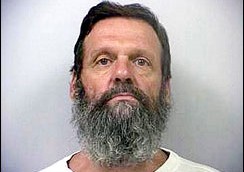 Robert Charles Browne
Serial killer? · 1970
Robert Charles Browne (born October 31, 1952) was a murderer and possible seria…
49 victims
Robert Charles Browne
Serial killer? · 1970
Robert Charles Browne (born October 31, 1952) was a murderer and possible seria…
49 victims
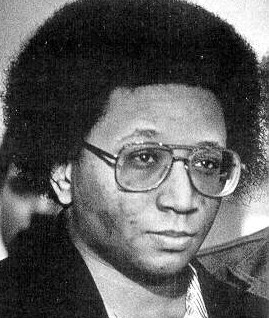 Wayne Williams
Serial killer? · USA · 1979
Wayne Bertram Williams was sentenced to two consecutive terms of life imprisonm…
24 victims
Wayne Williams
Serial killer? · USA · 1979
Wayne Bertram Williams was sentenced to two consecutive terms of life imprisonm…
24 victims
 Scott William Cox
Serial killer? · Several States USA / Canada · 1980
Name: Scott William Cox Tia Hicks vanished in 1990 after Scott William Cox was…
20 victims
Scott William Cox
Serial killer? · Several States USA / Canada · 1980
Name: Scott William Cox Tia Hicks vanished in 1990 after Scott William Cox was…
20 victims
 Tommy Lynn Sells
Serial killer? · USA · 1980
Tommy Lynn Sells was a white male. He was 35 at the time of the offence and 36…
13 victims
Tommy Lynn Sells
Serial killer? · USA · 1980
Tommy Lynn Sells was a white male. He was 35 at the time of the offence and 36…
13 victims
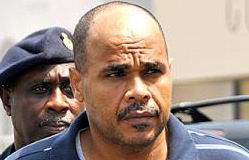 Cyril Darville
Serial killer? · The Bahamas · 1990
Cyril Darville was convicted for a murder committed in 1990. He had a prior rec…
9 victims
Cyril Darville
Serial killer? · The Bahamas · 1990
Cyril Darville was convicted for a murder committed in 1990. He had a prior rec…
9 victims
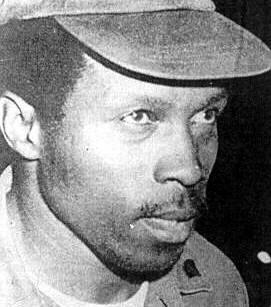 William Henry Hance
Serial killer · USA · 1977
William Henry Hance was executed by electrocution in Georgia on March 31, 1994.…
3 victims
William Henry Hance
Serial killer · USA · 1977
William Henry Hance was executed by electrocution in Georgia on March 31, 1994.…
3 victims
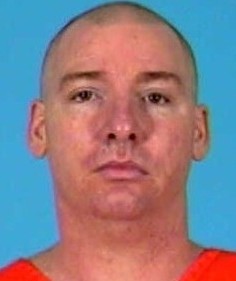 Michael Seibert
Murderer · USA · 1998
Name: Michael Seibert · Date of birth: 01/12/68 · Court opinion: Supreme Court…
1 victim
Michael Seibert
Murderer · USA · 1998
Name: Michael Seibert · Date of birth: 01/12/68 · Court opinion: Supreme Court…
1 victim
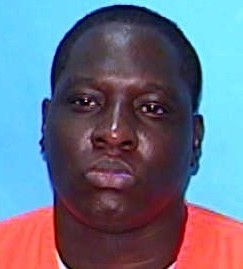 David Lee Thomas
Murderer · USA · 1990
David Lee Thomas was sentenced to death on March 15, 1991 in Twentieth Judicial…
1 victim
David Lee Thomas
Murderer · USA · 1990
David Lee Thomas was sentenced to death on March 15, 1991 in Twentieth Judicial…
1 victim
 Lee Chi Hang
Mass murderer · Hong Kong · 1982
Lee Chi Hang (Chinese: 李志衡) carried out the Anne Anne Kindergarten stabbing in…
6 victims
Lee Chi Hang
Mass murderer · Hong Kong · 1982
Lee Chi Hang (Chinese: 李志衡) carried out the Anne Anne Kindergarten stabbing in…
6 victims
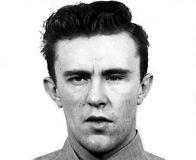 Richard Eugene Hickock
Mass murderer · USA · 1959
Richard Eugene Hickock was executed by hanging in Lansing on April 14, 1965. He…
4 victims
Richard Eugene Hickock
Mass murderer · USA · 1959
Richard Eugene Hickock was executed by hanging in Lansing on April 14, 1965. He…
4 victims
 Landon May
Murderer · USA · 2001
Landon May was convicted of killing Lucy Smith and Terry Smith in their Ephrata…
2 victims
Landon May
Murderer · USA · 2001
Landon May was convicted of killing Lucy Smith and Terry Smith in their Ephrata…
2 victims
- Gender
- male
- Country
- USA / Canada
- Location
- Several States, USA / Canada
- Date of birth
- 1946
- Age at first offence
- 34
- Characteristics
- robbery, fugitive, motive unknown
- Victim profile
- Men and women
- Method of murder
- Shooting
- Date(s) of murder
- 1980 - 1990
- Years active
- 1980–1990
- Date of arrest
- August 13, 1990
- Status
-
Died in custody
Died of heart attack in jail before trial on October 30, 1990
Case record
Charles Sinclair was described as having been sought for killings that were linked to robberies across seven U.S. states and British Columbia.
Background
For years, the issue of whether Charles T. Sinclair was a bona fide serial killer remained a question of his intentions. He was described as trolling “from New Mexico to Canada” and as having had a pattern of killing coin shop dealers, all strangers. It was stated that, unlike the popular perception of serial killers, Sinclair appeared to have a motive—money.
The case narrative contrasted two characterizations:
- Serial murderers were said to kill without conscience, for power, even for pleasure.
- People who kill for money were said to be robbers.
Charles Sinclair was referred to as “The Coin Shop Killer.”
Charles Sinclair was described as defying a textbook definition of serial killer, even though he was thought to have killed more than a dozen people, including six in Western Washington.
Investigation
In 1990, Pete Piccini, a Jefferson County cop who chased Sinclair for years, entered a ministorage shed near Sumas and discovered “a pile of evidence and a mountain of conflicting ideas about Sinclair and his crimes.” It was stated that, in the bottom of a barrel in the shed, Piccini found a yellow flowered bed sheet and pillows that matched the linen used to strangle and wrap the body of 18-year-old Amanda Stavik.
Amanda Stavik, described as a Central Washington University student, vanished Thanksgiving Eve 1989 while jogging. Her body was found Nov. 27 in the South Fork of the Nooksack River. The narrative stated there was evidence of rape.
The narrative also stated that a school yearbook was found among items from the shed. Investigators saw Stavik’s picture in the yearbook and it was stated that she had been a classmate of Sinclair’s son.
Pete Piccini’s role and retirement were described: he retired as Jefferson County sheriff in December.
A quoted statement from Piccini described the difficulty of defining Sinclair:
“It was hard to define Sinclair; he was all over the map,” said Piccini, who retired as Jefferson County sheriff in December.
The narrative stated that Piccini was diligently running down a missing-person report from his own county and that he had discovered a sex crime that called into question the profile of a man then sought as “The Coin Shop Killer.”
The narrative contrasted how many serial killers may go unnoticed:
Unlike Hollywood's Hannibal Lecter or the real-life Ted Bundy, not all serial killers present an easy-to-spot profile ripe with rituals, methods and arcane messages. Many remain unnoticed for years because their crimes show little or no common link.
Other details
The narrative stated that Sinclair’s killings were “Motive: CE-felony” and that he used a method of “Executed coin shop proprietors in robberies across seven U.S. states and British Columbia.”
The record contained the following codes and labels: “SEX: M RACE: W TYPE: N MOTIVE: CE-felony MO: Executed coin shop proprietors in robberies across seven U.S. states and British Columbia.”
Outcome
It was stated that Charles Sinclair died of heart attack in jail before trial on October 30, 1990, and also that the disposition was “Died of heart attack in jail before trial, Aug. 1990.”

Spotted an error, or have more information about this case?