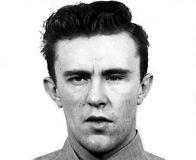
Richard Eugene Hickock
Mass murderer Francisco Paula Gonzales
Mass murderer · USA · 1964
Francisco Paula Gonzales was a passenger on Pacific Air Lines Flight 773. Gonza…
44 victims
Francisco Paula Gonzales
Mass murderer · USA · 1964
Francisco Paula Gonzales was a passenger on Pacific Air Lines Flight 773. Gonza…
44 victims
 John Gilbert Graham
Mass murderer · USA · 1955
John “Jack” Gilbert Graham was born on January 23, 1932, at Denver, Colorado. H…
44 victims
John Gilbert Graham
Mass murderer · USA · 1955
John “Jack” Gilbert Graham was born on January 23, 1932, at Denver, Colorado. H…
44 victims
 Thomas Doty
Mass murderer · USA · 1962
Thomas G. Doty was a passenger on Continental Airlines Flight 11. He was a marr…
44 victims
Thomas Doty
Mass murderer · USA · 1962
Thomas G. Doty was a passenger on Continental Airlines Flight 11. He was a marr…
44 victims
 Julian Andrew Frank
Mass murderer · USA · 1960
6 January 1960 — National Airlines Flight 2511 exploded and crashed 1-1/2 miles…
33 victims
Julian Andrew Frank
Mass murderer · USA · 1960
6 January 1960 — National Airlines Flight 2511 exploded and crashed 1-1/2 miles…
33 victims
 Charles Whitman
Mass murderer · USA · 1966
Charles Joseph Whitman (June 24, 1941 – August 1, 1966) shot and killed 14 peop…
15 victims
Charles Whitman
Mass murderer · USA · 1966
Charles Joseph Whitman (June 24, 1941 – August 1, 1966) shot and killed 14 peop…
15 victims
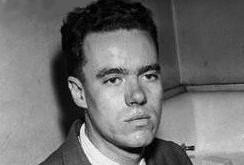 Howard Unruh
Mass murderer · USA · 1949
Howard Barton Unruh (born January 21, 1921, Camden, N.J.) carried out a shootin…
13 victims
Howard Unruh
Mass murderer · USA · 1949
Howard Barton Unruh (born January 21, 1921, Camden, N.J.) carried out a shootin…
13 victims
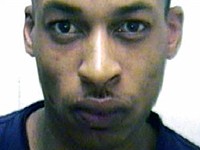 Joel Carl Smith
Murderer · United Kingdom · 2003
Joel Carl Smith (born 1973) was a drug dealer. He was also known as “Cocaine” o…
2 victims
Joel Carl Smith
Murderer · United Kingdom · 2003
Joel Carl Smith (born 1973) was a drug dealer. He was also known as “Cocaine” o…
2 victims
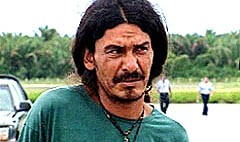 Jose Vicente Matias
—
Jose Vicente Matias fue descrito como un asesino en serie brasileño que se las…
Jose Vicente Matias
—
Jose Vicente Matias fue descrito como un asesino en serie brasileño que se las…
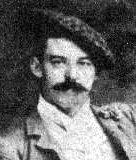 John Reginald Birchall
Murderer · 1890
John Reginald Birchall was born 25 May 1866 in Accrington, England. He was the…
1 victim
John Reginald Birchall
Murderer · 1890
John Reginald Birchall was born 25 May 1866 in Accrington, England. He was the…
1 victim
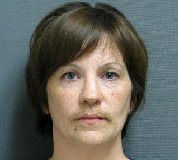 Christine Billis
Murderer · USA · 2009
Christine Billis drove the family car into a towering pine tree in Charleston,…
1 victim
Christine Billis
Murderer · USA · 2009
Christine Billis drove the family car into a towering pine tree in Charleston,…
1 victim
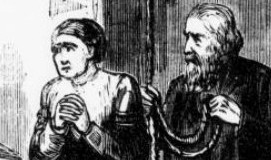 Margaret Waters
Murderer · United Kingdom · 1866
Margaret Waters was an English murderess who was hanged by executioner William…
19 victims
Margaret Waters
Murderer · United Kingdom · 1866
Margaret Waters was an English murderess who was hanged by executioner William…
19 victims
- Gender
- male
- Country
- USA
- Location
- Holcomb, Kansas, USA
- Date of birth
- June 6, 1931
- Age at first offence
- 28
- Characteristics
- robbery, sexual abuse, torture, sadist, pedophile
- Victim profile
- Herbert W. Clutter, 48; his wife, Bonnie Clutter, and their daughter Nancy, 16, and son Kenyon, 15
- Method of murder
- Shooting / C utting the throat
- Date(s) of murder
- November 14, 1959
- Years active
- 1959
- Date of arrest
- December 30, 1959
- Status
-
Executed
Executed by hanging in Lansing on April 14, 1965
Overview
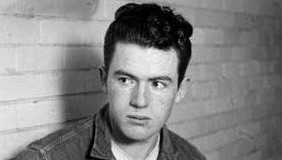
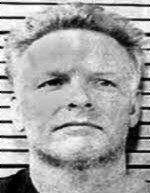
Richard Eugene Hickock was executed by hanging in Lansing on April 14, 1965. He was one of two ex-convicts who murdered four members of the Clutter family in Holcomb, Kansas. Together with Perry Smith, Hickock took part in a home invasion of the Clutter farmhouse, mistakenly believing that a large amount of money was kept in a safe. They killed Herbert Clutter and his wife Bonnie Clutter, and also killed their son Kenyon Clutter and their daughter Nancy Clutter.
Timeline
- June 6, 1931 — Richard Eugene Hickock was born in Kansas City, Kansas.
- 1950 — Hickock suffered head injuries from a serious automobile accident that left him disfigured.
- 1958 — Hickock met Perry Smith at the Kansas State Penitentiary in Lansing.
- 1959 (Thursday, November 12) — Hickock visited his parents; his parents reported that Perry something-or-other from Las Vegas visited him.
- 1959 (Thursday, November 14) — Hickock and Perry Smith left on what they called a “weekend trip” leaving before noon.
- 1959 (Friday, November 15) — The Clutter family murders were discovered; Herbert Clutter was found in the basement of his home with his throat cut and his head blown open by a shotgun blast. Bonnie Clutter and their children Kenyon and Nancy were found bound, gagged, and shot to death elsewhere in the house.
- 1959 (late December) — Hickock was captured in Las Vegas, Nevada.
- December 30, 1959 — Hickock and Perry Smith were apprehended in Las Vegas, Nevada.
- January 2, 1960 — Hickock and Perry Smith were interrogated separately at 2 p.m. at the Detective Bureau of Las Vegas.
- January 3, 1960 — Daylight rolled around and detectives let the boys rest, then questioning continued.
- March 22, 1960 — The trial convened; jury selection occurred.
- March 28, 1960 — The defense rebuttal began; by noon the court adjourned and arguments concluded.
- April 14, 1965 — Hickock was executed by hanging in Lansing.
Background
Hickock was born in Kansas City, Kansas to farmworker parents. He was a popular student and athlete at Olathe High School. Head injuries from a serious automobile accident in 1950 left him disfigured. He had wanted to attend college, but his family lacked the means to provide this, so he went to work as a mechanic.
Hickock married and fathered three sons. He became involved in an extramarital affair, which ended his marriage; he later married his paramour, and that marriage ended in divorce. He turned to petty crimes, including creating and using fraudulent checks, and eventually landed in prison where he met Perry Smith and hatched a plan for robbery and murder.
Hickock also had a history of head injuries. He was allegedly prevented by Smith, during the crime, from raping 16-year-old Nancy Clutter. Hickock later testified that he and Smith had gotten the idea to rob the Clutters after Hickock was told by former cellmate Floyd Wells that there was a safe in the Clutter family house containing $10,000 ($75,000 in today’s dollars). Hickock testified that the plan involved finding the farm, robbing the Clutters, and killing all witnesses.
Capote wrote that Hickock enlisted Smith in the robbery because he did not want to leave witnesses, and thought himself incapable of killing. Capote also wrote that Hickock took sadistic pleasure in killing dogs and harbored pedophilic desires for pre-pubescent girls.
Hickock and Smith met at the Kansas State Penitentiary in 1958 and later began working together on the plan. In Hickock’s account, he discussed the plan with Smith after receiving information about the safe from Floyd Wells.
The offence
Home invasion and attempted robbery
Hickock and Perry Smith launched an invasion of the Clutter farmhouse. They mistakenly believed that money was kept in a safe. They believed a large amount of money was kept in a safe and they sought that safe during the home invasion.
They entered the Clutter house through an unlocked door late at night. They woke Herbert Clutter and asked where his safe was; he denied having a safe. After searching the house, they learned that Hickock’s tip from Wells was no good. Hickock and Smith found about $40 to $50 in the house in total.
Binding and killings
According to their confessions, Smith tied up Herbert Clutter, his wife Bonnie, their son Kenyon, and their daughter Nancy in different rooms of the house.
After failing to find a safe, the pair decided to kill the Clutters. Smith first cut Herbert Clutter’s throat and then shot him in the head. A mattress box had been placed under Herbert earlier so he would not be uncomfortable. Smith also put a pillow under Kenyon’s head only to return later to shoot him in the face.
Both Nancy and Bonnie Clutter were shot in the head, but the identity of the shooter was unclear. Hickock claimed Smith shot both women while Smith said Hickock shot Nancy and Bonnie, and later Smith tried to change his story.
Hickock and Smith fled the scene in the early hours of November 15 and returned to Olathe for a time, then traveled to Mexico and Florida before ending up in Las Vegas.
Investigation
After the murders were committed, a police response followed after discovery of the bodies.
Sheriff Robinson and Undersheriff Meier from Garden City arrived at the Clutter house a little before ten that morning. They met outside the house with Larry Hendricks, a 29-year-old English teacher who lived with the Kidwells. Hendricks explained what the two girls had seen in Nancy’s room and asked permission to accompany the lawmen into the Clutter residence. Robinson and Hendricks went upstairs to where Nancy Clutter was found; Meier searched the lower floors.
Nancy Clutter was found on her bed with her face to the wall and her back of the head blown away, described as looking like a shotgun blast at extremely close range. Her wrists were tied behind her and her ankles bound with what looked like cord from a Venetian blind. She appeared to have been killed before going to bed and was fully dressed. The description also stated that there seemed to be no sign of sexual molestation because she was fully dressed.
Kenyon’s room was searched next. His room was empty and in order, but his eyeglasses rested on the covers. The next room included the corpse of Bonnie Clutter in a white nightgown drenched with red. She had been shot point-blank in the side of the head. Her wrists were tied with cord that ran down to her ankles, then ran to the bottom of the bed where it was tied to the footboard.
Meanwhile, Kenyon and Herbert Clutter were found in the basement. Kenyon had been tied in the same intricate pattern as his mother and roped to a davenport; his face had been erased by a shotgun. Herbert Clutter was found dead in his pajamas in the furnace room. The description characterized the appearance as if he had been tortured; it included that he had been shot with the gun held right in front of his face and that his throat had also been cut. His mouth was taped, and the tape was described as wound around his head. The description also stated that a steampipe overhead had a knotted piece of cord dangling from it with Mr. Clutter tied there by his hands.
An APB was radioed and the house filled with more police, ambulances, doctors, the local minister, and newspaper reporters and photographers.
Under ultraviolet light, Alvin Adams Dewey noticed two boot prints left behind on a cardboard box that had served as Mr. Clutter’s slab. The prints were described as men's boots, with one heel bearing a diamond-shaped pattern and the other bearing the Cat’s Paw insignia. Since both Herb and Kenyon were barefoot at the time of their deaths, Dewey considered them likely to belong to the killers.
Evidence described as including all four ejected cartridge shells from their weapon was also discussed. Dewey noted that the Clutter homestead had not appeared ransacked. The hints of theft described included Nancy’s purse lying opened in the kitchen and contents of Mr. Clutter’s billfold scattered in his bedroom. It was described that Bonnie still wore an expensive bracelet and Nancy’s jewelry was intact. Mrs. Helm had observed nothing missing except a small gray Zenith transistor radio from Kenyon’s room.
Dewey also discussed contacting witnesses and investigating potential motives. Harold Nye summarized what investigators had discovered as the Clutters being the least likely to be murdered among those in the world.
Dewey said that he did not know which of the four victims was the main target, and that it could have been Nancy or Kenyon or either of the parents. He also said he was considering a “second-killer concept.”
Arrest
Hickock and Perry Smith were apprehended in Las Vegas, Nevada in late December 1959.
The narrative described Las Vegas on December 30 with Hickock and Smith in a stolen 1956 Chevy. Perry Smith claimed a large cardboard box shipped to the States that contained clothes and personal belongings. Officers Ocie Pigford and Francis Macauley spotted the auto with an out-of-state license and checked it with Headquarters Central; the number matched printouts of cars stolen in Johnson County, Kansas. The officers waited until Perry Smith exited the post office with the package and then moved in by drawing revolvers.
After capture, Hickock was interrogated and confessed. It was described that Hickock denied any knowledge initially and later confessed his part in the slayings the next day, and that Smith confessed during the investigation.
Trial
Charges and court proceedings
Both Hickock and Smith were tried and found guilty. The trial proper began after jury selection. Public turnout was large outside the Finney County courtroom.
Trial details included:
- The charged crime was murder.
- A defense motion to have Smith and Hickock undergo comprehensive psychological testing before trial had been denied by Judge Tate. Judge Tate appointed three local general practitioners, not psychiatrists, to make the required examination; after brief interview, the doctors judged the defendants sane.
- Defense lawyers sought a psychiatrist from the state mental hospital who diagnosed mental illness in Smith and believed Hickock’s head injuries might have possibly affected his behavior; the diagnosis was never heard in the Finney County courthouse.
- Under the M’Naghten Test, the trial was applied strictly.
A jury trial occurred and the jury deliberated for only 40 minutes before returning a guilty verdict. The verdict was described as “GUILTY OF MURDER.” Judge Tate sentenced the defendants to death by hanging.
Witnesses and evidence
Floyd Wells testified for the prosecution. Wells was Hickock’s former cellmate. Wells described meeting Hickock and the discussions about a safe and robbery of the Clutter family, and he testified that Hickock said he would not leave witnesses and that he would probably tie them up and rob them and then kill them.
The defense rebuttal occurred after the prosecution rested. FBI agents presented testimony on ballistic and evidentiary interpretation. The narrative described analysis of blood samples, footprints, cartridge shells, weapon, cord, and tape, and verification that exhibits were valid evidence of the Clutter murders.
Quoted trial statements and remarks included the prosecution argument asking for death and Judge Tate’s statement that “The punishment is death.” The prosecution included a quoted statement attributed to prosecutor Logan Greene: “some of our most enormous crimes only happen because once upon a time a pack of chicken-hearted jurors refused to do their duty.”
The jury verdict and sentencing were described:
- Deliberations lasted 40 minutes.
- The punishment was death.
Sentencing
Hickock and Smith were sentenced to death by hanging.
Appeals
Hickock and Smith appealed on grounds related to counsel and the handling of physical evidence, and the Appeals Court ordered an investigation.
The narrative described execution postponements with federal lawyers requesting hearings; court actions included the U.S. Supreme Court declining to hear the case three times without comment. The defense obtained two counsel assignments: Joseph Jenkins and Robert Bingham.
The narrative described multiple execution dates being fended off:
- October 25, 1962
- August 8, 1963
- February 18, 1965
The Kansas Supreme Court ruled that Hickock and Smith must leave Death Row, but called for execution between midnight and 2 a.m. on April 14, 1965.
Outcome
Hickock and Smith were executed by hanging on April 14, 1965, after several appeals.
The narrative stated that Warden Greg Seamon presided over the hanging of the convicted murderers in Lansing.
Hickock was hanged first. It was stated that he said: “I just want to say I hold no hard feelings. You people are sending me to a much better place than this has been.” He also shook Dewey’s hand and told him, “Nice to see you,” before climbing the steps to the scaffold. The narrative described the noose being tightened, the hangman sprung the trap door, and that the execution was over by 1:19 a.m. Perry Smith entered the chamber afterward and said: “It would be meaningless to apologize now. But, I do apologize.”
Aftermath
After execution, the narrative described that Alvin Dewey returned later to visit the Clutters at Valley View Cemetery where all four were buried side by side under a single carved headstone. It included that he whispered to them that he missed them and that he had done all he could for their honor, and described that he felt that someone touched his shoulder.
The narrative also stated that In Cold Blood was published the following year and became the subject of film portrayals including:
- 1967 film version of In Cold Blood
- 1996 miniseries adaptation of In Cold Blood
- 2005’s Capote
- 2006’s Infamous
Other details
Victims
- Herbert Clutter (age 48, described as Christian-solid, soft-spoken).
- Bonnie Clutter.
- Kenyon Clutter (described as 15 years old).
- Nancy Clutter (described as 16 years old).
People mentioned in investigation and trial narrative
- Perry Smith (co-defendant).
- Floyd Wells (former cellmate and witness).
- Alvin Adams Dewey (Kansas Bureau of Investigation head of operations in the southwestern sector working out of Garden City; investigator).
- Harold Nye (assistant agent).
- Roy Church (interrogator).
- Clarence Duntz (agent).
- Judge Roland H. Tate.
- Prosecutor Logan Greene.
- County Attorney Duane West.
- Defense lawyers Arthur Fleming and Harrison Smith.
- Chief Defense Lawyers: Arthur Fleming and Harrison Smith.
- Chief Prosecutors: Logan Greene and Duane West.
- FBI agents (ballistics and evidentiary interpretation; described as a quartet).
- Sheriff Robinson and Undersheriff Meier (in the narrative of discovery).
- Larry Hendricks (English teacher who lived with the Kidwells; accompanied lawmen).
- Robert Fenton (county coroner who read the autopsy report).
- Chief Investigator Richard G. Rohleder (Garden City police; described photographs).
- Warden Greg Seamon (presided over execution).
Additional quoted material
The narrative included:
- “This is apparently the work of a psychopathic killer,” declared the local sheriff.
- Prosecutor Logan Greene: “some of our most enormous crimes only happen because once upon a time a pack of chicken-hearted jurors refused to do their duty.”
- Judge Tate: “is death.”
- Hickock’s justification during interrogation: “Ya’ see...all Perry and I wanted to do with that money was to buy a fishing boat and hire it out for deep-sea fishing off the coast of Mexico; woulda made a lot of money doing that...woulda paid them stores back every cent. Listen to me now, hear what I’m telling ya’ — that’s the truth. That was our plan.”
- Hickock responding to being asked about murders: “Whoa, Nellie Bell! I'm no damn murderer!”
- Smith regarding apologies before death: “It would be meaningless to apologize now. But, I do apologize.”
- Hickock at execution: “I just want to say I hold no hard feelings,” and “You people are sending me to a much better place than this has been.”
- The Bible quotation used in the narrative: “Be sure your sin will find you out.”
- The line attributed to Daniel Webster: “There is nothing so powerful as truth — and often nothing as strange.”
Spotted an error, or have more information about this case?