
Tommy Lynn Sells
Serial killer? Wayne Williams
Serial killer? · USA · 1979
Wayne Bertram Williams was sentenced to two consecutive terms of life imprisonm…
24 victims
Wayne Williams
Serial killer? · USA · 1979
Wayne Bertram Williams was sentenced to two consecutive terms of life imprisonm…
24 victims
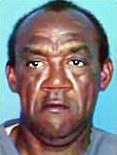 Jerry Frank Townsend
Serial killer? · USA · 1973
Jerry Frank Townsend was sentenced to seven concurrent life sentences in 1980.…
6 victims
Jerry Frank Townsend
Serial killer? · USA · 1973
Jerry Frank Townsend was sentenced to seven concurrent life sentences in 1980.…
6 victims
 Major Morris
Serial killer? · USA · 1972
Major Morris was a male with the motive listed as sex. He was described as a “l…
6 victims
Major Morris
Serial killer? · USA · 1972
Major Morris was a male with the motive listed as sex. He was described as a “l…
6 victims
 Warren Leslie Forrest
Serial killer? · USA · 1974
Warren Leslie Forrest was described as 25 years old, 5’9” tall, 155 lbs, with l…
6 victims
Warren Leslie Forrest
Serial killer? · USA · 1974
Warren Leslie Forrest was described as 25 years old, 5’9” tall, 155 lbs, with l…
6 victims
 Erno Soto
Serial killer? · USA · 1972
Erno Soto was found incompetent for trial and was committed to a mental institu…
4 victims
Erno Soto
Serial killer? · USA · 1972
Erno Soto was found incompetent for trial and was committed to a mental institu…
4 victims
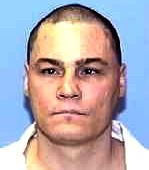 Richard Allen Masterson
Murderer · USA · 2001
Name: Richard Allen Masterson · TDCJ Number: 999414 · Date of Birth: 03/05/1972…
1 victim
Richard Allen Masterson
Murderer · USA · 2001
Name: Richard Allen Masterson · TDCJ Number: 999414 · Date of Birth: 03/05/1972…
1 victim
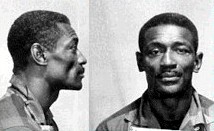 Lonnie Craft
Murderer · USA · 1957
Defendant: Lonnie Craft Victim: Virginia C. Craft (ex-wife) County Attorney: Ch…
1 victim
Lonnie Craft
Murderer · USA · 1957
Defendant: Lonnie Craft Victim: Virginia C. Craft (ex-wife) County Attorney: Ch…
1 victim
 Peter Alan Fell
Murderer ? · United Kingdom · 1982
Peter Alan Fell was involved in a case in which he made phone calls to police a…
2 victims
Peter Alan Fell
Murderer ? · United Kingdom · 1982
Peter Alan Fell was involved in a case in which he made phone calls to police a…
2 victims
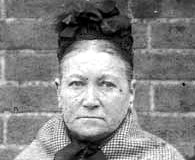 Amelia Dyer
Serial killer · United Kingdom · 1880
Amelia Dyer was convicted for the murder of Doris Marmon. She was known as a “b…
100 victims
Amelia Dyer
Serial killer · United Kingdom · 1880
Amelia Dyer was convicted for the murder of Doris Marmon. She was known as a “b…
100 victims
 James Ernest Hitchcock
Murderer · USA · 1976
Name: James Ernest Hitchcock Date of birth: 04/05/56 Court: Ninth Judicial Circ…
1 victim
James Ernest Hitchcock
Murderer · USA · 1976
Name: James Ernest Hitchcock Date of birth: 04/05/56 Court: Ninth Judicial Circ…
1 victim
- Gender
- male
- Country
- USA
- Location
- Missouri/New York/Illinois/Texas, USA
- Date of birth
- June 28, 1964
- Age at first offence
- 16
- Characteristics
- rape, serial rapist, abuse, drugs, mentally ill
- Victim profile
- Kaylene "Katy" Harris, 13
- Method of murder
- Cutting her throat
- Date(s) of murder
- 1980 - 1999
- Years active
- 1980–1999
- Date of arrest
- January 2, 2000
- Status
-
Executed
Executed by lethal injection in Texas on 3 April 2014
Case details
Tommy Lynn Sells was a white male. He was 35 at the time of the offence and 36 when received on 11/8/2000. He was 5' 9" tall and weighed 195 lb, had brown hair and hazel eyes. His native country was Alameda County, California. His prior occupation had included laborer. His prior prison record included Missouri Department of Corrections on a 2 year sentence for felony theft; he was confined 8 months and released on parole on 12/18/1985, then returned as a parole violator with a new conviction of driving under the influence and was confined 16 months and discharged. He then served Wyoming Department of Corrections on a 2 year sentence for vehicle theft; he was confined 16 months and discharged. He also served Wyoming Department of Corrections on a 2-10 years sentence for malicious wounding and was released on parole.
Timeline
- 12/31/1999 — Sells entered a Del Rio residence occupied by a 13-year-old white female and a 10-year-old white female, intended to sexually assault the 13-year-old, slashed the 13-year-old’s throat and stabbed her multiple times causing her death, and then slashed the throat of the 10-year-old; the 10-year-old survived.
- 1/2/2000 — Sells was located and arrested two days later after police received Krystal Surles’s description and made a composite drawing.
- 2/8/2000 — The State of Texas indicted Sells for the Dec. 31, 1999 capital murder of Kaylene Harris.
- 9/18/2000 — A Val Verde County jury convicted Sells of capital murder of thirteen-year-old Kaylene Harris.
- 9/20/2000 — Following a separate punishment phase, the jury answered the special sentencing issues, and Sells was sentenced to death.
- 3/12/2003 — The Texas Court of Criminal Appeals affirmed Sells’s conviction and sentence on direct appeal, denying relief on 36 points of error.
- 8/31/2005 — The Texas Court of Criminal Appeals issued an order denying relief on Sells’s state habeas corpus application.
- 8/17/2006 — Sells petitioned for federal habeas relief; the federal action was immediately stayed due to a successive (second) state habeas application.
- 5/23/2007 — The Texas Court of Criminal Appeals dismissed Sells’s successive habeas corpus application.
- 8/2008 — Federal habeas proceedings were reopened, and the district court granted funding to investigate and develop Sells’s Atkins claim and time to amend his habeas petition.
- 7/2010 — Sells abandoned the Atkins claim.
- 9/15/2010 — Sells filed a second successive (third) state habeas application including 10 claims of ineffective-assistance of counsel.
- 12/2011 — Federal habeas proceedings were reopened; the district court denied motions for further time and denied additional $65,000 beyond previously granted resources.
- 2/23/2011 — Sells filed an amended federal habeas petition with 12 grounds for relief; the district court issued a 290-page Memorandum Opinion and Order Denying Relief and denied a certificate of appealability.
- 7/22/2013 — The Fifth Circuit Court of Appeals denied Sells’s certificate of appealability to appeal two issues and affirmed the denial of additional funding.
- 10/16/2013 — The Fifth Circuit denied Sells’s petitions for panel and en banc rehearing.
- 12/11/2013 — The 63rd District Court of Val Verde County set Sells’s execution for Thursday, April 3, 2014.
- 1/13/2014 — Sells petitioned the U.S. Supreme Court for certiorari review.
- 4/3/2014 — Sells was scheduled for execution after 6 p.m. in Texas; Texas Department of Criminal Justice officials pronounced him dead at 6:27 p.m. after lethal injection.
The offence
On 12/31/1999, Tommy Lynn Sells entered a Del Rio residence occupied by a 13-year-old white female and a 10-year-old white female. Sells entered the residence with intent to sexually assault the 13-year-old. He slashed the 13-year-old’s throat and stabbed her multiple times, resulting in her death. He then slashed the throat of the 10-year-old; the 10-year-old survived.
In the account of the crime summarized by the U.S. Court of Appeals for the Fifth Circuit, the offence occurred early in the morning on Dec. 31, 1999. Sells secretly entered the Del Rio, Texas trailer home of Terry Harris, an acquaintance of Sells. Sells had previously visited Harris’s home and was familiar with it. Armed with a butcher knife, Sells explored the residence though Harris was out of town. The residence was occupied by five people that morning: Harris’s wife and a young girl asleep in one bedroom, a young boy in another bedroom, and in one of the bedrooms a bunk bed occupied by Harris’s thirteen-year-old daughter, Kaylene Harris, and her family friend, eleven-year-old Krystal Surles.
Seeing the girls asleep, Sells lay down next to Kaylene on the bottom bunk and cut off her underwear. When he began to grope Kaylene and touch her genitals, she snapped awake and yelled for Krystal to go get help. Sells jumped up, positioned himself between Kaylene and the bedroom door, and stabbed Kaylene with the knife when she attempted to open the door. Sells then turned on the bedroom light and lunged again, stabbing Kaylene a total of sixteen times and slitting her throat multiple times; Kaylene died almost immediately. Sells then remembered Krystal still in the top bunk, hurriedly slit Krystal’s throat, and left the room. As he exited the trailer, Sells wiped his fingerprints off a doorknob and took two window screens he thought might contain his fingerprints. He then drove back to his house, stopped to discard the knife and window screens in a field, and did so before leaving the home.
Krystal survived the attack and pretended to be dead until Sells left. Believing everyone in the Harris trailer to be dead, Krystal walked to a neighbor’s house, awakened the neighbors, and indicated in writing that help was needed at the Harris residence. After receiving care for her injuries, Krystal supplied the police with a description of her assailant, from which a composite drawing was made. After Sells was identified, located, and arrested, he confessed to the murder. The same day, Sells voluntarily accompanied police to the Harris residence and led them through a videotaped narrative re-enactment of his crime, describing how he murdered Kaylene Harris and attempted to murder Krystal Surles.
The trial evidence described multiple forms of evidence corroborating Sells’s confession and Krystal’s uncontradicted testimony, including: the location of the murder weapon; the medical examiner’s testimony regarding Kaylene’s injuries; forensic tests confirming the presence of Sells’s blood and clothing fibers on Kaylene; and forensic tests confirming the presence of Kaylene’s blood and clothing fibers on Sells.
Investigation and arrest
Krystal survived the attack and helped investigators by providing a description of her assailant. A composite drawing was made. The attacker was promptly identified as Tommy Lynn Sells, who was located and arrested two days later.
Upon being arrested, Sells immediately confessed to the murder. In a videotaped statement, Sells indicated that he was glad to have been caught so that he would not hurt others, and briefly alluded to another young girl that he may have murdered in Kentucky. Sells voluntarily accompanied police that same day to the Harris residence and led police through a videotaped narrative re-enactment of his crime, describing how he murdered Kaylene Harris and attempted to murder Krystal Surles.
After receiving care for Krystal’s injuries, she was able to supply the police with a description from which a composite drawing was made. The attacker was identified and then arrested.
Trial
Charges and pleas
Sells was indicted for the murder of Kaylene Harris and the attempted murder of Krystal Surles. At his jury trial, Sells pled guilty to the attempted murder charge and presented no evidence regarding his guilt in Kaylene’s murder.
Verdict
After deliberating less than two hours, the jury found Sells guilty of murder on Sept. 18, 2000.
Trial court and jury sentencing findings
Following the guilt finding, there was a separate punishment phase. After deliberating, the jury answered affirmatively the special sentencing issue on future dangerousness and answered negatively the issue on mitigation. The presiding judge was Honorable George M. Thurmond, and Sells was sentenced to death.
Jury trial procedural context (Texas)
The indictment alleged that Sells intentionally caused the death of Kaylene Harris while in the course of committing burglary of a habitation with intent to commit aggravated sexual assault. The evidence included Sells’s own statements that he broke into the Harris trailer without consent and sexually assaulted a young girl at knifepoint. The evidence also included that he prepared to encounter persons in the home by securing a knife before arriving at the residence, that he knew the Harris family and the layout of their home, knew that Terry Harris would be out-of-town, and knew the location of the phone line. The jury could infer intent to commit aggravated sexual assault from his obsession with sex at the bar and from the fact that he secured a weapon before going to the Harris home.
Sells claimed he had no specific intent to commit sexual assault when he broke into the Harris home, arguing everything happened spontaneously. The Court of Criminal Appeals overruled his legal and factual sufficiency points on this basis.
Voir dire and parole questions
On appeal, Sells argued that the trial court violated constitutional provisions when it refused to allow him to question the entire venire and various individual veniremembers on the law of parole. The proposed questions included:
- Would the minimum length of time a defendant could serve in prison before he could be paroled be something you would want to know in answering the special issues?
- On which special issue would this be important? How would this 40 year minimum sentence be important to you in answering the special issues?
- Would you be more likely, or less likely, generally, to view a defendant as a continuing threat to society if you knew he could not be paroled for a minimum of 40 years?
- What kind of evidence would you expect, as a juror, to help you in considering the 40–year parole ineligibility factor when answering the special issue?
The trial court refused to allow the requested parole-law questions. The Court of Criminal Appeals concluded none of the proposed questions were proper because they were attempts to commit prospective jurors to giving mitigating or aggravating effect to the minimum parole eligibility requirement.
Admission of recorded statements
On appeal, Sells complained that the trial court overruled objections to State’s Exhibits One–A and Three because the State failed to provide defense copies of recordings within a 20-day period, allegedly violating Article 38.22, § 3(a)(5). The Court of Criminal Appeals held that § 3(a)(5) applied to pretrial hearings and that failure to provide recordings 20 days before the pretrial hearing rendered the oral confession inadmissible at the pretrial hearing, but found the error harmless because appellant was given a timely opportunity to relitigate admissibility and edit a redacted version for playing before the jury.
Prison facilities videotape
Sells also complained that the trial court excluded Defendant’s Exhibit Two, a videotape depicting administrative segregation facilities in a Texas prison unit, and that such exclusion violated Texas Rule of Evidence 403, the Eighth Amendment, and due process. The trial court excluded it as irrelevant and potentially misleading, noting it showed only one aspect of prison life and did not portray the prison system's entire method of operation, and that probative value was substantially outweighed by the danger of misleading the jury and risks of confusion. The Court of Criminal Appeals affirmed exclusion and found no Eighth Amendment or due process violation.
Sentencing
After deliberating during the punishment phase, the jury answered affirmatively the special sentencing issue on future dangerousness and answered negatively the issue on mitigation. In accordance with those answers, the court sentenced Sells to death.
The State’s punishment phase evidence focused on Sells’s incapacity for rehabilitation and continuing proclivity for violence. The State presented evidence regarding the particularly brutal nature of Sells’s crimes against vulnerable children. It also presented evidence establishing prior convictions for automobile theft in Wyoming in 1980 and malicious wounding in West Virginia in 1983, and evidence about threats made against a fellow inmate while Sells was awaiting trial.
Psychologist Dr. Frederick Gary Mears presented expert testimony for the State. The testimony included that: (1) Sells was “off the scale” in terms of likelihood of future violence; (2) Kaylene’s autopsy revealed postmortem wounds consistent with intentional body desecration and mutilation; (3) the nature of many non-fatal wounds suggested Sells derived pleasure from brutality; (4) Sells qualified as a highly manipulative and antisocial personality; (5) Sells displayed a cavalier attitude during videotaped confessions and narrative re-enactment indicative of a lack of emotion and absolute indifference to death; (6) Sells displayed no remorse for the murder and attempted murder; (7) past behavior was the best predictor for future conduct; and (8) Sells’s criminal history demonstrated an escalation in violence over time.
Appeals and post-conviction proceedings
Direct appeal
On March 12, 2003, the Texas Court of Criminal Appeals affirmed Sells’s conviction and sentence, denying relief on 36 points of error. It affirmed the trial court’s judgment.
In particular, the Court rejected Sells’s argument on sufficiency of evidence related to intent for burglary with intent to commit aggravated sexual assault, holding the jury could rationally infer intent to commit aggravated sexual assault from Sells’s obsession with sex at the bar and his securing of a weapon before going to the Harris home. The Court also rejected voir dire-related complaints about the trial court’s refusal to allow parole-law questions, the trial court’s handling of commitment question content, challenges for cause to veniremembers, and evidentiary complaints involving the admission or exclusion of tapes and statements.
State habeas
While direct appeal was pending, Sells filed a state habeas corpus application raising four claims of ineffective assistance of counsel. On Aug. 31, 2005, the Texas Court of Criminal Appeals issued an order denying relief.
Sells later filed a successive (second) state habeas application alleging that he was mentally retarded and ineligible for execution under Atkins v. Virginia. On May 23, 2007, the Texas Court of Criminal Appeals dismissed the successive habeas application, finding he failed to make a threshold showing of evidence supporting a mental retardation finding.
On Sept. 15, 2010, Sells filed a second successive (third) state habeas application including 10 claims of ineffective-assistance of counsel. The Texas Court of Criminal Appeals dismissed this application under Texas’s writ-abuse statute.
Federal habeas
On Aug. 17, 2006, Sells petitioned for federal habeas relief, but the federal action was stayed due to the concurrent successive state habeas application. Federal habeas proceedings were reopened in August 2008 after funding was granted for development of an Atkins claim.
Sells abandoned the Atkins claim in July 2010. Federal habeas proceedings were stayed and held in abeyance to allow presentation of additional claims in state court.
Federal habeas proceedings reopened in December 2011. The district court denied motions for further time and an additional $65,000 beyond previously granted resources.
On Feb. 23, 2011, Sells filed an amended federal habeas petition with 12 grounds for relief. The U.S. District Court issued a 290-page Memorandum Opinion and Order Denying Relief, rejecting the claims on procedural and merits-based grounds, denied a request for an evidentiary hearing, and denied a certificate of appealability.
On July 22, 2013, the Fifth Circuit Court of Appeals denied Sells’s certificate of appealability to appeal two issues and affirmed the district court’s denial of Sells’s motion for additional funding. On Oct. 16, 2013, the Fifth Circuit denied Sells’s petitions for panel and en banc rehearing.
On Jan. 13, 2014, Sells petitioned the U.S.
Execution scheduling and execution-related litigation
On Dec. 11, 2013, the 63rd District Court of Val Verde County set Sells’s execution for Thursday, April 3, 2014.
A Texas Attorney General media advisory described Sells as scheduled for execution after 6 p.m. on Thursday, April 3, 2014 pursuant to a court order by the 63rd District Court of Val Verde County. The advisory stated that on Sept. 18, 2000, a Val Verde County jury convicted Sells of capital murder of thirteen-year-old Kaylene Harris and that on Sept. 20, 2000, after a separate punishment phase, the convicting court sentenced Sells to death.
In the execution-related reports, attorneys requested that the U.S. Supreme Court block or postpone the execution due to concerns about the secrecy of details about the pentobarbital to be used and whether it could deliver a painful death. The high court denied the request. Additional last-minute efforts were reported to have sought U.S. Supreme Court intervention to require more information about the drug manufacturer; the high court denied the request.
Outcome
Sells was executed in Texas. Texas Department of Criminal Justice officials pronounced Sells dead at 6:27 p.m. on 3 April 2014 after lethal injection. Reports indicated the execution took place around 6 p.m. after attorneys were unsuccessful in attempts to block or postpone it.
Statements and reactions at execution
Terry Harris, the father of Kaylene Harris, watched the execution and commented that the injection was “way more gentle than what he gave out.” Shawn Harris, Kaylene’s brother, commented “What a great day!” after Sells was covered with a blanket and escorted out of the viewing area.
Sells declined to give a final statement or make eye contact with victims’ families. When asked if he wanted to make a statement before his execution, Sells replied: “No.”
Mary Bea’s grandmother, Mary Torres, later said: “Whatever went through his veins, he went too quick for my satisfaction.” John Torres stated: “We all have suffered so many years. It’s payback time.”
Aftermath
After his execution was scheduled and carried out, multiple accounts described the procedural history and the claims raised to block the execution, including requests for transparency about lethal injection drugs. Terry Harris and Shawn Harris spoke after the execution.
Some reports described that Sells did not make a final statement, and that victims’ families participated in a list to witness the execution. Kaylene’s witnesses included her father, brother, and two grandmothers, and Mary’s mother and grandmother were also present.
The reports also described that Sells was pronounced dead at 6:27 p.m., about 13 minutes after he was injected with a fatal dose of the drug.

Spotted an error, or have more information about this case?