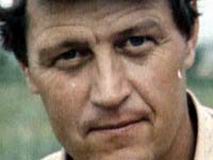
Anatoly Slivko
Serial killer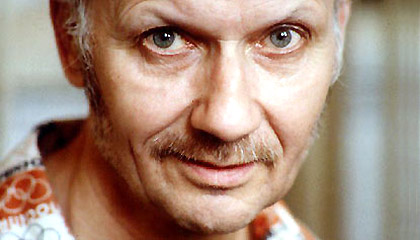 Andrei Chikatilo
Serial killer · Russia · 1978
Andrei Romanovich Chikatilo was a Ukrainian-born Soviet serial killer, nickname…
56 victims
Andrei Chikatilo
Serial killer · Russia · 1978
Andrei Romanovich Chikatilo was a Ukrainian-born Soviet serial killer, nickname…
56 victims
 Alexander Pichushkin
Serial killer · Russia · 1992
Alexander Yuryevich “Sasha” Pichushkin (Russian: Алекса́ндр Ю́рьевич Пичу́шкин,…
49 victims
Alexander Pichushkin
Serial killer · Russia · 1992
Alexander Yuryevich “Sasha” Pichushkin (Russian: Алекса́ндр Ю́рьевич Пичу́шкин,…
49 victims
 Artur Ryno
Serial killer · Russia · 2006
Artur Ryno led a skinhead gang described as the “Ryno skinhead gang” (also desc…
37 victims
Artur Ryno
Serial killer · Russia · 2006
Artur Ryno led a skinhead gang described as the “Ryno skinhead gang” (also desc…
37 victims
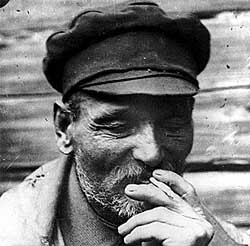 Vasili Komaroff
Serial killer · Russia · 1921
Vasili Komaroff was a horse-trader who maintained a stable at his home in Mosco…
33 victims
Vasili Komaroff
Serial killer · Russia · 1921
Vasili Komaroff was a horse-trader who maintained a stable at his home in Mosco…
33 victims
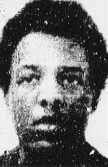 Ivon Ray Stanley
Murderer · USA · 1976
Ivon Ray Stanley was convicted in the Decatur County, Georgia Superior Court of…
1 victim
Ivon Ray Stanley
Murderer · USA · 1976
Ivon Ray Stanley was convicted in the Decatur County, Georgia Superior Court of…
1 victim
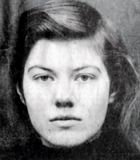 Juliet Hulme
Homicide · New Zealand · 1954
Juliet Hulme was known as Juliet Marion Hulme and later as Anne Perry. Juliet H…
1 victim
Juliet Hulme
Homicide · New Zealand · 1954
Juliet Hulme was known as Juliet Marion Hulme and later as Anne Perry. Juliet H…
1 victim
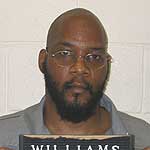 Marcellus Williams
Murderer · USA · 1998
Marcellus Williams was convicted in the State of Missouri case styled State of…
1 victim
Marcellus Williams
Murderer · USA · 1998
Marcellus Williams was convicted in the State of Missouri case styled State of…
1 victim
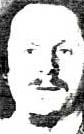 Kuno Hofmann
Murderer · Germany · 1972
Kuno Hofmann was a German labourer who was deaf mute. He was born in 1931. He h…
2 victims
Kuno Hofmann
Murderer · Germany · 1972
Kuno Hofmann was a German labourer who was deaf mute. He was born in 1931. He h…
2 victims
 Jacquelyn Greco
Murderer · USA · 1979
Jacquelyn Greco (also known as Jackie; formerly Jacquelyn Gaimari) — defendant;…
1 victim
Jacquelyn Greco
Murderer · USA · 1979
Jacquelyn Greco (also known as Jackie; formerly Jacquelyn Gaimari) — defendant;…
1 victim
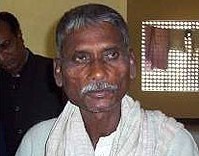 Sadashiv Sahu
Serial killer? · India · 2000
Sadashiv Sahu was identified as the suspect in a series of mystery killings of…
22 victims
Sadashiv Sahu
Serial killer? · India · 2000
Sadashiv Sahu was identified as the suspect in a series of mystery killings of…
22 victims
- Gender
- male
- Country
- Russia
- Location
- Nevinnomyssk, Stavropol Krai, Russia
- Date of birth
- December 28, 1938
- Age at first offence
- 26
- Characteristics
- necrophilia, sexual abuse, torture, police officer
- Victim profile
- An unidentified homeless boy / Aleksander Nesmeyanov, 15 / Andrei Pogasyan, 11 / Sergei Fatsiev, 13 / Slava Khovistik, 15 / Sergei Pavlov, 13 / ???
- Method of murder
- Once the victims were unconscious, Slivko dismembered their bodies, poured gasoline on their limbs and torso, and set the remains on fire to remind himself of the traffic accident which sparked his arousal
- Date(s) of murder
- 1964 - 1985
- Years active
- 1964–1985
- Date of arrest
- December 1985
- Status
-
Executed
Executed a few hours after being interviewed by police in 1989
Other details
Anatoly Yelemianovich Slivko (Russian: Анатолий Емельянович Сливко; December 28, 1938 - September 1989) was a Soviet serial killer.
Slivko was married and had two young children. He was a respected member of the community and ran a children’s club.
Background
In 1961, at the age of 23, Slivko witnessed a traffic accident in which a boy in his early teens who was wearing a Young Pioneers uniform was killed. Slivko recalled the accident vividly, including “the smell of gasoline and fire.” The scene sexually aroused Slivko.
Slivko exploited his position at the children’s club he ran. He formed close friendships with boys, typically aged between 13 and 17, who were short for their age and wore Young Pioneers uniforms. He told them about an experiment involving a controlled hanging intended to cause unconsciousness and stretch the spine, after which he assured the boy he would revive him.
Over a period described as about 21 years, Slivko persuaded forty-three boys to take part in this “experiment.”
Slivko photographed and/or filmed victims “from start to finish.” After victims fell unconscious from hanging, he cut them down and arranged their bodies into suggestive positions, caressed them while masturbating, and used a shoe fetish by arranging the victims’ shoes neatly and capturing this in photographs or on film; at times he kept the shoes as souvenirs.
The offence
Slivko was accused of seven murders, seven sexual abuses, and necrophilia.
Seven boys died. In seven cases, Slivko’s behaviour “became bloody.” After victims were unconscious, Slivko dismembered their bodies and, in some cases, poured gasoline on their bodies, then set the remains on fire. He did this “to remind himself of the traffic accident which sparked his arousal.”
Slivko claimed that in his first killing the victim was killed unintentionally and that he destroyed the photographs and film footage taken of that incident.
Victims
Slivko’s known victims were described as seven boys between the ages of seven and seventeen in and around the Russian city of Stavropol between 1964 and 1985.
November 14, 1973 — Aleksander Nesmeyanov (15-year-old, member of Chergid) disappeared in Nevinnomyssk, southern Russia (Southern RSFSR). May 11, 1975 — Andrei Pogasyan (11-year-old, member of Chergid) disappeared in the town. Andrei’s mother told police that a man made video recordings in a nearby forest and that her son was going to participate in a recording session. Police authorities did not do anything to prevent this because they knew the identity of the man who made the video recordings, and that man “received many prizes and awards for some of his videos.” The man’s name was Anatoly Slivko. 1980 — Sergei Fatsiev (13-year-old, member of Chergid) disappeared in Nevinnomyssk. 1982 — Slava Khovistik (15-year-old) disappeared in 1982. July 23, 1985 — Sergei Pavlov (13-year-old) disappeared after telling a neighbour he was going to meet the leader of Chergid.
In winter 1975, after Aleksander Nesmeyanov disappeared, a prisoner claimed he knew where Aleksander Nesmeyanov was buried, but the police searched the area and found nothing, proving the claim was false.
In 1985, yet another boy disappeared, and in 1980 another boy disappeared as well.
Investigation
A prosecutor named Tamara Languyeva took an interest in the club’s activities in November 1985 while investigating the disappearance of Sergei Pavlov. Languyeva had no evidence that there was anything illegal in the way the club was run. She interrogated many boys who had been to the club.
Boys who had been at the club said they had suffered “temporary amnesia” and that Slivko had practiced many experiments with them.
Following a long inquiry, Slivko was arrested in December 1985 and accused of seven murders, seven counts of sexual abuse, and necrophilia.
After his arrest, Slivko confessed to his crimes and worked with investigators to lead them to the whereabouts of the bodies of six of his victims during January and February 1986. He was unable to locate the body of his first victim.
Trial
Slivko was sentenced to death.
He was held on death row at Novocherkassk prison for three years.
Appeals
No appeal information was included.
Sentencing
Slivko was sentenced to death in 1986.
Outcome
Only a few hours after being interviewed by the police in 1989 in relation to serial killer Andrei Chikatilo, Anatoly Slivko was executed.
Andrei Chikatilo was described as having killed 53 children and women.
Timeline
- 1961 — Slivko witnessed a traffic accident in which a boy in a Young Pioneers uniform was killed.
- 1964 — Slivko killed his first victim, described as an unidentified homeless boy aged around 15 years old.
- November 14, 1973 — Aleksander Nesmeyanov disappeared in Nevinnomyssk.
- May 11, 1975 — Andrei Pogasyan disappeared in the town.
- 1980 — Sergei Fatsiev disappeared in Nevinnomyssk.
- 1982 — Slava Khovistik disappeared.
- July 23, 1985 — Sergei Pavlov disappeared after telling a neighbour he was going to meet the leader of Chergid.
- November 1985 — Prosecutor Tamara Languyeva took an interest in Chergid’s activities during the investigation of Sergei Pavlov’s disappearance.
- December 1985 — Slivko was arrested and accused of seven murders, seven counts of sexual abuse and necrophilia.
- January and February 1986 — Slivko led investigators to the whereabouts of the bodies of six victims.
- 1986 — Slivko was sentenced to death.
- 1989 — Slivko worked with police to help arrest Andrei Chikatilo and was executed a few hours after being interviewed in relation to Chikatilo.

Spotted an error, or have more information about this case?