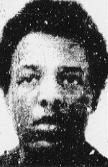
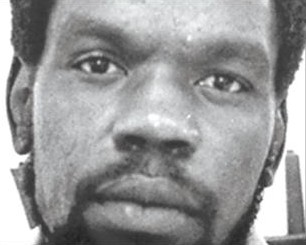
Ivon Ray Stanley
Murderer Ervil LeBaron
Murderer · USA · 1972
Ervil Morrell LeBaron (1925 to August 16, 1981) was the leader of a polygamous…
35 victims
Ervil LeBaron
Murderer · USA · 1972
Ervil Morrell LeBaron (1925 to August 16, 1981) was the leader of a polygamous…
35 victims
 Brian Kevin Rosenfeld
Murderer · USA · 1985
Brian Kevin Rosenfeld Brian Kevin Rosenfeld was sentenced to three concurrent l…
23 victims
Brian Kevin Rosenfeld
Murderer · USA · 1985
Brian Kevin Rosenfeld Brian Kevin Rosenfeld was sentenced to three concurrent l…
23 victims
 Marvin Gray
Murderer · USA · 1975
Marvin Gray was convicted killer who claimed responsibility for 23 slayings and…
23 victims
Marvin Gray
Murderer · USA · 1975
Marvin Gray was convicted killer who claimed responsibility for 23 slayings and…
23 victims
 Yahweh ben Yahweh
Murderer · USA · 1980
Yahweh ben Yahweh was born and legally named Hulon Mitchell Jr. (October 27, 19…
23 victims
Yahweh ben Yahweh
Murderer · USA · 1980
Yahweh ben Yahweh was born and legally named Hulon Mitchell Jr. (October 27, 19…
23 victims
 Maoupa Maake
Serial killer · S outh Africa · 1996
Maoupa Maake (Maoupa Cedric Maake; also known as the Wemmer Pan Killer) was a s…
27 victims
Maoupa Maake
Serial killer · S outh Africa · 1996
Maoupa Maake (Maoupa Cedric Maake; also known as the Wemmer Pan Killer) was a s…
27 victims
 Scott Dyleski
Homicide · USA · 2005
December 17, 1994 — Scott Dyleski’s father notified Child Protective Services t…
1 victim
Scott Dyleski
Homicide · USA · 2005
December 17, 1994 — Scott Dyleski’s father notified Child Protective Services t…
1 victim
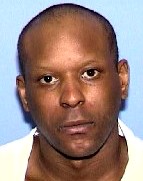 Calvin Letroy Hunter
Murderer · USA · 2003
Calvin Letroy Hunter (TDCJ Number 999483) was born on 04/30/1971. He was receiv…
2 victims
Calvin Letroy Hunter
Murderer · USA · 2003
Calvin Letroy Hunter (TDCJ Number 999483) was born on 04/30/1971. He was receiv…
2 victims
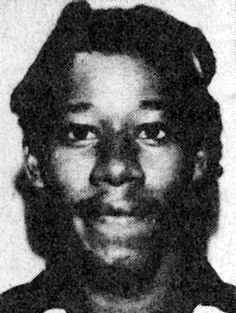 Connie Ray Evans
Murderer · USA · 1981
Connie Ray Evans was executed by asphyxiation-gas in Mississippi on July 8, 198…
1 victim
Connie Ray Evans
Murderer · USA · 1981
Connie Ray Evans was executed by asphyxiation-gas in Mississippi on July 8, 198…
1 victim
 Jane Reth
Murderer · USA · 1988
Jane Reth was convicted of second-degree murder in the 1988 death of her husban…
1 victim
Jane Reth
Murderer · USA · 1988
Jane Reth was convicted of second-degree murder in the 1988 death of her husban…
1 victim
- Gender
- male
- Country
- USA
- Location
- Decatur County, Georgia, USA
- Date of birth
- 1956
- Age at first offence
- 20
- Characteristics
- robbery, kidnapping
- Victim profile
- Clifford Floyd (insurance collector)
- Method of murder
- Shooting ( .22 caliber pistol) - Buried alive
- Date(s) of murder
- April 12, 1976
- Years active
- 1976
- Date of arrest
- 2 days after
- Status
-
Executed
Executed by electrocution in Georgia on July 12, 1984
Background
Ivon Ray Stanley was convicted in the Decatur County, Georgia Superior Court of murder, armed robbery, and kidnapping with bodily injury, and he was sentenced to death.
Stanley and his codefendant, Joseph Thomas, were overheard plotting the robbery several weeks before the crime. One witness overheard Stanley remark that after the robbery the best thing to do is to “get rid of him.”
The offence
On April 12, 1976, Clifford Floyd was making his regular Monday afternoon rounds through the Fowlstown area of Bainbridge, Georgia, collecting weekly insurance premiums.
Five weeks earlier, Joseph Thomas and Ivon Stanley had been overheard talking about robbing the insurance man because they needed some money. About one month prior to the murder, they were again overheard by a different person discussing the planned robbery. The two agreed that after the robbery they would “have to get rid of him because he will tell who we are.”
Stanley and Joseph Thomas robbed Floyd at gunpoint, took him to the woods, struck his head with a hammer, tied him to a tree, made him lie in a shallow grave, beat and jabbed him with a shovel in the head, throat, and chest, shot him in the head, and buried him alive while he was still pleading with Stanley and Thomas to stop.
Investigation
At the time of Floyd’s last known collection, he would have collected approximately $234.
Beginning the next day after the murder, four anonymous telephone calls were made to police telling them where they could find the car and giving misleading information about the victim. Through a telephone tap, one of these calls was traced to Thomas’ home. When police arrived, Thomas was the only one at home, and he subsequently admitted making the call.
An autopsy was performed by James Dawson, Assistant Director of the Georgia Crime Laboratory. The autopsy disclosed:
- a gunshot wound through the victim’s upper lip;
- numerous lacerations to the scalp, head, and body, apparently inflicted by the leading edge of a shovel;
- a depressed skull fracture pushed into the brain consistent with a blow from a hammer;
- brain hemorrhage;
- a broken sternum; and
- “a rather striking accumulation of both blood and dirt which was found in the bronchi of both lungs, scattered up and down the trachea and in the larynx and also in the upper-most part of the stomach ...”
Based upon the autopsy, death was caused by swallowing a mixture of blood and dirt, vomiting it up, then inhaling the regurgitated mixture into the lungs.
In sum, Clifford Floyd either strangled or suffocated on his own blood within about thirty minutes as he lay buried in the shallow grave.
Arrest
Joseph Thomas was arrested two days after the murder and confessed in intricate detail to this crime. Stanley’s arrest followed the murder as part of the investigation and the case that resulted in the death sentence.
Confession and trial evidence
Thomas’ statements were used to describe subsequent events.
Thomas sent a friend over to Stanley’s house to tell Ivon to come over to my house. Stanley “came straight on over. And I told him, I asked him, I said 'you can get the insurance man if you want him ....'”
Stanley ran from Thomas’ house and caught up with Floyd. On a pretext he persuaded Floyd to return to the Thomas residence. Stanley was armed with a .22 caliber pistol which Thomas had just given him. When Thomas came out of the house, Stanley had already pulled the gun on Floyd, emptied his pockets and told him not to move and not to say anything.
Stanley, armed with the pistol, and Thomas, carrying a hammer, forced Floyd to go with them to the woods near the Thomas house. As they were walking, Floyd and Thomas exchanged some words. Angered, Thomas struck Floyd on the forehead with the hammer. Thomas walked back up to the hog pens near his house, got a length of rope, and returned to the woods where the other two were. Again leaving Stanley and Floyd alone, Thomas went back to where Floyd had parked his car and drove it away in search of a hiding place. He rifled the car, broke into the glove compartment and removed a .22 caliber pistol. Leaving the car, he walked back to where he had left the other two men.
When Thomas returned, he found Floyd tied to a tree.
Stanley said, “You know, you know, we gonna have to, you know he knows.” Thomas responded, “Yeah.” “You know, we are gonna have to get rid of him,” said Stanley. Thomas said nothing, then went back to his house, got his mother’s shovel and returned.
With the shovel, Thomas began digging a shallow grave perhaps 11 inches in depth. Tiring, he gave the shovel to Stanley who finished “digging that insurance man's grave.”
When they had completed the grave, Stanley went over and untied Floyd from the tree but left his hands bound. Considerable blood was flowing from Floyd’s forehead. Thomas ripped part of the shirt from the man’s back and stuffed it into his mouth to silence him.
As they approached the grave, Stanley handed the gun to Thomas and told him, “You gonna do the rest ...”
Taking the gun, Thomas turned his head away and fired five times at Floyd’s head. Stanley then took the shovel that had been used to dig the grave and hit Floyd with it twice. He handed the shovel to Thomas who then beat the man with the shovel, hitting him once in the stomach, twice in the head and one time in the chest. Floyd was still alive.
Stanley then began to shovel dirt over the lower part of Floyd’s body. When he had partially buried the man, he handed the shovel to Thomas who then began to shovel dirt over Floyd’s head.
Through all of this, Floyd was not only struggling for breath but, as the dirt began to cover his head, he attempted to say something. Twice, according to Thomas, the insurance man had pleaded for his life. When Floyd, still breathing, was completely covered in his shallow grave, the two men left, Thomas returning to his home.
At around 6 p.m., as Thomas was finishing supper, Stanley came over to his house and said that they had “better go move that car.”
They drove the car down an old logging road where they eventually bogged down. The car was ultimately discovered by law enforcement officials.
Tape-recorded confession and Stanley’s statement
Thomas was arrested two days after the murder and confessed in intricate detail to this crime. His confession was tape-recorded seven days after the murder and was introduced at the trial.
At the guilt phase of the trial, Stanley testified that he had no memory of the incident after ingesting two pills given or sold to him by “some dude” in Macon. He also claimed no memory of the telephone calls or of the confession given seven days later.
Trial
Ivon Ray Stanley was convicted in the Decatur County, Georgia Superior Court of murder, armed robbery and kidnapping with bodily injury and sentenced to death.
Sentencing
The sentencing resulted in a death sentence. The Eleventh Circuit stated that Stanley’s death sentence was affirmed.
The aggravating circumstance set out in Ga.Code Ann. Sec. 17-10-30(b)(7) was at issue in the appeal. Stanley challenged the trial court’s instruction on section (b)(7) and argued that Godfrey v. Georgia required a limiting construction placed on section (b)(7) by the Georgia Supreme Court.
Appeals
Georgia Supreme Court
The Georgia Supreme Court affirmed Stanley’s convictions and death sentences for murder and kidnapping with bodily injury.
The court vacated Stanley’s armed robbery conviction, holding that it was included in the felony murder charge.
United States Supreme Court
Stanley filed a petition for state habeas corpus in the Butts County Superior Court. An evidentiary hearing was held on March 28, 1979, and Stanley was afforded full opportunity to present evidence. He testified and called six other witnesses. This testimony related to Stanley’s contention that he was denied the effective assistance of counsel in violation of his sixth and fourteenth amendment rights.
Stanley’s petition was denied on July 26, 1979.
Certificate of probable cause for appeal to the Georgia Supreme Court and petition for certiorari to the United States Supreme Court were denied. Stanley v. Zant, 444 U.S. 1103 (1980).
He filed a second state habeas petition in superior court, but, with one exception, the court held that the petition presented grounds which could have been presented earlier and were therefore waived. The state court considered one ground, a claim that the jury instructions violated Godfrey v. Georgia on the merits. The second petition was denied on October 14, 1980.
Stanley then filed his petition in district court. The district court found that Stanley had been given a full and fair hearing in state court and concluded that he was not entitled to a federal evidentiary hearing, and it denied the petition.
Stanley appealed that judgment to the United States Court of Appeals for the Eleventh Circuit.
The Eleventh Circuit considered four contentions:
- denial of effective assistance of counsel due to appointed lawyer’s failure to present any evidence of mitigation in the penalty phase of trial;
- jury instructions violated Godfrey;
- incriminating statement improperly received in evidence; and
- death penalty unconstitutionality where Stanley claimed he had no purpose to cause the victim’s death.
The Eleventh Circuit affirmed the judgment, concluding that:
- Stanley had failed to prove his trial counsel was ineffective;
- the section (b)(7) instruction claim did not provide sufficient justification for habeas relief in light of the evidence;
- the record supported that Stanley was thoroughly advised of his right to consult with an attorney before making any statement and understood his rights and was willing to make a statement freely and voluntarily; and
- a factfinder could conclude beyond a reasonable doubt that Stanley had a clear intention to kidnap, rob and murder the victim.
The Eleventh Circuit stated: “AFFIRMED.”
Concurrence and dissent in the Eleventh Circuit
FAY, Circuit Judge, concurring, stated: “Bound by our court’s recent opinion in Washington v. Strickland, 693 F.2d 1243 (5th Cir.1982) (Unit B en banc), I concur. My personal views continue to be those expressed in the dissents of Judges Roney and Hill.”
ARNOLD, Circuit Judge, sitting by designation, dissented and argued that counsel in the penalty phase introduced no evidence and that relatives and friends could have given testimony that would have portrayed Stanley as a “uniquely individual human being [ ],” quoting Woodson v. North Carolina, 428 U.S. 280, 304, 96 S.Ct. 2978, 2991, 49 L.Ed.2d 944 (plurality opinion). The dissent criticized the allocation of the burden of proof and argued for a remand or new trial as to punishment.
The dissent included the following statements:
- “Because I cannot agree with this allocation of the burden of proof, I respectfully dissent.”
- “He would not be released from prison. There would simply be a new trial as to punishment, and the worst that could happen, from the point of view of the State, would be a sentence of life imprisonment.”
- “I therefore respectfully dissent.”
The dissent also reproduced a portion of counsel’s closing address to the jury: “I have done my duty. I'll walk out of this courtroom today feeling that I have even gone overboard against my friends, against those I sit in church with, against those I have sat in the lodge with, against those I have broken bread with.”
Outcome
The Eleventh Circuit affirmed Stanley’s conviction and death sentence.
Stanley was executed by electrocution in Georgia on July 12, 1984.
Other details
Stanley’s appeal record included discussion of:
- his Miranda-related claims, including that he signed a waiver of counsel form and later gave a tape recorded statement after being read Miranda rights;
- the claim that the aggravating circumstance instruction was vague, overbroad and ambiguous under Ga.Code Ann. Sec. 17-10-30(b)(7), and the analysis comparing the jury instruction to Godfrey v. Georgia; and
- Enmund v. Florida as to accomplice liability and death penalty eligibility, with the Eleventh Circuit concluding that Stanley’s personal culpability was greater than Enmund’s.
The case referenced Stanley v. State, 240 Ga. 341, 241 S.E.2d 173 (1977), and certiorari denial, 439 U.S. 882 (1978). The district court denial was cited as Stanley v. Zant, Civ. Action No. 80-66-THOM, slip op. at 3 (M.D.Ga. June 11, 1981). The state habeas hearing denial was referenced as Stanley v. Zant, 444 U.S. 1103 (1980). The state habeas evidentiary hearing occurred on March 28, 1979, and the petition was denied on July 26, 1979. The second state habeas petition was denied on October 14, 1980. The Eleventh Circuit decision cited “Feb. 10, 1983” and that rehearing and rehearing en banc were denied “May 3, 1983.”
Spotted an error, or have more information about this case?