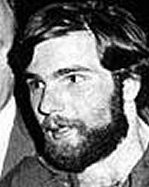
Ronald DeFeo
Mass murderer Francisco Paula Gonzales
Mass murderer · USA · 1964
Francisco Paula Gonzales was a passenger on Pacific Air Lines Flight 773. Gonza…
44 victims
Francisco Paula Gonzales
Mass murderer · USA · 1964
Francisco Paula Gonzales was a passenger on Pacific Air Lines Flight 773. Gonza…
44 victims
 James Huberty
Mass murderer · USA · 1984
James Oliver Huberty was a 41-year-old unemployed security guard. He was born i…
21 victims
James Huberty
Mass murderer · USA · 1984
James Oliver Huberty was a 41-year-old unemployed security guard. He was born i…
21 victims
 Charles Whitman
Mass murderer · USA · 1966
Charles Joseph Whitman (June 24, 1941 – August 1, 1966) shot and killed 14 peop…
15 victims
Charles Whitman
Mass murderer · USA · 1966
Charles Joseph Whitman (June 24, 1941 – August 1, 1966) shot and killed 14 peop…
15 victims
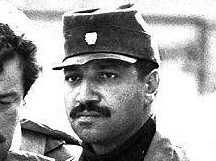 George Emil Banks
Mass murderer · USA · 1982
George Emil Banks was an American mass murderer and a former Camp Hill prison g…
13 victims
George Emil Banks
Mass murderer · USA · 1982
George Emil Banks was an American mass murderer and a former Camp Hill prison g…
13 victims
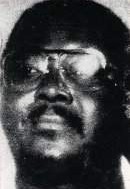 James Edward Pough
Mass murderer · USA · 1971
James Edward Pough (1948 – 18 June 1990) was an American mass murderer. On 18 J…
12 victims
James Edward Pough
Mass murderer · USA · 1971
James Edward Pough (1948 – 18 June 1990) was an American mass murderer. On 18 J…
12 victims
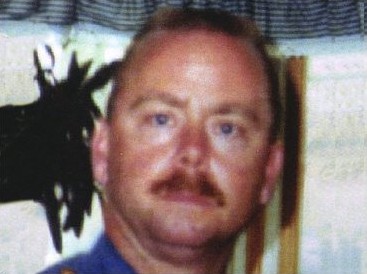 Edward Lutes
Mass murderer · USA · 2002
Edward Lutes, 42, was a police officer. Local community members described Edwar…
5 victims
Edward Lutes
Mass murderer · USA · 2002
Edward Lutes, 42, was a police officer. Local community members described Edwar…
5 victims
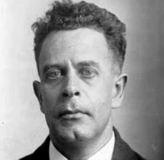 Henry Judd Gray
Murderer · USA · 1927
Henry Judd Gray Henry Judd Gray was executed by electrocution in New York on Ja…
1 victim
Henry Judd Gray
Murderer · USA · 1927
Henry Judd Gray Henry Judd Gray was executed by electrocution in New York on Ja…
1 victim
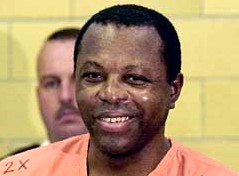 Amos Lee King
Murderer · USA · 1977
Name: Amos Lee King Jr. · Gender: Male · Race: Black · Hair color: Black · Eye…
2 victims
Amos Lee King
Murderer · USA · 1977
Name: Amos Lee King Jr. · Gender: Male · Race: Black · Hair color: Black · Eye…
2 victims
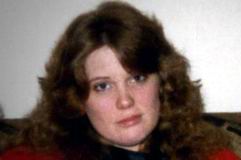 Michelle Knotek
Murderer · USA · 1994
Michelle Knotek was a woman from Raymond, Washington. She was convicted in 2004…
2 victims
Michelle Knotek
Murderer · USA · 1994
Michelle Knotek was a woman from Raymond, Washington. She was convicted in 2004…
2 victims
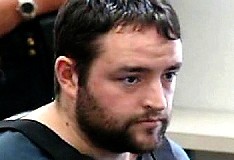 Peter James Wilson
Murderer · USA · 2010
Peter James Wilson was 29 years old. He was from Abbotsford, B.C., and had both…
1 victim
Peter James Wilson
Murderer · USA · 2010
Peter James Wilson was 29 years old. He was from Abbotsford, B.C., and had both…
1 victim
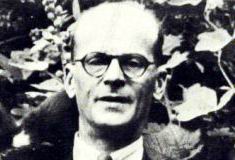 John Reginald Christie
Serial killer · United Kingdom · 1943
John Reginald Halliday Christie (April 8, 1899–July 15, 1953) was an English se…
8 victims
John Reginald Christie
Serial killer · United Kingdom · 1943
John Reginald Halliday Christie (April 8, 1899–July 15, 1953) was an English se…
8 victims
- Gender
- male
- Country
- USA
- Location
- Amityville, Long Island, New York, USA
- Date of birth
- September 26, 1951
- Age at first offence
- 23
- Characteristics
- parricide, history of mental illness, drugs, alcohol, rape
- Victim profile
- His father, Ronald DeFeo Sr.; mother, Louise; sisters Dawn, 18, and Allison, 13, and brothers Mark, 12, and John, 7
- Method of murder
- Shooting (.35 caliber rifle)
- Date(s) of murder
- November 13, 1974
- Years active
- 1974
- Date of arrest
- Next day
- Status
-
Life imprisonment
Sentenced to six consecutive sentences of 25 years to life on December 4, 1975
Case details
Ronald Joseph “Butch” DeFeo, Jr. (born September 26, 1951) was an American murderer. He was tried and convicted for the 1974 killings of his father, mother, two brothers, and two sisters.
Ronald DeFeo, Jr. was also known as “Butch.” He was the eldest son of the family.
STATUS and sentence
On November 21, 1975, DeFeo was found guilty on six counts of second-degree murder. On December 4, 1975, Judge Thomas Stark sentenced Ronald DeFeo, Jr. to six consecutive sentences of 25 years to life.
He was held in Green Haven Correctional Facility, Beekman, New York. Appeals to the parole board to date were turned down.
Timeline
- September 26, 1951 — Ronald Joseph “Butch” DeFeo, Jr. was born.
- 1965 — The DeFeo family occupied 112 Ocean Avenue after purchasing it.
- November 13, 1974 — Six members of the DeFeo family were shot and killed in their beds; Ronald DeFeo, Jr. was the sole survivor.
- November 14, 1974 — DeFeo confessed to carrying out the killings himself.
- October 14, 1975 — DeFeo’s trial began.
- November 19, 1975 — The presiding judge instructed the jury to gather in the deliberation chamber and return with a verdict.
- November 21, 1975 — DeFeo was found guilty of six counts of second-degree murder.
- December 4, 1975 — Judge Thomas Stark sentenced Ronald DeFeo, Jr.
- December 18 — George and Kathy Lutz moved into 112 Ocean Avenue.
- February 16, 1976 — Dr. Stephen Kaplan received a phone call from George Lutz requesting investigation of the house.
- 1986 — DeFeo gave an account in an interview claiming his mother was responsible for the shootings.
- November 30, 2000 — Ronald DeFeo met with Ric Osuna.
- 2001 — One of the alleged accomplices died in January 2001.
- 2002 — Ric Osuna’s book was published in 2002.
The offence
Ronald DeFeo, Jr. killed six family members at 3:15 a.m. on the morning of November 13, 1974 with a .35 caliber rifle.
The victims were the DeFeo family: Ronald DeFeo, Sr. (43), Louise DeFeo (42), and their children Dawn (18), Allison (13), Marc (12), and John Matthew (9). The six victims were shot with a .35 caliber lever action Marlin 336C rifle at around three o’clock in the morning.
The report differentiated the victims’ injuries by parental shots and children’s shots: Ronald DeFeo, Sr. and Louise DeFeo were both shot twice, while the children were all killed with single shots.
One account stated Louise DeFeo and her daughter Allison were reportedly the only victims awakened by the gunfire at the time of their deaths, but Suffolk County Police stated the victims were all found lying on their stomachs in bed.
Investigation and discovery
At around 6:30 in the evening of November 13, 1974, 23-year-old Ronald DeFeo, Jr. went to Henry’s Bar in Amityville, Long Island, New York and declared:
“You got to help me! I think my mother and father are shot!”
DeFeo and a small group of people went to 112 Ocean Avenue and found his parents were indeed dead. One of the group, Joe Yeswit, made an emergency call to the Suffolk County Police. Police searched the house and found that six members of the same family were dead in their beds.
Suffolk County Police reported that the victims were discovered in their home at 112 Ocean Avenue by the oldest son, Ronald Jr. (23), at about 6:15 P.M. Police said he had just returned home from business. Another account stated that by the end of the evening, police investigators would find an additional two bodies, bringing the Ocean Avenue death toll to six.
The DeFeo family had occupied 112 Ocean Avenue since purchasing it in 1965.
The DeFeo family members were buried in nearby Saint Charles Cemetery in Farmingdale.
Arrest and custody
After suggesting to police officers at the scene of the crime that the killings had been carried out by a mob hit man named Louis Falini, Ronald DeFeo, Jr. was taken to the local police station for his own protection. An interview with DeFeo at the station soon exposed serious inconsistencies in his version of events.
The following day DeFeo confessed to carrying out the killings himself.
Confession and interrogation
In his confession, DeFeo told detectives:
“Once I started, I just couldn’t stop. It went so fast.”
DeFeo admitted taking a bath, redressing, and discarding crucial evidence including blood-stained clothes, the Marlin rifle, and cartridges on his way to work as usual.
He also gave police a written statement. In that statement, he claimed he stayed up until 2:00 a.m. watching the film Castle Keep on television. He reported that at 4:00 a.m. he walked past the upstairs bathroom and that his brother’s wheelchair was in front of the door. He also claimed to have heard the toilet flush. He described leaving work early, visiting Sherry and Bobby, drinking, and trying to reach his family by telephone. He further stated that when he finally returned home to check on his family, he entered through a kitchen window and went upstairs where he discovered his parents’ bodies, then raced downstairs and back to Henry’s Bar to alert others who summoned the police.
In one interrogation account, Detective George Harrison shook Butch awake at 8:45 a.m. and asked:
“Did you find Falini yet?”
The same account stated DeFeo protested that it was not necessary to read him his rights and that he waived his right to counsel to prove he was an innocent witness.
In discussions about the murders’ timing, it was established that the murders occurred between 2:00 and 4:00 a.m. when police pointed to discrepancies in DeFeo’s earlier account.
In a further development of his story, DeFeo claimed that at 3:30 a.m. Louis Falini woke him up and put a revolver to his head, and that another man was present, though he could not provide a physical description.
In response to questioning about not wanting to leave clues, DeFeo later implicated himself after police confronted him with evidence linking him to a .35-caliber gun box from his room.
During the confrontation, DeFeo threatened:
“If I had any sense, which I don’t, I’d come down there and kill you now.”
In the confession sequence, DeFeo ultimately said:
“It all started so fast. Once I started, I couldn’t stop. It went so fast.”
People involved
Defendant
- Ronald Joseph “Butch” DeFeo, Jr. — sole survivor; convicted for the murders of six family members.
Victims
- Ronald DeFeo, Sr. (43) — killed.
- Louise DeFeo (42) — killed.
- Dawn (18) — killed.
- Allison (13) — killed.
- Marc (12) — killed.
- John Matthew (9) — killed.
Police and prosecutors named
- Robert C. Rapp — Suffolk Deputy Police Commissioner; declined to comment when asked whether DeFeo had given a statement.
- William Benjamin — principal officer of Suffolk County’s Babylon Probation Office.
- Suffolk County Police — searched the house and found six victims dead.
- Joe Yeswit — called Suffolk County Police in an emergency call.
- Detective Gaspar Randazzo — first to question DeFeo after the discovery.
- Detective Gerard Gozaloff — joined questioning in a temporary command center.
- Joseph Napolitano — joined questioning in the command center.
- Officer Kenneth Geguski — first policeman on the scene in one account.
- Officer Edwin Tyndall — arrived at the scene in one account.
- Detective John Shirvell — discovered evidence in the DeFeo bedrooms around 2:30 a.m., November 15.
- Detective George Harrison — read DeFeo his rights at 8:45 a.m. in one account.
- Lt. Robert Dunn — took over after Harrison.
- Detective Dennis Rafferty — took over questioning after Harrison.
- Suffolk County assistant district attorney Gerard Sullivan — led the prosecution.
- Judge Thomas Stark — sentenced DeFeo.
Defence
- William Weber — DeFeo’s defense lawyer.
- Dr. Daniel Schwartz — psychiatrist for the defense who supported the insanity plea.
- Dr. Harold Zolan — psychiatrist for the prosecution who testified to DeFeo being aware of his actions at the time of the crime.
Other named individuals
- Louis Falini — named by DeFeo as the mob hit man who allegedly carried out the killings.
- Sherry Klein — DeFeo’s girlfriend (19) mentioned in one narrative.
- Bobby Kelske — mentioned in one narrative as a friend.
- Ric Osuna — author of The Night the DeFeos Died.
- Jay Anson — author of The Amityville Horror.
- George Lutz and Kathy Lutz — occupants of 112 Ocean Avenue after the murders.
- Dr. Stephen Kaplan — parapsychologist.
- William Weber — referred to again as DeFeo’s defense attorney.
- Jack Weinstein — U.S. District Court Judge named in relation to debunking.
- Lou Gentile — radio show host named in relation to a letter from DeFeo.
- Michael Brigante, Sr. — named in an interview as DeFeo’s fear.
- Pete DeFeo — described as a caporegime in the Genovese crime family and named as DeFeo’s father’s uncle.
- Ryan Katzenbach — wrote, directed, and produced a film described in the record.
- Ed Asner — provided narration in the film described.
- Ryan Katzenbach and Ed Asner are linked to the film described about the Amityville case.
Trial
DeFeo’s trial began on October 14, 1975.
DeFeo and his defense lawyer William Weber mounted an affirmative defense of insanity. DeFeo claimed that voices in his head had urged him to carry out the killings. Dr. Daniel Schwartz supported the insanity plea.
The prosecution’s psychiatrist Dr. Harold Zolan maintained that while DeFeo was an abuser of heroin and LSD, he had antisocial personality disorder and was aware of his actions at the time of the crime.
Jury deliberation and verdict
The presiding judge instructed the jury on Wednesday, November 19, 1975 to gather in the deliberation chamber and return with a verdict.
The jury’s first vote came back 10-2 with two holdouts. After reviewing transcripts of DeFeo’s testimony, the vote became unanimous 12-0.
On Friday, November 21, 1975, DeFeo was found guilty of six counts of second-degree murder.
Sentencing
Appeals and incarceration
DeFeo was currently held in Green Haven Correctional Facility, Beekman, New York.
All appeals to the parole board to date were turned down.
In 1984, DeFeo was awarded $300 in damages from the state because he was locked in his prison cell for five days last December. State Court of Claims Judge Thomas Lowery ruled DeFeo suffered mental anguish from the experience in the Auburn Correctional Facility.
In June 1992, DeFeo asked for a new trial. He claimed in court papers that his sister Dawn killed the other relatives and then he fatally shot her in a rage after discovering the bodies.
Other details
Evidence and weapon
Investigators found a pair of rectangular cardboard boxes labeled describing recent contents: Marlin rifles, a .22 and a .35. The .35-caliber Marlin was identified as the murder weapon after further questioning.
Police officers and a medical examiner were initially puzzled by the rapidity and scale of the killings and considered the possibility that more than one person had been responsible.
The investigation concluded that the victims had been asleep at the time of the murders and that the rifle had not been fitted with a suppressor.
Physical circumstances and scene observations
All six victims were found lying face down in their beds with no signs of a struggle or sedatives having been administered, leading to speculation that someone in the house should have been awakened by the noise of the gunshots. Neighbors did not report hearing any gunshots being fired.
During the original police investigation, traces of gunpowder were reported to have been found on Dawn’s nightgown, which was treated as an inquiry that was not pursued after DeFeo’s confession.
Reports about changing accounts
During his time in jail, DeFeo gave several accounts of how the killings were carried out, all of them inconsistent.
In a 1986 interview, he claimed that his mother was responsible for the shootings, which was dismissed as "preposterous" by a former Suffolk County official.
On November 30, 2000, DeFeo met with Ric Osuna. Osuna reported that DeFeo claimed he committed the murders with his sister Dawn and two unnamed friends "out of desperation." DeFeo claimed that after a furious row with his father, he and his sister planned to kill their parents, and that Dawn murdered the children to eliminate them as witnesses. DeFeo said he was enraged on discovering his sister’s actions, knocked her unconscious on to her bed, and shot her in the head.
It was reported that one alleged accomplice died in January 2001 and the other entered a witness protection program. Attempts to contact the alleged accomplices failed.
DeFeo also denied giving Ric Osuna information that could be used in his book, in a letter to radio show host Lou Gentile.
Relationship background and conduct named
The record included claims that DeFeo used heroin and LSD and that he had a history of mental illness and antisocial personality disorder. It also described alcohol use and drug use.
The record described a stormy relationship with his father and conflicts between them. It described DeFeo being overweight and sullen as a young boy and noted that he had employed passive-aggressive behavior with a therapist.
Sequence and conduct on the night of the murders in one narrative
A narrative included that DeFeo spent most of the day drinking, had friends around earlier in the day for a “piss-up,” and later turned up at a bar continuing his drinking.
The narrative described DeFeo returning to Henry’s and telling Bobby Kelske:
“Bob, you gotta help me. Someone shot my mother and father!”
Another narrative account included a written statement in which DeFeo claimed to have discovered his parents’ bodies after entering through a kitchen window and then to have alerted others at Henry’s.
Phone call transcript (verbatim)
The record included a transcript with repeated lines from the caller:
Operator: This is Suffolk County Police. May I help you?
Man: "We have a shooting here. Uh, DeFeo."
Operator: "Sir, what is your name?"
Man: "Joey Yeswit."
Operator: "Can you spell that?"
Man: "Yeah. Y-E-S W I T."
Operator: "Y-E-S . . Man: "Y-E-S-W-I-T."
Operator: ". . . W-I-T. Your phone number?"
Man: "I don't even know if it's here. There's, uh, I don't have a phone number here."
Operator: "Okay, where you calling from?"
Man: "It's in Amityville. Call up the Amityville Police, and it's right off, uh . . .Ocean Avenue in Amityville."
Operator: "Austin?"
Man : "Ocean Avenue. What the ... ?"
Operator: "Ocean ... Avenue? Offa where?"
Man: "It's right off Merrick Road. Ocean Avenue."
Operator: "Merrick Road. What's ... what's the problem, Sir?"
Man: "It's a shooting!"
Operator: "There's a shooting. Anybody hurt?"
Man: "Hah?"
Operator: "Anybody hurt?"
Man: "Yeah, it's uh, uh -- everybody's dead."
Operator: "Whattaya mean, everybody's dead?"
Man: "I don't know what happened. Kid come running in the bar. He says everybody in the family was killed, and we came down here."
Operator: "Hold on a second, Sir." ( Police Officer now takes over call )
Police Officer: "Hello."
Man: "Hello."
Police Officer: "What's your name?"
Man: "My name is Joe Yeswit."
Police Officer: "George Edwards?"
Man: "Joe Yeswit."
Police Officer: "How do you spell it?"
Man: "What? I just ... How many times do I have to tell you? Y-E-S-W-I-T."
Police Officer: "Where're you at?"
Man: "I'm on Ocean Avenue.
Police Officer: "What number?"
Man: "I don't have a number here. There's no number on the phone. "
Police Officer: "What number on the house?"
Man: "I don't even know that."
Police Officer: "Where're you at? Ocean Avenue and what?"
Man: "In Amityville. Call up the Amityville Police and have someone come down here. They know the family."
Police Officer: "Amityville."
Man: "Yeah, Amityville."
Police Officer: "Okay. Now, tell me what's wrong."
Man: "I don't know. Guy come running in the bar and said there -- his mother and father are shot. We ran down to his house and everybody in the house is shot. I don't know how long, you know. So, uh . . ."
Police Officer: "Uh, what's the add ... what's the address of the house?"
Man: "Uh, hold on. Let me go look up the number. All right. Hold on. One-twelve Ocean Avenue, Amityville."
Police Officer : "Is that Amityville or North Amityville?"
Man: "Amityville. Right on ... south of Merrick Road."
Police Officer : "Is it right in the village limits?"
Man: "It's in the village limits, yeah."
Police Officer : "Eh, okay, what's your phone number?"
Man: "I don't even have one. There's no number on the phone. "
Police Officer: "All right, where're you calling from? Public phone?"
Man: "No, I'm calling right from the house, because I don't see a number on the phone."
Police Officer: "You're at the house itself?"
Man: "Yeah."
Police Officer: "How many bodies are there?"
Man: "I think, uh, I don't know -- uh, I think they said four."
Police Officer : "There's four?"
Police Officer : "All right, you stay right there at the house, and I'll call the Amityville Village P.D., and they'll come down."
Media and later controversies (as contained in the record)
The record included that the DeFeo murders and its subsequent haunting became part of pop culture with the film series “Amityville Horror.”
It included claims about the book The Amityville Horror by Jay Anson, describing a 28-day period during December 1975 and January 1976 when George and Kathy Lutz and their three children lived at 112 Ocean Avenue.
It included that the 1982 film Amityville II: The Possession was based on a book Murder in Amityville by parapsychologist Hans Holzer and was described as a prequel featuring the fictional Montelli family based loosely on the DeFeo family.
The record also included a claim that the Hollywood film versions of the DeFeo murders contained inaccuracies, including that a 2005 remake included a fictional child character called Jodie DeFeo, who was not a victim of the shootings in November 1974.
It included that Dr. Stephen Kaplan received a phone call from George Lutz on February 16, 1976 and later concluded the account contained inconsistencies and fabrications.
In relation to Dr. Kaplan’s questioning, George Lutz was described as saying he could not describe the psychic phenomena and that he knew the names of demons. The record included verbatim Kaplan text using brackets:
“The Amityville Horror Conspiracy”
I began to ask questions. What actually happened to him and his family? George…says that he simply can’t describe the psychic phenomena. But there are demons there. He even knows their names!
‘What are their names?’ I ask. [George] won’t tell me. He claims they’ll appear if he as much as mentions their names out loud.
‘Who told you that?’ I ask.
‘I read it in a book.’ I ask him for the title, but he can’t remember -- he’s read so many books since they bought the house. Books on demonology, witchcraft, Satanism, ghosts, psychic phenomena -- the list went on and on. And all in just a few short weeks, or so George claims.
It also described instances of paranormal claims in the Lutz account, and stated that the tale was debunked by the Catholic Diocese of Rockville Center, the Amityville Police Department, William Weber, U.S. District Court Judge Jack Weinstein, and even George and Kathy Lutz, who were said to have recanted certain parts of the tale.
Spotted an error, or have more information about this case?