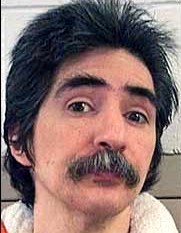
Roberto Arguelles
Serial killer Glen Edward Rogers
Serial killer · USA · 1993
Glen Edward Rogers was a spree killer whose cross-country rampage in 1994-95 le…
70 victims
Glen Edward Rogers
Serial killer · USA · 1993
Glen Edward Rogers was a spree killer whose cross-country rampage in 1994-95 le…
70 victims
 Efren Saldivar
Serial killer · USA · 1989
Efren Saldivar (born 30 September 1969) was an American serial killer who murde…
50 victims
Efren Saldivar
Serial killer · USA · 1989
Efren Saldivar (born 30 September 1969) was an American serial killer who murde…
50 victims
 Gary Ridgway
Serial killer · USA · 1982
Gary Leon Ridgway Ridgway was born 18-February-1949 in Salt Lake City, UT. He w…
49 victims
Gary Ridgway
Serial killer · USA · 1982
Gary Leon Ridgway Ridgway was born 18-February-1949 in Salt Lake City, UT. He w…
49 victims
 Charles Cullen
Serial killer · USA · 1984
Charles Cullen (born February 22, 1960) was a former nurse and the most prolifi…
45 victims
Charles Cullen
Serial killer · USA · 1984
Charles Cullen (born February 22, 1960) was a former nurse and the most prolifi…
45 victims
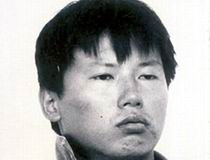 Charles Ng
Serial killer · USA · 1983
Charles Chi-Tat Ng (Chinese: 吳志達/吴志达; born December 24, 1960) was a Chinese-Ame…
25 victims
Charles Ng
Serial killer · USA · 1983
Charles Chi-Tat Ng (Chinese: 吳志達/吴志达; born December 24, 1960) was a Chinese-Ame…
25 victims
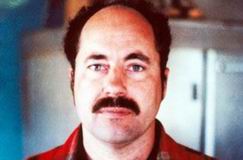 Leonard Lake
Serial killer · USA · 1983
Leonard Lake (October 29, 1945 – June 6, 1985) was an American serial killer. H…
25 victims
Leonard Lake
Serial killer · USA · 1983
Leonard Lake (October 29, 1945 – June 6, 1985) was an American serial killer. H…
25 victims
 Joseph Bishop Goff
Murderer · USA · 2004
Joseph Bishop Goff was convicted by the George County Circuit Court in the capi…
1 victim
Joseph Bishop Goff
Murderer · USA · 2004
Joseph Bishop Goff was convicted by the George County Circuit Court in the capi…
1 victim
 Ivan Abner Cantu
Murderer · USA
Name: Ivan Abner Cantu · TDCJ number: 999399 · Date of birth: 06/14/1973 · Age…
2000 victims
Ivan Abner Cantu
Murderer · USA
Name: Ivan Abner Cantu · TDCJ number: 999399 · Date of birth: 06/14/1973 · Age…
2000 victims
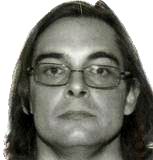 James Ritchie
Serial killer · USA · 2016
James Dale Ritchie (November 4, 1976 – November 12, 2016) was known in the medi…
5 victims
James Ritchie
Serial killer · USA · 2016
James Dale Ritchie (November 4, 1976 – November 12, 2016) was known in the medi…
5 victims
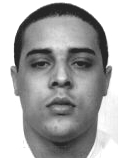 Gerald Tigner
Murderer · USA · 1992
Gerald Wayne Tigner was convicted of the capital murders of Michael Watkins and…
3 victims
Gerald Tigner
Murderer · USA · 1992
Gerald Wayne Tigner was convicted of the capital murders of Michael Watkins and…
3 victims
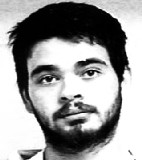 Donnie Allen Hulett
Murderer · USA · 2002
Donnie Allen “D.J.” Hulett was convicted murderer who was sentenced to death on…
2 victims
Donnie Allen Hulett
Murderer · USA · 2002
Donnie Allen “D.J.” Hulett was convicted murderer who was sentenced to death on…
2 victims
- Gender
- male
- Country
- USA
- Location
- Salt Lake City, Utah, USA
- Date of birth
- 1962
- Age at first offence
- 30
- Characteristics
- rape, child molester
- Victim profile
- Margo Bond, 42 / Stephanie Blundell, 13 / Tuesday Roberts, 15, and her friend Lisa Martinez, 16
- Method of murder
- Strangulation / St abbing with knife
- Date(s) of murder
- 1992
- Years active
- 1992
- Date of arrest
- May 2, 1996 (confessed)
- Status
-
Died in custody
Sentenced to death on July 20, 1997; died in prison on November 23, 2003
Case record: Roberto Arguelles
Background
Roberto Arguelles was serving a sentence for child molestation when he confessed to being a serial killer.
He spent all but three years of his adult life behind bars.
He was on parole in March 1992.
Roberto Arguelles repeatedly stated he wished to die for his crimes and would fight any effort to appeal his death sentences.
At a May 1 hearing, Arguelles repeatedly requested that Karen Stam be called. Stam was initially appointed to represent him, but in 1996 she and other members of the Salt Lake Legal Defenders Association were disqualified because an employee had a potential conflict of interest. Brass asked that an attorney be appointed for Arguelles. The prosecutors argued Tuesday that unless Arguelles was ruled incompetent, he had the right to not have an attorney. In a response Tuesday, Brass contended that courts had the authority to appoint counsel for defendants “who defy basic procedural rules or who fail to maintain proper courtroom decorum.” He said that at the May 1 hearing, Arguelles “was clearly and wildly inappropriate and also (appeared) to be incompetent. He simply cannot be allowed to represent himself at this point.” During that hearing, Arguelles yelled, screamed and spewed profanity. Burton had him removed from the courtroom three times.
Technically, Arguelles had no attorney, as he fired Brass and other court-appointed public defenders.
Karen Stam wrote to the Utah Supreme Court in March 2001 that Arguelles “continues to deteriorate mentally, collecting and eating feces regularly.” That behavior was among several reasons cited by Brass in seeking a new evaluation.
After he tried to hang himself with a laundry bag in his cell at the Utah State Prison on August 12, 1998, he began eating his own feces. He also ate pieces of paper and plastic.
He was strapped in a wheelchair whenever he appeared in court and a mesh mask covered his face to prevent him from spitting.
The offence
Roberto Arguelles confessed to four killings and pleaded guilty to the murders.
He confessed that on March 1992 he kidnapped, sexually assaulted and strangled 15-year-old Tuesday Roberts, then stabbed her friend, 16-year-old Lisa Martinez, to death with a wood chisel.
He also confessed to kidnapping, sexually assaulting and killing 13-year-old Stephanie Blundell earlier that month.
He pleaded guilty to the February 1992 abduction and strangulation of 42-year-old Margo Bond, a janitor at a junior high school where Arguelles said he was hunting for teenage victims.
Arguelles said the three teens were killed after accepting rides from him.
Aruguelles originally claimed to have merely witnessed the dumping of the bodies of two of the dead teenagers, and later broke down and admitted to the four killings.
He confessed while in prison for sexually abusing two young children.
Margo Bond was a janitor at a junior high school.
Lisa Martinez’s grandmother, Rose Edwards, was removed from the courtroom briefly after she shouted at Arguelles during his health-related complaints. “That's nothing compared to what you did to my granddaughter,” she said.
Investigation
Four years after the disappearance of three teen-age girls from the Salt Lake City area, Arguelles received a letter saying that he was a father.
On May 2, 1996, he confessed to their murders after receiving the letter.
On May 2, 1996, the repentant slayer said:
"I realise these girls were just little girls like mine.... I started to understand just how much it would hurt to have someone do what he had done"
In return for fessing up, Arguelles asked for a private cell, a color TV and the death penalty.
Arrest
Arguelles pleaded guilty to the murders on May 12, 1997 and said he wanted to be executed as soon as possible.
Trial
On June 20, Third District Court Judge David Young handed down the death sentence for Roberto.
In a courtroom exchange, the judge asked Arguelles: “You're asking me to sentence you to death?”
Roberto Arguelles replied:
"I am because as many years as I've been through this, no one's going to help me with this condition... I would elect to be executed by firing squad," if possible without a hood, Arguelles added.
Arguelles was ordered to undergo a competency evaluation after he tried to hang himself with a laundry bag in his cell at the Utah State Prison on August 12, 1998. Two psychiatrists and a neuro-psychologist determined he was competent.
In April 2000, Arguelles told Judge David Young he was fed up with the competency hearings to determine if he was fit to die. He said: “I'm tired of waiting,” and “I'm having a lot of problems at the prison. A lot of people are trying to tell me I don't want the death penalty.”
Sentencing
On July 20, 1997, Arguelles was sentenced to death.
On June 20, 1997, Judge David Young handed down the death sentence.
When sentenced to death in Utah, inmates were given the option of lethal injection or a firing squad.
Appeals
Arguelles has repeatedly stated he would fight any effort to appeal his death sentences.
Two psychiatrists and a neuro-psychologist had determined he was competent after the August 12, 1998 suicide attempt and subsequent ordering of evaluation.
Prosecutors contended that the Corrections’ action invalidated requests filed in Arguelles’ behalf last week by attorney Ed Brass. Brass sought to vacate the execution order and extend the time to appeal it, stay the execution and arrange a competency evaluation.
Prosecutors said, “The only inquiry is whether defendant has become incompetent since the last adjudication of that issue.”
Outcome
Roberto Arguelles died in prison on November 23, 2003.
He died at age 41 in Utah State Prison in Draper, UT, of undetermined causes.
The execution of serial killer Roberto Arguelles, which had been scheduled for June 27, 2003, was stayed until his competency could be determined.
Third District Judge Michael Burton signed the stay after prosecutors agreed to the delay.
The action came one day after the Utah Department of Corrections notified Burton that there was good reason to evaluate Arguelles.
Assistant Attorney General Thomas Brunker said:
“The bottom line is, we cannot legally or constitutionally execute someone who is incompetent,”
and:
“The prison ... has concluded this is an issue that needs to be adjudicated.”
At the time of the death warrant hearing, Lisa’s grandmother Rose Edwards was removed from the courtroom briefly after shouting.
Investigators said the death was due to natural causes.
Aruguelles had been set to face the firing squad on June 27.
The procedure for a firing squad was described as: he would have worn a black jumpsuit with a white cloth pinned over his heart and a black hood over his head. At the shouted command of “ready, aim, fire,” state-sanctioned riflemen would have fired at the white cloth.
Jack Ford, spokesman for the Utah Department of Corrections, said:
“This is quick, clean, and simple,”
and:
“It is a lot more humane than the way his victims died.”
Roberto Arguelles died without Utah’s help.
He was taken to the hospital twice with intestinal blockage but refused treatment.
On the evening of Nov. 15, officers noticed Arguelles had glassy eyes and was unusually subdued, and he was taken to the prison infirmary.
Clint Friel, warden of the Utah State Prison, said:
“17:05 Inmate Arguelles unresponsive,”
“17:10 called for an ambulance. 17:27 pronounced dead.”
Karen Stam said:
“In the situation where somebody is obviously mentally ill, which Roberto was, you don't ask them if they want treatment, like they are a normal person,”
and:
“You treat them.”
Roberto Arguelles insisted he was being mistreated.
During a court hearing, he said prison officers broke his neck and back bones, according to transcripts.
Jack Ford said there was no evidence of any broken bones or mistreatment.
The results of a toxicology report and autopsy were expected in a few weeks, and the Salt Lake County Sheriff's Department was investigating his death.
Aftermath
Lorraine Martinez, whose 16-year-old daughter was one of Arguelles’s victims, said:
“I can't believe he just passed away; it was like nothing,”
and:
“I wish he could have lived longer and suffered more.”
Mrs. Martinez said:
“He gets to rest, but I'm still out here in the world,”
and:
“I still have to live with losing my daughter.”
George Haley, a lawyer who had argued against parole for Arguelles, said:
“I was driving when I heard about the murders,”
and:
“I pulled over and cried. They let this mad dog out and he murdered four people.”
Other details
Aruguelles had been described as having been sentenced to death June 20, 1997 and having a June 2003 execution date that was halted by a judge.
He had been considered Utah’s most notorious inmate.
He was the third person executed by a firing squad after Gary Gilmore in 1977 and John Albert Taylor in 1996.
Use of a firing squad was described as also legal in Oklahoma and Idaho, but those states were said to have never exercised the option.
Mayhem.net referred to Roberto Arguelles as “Roberto Arguelles , 41,” and described him as being on parole in March 1992.
Spotted an error, or have more information about this case?