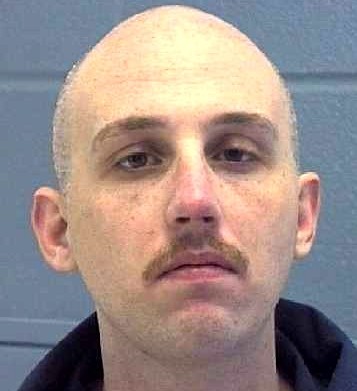
David Phillip Smith
Murderer Brian Kevin Rosenfeld
Murderer · USA · 1985
Brian Kevin Rosenfeld Brian Kevin Rosenfeld was sentenced to three concurrent l…
23 victims
Brian Kevin Rosenfeld
Murderer · USA · 1985
Brian Kevin Rosenfeld Brian Kevin Rosenfeld was sentenced to three concurrent l…
23 victims
 Russell Ellwood
Murderer · USA · 1991
Russell Ellwood was a former taxi driver. Authorities suspected him of killing…
20 victims
Russell Ellwood
Murderer · USA · 1991
Russell Ellwood was a former taxi driver. Authorities suspected him of killing…
20 victims
 Robert Martines Perez
Murderer · USA · 1994
Name: Robert Martines Perez · Other name used in proceedings: Robert Martinez P…
15 victims
Robert Martines Perez
Murderer · USA · 1994
Name: Robert Martines Perez · Other name used in proceedings: Robert Martinez P…
15 victims
 Billy Frank Vickers
Murderer · USA · 1993
Billy Frank Vickers Vickers was executed by lethal injection in Texas on Januar…
14 victims
Billy Frank Vickers
Murderer · USA · 1993
Billy Frank Vickers Vickers was executed by lethal injection in Texas on Januar…
14 victims
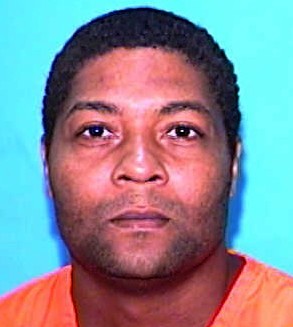 Kenneth Hartley
Murderer · USA · 1991
Name: Kenneth Hartley Date of birth: 01/27/67 Court: Fourth Judicial Circuit, D…
1 victim
Kenneth Hartley
Murderer · USA · 1991
Name: Kenneth Hartley Date of birth: 01/27/67 Court: Fourth Judicial Circuit, D…
1 victim
 Jack Harrison Trawick
Serial killer · USA · 1972
Jack Harrison Trawick (male; W; gender M) Trawick was executed by lethal inject…
14 victims
Jack Harrison Trawick
Serial killer · USA · 1972
Jack Harrison Trawick (male; W; gender M) Trawick was executed by lethal inject…
14 victims
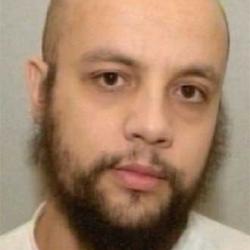 Mohammed Bouyeri
Murderer · Netherlands · 2004
Mohammed Bouyeri (Arabic: محمد بويري ) was born on March 8, 1978 in Amsterdam.…
1 victim
Mohammed Bouyeri
Murderer · Netherlands · 2004
Mohammed Bouyeri (Arabic: محمد بويري ) was born on March 8, 1978 in Amsterdam.…
1 victim
 Michael McCrea
Murderer · Singapore · 2002
Michael McCrea was sentenced to 24 years imprisonment on June 29, 2006. · 2 Jan…
2 victims
Michael McCrea
Murderer · Singapore · 2002
Michael McCrea was sentenced to 24 years imprisonment on June 29, 2006. · 2 Jan…
2 victims
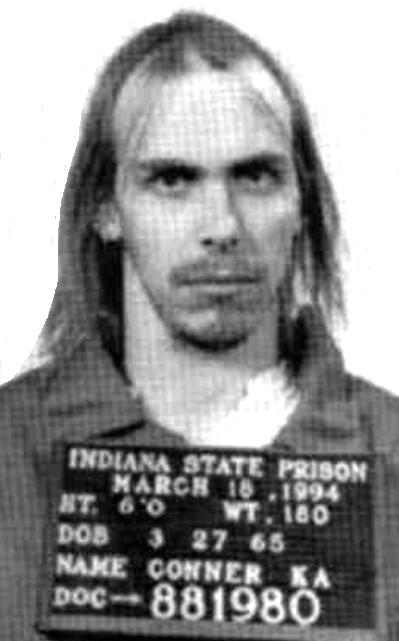 Kevin Aaron Conner
Murderer · USA · 1988
Kevin Aaron Conner was convicted by jury in the Marion Superior Court, Criminal…
4 victims
Kevin Aaron Conner
Murderer · USA · 1988
Kevin Aaron Conner was convicted by jury in the Marion Superior Court, Criminal…
4 victims
- Gender
- male
- Country
- USA
- Location
- Clayton County, Georgia, USA
- Date of birth
- 1976
- Age at first offence
- 19
- Characteristics
- argument
- Victim profile
- Jeremy Javies, 16 (friend and neighbor)
- Method of murder
- Shooting (sawed-off 12-gauge shotgun)
- Date(s) of murder
- March 22, 1995
- Years active
- 1995
- Date of arrest
- Next day
- Status
-
Sentenced to death
Commuted to life in prison; death sentence was imposed on March 7, 1997.
Case record: David Phillip Smith
Background
David Phillip Smith was 20 years old when he was sentenced to death. He was sentenced to death on March 7, 1997, and his punishment was later commuted to life in prison.
Smith was white. The victim, Jeremy Javies, was African-American.
Smith was convicted of malice murder of Jeremy Javies, and he was also convicted of theft by receiving stolen property and possession of a firearm during the commission of a felony.
The offence
Jeremy Javies was 16 years old. He was a friend and neighbor of David Phillip Smith.
Jeremy Javies was killed by a shotgun. The evidence showed that Smith methodically shot Jeremy in the arms and legs before putting the barrel of a sawed-off shotgun in the teen-ager's mouth and firing a final time. At trial, the State presented evidence that Javies had six and possibly seven gunshot wounds: four wounds to the arms and shoulders, a press-contact shot to the neck that had fractured the vertebrae, and one and possibly two press-contact shots to the face. All of the wounds were inflicted by a 12-gauge shotgun.
Smith and Jeremy Javies went into the woods with shotguns after an argument on the front porch.
Smith admitted shooting Javies but claimed that Javies had first fired at him with the 16-gauge shotgun.
Investigation
The evidence presented at trial showed that Smith purchased a sawed-off 12-gauge shotgun from an acquaintance who had stolen the gun during a burglary. Smith also had a sawed-off 16-gauge shotgun.
After the shooting, Hopkins hid the shotguns with Smith at a place in the woods. Javies' body and the book bag containing the shotguns were found the following day.
Arrest
Smith was indicted on August 10, 1995. The case proceeded to capital trial after the State filed a notice of intent to seek the death penalty.
Trial
Procedural posture and key rulings on appeal
Smith's convictions and sentences were appealed. Because Smith was prevented from introducing relevant evidence in the guilt/innocence phase, the appellate court reversed Smith's convictions for murder and possession of a firearm during the commission of a felony. The appellate court affirmed his conviction for theft by receiving stolen property.
Charges and jury recommendations
Smith was indicted on August 10, 1995, for malice murder, felony murder (4 counts), theft by receiving stolen property, and possession of a firearm during the commission of a felony.
At trial, the jury convicted Smith on all counts. On January 24, 1997, the jury recommended a death sentence for the malice murder.
The jury found aggravating circumstances including that the murder was committed while the defendant was engaged in the commission of an aggravated battery, and that the murder was outrageously and wantonly vile, horrible, and inhuman in that it involved an aggravated battery to the victim and torture. OCGA 17-10-30 (b) (2); (b) (7).
At sentencing, the trial court sentenced Smith to death for the malice murder and vacated the felony murder convictions. The trial court also sentenced Smith to ten years for theft by receiving stolen property, concurrent with the death sentence, and five years for possession of a firearm during the commission of a felony, consecutive to the theft sentence.
Timeline
- March 22, 1995 — Smith went to the home of friend Jeremy Javies, who was 16 years old, and got into an argument with Javies on the front porch.
- August 10, 1995 — Smith was indicted for malice murder, felony murder (4 counts), theft by receiving stolen property, and possession of a firearm during the commission of a felony.
- July 14, 1995 — The State filed a notice of intent to seek the death penalty.
- March 22, 1995 — Later that night, Smith and Javies went into the woods with the shotguns after the argument.
- Following day after the shooting — Javies' body and the book bag containing the shotguns were found.
- January 13–24, 1997 — The trial took place.
- January 22, 1997 — The jury convicted Smith on all counts.
- January 24, 1997 — The jury recommended a death sentence for the malice murder.
- January 24, 1997 — Smith was sentenced to death.
- February 4, 1997 — Smith filed a motion for new trial.
- November 13, 1997 — An amended motion for new trial was filed.
- December 22, 1997 — The trial court denied the amended motion for new trial.
- January 20, 1998 — Smith filed his notice of appeal.
- February 18, 1998 — The case was docketed.
- June 8, 1998 — The case was orally argued.
- November 9, 1998 — The case was decided.
Facts established at trial
On the day of the shooting, Smith and Jeremy Javies argued on the front porch. Jeremy Javies' mother heard the argument but could not discern what they were arguing about.
After the argument, Jeremy Javies came inside and told his mother, "You don't have to worry about seeing David come over here no more because I told him if he didn't get rid of the guns that you was gonna go to the police."
Later that night, Smith and Javies went into the woods with the shotguns.
Neighbors heard one shot, a pause of one-two minutes, and then a rapid series of additional shots.
About 15 minutes later, Lamar Hopkins saw Smith walking on a nearby road carrying both shotguns in a blue book bag. Smith told Hopkins that he had just killed Javies. Hopkins went with him to a place in the woods where he hid the shotguns.
Two additional witnesses saw Smith walking on the road carrying the book bag within minutes of the shooting.
Hopkins testified that Smith had been angry with Javies on the day before the shooting, and that Smith told him that he shot Javies because he was afraid that Javies was going to tell on him for possessing the shotguns.
At trial, Smith claimed self-defense and voluntary manslaughter, and he argued that the exclusion of certain evidence prevented him from presenting relevant evidence.
Pretrial issues
The trial court denied Smith's plea in bar to prevent seeking the death penalty due to alleged gender discrimination by the Clayton County district attorney. Smith failed to show discriminatory intent by decision-makers.
Smith complained that the State obtained improper access to his juvenile record during discovery:
- A detective viewed Smith's juvenile file in violation of OCGA 15-11-58 and 15-11-59.
- A later juvenile court proceeding where the State was given permission to copy portions of the file was outside the scope of the Unified Appeal Procedure ("UAP").
The appellate court held that a defendant's juvenile court record was admissible as aggravation evidence in the sentencing phase of a capital trial, citing OCGA 15-11-38 (b) and Burrell v. State. The court found no error, explaining that the detective obtained consent of the juvenile court judge before examining the file, and that the UAP was not intended to bar legal proceedings outside the Superior Court needed for litigation of a capital case.
Voir dire
The trial court did not err by excusing a prospective juror due to her inability to consider a possible death sentence.
The guilt/innocence phase
Excluded evidence regarding self-defense and voluntary manslaughter (reversal ground)
At the start of the trial, the State filed a motion in limine to prevent Smith from presenting evidence or questioning witnesses regarding two incidents that occurred two days before the shooting.
The State argued the incidents were irrelevant and impermissible bad character evidence regarding the victim, citing OCGA 24-2-2. The State also argued the defense violated Uniform Superior Court Rules 31.1 and 31.6 by failing to provide notice of intent to introduce evidence of these incidents because they were past violent acts by the victim.
The trial court ruled the incidents were irrelevant because they occurred two days before the shooting and also ruled the evidence inadmissible due to Smith's failure to comply with Uniform Superior Court Rule 31.6.
The first incident involved a man, Troy Fitzgibbons, who called the police and reported that he had seen Smith and the victim carrying sawed-off shotguns.
The second incident involved an acquaintance of Smith, Steve McLendon. Smith and Javies asked him if he would like to join them in a scheme to shoot someone and take his money. During this solicitation, Smith and Javies each had a sawed-off shotgun. Fitzgibbons and McLendon gave written statements to the police and both men identified the shotguns found in the blue book bag as the shotguns carried by the defendant and the victim.
The appellate court held that the excluded evidence rendered Smith's desired inferences more probable because it supported Smith's claim that he and the victim had gone into the woods to test-fire their guns in anticipation of a robbery, rebutting the State's assertion that Smith had lured the victim into the woods to kill him so he could not report Smith's possession of the shotguns. The appellate court also held that it showed the victim possessed one of the shotguns and therefore could have fired at Smith first.
The appellate court concluded the excluded evidence was relevant and should have been admitted, and it found the exclusion was not harmless. As a result, the appellate court reversed Smith's convictions for murder and possession of a firearm during the commission of a felony.
The appellate court affirmed Smith's conviction for theft by receiving stolen property as unaffected by any error in the guilt/innocence phase.
Hearsay statement by the victim to his mother; cross-examination limits
The victim's mother testified that Smith and her son had an argument on the day of the shooting on her front porch. Immediately afterwards, the victim came inside and told her the statement quoted above: "You don't have to worry about seeing [the defendant] come over here no more because I told him if he didn't get rid of the guns that you was gonna go to the police."
Smith challenged admissibility on hearsay grounds, but the trial court ruled the statement was admissible as an excited utterance, OCGA 24-3-3, and under the necessity exception, OCGA 24-3-1 (b).
After direct examination, Smith sought to cross-examine the mother about previous attempts by her son to run away from home and about a Department of Family and Children Services ("DFACS") declaration that he was a "deprived child." Smith argued these questions would show lack of trust and confidence, creating doubt about credibility.
The appellate discussion explained that impeachment of the hearsay declarant was generally permitted in Georgia in ways that could attack accuracy, but it also stated that impeaching a witness with evidence of specific bad acts or a juvenile record was not permitted under OCGA 24-9-84, with citations to Baynes v. State and Wetta v. State. The appellate court found no error in refusing cross-examination on those topics.
Hopkins testimony and impeachment; prior inconsistent statements
Hopkins testified for the State that Smith had called him the day after the shooting and asked for his help in burning and burying the body.
On cross-examination, Smith asked Hopkins whether he had told the police about Smith's request, and Hopkins replied that he had.
Smith then asked Hopkins to look through his written statement and oral statement transcript and show where he had told the police about the conversation. Hopkins' statements had not been admitted into evidence. The State objected. The trial court ruled Smith could not impeach Hopkins with his statements until they were tendered into evidence.
The appellate court found that the ruling was error, stating that a prior inconsistent statement does not need to be admitted into evidence before it is used for impeachment purposes. The appellate court did not consider harm because the murder conviction was reversed on other grounds.
The racial slur issue (disputed between majority and dissent)
Smith's counsel attempted to cross-examine Hopkins about whether Hopkins was racist, after Hopkins testified that Smith boasted about the shooting on the day after its occurrence and used a racial slur during the admission to describe the victim. The prosecutor mentioned this admission and slur in opening statement and closing argument.
During cross-examination, Smith tried to ask Hopkins if Hopkins was a racist and whether Hopkins carried a lighter with a rebel flag and "racist-type language" on it. After State objection, the trial court ruled the questions improper.
Later, during Smith's direct examination, Smith sought to testify that he had dated an African-American girl. The trial court ruled that line of inquiry not relevant. Smith claimed he was prevented from rebutting allegations that he was racist and from proving that Hopkins uttered the racial comment.
The appellate majority held:
- The trial court abused its discretion by preventing Smith from asking Hopkins whether Hopkins was a racist.
- Smith's questions were relevant to determining who had made the racial comment.
- The trial court did not err by refusing to allow questions about Hopkins' lighter, finding little support for Smith's claim.
As to Smith's direct examination, the appellate majority held the trial court erred by preventing Smith from testifying that he had dated an African-American woman, ruling that it was relevant to rebut the allegation that Smith made a racial slur.
The appellate majority did not consider whether the errors were harmful because the murder conviction was reversed on other grounds.
The opinion also included separate writings:
- HUNSTEIN, Justice, concurring in part and dissenting in part, stated concurrence with reversal of the death sentence and with all divisions of the majority opinion except Divisions 4, 6 and 7, and dissented to reversal of conviction for reasons set forth in a dissenting opinion.
- CARLEY, Justice, dissenting in part, argued that Smith did not preserve Division 4 issues and disagreed with the majority’s treatment of excluded evidence. CARLEY also addressed Division 6 and Division 7 arguments, dissenting from those holdings.
Other guilt/innocence phase rulings described in the appellate opinion
- The trial court did not abuse its discretion by sustaining repeated objections by the prosecutor to Smith's opening statement.
- The trial court did not err by permitting the State to display images of photographs admitted into evidence on a 35-inch television screen, and enlargement was permitted provided there was no distortion.
- The guilt/innocence phase jury charge was not error. The appellate discussion explained that the trial court's instructions on elements and criminal negligence, as part of OCGA 16-2-1, did not mislead the jury, and the jury was extensively instructed on malice murder, felony murder, voluntary manslaughter and self-defense.
Sentencing
The jury recommended a death sentence. The trial court sentenced Smith to death for the malice murder and vacated felony murder convictions.
Smith raised multiple sentencing-phase complaints on appeal. The appellate opinion’s sentencing issues included:
Prosecutor's sentencing closing argument; Caldwell-type violation
Smith complained that the State argued improperly in the sentencing phase closing argument by minimizing the importance of the jury's responsibility by telling the jury their decision would be shared with an appellate court.
The appellate court agreed and held:
- The prosecutor began by suggesting justice demanded the death penalty and reminding the jury of their "awesome responsibility."
- The prosecutor then stated the jury was not alone and there were "others who have been involved in this decision and there will be others after you who will also be involved."
- The prosecutor described roles of the Legislature, grand jurors, prosecution, court, defense, and "others after you."
- The trial court asked what the prosecutor meant by "others after you."
- The prosecutor responded that deputies would be involved carrying the defendant back and forth and later clarified he had been referring to the Parole Board because parole was a consideration in a life sentence.
- The trial court stated the statement could lead the jury to impressions about what could happen if the case went up on appeal but denied mistrial and declined curative instructions, requiring the prosecutor to clarify his meaning.
The appellate court held this sought in a misleading fashion to diminish the jury's sense of responsibility, required curative instructions but none were issued adequately, and would have mandated reversal of the death sentence if the murder conviction had not been reversed.
Hearsay objections to mitigation witnesses
Smith complained the trial court erred by sustaining State hearsay objections to testimony of two mitigation witnesses.
Smith had lived in Oregon with his mother until he was five years old, then came to Georgia to live with his father and stepmother.
- Smith's stepmother testified when asked about childhood living conditions in Oregon that she received a letter from Smith's mother when Smith was five years old. The trial court sustained a State hearsay objection when she began relating contents.
- Smith's father testified he had sought permanent custody based on what Smith told him about living in Oregon. When the father started to testify about the substance of the conversation, the trial court sustained a State hearsay objection.
The appellate court held that the hearsay rule was not suspended in the sentencing phase and that the unique circumstances supporting hearsay admission under Green were not present. The appellate court also noted the defense made no proffer. The appellate court could not conclude hearsay ruling was error.
Excluding photographs taken in fifth grade
Smith complained the trial court erred by excluding two photographs of himself taken when he was in the fifth grade.
A defense witness, Smith's fifth grade teacher, was found and allowed to testify in mitigation even though she was not on the witness list. Smith attempted to introduce three fifth grade photographs through her testimony, but the State objected on cumulative and discovery grounds. The trial court excluded two photographs.
Because the murder conviction was reversed, the appellate court did not determine whether exclusion was reversible error. The appellate court noted Georgia permits broad mitigation and relevant mitigation should not be excluded unless unreasonably cumulative. The admission of three photographs would not have been unreasonably cumulative. The appellate court did not address the discovery grounds because it would not recur.
First Amendment and gang-related mitigation/aggravation testimony
Smith claimed the State introduced aggravating evidence violating First Amendment rights. Smith's DFACS caseworker testified she attempted to place Smith in a religious-based group home, and Smith told the home director: "I'm not a Christian, I'm a Buddhist, and I don't agree with all of the religious part of this."
The caseworker also testified Smith was ejected from the group home after he told other residents he was a member of an Asian gang and he told her he would do whatever was necessary to be connected with an Asian gang.
The trial court sustained Smith's objection to the religious statement, ordered the testimony stricken, and instructed the jury not to consider the religious reference in reaching its verdict. Smith did not object further or move for mistrial, so the issue was not preserved.
As to the Asian gang reference, the appellate opinion stated Smith did not object, so the argument was waived on appeal.
Refusal to allow opening statements at start of sentencing phase
Smith argued the trial court improperly refused to allow opening statements at the beginning of the sentencing phase. The appellate court held there was no statute, rule, or caselaw requiring an opening statement in the sentencing phase, and any harm was not shown.
Electrocution process evidence and constitutional challenges
Smith sought to introduce evidence in the sentencing phase describing "the process and effects of death by electrocution." The appellate court held the evidence was inadmissible because it did not relate to character, background, or offense of the defendant and instead concerned circumstances facing many or all capital defendants, citing Barnes and Pope.
Smith also claimed execution by electrocution constituted cruel and unusual punishment under the United States and Georgia constitutions. The appellate court rejected the claim, citing DeYoung and McMichen.
Constitutional challenges to death penalty statutes and Unified Appeal Procedure
Smith contended Georgia death penalty statutes were unconstitutional due to district attorney discretion or other reasons stated. The appellate court rejected those contentions, citing McMichen.
The appellate court held the Unified Appeal Procedure was not unconstitutional, citing Wellons v. State.
Jury charge on burden of proof for non-statutory aggravating circumstances
The appellate court stated there was no merit to Smith's contention that the trial court erred in failing to charge the jury on a burden of proof regarding non-statutory aggravating circumstances, citing McClain and Ross.
Appeals
Smith appealed his convictions and sentences.
The appellate court’s holdings included:
- Reversal of convictions for murder and possession of a firearm during the commission of a felony because Smith was prevented from introducing relevant evidence in the guilt/innocence phase.
- Affirmation of Smith's conviction for theft by receiving stolen property as unaffected by error in the guilt/innocence phase.
Separate writings included:
- HUNSTEIN, Justice, concurring in part and dissenting in part.
- CARLEY, Justice, dissenting.
Outcome
Smith’s convictions for murder and possession of a firearm during the commission of a felony were reversed.
Smith’s conviction for theft by receiving stolen property was affirmed.
His death sentence was commuted to life in prison, with death sentenced on March 7, 1997.
Other details
Named counsel and officials included:
- Robert E. Keller, District Attorney
- David B. Horns by, Assistant District Attorney
- Thurbert E. Baker, Attorney General
- Susan V. Boleyn, Senior Assistant Attorney General
- Christopher L. Phillips, Assistant Attorney General for appellee
- John A. Beall IV, for appellant
Notes included:
- Jeremy Javies was killed on March 22, 1995. Smith was indicted on August 10, 1995, and the State filed notice of intent on July 14, 1995. The trial took place from January 13-24, 1997. On January 22, 1997, the jury convicted Smith on all counts. On January 24, 1997, the jury recommended a death sentence. It also sentenced Smith to ten years for theft by receiving stolen property, concurrent with death, and five years for possession of a firearm during the commission of a felony, consecutive to the theft sentence. Smith filed motion for new trial on February 4, 1997, and amended motion on November 13, 1997. The trial court denied the amended motion on December 22, 1997. Smith filed notice of appeal on January 20, 1998. The case was docketed on February 18, 1998 and orally argued on June 8, 1998.
- There was no proffer about what constituted the alleged "racist-type language."
- The trial court called the prosecutor's second, belated explanation "disingenuous."
- Smith's stepmother testified that Smith and his mother had "lived in cars, moved from one apartment to another, with a series of men."
Spotted an error, or have more information about this case?