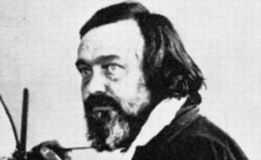
Richard Dadd
Homicide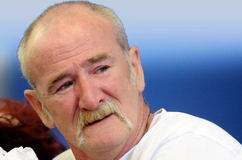 Mick Philpott
Homicide · United Kingdom · 2012
Michael “Mick” Philpott was an Englishman who had gained notoriety as a crimina…
6 victims
Mick Philpott
Homicide · United Kingdom · 2012
Michael “Mick” Philpott was an Englishman who had gained notoriety as a crimina…
6 victims
 Dyson Allen
Homicide · United Kingdom · 2012
Dyson Allen was convicted for starting a fire in a wardrobe in the children’s b…
4 victims
Dyson Allen
Homicide · United Kingdom · 2012
Dyson Allen was convicted for starting a fire in a wardrobe in the children’s b…
4 victims
 Robert Mone
Homicide · United Kingdom · 1967
Robert Francis Mone was born in 1948. He grew up with his parents and two siste…
4 victims
Robert Mone
Homicide · United Kingdom · 1967
Robert Francis Mone was born in 1948. He grew up with his parents and two siste…
4 victims
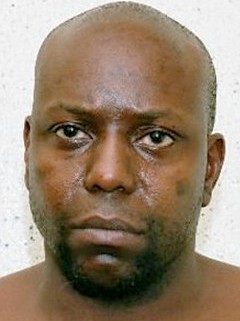 Peter Bryan
Homicide · United Kingdom · 1993
Peter Bryan was a schizophrenic cannibal who was sentenced to closed psychiatri…
3 victims
Peter Bryan
Homicide · United Kingdom · 1993
Peter Bryan was a schizophrenic cannibal who was sentenced to closed psychiatri…
3 victims
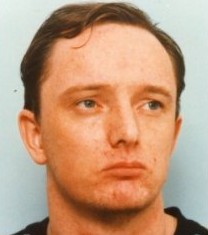 Robert Napper
Homicide · United Kingdom · 1992
Robert Clive Napper (born 25 February 1966) was a paranoid schizophrenic convic…
3 victims
Robert Napper
Homicide · United Kingdom · 1992
Robert Clive Napper (born 25 February 1966) was a paranoid schizophrenic convic…
3 victims
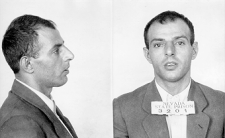 Joseph Behiter
Murderer · USA · 1931
Joseph Behiter was executed by asphyxiation-gas in Nevada on July 13, 1934. Beh…
1 victim
Joseph Behiter
Murderer · USA · 1931
Joseph Behiter was executed by asphyxiation-gas in Nevada on July 13, 1934. Beh…
1 victim
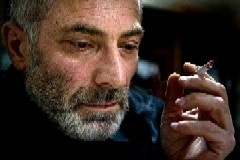 Vitaly Kaloyev
Murderer · Switzerland · 2004
Vitaly Konstantinovich Kaloyev was born in 1956 in Vladikavkaz. He was an archi…
1 victim
Vitaly Kaloyev
Murderer · Switzerland · 2004
Vitaly Konstantinovich Kaloyev was born in 1956 in Vladikavkaz. He was an archi…
1 victim
 David McGreavy
Murderer · United Kingdom · 1973
David McGreavy was born in 1950 or 1951. He was an English convicted murderer w…
3 victims
David McGreavy
Murderer · United Kingdom · 1973
David McGreavy was born in 1950 or 1951. He was an English convicted murderer w…
3 victims
 Christopher Flannery
Murderer · Australia · 1979
Christopher Dale Flannery (1949 - missing and believed murdered ca. May 9, 1985…
12 victims
Christopher Flannery
Murderer · Australia · 1979
Christopher Dale Flannery (1949 - missing and believed murdered ca. May 9, 1985…
12 victims
- Gender
- male
- Country
- United Kingdom
- Location
- Cobham, Kent, England, United Kingdom
- Date of birth
- August 1, 1917
- Characteristics
- history of mental illness
- Victim profile
- His father, Robert Dadd
- Method of murder
- St abbing with a sailor's knife
- Date(s) of murder
- August 28, 1843
- Years active
- 1843
- Date of arrest
- —
- Status
-
Found unfit to plead and was sent to Bethleham Hospital at Southwark; transferred to Broadmoor Asylum; died there on January 7, 1886
Case record: Richard Dadd
Status and disposition
Richard Dadd was found unfit to plead and was sent to Bethleham Hospital at Southwark. He was transferred to Broadmoor Asylum and died there on January 7, 1886.
Background
Richard Dadd was an English painter of the Victorian era. He was a member of the Royal Academy of Arts and was noted for his depictions of supernatural subjects, fairies and other supernatural subjects, Orientalist scenes, and enigmatic genre scenes, rendered with obsessively minuscule detail.
Dadd was born at Chatham, Kent, England. He was the son of a chemist. His aptitude for drawing was evident at an early age, leading to his admission to the Royal Academy of Arts at the age of 20.
In July 1842, Sir Thomas Phillips, the former mayor of Newport, chose Dadd to accompany him as his draftsman on an expedition through Europe to Greece, Turkey, Southern Syria and finally Egypt. With William Powell Frith, Augustus Egg, Henry O'Neil and others, he founded The Clique, of which he was generally considered the leading talent.
Dadd underwent a dramatic personality change in the late December period while travelling up the Nile by boat. His condition was initially thought to be sunstroke. On his return in the spring of 1843, he was diagnosed to be of unsound mind and was taken by his family to recuperate in the countryside village of Cobham, Kent.
The hospital experience included care and encouragement to continue painting by Drs William Wood and Sir W. Charles Hood.
The narrative also described probable paranoid schizophrenia and suggested a genetic predisposition to mental illness. It said that two of his siblings were similarly afflicted, while a third had “a private attendant” for unknown reasons.
The offence
On the night of 28th August 1843, Richard Dadd, twenty-six years old, and his father, Robert, were staying at the Ship, Cobham, Kent.
They had a few drinks during the evening. About 9pm, they decided to go for a walk. The pair walked to Cobham Park. As they arrived, Dadd’s father decided that he wanted to relieve himself. As he turned his back he was attacked by his son, who tried to cut his father’s throat with a razor.
Dadd then stabbed his father with a sailor’s knife and fled.
Dadd later went to France and told people that the Egyptian god Osiris had ordered him to carry out the attack. He made a similar frenzied assault on a man travelling on a stagecoach with him in France.
On the journey en route to Paris, Dadd attempted to kill another tourist with a razor, but was overpowered and was arrested by the police.
Investigation and arrest
French police committed Dadd to an asylum.
English police applied for extradition. Dadd was returned to England and appeared before Maidstone Assizes in August 1844.
Dadd was found unfit to plead and was sent to Bethleham Hospital at Southwark.
Trial
In August 1844, Richard Dadd appeared before Maidstone Assizes.
He was found unfit to plead.
Sentencing and hospital placement
Dadd was sent to Bethleham Hospital at Southwark.
When Broadmoor Asylum for the Criminally Insane opened he was transferred there and lived out the rest of his life.
After 20 years at Bethlem, he was moved to the criminal lunatic asylum at Broadmoor, outside London, where he remained, painting constantly and receiving infrequent visitors until 7 January 1886.
Outcome
Richard Dadd died at Broadmoor on 7 January 1886.
A further phrasing of the cause of death stated that he died “from an extensive disease of the lungs.”
Other details
Dadd created many works during his incarceration.
His most celebrated painting, The Fairy Feller's Master-Stroke, was worked on between 1855 and 1864.
Also dating from the 1850s were thirty-three watercolour drawings titled Sketches to Illustrate the Passions, including Grief or Sorrow, Love, and Jealousy, as well as Agony-Raving Madness and Murder. The works were executed on a small scale and featured protagonists whose eyes were fixed in a peculiar, unfocused stare.
He also produced many shipping scenes and landscapes during his incarceration, including the 1861 watercolour Port Stragglin.
Legacy details included that The Fairy Feller's Master-Stroke inspired a song of the same name by the British rock band Queen.
The painting was described as a plot element in The Witches of Chiswick by Robert Rankin. The Wee Free Men by Terry Pratchett was described as being in a central part inspired by it as well.
Angela Carter wrote Come unto these Yellow Sands, a radio-play based on Dadd’s life.
The British composer Oliver Knussen considered naming his piece Flourish with Fireworks after The Fairy Feller's Master-Stroke, described as owing a lot to the small, exquisite, quirky details in the painting and containing a similar attempted correlation of large and small scale.
Canadian author R.J. Anderson acknowledged Dadd as the basis of her fictional painter Alfred Wrenfield, who figured prominently in her young adult fantasy novel Knife (Faery Rebels: Spell Hunter in the USA).
The full name of the eccentric character Mr. Dick in David Copperfield by Charles Dickens was given as Richard Babley, which was described as echoing the name of Dickens' contemporary Richard Dadd.
In 1987, a long-lost watercolour by Dadd, The Artist's Halt in the Desert, was discovered by Peter Nahum on the BBC TV programme Antiques Roadshow. The work was described as being made while the artist was incarcerated, based on sketches made during his tour of the Middle East, and showing his party encamped by the Dead Sea, with Dadd at the far right. It was later sold for £100,000 to the British Museum.
A further entry about The Fairy Feller's Master-Stroke stated it was an oil on canvas, 26 inches x 21 inches, 1855-64, at the Tate Gallery in London, England, UK.
Spotted an error, or have more information about this case?