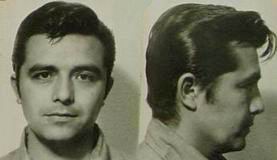
Perry Edward Smith
Mass murderer Francisco Paula Gonzales
Mass murderer · USA · 1964
Francisco Paula Gonzales was a passenger on Pacific Air Lines Flight 773. Gonza…
44 victims
Francisco Paula Gonzales
Mass murderer · USA · 1964
Francisco Paula Gonzales was a passenger on Pacific Air Lines Flight 773. Gonza…
44 victims
 John Gilbert Graham
Mass murderer · USA · 1955
John “Jack” Gilbert Graham was born on January 23, 1932, at Denver, Colorado. H…
44 victims
John Gilbert Graham
Mass murderer · USA · 1955
John “Jack” Gilbert Graham was born on January 23, 1932, at Denver, Colorado. H…
44 victims
 Thomas Doty
Mass murderer · USA · 1962
Thomas G. Doty was a passenger on Continental Airlines Flight 11. He was a marr…
44 victims
Thomas Doty
Mass murderer · USA · 1962
Thomas G. Doty was a passenger on Continental Airlines Flight 11. He was a marr…
44 victims
 Julian Andrew Frank
Mass murderer · USA · 1960
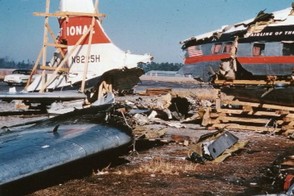
6 January 1960 — National Airlines Flight 2511 exploded and crashed 1-1/2 miles…
33 victims
Julian Andrew Frank
Mass murderer · USA · 1960
6 January 1960 — National Airlines Flight 2511 exploded and crashed 1-1/2 miles…
33 victims
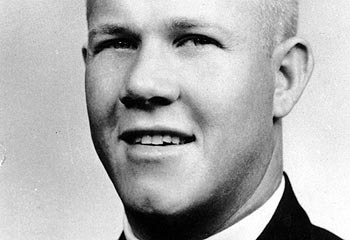 Charles Whitman
Mass murderer · USA · 1966
Charles Joseph Whitman (June 24, 1941 – August 1, 1966) shot and killed 14 peop…
15 victims
Charles Whitman
Mass murderer · USA · 1966
Charles Joseph Whitman (June 24, 1941 – August 1, 1966) shot and killed 14 peop…
15 victims
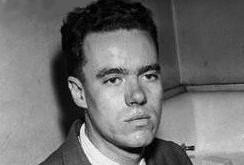 Howard Unruh
Mass murderer · USA · 1949
Howard Barton Unruh (born January 21, 1921, Camden, N.J.) carried out a shootin…
13 victims
Howard Unruh
Mass murderer · USA · 1949
Howard Barton Unruh (born January 21, 1921, Camden, N.J.) carried out a shootin…
13 victims
 Robert Leroy Anderson
Murderer · USA · 1994
Robert Leroy Anderson was sentenced to death by lethal injection on April 9, 19…
2 victims
Robert Leroy Anderson
Murderer · USA · 1994
Robert Leroy Anderson was sentenced to death by lethal injection on April 9, 19…
2 victims
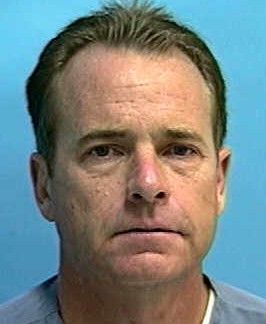 Michael Frederick Griffin
Murderer · USA · 1993
Michael Frederick Griffin · March 4, 1994 — A jury found Michael Frederick Grif…
1 victim
Michael Frederick Griffin
Murderer · USA · 1993
Michael Frederick Griffin · March 4, 1994 — A jury found Michael Frederick Grif…
1 victim
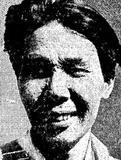 Leung Ying
Mass murderer · USA · 1928
Leung Ying (also known as Loy Yeung, Wong Gay, and Lim Onn) pleaded guilty to k…
11 victims
Leung Ying
Mass murderer · USA · 1928
Leung Ying (also known as Loy Yeung, Wong Gay, and Lim Onn) pleaded guilty to k…
11 victims
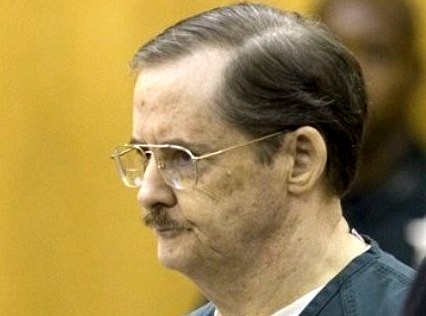 Nelson Serrano
Mass murderer · USA · 1997
Nelson Iván Serrano Sáenz was sentenced to death by lethal injection on June 26…
4 victims
Nelson Serrano
Mass murderer · USA · 1997
Nelson Iván Serrano Sáenz was sentenced to death by lethal injection on June 26…
4 victims
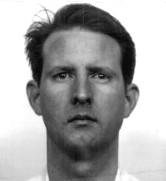 Markham Duff-Smith
Murderer · USA · 1971
Name: Markham Duff-Smith Age: 46 Education level: Some college · October 15, 19…
4 victims
Markham Duff-Smith
Murderer · USA · 1971
Name: Markham Duff-Smith Age: 46 Education level: Some college · October 15, 19…
4 victims
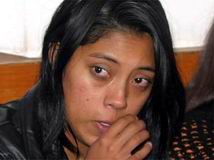 Romina Tejerina
Murderer · Argentina · 2003
Romina Tejerina was born in 1985 in San Pedro, Jujuy Province. She was sentence…
1 victim
Romina Tejerina
Murderer · Argentina · 2003
Romina Tejerina was born in 1985 in San Pedro, Jujuy Province. She was sentence…
1 victim
- Gender
- male
- Country
- USA
- Location
- Holcomb, Kansas, USA
- Date of birth
- October 27, 1928
- Age at first offence
- 31
- Characteristics
- robbery
- Victim profile
- Herbert W. Clutter, 48; his wife, Bonnie Clutter, and their daughter Nancy, 16, and son Kenyon, 15
- Method of murder
- Shooting / C utting the throat
- Date(s) of murder
- November 14, 1959
- Years active
- 1959
- Date of arrest
- December 30, 1959
- Status
-
Executed
Executed by hanging in Lansing on April 14, 1965
Case record: Perry Edward Smith
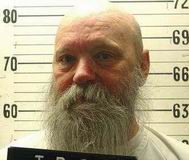
Perry Edward Smith (October 27, 1928 – April 14, 1965) was one of two ex-convicts who murdered four members of the Clutter family in Holcomb, Kansas on November 14, 1959. The murders became the subject of Truman Capote’s 1966 non-fiction novel In Cold Blood.
Timeline
- November 14, 1959 — Perry Smith and Richard Hickock murdered the four members of the Clutter family at their farmhouse in Holcomb, Kansas.
- November 1959 — Perry Smith and Richard Hickock resumed their acquaintance in Kansas State Prison at Lansing, Kansas, after Hickock’s release.
- December 30, 1959 — Smith and Hickock were captured in Las Vegas, Nevada.
- January 2, 1960 — Hickock and Smith were interrogated separately at 2 p.m. at the Detective Bureau of Las Vegas.
- January 3, 1960 — The interrogation continued; Alvin Dewey wanted to break the case.
- March 22–29, 1960 — Trial of Richard E. Hickock and Perry E. Smith.
- March 28, 1960 — The defense rebuttal concluded; deliberations lasted a mere forty minutes.
- April 14, 1965 — Perry Smith was executed by hanging in Lansing, Kansas.
The offence
Smith and Richard Hickock launched an invasion of the Clutter farmhouse, mistakenly believing that a large amount of money was kept in a safe. When they invaded the house, they discovered that there was no such safe.
Smith admitted to cutting the throat of the father, Herbert Clutter. He also admitted to shooting both Herbert and Kenyon Clutter in the head with a shotgun at close range.
It remained a matter of dispute which of the two shot the women, Bonnie Clutter and Nancy Clutter. Hickock insisted that Smith performed all the killings. Smith initially claimed Hickock killed the women, but later claimed to have shot them himself.
In the crime as described, the intruders tied up Herbert Clutter, his wife Bonnie Clutter, their son Kenyon Clutter, and their daughter Nancy Clutter in different rooms.
Investigation
Alvin Dewey, chief investigator of the Clutter family murders, testified at trial. Dewey said that Hickock insisted in his confession that Smith performed all the killings; Smith first claimed Hickock killed the women, but later claimed to have shot them himself.
A “second-killer concept” was discussed by Dewey. Dewey told reporters that it was unclear “which of the four (victims) was the main target, the primary victim,” and said it could have been Nancy or Kenyon, or either of the parents.
Dewey also addressed the issue of identifying who killed the women, stating that “it would help if we knew in what order the family died, but the coroner can't determine that.”
Dewey said at a press conference that “All I know is that somebody better watch out.”
Ultraviolet light was used to notice boot prints left behind on the cardboard box that had served as Herbert Clutter’s slab. Dewey hid this information from the press to prevent the murderers from changing their boots.
The investigation considered clues including a shotgun, cartridge shells, cord, tape, and other evidence tied to the boots and gun used in the killings.
Arrest and custody
After the murders, Smith was captured in Las Vegas, Nevada.
Smith and Hickock were retained in the Finney County Courthouse calaboose in Garden City, with the men kept separated by wings.
Interrogation
Hickock and Smith were interrogated separately, but at the same time at 2 p.m. on January 2, 1960, at the Detective Bureau of Las Vegas. Agents Harold Nye and Roy Church interviewed Hickock; Chief Dewey and agent Clarence Duntz grilled Perry Smith.
Dewey’s strategy was to open the questioning with questions about bad-checks and take note of the suspects’ expressions when the name Clutter was introduced.
During Hickock’s interrogation, when he was asked about the Clutter murders, he responded:
- "Whoa, Nellie Bell! I'm no damn murderer!"
During Smith’s interrogation, when Dewey questioned him about a trip to Ft. Scott, Smith said he had “no idea, no idea whatsoever” how far Ft. Scott was and later said “I don't 'member.”
At one point Smith asked for an aspirin, saying:
- "I need an aspirin - please."
Confessions and disputes over who killed the women
There was a dispute over who killed the women, and the confessions were revised.
Hickock confessed and implicated Smith in the killings, while Smith later revised his confession.
In Smith’s revised confession, he stated that Hickock had told the truth originally and that Smith “did indeed do all the killing.”
When Smith was asked why he was changing his mind, he replied:
- "I thought about it, about how Mrs. Hickock'd feel a lot better knowing her son never pulled the trigger. That's why I'm setting the record straight."
Dewey later said he never quite accepted the amended confession, but stated:
- "We were not dependent on a formal confession from Smith to prove any part of our case. With or without it, we had enough to hang them ten times over."
Trial
Charges and trial details
The trial record described the charged crime as murder. The trial dates were March 22–29, 1960.
A judge was identified as Roland H. Tate.
Chief defense lawyers included Arthur Fleming and Harrison Smith. Chief prosecutors included Logan Greene and Duane West.
Jury verdict and sentence
The jury verdict was guilty.
Judge Roland Tate sentenced the defendants to death by hanging.
Appeals
Smith and Hickock appealed their verdicts.
The appeals process included federal court petitions and efforts to have the case heard by the U.S. Supreme Court, where the court declined without comment in multiple attempts.
Execution dates were postponed. Execution dates mentioned as postponed were October 25, 1962; August 8, 1963; and February 18, 1965.
The Kansas Supreme Court ruled that Hickock and Smith must leave Death Row and that the final ruling called for them to be executed between midnight and 2 a.m. on April 14, 1965.
Outcome
Smith was executed by hanging on April 14, 1965 in Lansing, Kansas.
Other details
Names and ages
- Perry Edward Smith was born October 27, 1928 and was executed April 14, 1965.
- Hickock and Smith were portrayed as ex-convicts who were convicted and sentenced to death.
- Hickock was identified by birth date as June 6, 1931.
Legal counsel and timing
Because the defendants were without funds to hire a private lawyer, Judge Roland H. Tate coaxed Arthur Fleming and Harrison Smith into accepting the defense assignments.
A defense motion to have Smith and Hickock undergo comprehensive psychological testing before the trial had been denied by Judge Tate. Judge Tate appointed three local general practitioners, not psychiatrists.
After consideration, the doctors pronounced both men sane and not prone to suffer mental disorders.
Evidence described at trial
Evidence described included blood samples, footprints, cartridge shells, weapon, cord and tape. The prosecution asserted that:
- “The boots of Smith and Hickock matched he boot prints at the scene”
- “Lab tests proved that the four shells were fired from the shotgun belonging to Hickock”
- “The end on the roll of tape matched the end of one of the pieces used to gag Clutter”
- “The blood particles found in crevices along the soles of Smith's boots and in the knife handle matched Herb Clutter's blood.”
Quotes attributed to participants
County attorney Duane West stated:
- "If the case goes before a jury, I will request the jury, upon finding them guilty, to sentence them to the death penalty. If the defendants waive right to jury trial and enter pleas of guilty before the judge, I will request the judge to set the death penalty."
Prosecutor Logan Greene said:
- "some of our most enormous crimes only happen because once upon a time a pack of chicken-hearted jurors refused to do their duty."
At execution, Hickock told reporters outside the execution room:
- "I just want to say I hold no hard feelings," followed by: "You people are sending me to a much better place than this has been."
After Hickock was executed, Perry Smith entered the chamber. Smith told awaiting reporters:
- "It would be meaningless to apologize now. But, I do apologize."
Victims and family identified in the narrative
Herbert Clutter, Bonnie Clutter, Kenyon Clutter, and Nancy Clutter were identified as the four members of the Clutter family who were murdered.
Spotted an error, or have more information about this case?