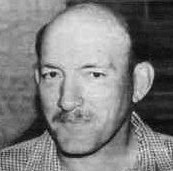
Patrick Henry Sherrill
Mass murderer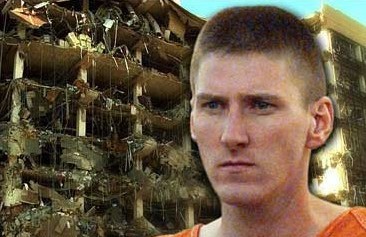 Timothy McVeigh
Mass murderer · USA · 1995
Timothy James McVeigh (April 23, 1968 – June 11, 2001) was a United States Army…
168 victims
Timothy McVeigh
Mass murderer · USA · 1995
Timothy James McVeigh (April 23, 1968 – June 11, 2001) was a United States Army…
168 victims
 Julio Gonzalez
Mass murderer · USA · 1990
Julio Gonzalez was sentenced to 174 twenty-five-year sentences (a total of 4,35…
87 victims
Julio Gonzalez
Mass murderer · USA · 1990
Julio Gonzalez was sentenced to 174 twenty-five-year sentences (a total of 4,35…
87 victims
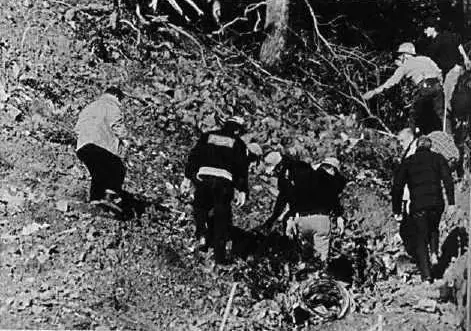 David Burke
Mass murderer · USA · 1987
David Augustus Burke (May 18, 1952–December 7, 1987) was an employee of USAir,…
43 victims
David Burke
Mass murderer · USA · 1987
David Augustus Burke (May 18, 1952–December 7, 1987) was an employee of USAir,…
43 victims
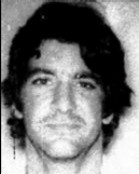 George Jo Hennard
Mass murderer · USA · 1991
George Jo Hennard carried out a mass killing at a Luby’s Cafeteria in Killeen,…
23 victims
George Jo Hennard
Mass murderer · USA · 1991
George Jo Hennard carried out a mass killing at a Luby’s Cafeteria in Killeen,…
23 victims
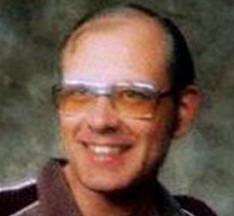 James Huberty
Mass murderer · USA · 1984
James Oliver Huberty was a 41-year-old unemployed security guard. He was born i…
21 victims
James Huberty
Mass murderer · USA · 1984
James Oliver Huberty was a 41-year-old unemployed security guard. He was born i…
21 victims
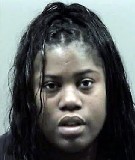 Banita Jacks
Murderer · USA · 2007
Banita Jacks was a Washington, DC resident convicted of murdering her four daug…
4 victims
Banita Jacks
Murderer · USA · 2007
Banita Jacks was a Washington, DC resident convicted of murdering her four daug…
4 victims
 Robert Pickton
Serial killer · Canada · 1995
Robert William "Willie" Pickton (born October 26, 1949) of Port Coquitlam, Brit…
49 victims
Robert Pickton
Serial killer · Canada · 1995
Robert William "Willie" Pickton (born October 26, 1949) of Port Coquitlam, Brit…
49 victims
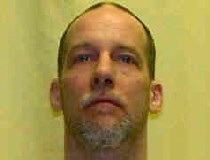 Mark Wiles
Murderer · USA · 1985
Mark Wiles was a White male convicted in Portage County of an aggravated murder…
1 victim
Mark Wiles
Murderer · USA · 1985
Mark Wiles was a White male convicted in Portage County of an aggravated murder…
1 victim
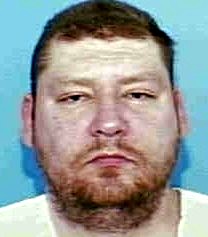 John William Byrd
Murderer · USA · 1983
John William Byrd, Jr. was executed by lethal injection for the murder of conve…
1 victim
John William Byrd
Murderer · USA · 1983
John William Byrd, Jr. was executed by lethal injection for the murder of conve…
1 victim
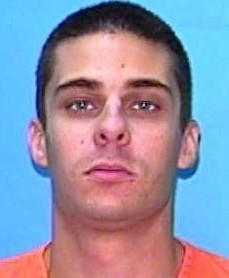 Jason Looney
Murderer · USA · 1997
Jason Looney was sentenced to death on February 18, 2000. His case was heard in…
2 victims
Jason Looney
Murderer · USA · 1997
Jason Looney was sentenced to death on February 18, 2000. His case was heard in…
2 victims
- Gender
- male
- Country
- USA
- Location
- Edmond, Oklahoma County, Oklahoma, USA
- Date of birth
- November 13, 1941
- Age at first offence
- 45
- Characteristics
- abuse, alcohol, fugitive, motive unknown, police officer, rape, rape?, rapist, revenge
- Victim profile
- Patricia Ann Chambers, 41 / Judy Stephens Denney, 41 / Richard C. Esser Jr., 38 / Patricia A. Gabbard, 47 / Jonna Gragert Hamilton, 30 / Patty Jean Husband, 48 / Betty Ann Jarred, 34 / William F. Miller, 30 / Kenneth W. Morey, 49 / Leroy Orrin Phillips, 42 / Jerry Ralph Pyle, 51 / Paul Michael Rockne, 33 / Thomas Wade Shader Jr., 31 / Patti Lou Welch, 27 (co-workers)
- Method of murder
- Shooting ( two .45 caliber pistols)
- Date(s) of murder
- August 20, 1986
- Years active
- 1986
- Date of arrest
- —
- Status
-
Died in custody
Committed suicide by shooting himself; killed 14 employees and wounded six others at the Edmond, Oklahoma Post Office on August 20, 1986
Case name
Patrick Henry Sherrill
Outcome
Patrick Henry Sherrill committed suicide by shooting himself after killing 14 employees at the Edmond, Oklahoma Post Office on August 20, 1986, and after wounding six other employees. Police and emergency responders found Sherrill dead in the post office after a SWAT team stormed the building.
Timeline
- November 13, 1941 — Patrick Henry Sherrill was born.
- Four days after Christmas 1966 — He received a general discharge under honorable conditions from the Marine Corps.
- 1976 — He was accepted by the Oklahoma Air National Guard.
- 1977 — His mother’s condition deteriorated; she later needed full-time care at a nursing home.
- 1978 — His mother died.
- October 2, 1985 — A suspension was referenced as having been given earlier in his USPS disciplinary history.
- March 31, 1986 — A USPS incident described in a suspension letter occurred.
- August 12, 1986 — A coworker described having a conversation with Sherrill in the break room in which he said management would be sorry.
- August 19, 1986 — Sherrill was reprimanded by supervisors in a glassed-in office over personal matters unrelated to the profession; he approached a female clerk and told her she should stay home.
- August 20, 1986 — He walked into the post office about 7 a.m., opened fire with two .45 caliber pistols, killed 14 employees, wounded six, and then shot himself.
The offence
Sherrill killed employees at his workplace in Edmond, Oklahoma on August 20, 1986. The incident involved two .45 caliber pistols and included one outside death in the parking lot behind the building, where someone was shot down as they tried to flee. The incident lasted between 15 and 20 minutes.
Police and witnesses reported employees were shot as they sat or stood at their work stations, and that some survivors survived by playing dead or hiding. Survivors described confusion at the start, with some hearing sounds that they initially compared to popping like firecrackers or slapping a tray against the floor repeatedly before realizing he was shooting.
Sherrill was described as entering from the employee parking lot carrying his mail delivery satchel over his left shoulder and a pistol in his right hand. Multiple employees described hearing shots and seeing Sherrill moving methodically around the work area, shooting employees in different sections, and sealing doors while he searched for people who had hidden.
Investigation
Police converged on the post office after receiving reports by telephone calls, by people running into the station, and by patrol cars flagged down by terrified employees. Several workers reported a tall, bald man inside was shooting and killing people, and many knew his name as Patrick Sherrill.
Officers advanced cautiously toward the doors, mostly to assure the killer did not escape and to help victims who fled, and they waited for a SWAT team to invade the interior. An officer described seeing one man drenched in blood lying on the grass with emergency fire department employees attempting to carry him, and another postal employee treated by emergency vehicles.
One officer described officers watching through windows and reported that the suspect inside walked up and barred the back doors, looked out the windows for an instant, and then disappeared from view; the officer reported that the suspect was bald-headed and had blood on his forehead. The officer reported hearing the distinct sound of a muffled gunshot at approximately 0715 to 0720, followed by silence.
Arrest
No arrest was described; the suspect died by suicide during the incident.
People
Defendant / perpetrator
- Patrick Henry Sherrill — United States Postal Service employee; postal worker who committed suicide after the shootings.
- Age: 44 (also referenced as 44 in multiple places)
- Lifespan: November 13, 1941 – August 20, 1986
- Employment: relief carrier; part-time worker for the Edmond, Oklahoma post office; rural carrier and letter carrier roles are referenced in connection with victims and his workplace role is described as a postal employee
Supervisors and colleagues named
- Bill Bland — supervisor; referenced as giving a reprimand and as having threatened Sherrill with dismissal; also described as sleeping late on the day of the massacre.
- Richard C. Esser Jr. / Rick Esser / Richard Esser — supervisor; killed during the attack.
- Richard Esser Jr. — identified in the narrative and in the list of victims as a supervisor.
- Mike Rockne / Mike Rockne — grandson of Notre Dame football coach Knute Rockne; killed during the attack.
- Gavin de Becker — security expert quoted on postal authorities ignoring signs of Sherrill’s unstable and hostile attitude.
- Debbie Coons — rural delivery carrier; quoted about feeling scared.
- Debbie Smith / Debbie Smith — employee; quoted describing hiding and hearing clerks scream.
- Peggy Gibson — employee who narrowly missed being killed; quoted about hiding and escaping.
- Diane Mason — quoted about hearing screams and shots and then escaping through an unlocked lobby door.
- Gene Black — mail carrier; quoted about hearing sounds, firing, and helping wounded colleagues.
- Darrell Fesler — quoted about seeing Sherrill shooting and fleeing.
- Hubert Hammond — quoted about seeing Sherrill walk towards William Nimmo and shoot him twice.
- Larrie Parrish — quoted about initially thinking it might be a drill or practice.
- Jerry Pyle — rural carrier; shot and died.
- Kenneth W. Morey — rural carrier; killed during the attack.
- Tracy Sanchez — quoted about hiding and hearing Sherrill reloading and shooting.
- William F. Miller — referenced as killed during the attack.
- Leroy Orrin Phillips — rural carrier; killed.
- Joyce Ingram — employee rushed to hospital; wounded.
- Judy Walker — employee rushed to hospital; wounded.
- Michael Bigler / Mike Bigler — quoted and described as shot in the back and wounded.
- Steve Vick — quoted and described as shot and wounded.
- William Nimmo / William Nimmo — described as critically wounded after Sherrill shot him twice.
- Gene Bray / Gene Bray — shot and died; quoted indirectly through witness descriptions and described with blood loss.
- Phil Crabtree / Larry Wilson / Mark Lumin / Ken Lobdell — named in accounts of helping or carrying wounded.
- Rev. Finley Tinnin — quoted at the funeral of Patty J. Husband.
Victims (killed)
The victims listed as killed were:
- Patricia Ann Chambers (41) — part-time clerk
- Judy Stephens Denney (41) — part-time clerk
- Richard C. Esser Jr. (38) — supervisor
- Patricia A. Gabbard (47) — clerk
- Jonna Gragert Hamilton (30) — clerk
- Patty Jean Husband (48) — supervisor
- Betty Ann Jarred (34) — clerk
- William F. Miller (30) — rural carrier or supervisor role is referenced in narrative as killed; listed in victim list
- Kenneth W. Morey (49) — rural carrier
- Leroy Orrin Phillips (42) — rural carrier
- Jerry Ralph Pyle (51) — rural carrier
- Paul Michael Rockne (33) — letter carrier
- Thomas Wade Shader Jr. (31) — part-time clerk
- Patti Lou Welch (27) — clerk
In addition, Sherrill was included as the shooter and fatality count included him:
- The narrative states that Sherrill made himself the 15th fatality.
Wounded survivors
The narrative named six employees rushed for emergency care and stated they survived:
- William Nimmo
- Gene Bray
- Michael Bigler
- Steve Vick
- Judy Walker
- Joyce Ingram
Sentencing
No sentencing occurred because the perpetrator died by suicide.
Appeals
No appeals were described.
Aftermath
Employees and family members gathered at nearby City Council chambers where an officer called out names of fatalities and requested family members of the fatalities come forward for counseling; a crowd cried and some collapsed and needed help.
A city official and associates requested everyone go back inside for a roll call, and counselors were available. Witness accounts described dazed survivors being directed into the chambers, emotional reactions as names were called, and some individuals leaving in shock.
The incident was credited with inspiring the American phrase “going postal.”
Other details
Personal history and employment details
Sherrill lived as a “loner,” was described as quiet and angry, and had few friends. He had been an ex-Marine and an expert marksman and served in the Air National Guard as a handgun instructor. He was described as having served in a Marine Corps tour and later having served with the Oklahoma Air National Guard and then the U.S. Air Force Reserve.
The narrative described multiple periods of education and work, including:
- Enrolling at Harding High School in Oklahoma City
- Enrolling at Oklahoma University on a wrestling scholarship and dropping out
- Attending Edmond’s Central State University taking general education classes and dropping out
- Working as an electronics technician repairing traffic lights in Oklahoma City (October 1974 to July 1975)
- Working at a radio store as an installer and technician
- Working as a file clerk for the Federal Aviation Administration (FAA)
- Working at Tinker Air Force Base as a civilian maintenance employee after military reserve contacts
- Working at a stockroom position at the American Cancer Society in March 1984 for five months before leaving in September
- Applying to the USPS and being hired in Oklahoma City as a “multiple position” letter sorter, then resigning a day before the three-month deadline
- Applying again for the USPS in Edmond in April, working about 40 hours each week with some overtime and earning approximately $13,000 in his first year
His mother died in 1978; afterward, she had been affected by Alzheimer’s disease and required full-time care at a nursing home.
Weapons mentioned
Sherrill used two .45 caliber pistols. The narrative also described additional weaponry including a .22 caliber pistol and ammunition in his mailbag.
Disciplinary and reprimand details
The narrative described USPS suspensions and letters:
- A letter from Bill Bland signed in October that informed Sherrill he was suspended for seven calendar days for failure to discharge assigned duties conscientiously and effectively; it referenced leaving two trays of mail and three parcel post items unattended overnight at 601 Vista Lane and resulting in a one day delay in delivery of approximately 500 pieces of mail.
- A second letter suspending him for 14 calendar days referenced incidents on March 31, 1986. It described telling a customer he did not need her help and did not care if the tenants received mail; it also described spraying a dog with dog spray, later explained as Mace, and that the dog was behind a 5 foot fence with a locked gate. The letter alleged the dog’s presence was known to Sherrill and described asking the customer, when questioned, if he wanted his mail delivered or not.
The narrative also described that on the afternoon of Aug. 19, 1986, he was reprimanded by two supervisors in a glassed-in office over personal matters unrelated to the profession.
Quotes (verbatim)
- Security expert Gavin de Becker said: “Security expert Gavin de Becker said that postal authorities ignored numerous signs of Sherrill's unstable and hostile attitude.”
- Judy Stephens Denney’s and other victims are not directly quoted; the following quotes are attributed to named individuals:
Debbie Coons, 32, said: “I don't know what to expect when I get in there,” and “I feel scared.”
Officer said: “When I arrived at the post office, I saw one man drenched in blood lying on the grass with emergency fire department employees attempting to carry him to the southwest corner where the ambulance was parked. I also saw another postal employee standing by the emergency vehicles being treated and that his shirt was drenched in blood.”
Rev. Finley Tinnin said at the funeral of Patty J. Husband: “We've experienced pain, haven't we? You bet we have,”
Patrick Henry Sherrill’s quote about mistreatment as described: “I gotta get out of here,”
Neighbor Gerald Cash said: “Everybody hated him,” and “He'd prowl around at night, looking in people's windows.”
Mail carrier Mike Bigler recalled: “I was at my case [work station]. I heard some popping like firecrackers. I thought it was a practical joke to scare employees, so I kept working. My friend Mike was standing behind his own case.”
Mike Bigler said: “Mike [Rockne] fell to the floor and I could see he was lying in a pool of blood.”
Mike Bigler said: “I was fifty or sixty feet from it and was shot in the back ... felt a stinging sensation. I just played dead. Sherrill kept walking around several times ... just went around shooting methodically, saying nothing. Some of the clerks were huddled in the post-office box area. He went up to them and shot seven rounds and they were all screaming.”
Darrell Fesler said: “I heard a gunshot, and hid behind some big boxes. I looked up and saw a man shooting a gun. He shot Mike Bigler and then just turned in a circle shooting at random. He went towards the front lobby shooting and we ran out the back. He followed, still firing, and then returned inside.”
Gene Black said: “Help me, help me, I'm shot, ”
Gene Black said: “Get back! Get back!”
Gene Bray is not quoted directly in the narrative.
Tracy Sanchez said: “People begged him and he would yell at them and shoot them several times.”
Debbie Smith said: “I froze. I couldn't run. He came to shoot the clerks in the box section next to mine. I just knew I was next.”
Debbie Smith said: “I could hear all the clerks screaming as they were shot.”
Hubert Hammond said: “ . . . all of a sudden, everyone panicked.”
Elizabeth Hilchey said: “I heard gunshots. At first, I thought it was a joke, until I saw City 4 fall on the ground, bleeding. I could smell gunpowder. I heard several shots and people falling and moaning.”
Larry Wilson said: “I kicked the gun out of Pat's hand but he recovered it and started shooting again.”
Gene Black said: “Oh, God, don't let Gene die, ”
Gene Black said: “Do something for him.”
Other named locations and institutions mentioned
- Edmond Post Office
- Edmond, Oklahoma
- Broadway and the parking lots
- City Council chambers
- Watonga, Oklahoma
- Oklahoma City
- Harding High School
- Oklahoma University
- Edmond’s Central State University
- Northwest 27th Street
- 601 Vista Lane
- Tinker Air Force Base
- Will Rogers Air Base (now Will Rogers World Airport)
- Lackland Air Force Base near San Antonio, Texas
- McChord Air Force Base near Tacoma, Washington
- England
- Camp Lejeune, North Carolina
- The National Guard armory
- Christian Nursing Home in Edmond
- Watonga family plot and gravesite of his parents
- Broadway
Additional descriptive details preserved
- The narrative described that some employees survived by hiding in a vault where stamps are kept, hiding in a broom closet, or playing dead.
- The narrative described police officers trying to communicate with the gunman by telephone and bullhorn for 45 minutes, with no response.
- The narrative described SWAT team entry time: “When an Edmond SWAT team finally stormed the building at 8:30 a.m.”
- The narrative described that some clerks and office personnel had already fled through the open lobby entrance before Sherrill reached the lobby entrance.
- The narrative described that Sherrill’s victims included supervisors and clerks and rural carriers and that “Seven men died. Seven women died. Six employees were seriously wounded.”
- The narrative described that Bill Bland was absent because he slept late and was not present during the massacre.
- The narrative described that Sherrill had been reprimanded previously and had been suspended for assigned duties and customer service issues, and referenced that he had “never marrying” and lived at home with his mother for periods.
Spotted an error, or have more information about this case?