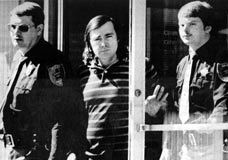
Randall Lee Smith
Murderer Ervil LeBaron
Murderer · USA · 1972
Ervil Morrell LeBaron (1925 to August 16, 1981) was the leader of a polygamous…
35 victims
Ervil LeBaron
Murderer · USA · 1972
Ervil Morrell LeBaron (1925 to August 16, 1981) was the leader of a polygamous…
35 victims
 Brian Kevin Rosenfeld
Murderer · USA · 1985
Brian Kevin Rosenfeld Brian Kevin Rosenfeld was sentenced to three concurrent l…
23 victims
Brian Kevin Rosenfeld
Murderer · USA · 1985
Brian Kevin Rosenfeld Brian Kevin Rosenfeld was sentenced to three concurrent l…
23 victims
 Marvin Gray
Murderer · USA · 1975
Marvin Gray was convicted killer who claimed responsibility for 23 slayings and…
23 victims
Marvin Gray
Murderer · USA · 1975
Marvin Gray was convicted killer who claimed responsibility for 23 slayings and…
23 victims
 Yahweh ben Yahweh
Murderer · USA · 1980
Yahweh ben Yahweh was born and legally named Hulon Mitchell Jr. (October 27, 19…
23 victims
Yahweh ben Yahweh
Murderer · USA · 1980
Yahweh ben Yahweh was born and legally named Hulon Mitchell Jr. (October 27, 19…
23 victims
 Russell Ellwood
Murderer · USA · 1991
Russell Ellwood was a former taxi driver. Authorities suspected him of killing…
20 victims
Russell Ellwood
Murderer · USA · 1991
Russell Ellwood was a former taxi driver. Authorities suspected him of killing…
20 victims
 William Phillips
Murderer · USA · 2007
William Phillips was identified as the gunman in the Johnson Space Center (JSC)…
1 victim
William Phillips
Murderer · USA · 2007
William Phillips was identified as the gunman in the Johnson Space Center (JSC)…
1 victim
 Margaret Rudin
Murderer · USA · 1994
Margaret Rudin (born May 31, 1943) was an American woman convicted in the Decem…
1 victim
Margaret Rudin
Murderer · USA · 1994
Margaret Rudin (born May 31, 1943) was an American woman convicted in the Decem…
1 victim
 Brandy Holmes
Murderer · USA · 2003
Brandy Aileen Holmes was convicted of first-degree murder and sentenced to deat…
1 victim
Brandy Holmes
Murderer · USA · 2003
Brandy Aileen Holmes was convicted of first-degree murder and sentenced to deat…
1 victim
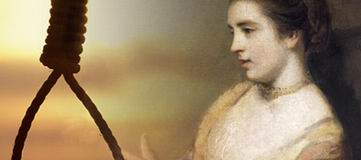 Lavinia Fisher
Murderer? · USA · 1818
Lavinia Fisher Lavinia Fisher was executed by hanging on February 18, 1820. The…
0 victims
Lavinia Fisher
Murderer? · USA · 1818
Lavinia Fisher Lavinia Fisher was executed by hanging on February 18, 1820. The…
0 victims
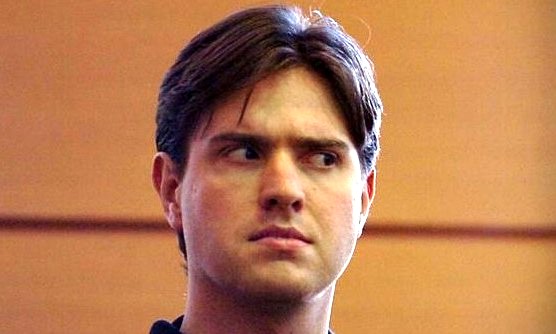 Neil Entwistle
Murderer · USA · 2006
Neil Entwistle (born September 18, 1978) was sentenced to life in prison withou…
2 victims
Neil Entwistle
Murderer · USA · 2006
Neil Entwistle (born September 18, 1978) was sentenced to life in prison withou…
2 victims
- Gender
- male
- Country
- USA
- Location
- Giles County, Virginia, USA
- Date of birth
- June 29, 1953
- Age at first offence
- 28
- Characteristics
- rape?, murder-suicide
- Victim profile
- Robert Mountford Jr., 27, and Laura Susan Ramsay, 27
- Method of murder
- Stabbing with knife - Shooting
- Date(s) of murder
- May 19, 1981
- Years active
- 1981
- Date of arrest
- June 22, 1981
- Status
-
Died in custody
Died in jail custody four days after the crash; autopsy results were pending at the time of reporting
Case record: Randall Lee Smith
Background
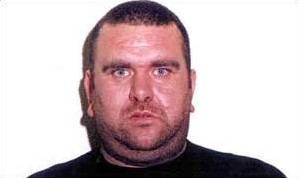
Randall Lee Smith (1954 – 10 May 2008) was from Pearisburg, Virginia. He was 54 at the time of the May 6, 2008 shootings.
He pleaded guilty to two counts of second-degree murder in connection with the deaths of Appalachian Trail hikers Robert Mountford Jr. and Laura Susan Ramsay, who were killed in May 1981. He was sentenced to 30 years in prison on March 23, 1982.
Smith was released on mandatory parole in 1996 after serving only 15 years. His probation ended in 2006. His sentence and early release were met with anger by the victims’ families as well as the hiking community, and hikers protested outside the courtroom the day after his sentencing. A spokesman for the Appalachian Trail Conference said Smith was the “first person convicted of murdering a hiker who has had the opportunity to leave prison”.
In 1981, the killings were described as a notorious double slaying on a Giles County section of the Appalachian Trail, and the deaths led to national attention about whether the Appalachian Trail was safe.
In 2008, Giles authorities had contacted other area agencies a few days before the recent double-shooting to alert authorities that Smith was missing from his residence.
The offence
1981 murders on the Appalachian Trail
In the spring of 1981, Susan Ramsay and Robert Mountford Jr., both 27-year-old social workers from Maine, decided to hike the trail to raise funds on behalf of the mentally ill. Mountford left from Georgia. In early May, he met up with Ramsay in Virginia. They had befriended a female hiker on the trail, and all agreed to meet in the area above Pearisburg. When Ramsay and Mountford did not show, the woman became worried and alerted authorities.
Mountford and Ramsay were last seen by May 19, which later proved to be the last sighting of the two. Investigators found evidence in the area above Pearisburg, including blood and burial sites at or near the Wapiti Shelter. Investigators discovered Susan Ramsay and Robert Mountford Jr. buried in sleeping bags. Investigators found Mountford shot in the head. Investigators found Ramsay had defensive marks on her hands. The injury account included that Smith used “a piece of iron” to hit Ramsay in the head, stabbed her with “a long nail,” and that she had 13 puncture wounds and additional wounds with a knife. The bodies had been dragged from the shelter.
Investigators found Ramsay’s camera, but the film had been ripped out. They also found Ramsay’s backpack, which yielded a paperback novel Ramsay was reading, “Mountolive” by Lawrence Durrell, that had bloody fingerprints. One fingerprint inside the book belonged to Randall Smith, which had been on file from his time in Norfolk shipyards.
Investigators put out a nationwide APB, or All-Points Bulletin, and closed a Virginia portion of the Appalachian Trail to hikers. Investigators also went to Smith’s home and discovered blood-soaked jeans, pornographic materials, and hospital instruments. There was a note in Smith’s handwriting stating that he had been kidnapped by two people and was going to be killed. Investigators did not believe the note.
Tom Lawson, then a deputy sheriff for Giles County, recalled a specific interaction with investigators and a comment attributed to a man going around saying “Hey, I know what happened to those hikers.” Lawson asked the man’s name, and he was told: “Lyin’ Randall.”
Investigation and evidence
Pre-trial investigation in 1981
Investigators traced reports of Ramsay and Mountford being seen near Wapiti Shelter with a male figure. They also inspected the shelter and found evidence including a thick and red substance between floorboards that analysis later revealed was Mountford’s blood.
Investigators noticed a mound of leaves as if someone had tried to cover up something, and they found a cloth sleeping bag containing Susan Ramsay. They found Mountford nearby, also buried in a sleeping bag.
Investigators concluded that Ramsay and Mountford had shared an evening meal before they died. They also had each had a drink of Bacardi rum.
Investigators said that Smith’s possessions of the murdered hikers were buried and hidden in a complex pattern aligned with compass points, as if Smith wanted to be able to find them later. Investigators also said that log books hikers sign and date were removed from shelters for miles down the trail, making it hard for investigators to develop a timetable of travel before the deaths.
Al Krane worked on the investigation as a special agent with the Virginia State Police.
Arrest and custody
May 1981 arrest in Myrtle Beach
In the investigation described for 1981, Tom Lawson took his family on vacation to Myrtle Beach in late June of 1981 and was later contacted by authorities in South Carolina who had arrested a man they thought might be Smith. Lawson passed along the name of the motel where he was staying.
The detained man claimed to have amnesia and could not remember his name or even how he got to Myrtle Beach. Lawson said he recognized Randall Smith. Lawson described an interview plan in which investigators told him that his bites were serious and that he would need medical attention.
As soon as the consent form was placed in front of him, the detained man scrawled out “Randall Lee Smith.”
Smith was extradited to Virginia after the arrest.
May 6, 2008 arrest after shootings
Smith was arrested on May 6, 2008 in connection with the double shooting of two Tazewell County men who were on a fishing trip in the Jefferson National Forest.
The victims were Scott Johnson of Bluefield, Va., and Sean Farmer of Tazewell, Va. They were camping near the Walnut Flats picnic site in the Dismal area of Giles County. Both men were wounded in the incident.
Smith allegedly left the scene in a 2000 Ford Ranger pickup truck that belonged to one of the victims. When a state trooper spotted the stolen vehicle on Sugar Run Road near Eggleston, Va., and pulled onto the road behind Smith, Smith ran off the road, and flipped the vehicle. Smith was transported to Carilion Hospital in Roanoke, Va., where he was treated for injuries from the accident. A trooper recovered a gun at the scene.
Lt. Ron Hamlin of the Giles County Sheriff’s Office said Smith was read his rights and informed of the charges. Hamlin said Smith was being held in the medical area in a cell by himself, and later transported to the regional jail.
Trial and plea
Smith pleaded guilty to two counts of second-degree murder. The guilty pleas were entered before the case went to trial, so details including motive were never presented publicly.
Smith pleaded guilty to two charges of second-degree murder before the case went to trial, and the plea bargain resulted in a 30-year sentence.
The Ramsay and Mountford families agreed to the plea bargain. James Hartley described community anger and said the plea bargain was “Everybody was outraged, particularly police officers,” and that hikers were among those picketing the courthouse.
Hezekiah Osborne was the commonwealth’s attorney for Giles County when Smith was returned to Virginia. Osborne accepted a plea bargain from Smith’s attorneys on the eve of trial. Osborne was described as having told fellow lawyers he did not want to risk a trial because he had been unable to discover a motive for the killings, and that he thought the case was weak.
Sentencing
Smith was sentenced to 30 years in prison on March 23, 1982.
After serving 15 years, Smith was paroled in 1996. He was released on mandatory parole after serving only 15 years.
Appeals
No appeals were described.
May 6, 2008 shootings and attempted killings
On May 6, 2008, Smith attempted to kill two fishermen less than two miles from the site of the 1981 murders. He befriended Scott Johnson and Sean Farmer, who shared dinner with him. Smith opened fire on them without warning.
Both men were shot twice but survived.
The incident narrative included that Smith introduced himself to the victims as “Ricky Williams” and carried a .22. The events were described with Johnston noticing the man and receiving trout and beans, and later inviting him to dinner. During the dinner and evening, “Ricky” or “Lyin’ Randall” later drew out a .22 pistol and shot Johnston and Farmer. Scott Johnson was shot in the neck and back of the neck. Sean Farmer was shot in the temple and chest. The account further described Smith running out of ammunition and reloading as Farmer fled in a truck.
Charges in 2008 (as stated)
Hamlin said Smith was charged with:
- two counts of attempted capital murder
- two counts of the use of a firearm during the commission of a felony
- one count of possession of a firearm by a convicted felon
- one count of grand larceny related to the theft of the pickup truck
Outcome
Smith was found unresponsive at New River Regional Jail in Dublin, Va., on a Saturday evening. Lt. Ron Hamlin said Smith was discovered by regional jail personnel at about 5 p.m. lying unresponsive on his side on the floor of the jail.
Smith was transported to Pulaski Community Hospital, where he was pronounced dead at 6:03 p.m., according to the press release. Hamlin said Smith was being held in the medical area in a cell by himself.
About a dozen family members attended Smith’s funeral at the A. Vest & Sons Funeral Home in Pearisburg. The service lasted 30 minutes. Taped music played at the private service, which was announced only after he had been buried.
Smith was buried next to his mother at Fairview Cemetery in Narrows. His dog, Bo, scratched in the dirt at the graveside ceremony. The dog was later adopted.
Sgt. Mike Conroy, a spokesman for the Virginia State Police, said their investigators found no obvious signs of foul play in Smith’s death and that Randall had no marks at all, and that he “just died. Quite possibly of natural causes.” The Virginia medical examiner’s office said autopsy results could take between 60 and 90 days.
Other details
People mentioned in relation to the case
- Robert Mountford Jr. — victim; 27
- Laura Susan Ramsay — victim; 27
- Scott Johnson — victim in 2008; wounded; from Bluefield, Va.
- Sean Farmer — victim in 2008; wounded; from Tazewell, Va.
- Hezekiah Osborne — commonwealth’s attorney for Giles County when Smith was returned to Virginia
- Tom Lawson — investigator in the 1981 case; deputy sheriff for Giles County; later assistant superintendent of the New River Valley Regional Jail in Dublin
- Al Krane — special agent with the Virginia State Police who worked on the investigation
- Brian B. King — spokesman for the Appalachian Trail Conservancy
- Joseph Allen — UVa psychology professor
- Dewey Cornell — forensic clinical psychologist at the University of Virginia
- June Tangney — psychologist at George Mason University
- James Hartley — local attorney at the time
- Brian King, spokesman for the Appalachian Trail Conservancy — filed an objection each year as Smith came up for parole
- Lt. Ron Hamlin — Giles County Sheriff’s Office
- Sgt. Mike Conroy — spokesman for the Virginia State Police
- Lt. Jerry Humphreys — Bureau of Criminal Investigation for the State Police
- Melissa Miller — witness in 2008 narrative
- Thelma Johnston — Scott’s mother
- Randall Miller — Melissa’s son in 2008 narrative
- Lena Farmer — Sean’s mother
- Randy Miller — identified as the grandson of a Randall Smith-related family member in 2008 narrative
- Jesse Carr — Southwest Virginia author of “Murder on the Appalachian Trail” (fictionalized account)
- Lawrence Durrell — author of “Mountolive” referenced in the 1981 evidence narrative
Geographic and other descriptive details
The 1981 murders were associated with the Appalachian Trail near Wapiti Shelter in the area above Pearisburg and involved a nearby store referred to as Trent’s. The 2008 shootings occurred on Dismal Creek and at/near the Jefferson National Forest, with events described around the Walnut Flats picnic site and Sugar Run Road near Eggleston, Va. Smith’s crash and subsequent detention were tied to New River Regional Jail in Dublin, Va., and hospital treatment involved Carilion Hospital in Roanoke, Va., and Pulaski Community Hospital.
The Appalachian Trail was described as stretching more than 2,000 miles from Georgia to Maine, and the trail management group was described as based in Harpers Ferry, W.Va. The account included statements that violent crime is rare on the Appalachian Trail and that there have been eight murders linked to the trail since the 1970s.
Family and personal history described in connection with 1981 and 2008
Records from Smith’s 1982 court proceedings indicated his mother and father divorced when he was 6 months old. Smith lived with his mother until she died in 2000. Loretta Smith worked at Giles Memorial Hospital and later became a nurse’s aide.
Smith left school after 11th grade and made several trips to Newport News, Va., to work welding jobs in a shipyard. The account described his habit of collecting arrowheads, spending time in the woods alone, and telling wild stories as a teenager.
Neighbors described Smith as staying apart and as a habitual liar. He was nicknamed “L.R.” for “Lyin’ Randall.” The account described his interest in pornographic magazines, and that some described hospital instruments were possibly pilfered and “fashioned them into sex toys.”
Loretta Smith’s sister lived next door, and her husband was described as Randall Smith’s uncle who took him camping. The account described that Smith had no known romantic relationship of any kind and did not have a girlfriend.
The account also described that Smith wore an electronic monitoring anklet and that he was under 10 years of supervision by the Giles probation office, and that he did not work after release, leading neighbors to believe he drew some sort of disability check.
Virginia Smith, described as Sherman Smith’s wife, said Smith “stayed too much to himself.” Sherman Smith said the lack of a friend for a child was “unusual.” Virginia Smith said she baked Smith a pumpkin roll every Christmas and sent her husband across the street.
Robin and Jason Stephen owned 98 acres between Smith’s house and the Appalachian Trail and told him to stay away. Robin Stephen said Smith told her husband to “go down to the sheriff’s office and ask them who I am and what I did.” She also said Smith once told her husband he could see her coming “a mile away -- that jet black hair.” Robin Stephen said Smith asked to buy a parcel near the Appalachian Trail, which they declined, and later asked her to list his house, and she said he told her he had been in the hospital and that his days of walking on the mountain were over.
Smith’s public water was cut off on April 28. A missing persons report was filed on April 30. Police checked his mailbox and found that his mail appeared not to have been picked up since March 3. The account said exactly when Smith left home, or where he went, was part of the mysteries surrounding him.
Quotes preserved verbatim
A spokesman for the Appalachian Trail Conference said Smith is the “first person convicted of murdering a hiker who has had the opportunity to leave prison”.
Tom Lawson said:
“Cold. Stone cold. And remorseless.”
Lt. Ron Hamlin said:
“The correctional officer radioed for assistance and other staff members responded to the area (where Smith was being held) to assist,”
Hamlin also said:
“Smith was being held in the medical area in a cell by himself,”
Hamlin said:
“We read him his rights, informed him that he was being charged with two counts of attempted capital murder, two counts of the use of a firearm during the commission of a felony, one count of possession of a firearm by a convicted felon and one count of grand larceny related to the theft of the pickup truck. After that, we transported him to the regional jail.”
Tom Lawson described a message about the hikers and said:
“Some people told me there was some man going around saying, 'Hey, I know what happened to those hikers.' ”
Lawson asked the man’s name and was told:
“Lyin' Randall.”
Lawson recalled his evidence discovery and said:
“It looked like something had run down between the floorboards,”
Lawson continued:
“So I run my knife down between the boards. It was a thick and red substance down there. I said, 'We need to tear this floorboard up. I think there's blood here.' ”
Lawson also said:
“It was heavy food,”
Lawson said:
“So it would have been a last meal for the day. They wouldn't have eaten that type food and continued hiking.”
Another quoted statement from Hamlin included:
“Carilion officers released him to our custody Friday evening,”
Sgt. Mike Conroy said:
“Our investigators found no obvious signs of foul play in Smith's death,”
Conroy also said:
“Randall had no marks at all,”
Lt. Jerry Humphreys said:
“He just died. Quite possibly of natural causes.”
A spokesman quote included Brian B. King’s statement about safety:
“It is extremely safe,”
King added:
“You have more of a chance getting hurt driving to the trail in your car than you do on the trail.”
On the two counts of murder and the plea bargain, James Hartley recalled Osborne’s view and said:
“He said he thought the case was weak,”
Hartley continued:
“I think everybody disagreed with that.”
Joseph Allen’s quoted question and June Tangney’s quoted explanation were included as:
“Criminals often do go to places they are most comfortable with,”
and:
“Crimes don't just happen in random spots.”
Sherman Smith’s wife Virginia Smith said:
“For a child not to ever have a friend, that's unusual.”
Brian King’s quoted statement included the annual objections for parole described in prose, and the statement about him was: he filed an objection each year as Smith came up for parole.
Robin Stephen said Smith told her husband:
“You may hear some things about me that aren't true, that I killed some people.”
“Why don't you go down to the sheriff's office and ask them who I am and what I did?”
Robin Stephen said Smith told her husband he could see her coming:
“a mile away -- that jet black hair.”
Johnston described his belief about counseling and later said:
“But I might,”
and:
“Yes, I just might. I mean, my insurance will cover it.”
Scott’s mother, Thelma Johnston, said:
“They told me Scott had been shot. And an ambulance was on the way,”
and:
“I could hear Scott talking in the background.”
In 2008, the account included Scott Johnston quoting that he saw the shooter and said:
“I saw fire coming from his hand,”
Farmer said:
“I even grilled an extra trout for the dog,”
Johnston said:
“Come on, boy,”
Hamlin’s earlier quoted statements were included above as part of the reporting and preserved verbatim.
Book references
The novel “Murder on the Appalachian Trail” by Jess Carr was described as a fictionalized account of the 1981 murders, published by Jess Carr in 1985 (with additional references in the narrative to 1984 in the prose). The book was described as a novel but based on investigators’ records and numerous interviews, and it portrayed Smith as a loner who spent much of his time in a sort of fog and who both craved companionship and lashed out at anyone who got too close. The narrative said the author said Smith declined to talk to Carr.
Spotted an error, or have more information about this case?