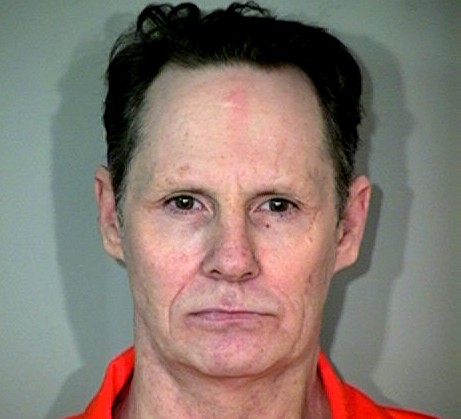
Robert Douglas Smith
Murderer Ervil LeBaron
Murderer · USA · 1972
Ervil Morrell LeBaron (1925 to August 16, 1981) was the leader of a polygamous…
35 victims
Ervil LeBaron
Murderer · USA · 1972
Ervil Morrell LeBaron (1925 to August 16, 1981) was the leader of a polygamous…
35 victims
 Brian Kevin Rosenfeld
Murderer · USA · 1985
Brian Kevin Rosenfeld Brian Kevin Rosenfeld was sentenced to three concurrent l…
23 victims
Brian Kevin Rosenfeld
Murderer · USA · 1985
Brian Kevin Rosenfeld Brian Kevin Rosenfeld was sentenced to three concurrent l…
23 victims
 Marvin Gray
Murderer · USA · 1975
Marvin Gray was convicted killer who claimed responsibility for 23 slayings and…
23 victims
Marvin Gray
Murderer · USA · 1975
Marvin Gray was convicted killer who claimed responsibility for 23 slayings and…
23 victims
 Yahweh ben Yahweh
Murderer · USA · 1980
Yahweh ben Yahweh was born and legally named Hulon Mitchell Jr. (October 27, 19…
23 victims
Yahweh ben Yahweh
Murderer · USA · 1980
Yahweh ben Yahweh was born and legally named Hulon Mitchell Jr. (October 27, 19…
23 victims
 Graham Coutts
Murderer · United Kingdom · 2003
Graham Coutts was the man convicted of murdering school teacher Jane Longhurst…
1 victim
Graham Coutts
Murderer · United Kingdom · 2003
Graham Coutts was the man convicted of murdering school teacher Jane Longhurst…
1 victim
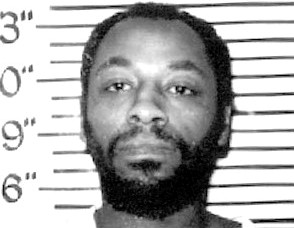 Charles Evans
Murderer · USA · 1985
September 19, 1986 — Charles Evans was sentenced to death. · On 12-08-92 — Evan…
1 victim
Charles Evans
Murderer · USA · 1985
September 19, 1986 — Charles Evans was sentenced to death. · On 12-08-92 — Evan…
1 victim
 Susan Hendricks
Mass murderer · USA · 2006
Susan Hendricks was accused of killing four members of her own family in order…
5 victims
Susan Hendricks
Mass murderer · USA · 2006
Susan Hendricks was accused of killing four members of her own family in order…
5 victims
 Anibal Gonzalez Igonet
—
Aníbal González Igonet, apodado “El Loco del Martillo”, fue encarcelado tras un…
Anibal Gonzalez Igonet
—
Aníbal González Igonet, apodado “El Loco del Martillo”, fue encarcelado tras un…
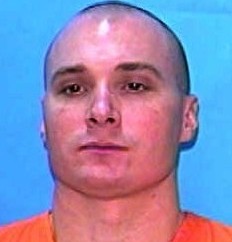 Jack Sliney
Murderer · USA · 1992
Jack Sliney was sentenced to death on February 14, 1994. Sliney was sentenced a…
1 victim
Jack Sliney
Murderer · USA · 1992
Jack Sliney was sentenced to death on February 14, 1994. Sliney was sentenced a…
1 victim
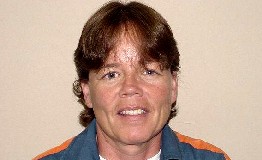 Gwendolyn Graham
Serial killer · USA · 1987
Gwendolyn Graham worked as a nurse’s aide at the Alpine Manor Nursing Home in W…
5 victims
Gwendolyn Graham
Serial killer · USA · 1987
Gwendolyn Graham worked as a nurse’s aide at the Alpine Manor Nursing Home in W…
5 victims
- Gender
- male
- Country
- USA
- Location
- Pima County, Arizona, USA
- Date of birth
- December 8, 1948
- Age at first offence
- 32
- Characteristics
- rape, hitchhiking
- Victim profile
- Sandra Owen, a young woman with mental problems
- Method of murder
- Hitting her in the head with a large rock
- Date(s) of murder
- March 11, 1980
- Years active
- 1980
- Date of arrest
- —
- Status
-
Sentenced to death
Sentenced to death on May 27, 1982
Other details
Robert Douglas Smith was convicted in Tucson following a joint trial in which he and Joe Leonard Lambright were tried together before two separate juries.
Background
Sometime between March 11 and March 14, 1980, Sandra Owen was hitchhiking in the Tucson area. She was picked up by Robert Douglas Smith, Joe Leonard Lambright, and Kathy Foreman. Smith was from the Houston area.
Sandra Owen had mental problems.
Smith raped Ms. Owen twice.
The offence
After the group took Sandra Owen to a remote area in the mountains outside Tucson, Owen was killed as Lambright and Smith choked her, stabbed her, and hit her in the head with a large rock.
The group concealed her body by covering it with rocks.
Sandra Owen’s body was not discovered until one year later.
Trial
Smith and Lambright were both charged with the crime. They were tried together in Tucson before two separate juries.
Kathy Foreman testified against them in exchange for a grant of immunity and in exchange for Pima County prosecutors agreeing not to prosecute her.
At Smith’s trial, witnesses said Smith confessed to the crime without remorse.
The only evidence presented on Smith’s behalf was the testimony of Smith’s two sisters and mother-in-law. They portrayed Smith as a nice man who grew up in an unstable household.
Dr. Martin Levy examined Smith to determine if he was competent to stand trial. Levy said Smith had a history of depression that included multiple suicide attempts. Levy said Smith suffered both psychological and physical abuse growing up in a broken home and trying to run away more than once. Levy said Smith also had said he was gang-raped in a county jail when he was 18-years-old. Levy said Smith also had a history of drug abuse.
Smith’s attorney, a Pima County deputy public defender, Thomas G. Hippert, did not present any of this evidence during the trial.
S. Jonathan Young, who represented Smith now, said:
"Robert has an IQ of 71; hes not the brightest guy in the world,"
"He's got very clear psychological limitations. Hes never been to see a psychologist, a psychiatrist or a neuropsychologist to check for brain damage."
The narrative stated that Hippert failed to investigate Smith’s mental state and history, and that Hippert seemed to misunderstand Arizona’s capital punishment law, which includes psychological disorders as a mitigating circumstance.
In his closing argument, Hippert implied that Smith was a person of average intelligence who did not have any major personality disorders.
On March 30, 1982, Smith was convicted of first-degree murder, kidnapping and sexual assault.
Sentencing
Smith was sentenced to death by the trial judge on May 27, 1982.
Aggravating circumstances were especially heinous/cruel/depraved.
Mitigating circumstances were none.
Timeline
- March 11 1980 — Sandra Owen was hitchhiking in the Tucson area when she was picked up by Robert Douglas Smith, Joe Leonard Lambright, and Kathy Foreman.
- March 30 1982 — Smith was convicted of first-degree murder, kidnapping and sexual assault.
- May 27 1982 — Smith was sentenced to death by the trial judge.
- December 12 2001 — The U.S. Supreme Court granted certiorari and issued a per curiam opinion certifying a question to the Arizona Supreme Court.
- March 6 2001 — The 9th Circuit Court of Appeals reversed.
- March 26 2002 — Oral arguments before the Arizona Supreme Court were heard.
- 2001 — Smith’s federal petition for a writ of habeas corpus proceedings included a district court dismissal and a 9th Circuit reversal.
Appeals
Smith appealed his conviction and sentence to the Arizona Supreme Court. On the direct appeal, a petition for post-conviction relief was also filed.
The Arizona Supreme Court affirmed both Smith’s conviction and sentence.
John F. Palumbo, another Pima County deputy public defender, filed a series of post-conviction petitions, which were all denied. None of the petitions included a claim of ineffective assistance of counsel.
Smith also filed a federal petition for a writ of habeas corpus.
Smith wrote a letter to Richard M. Bilby, the Chief Judge of the U.S. District Court for the District of Arizona, asking for Palumbo to include the issue of ineffective assistance of counsel in his appeals. The letter was described as extremely misspelled and riddled with grammatical errors.
Palumbo did not honor Smith’s requests.
Palumbo confirmed that he did not raise the claim because his employer, the Pima County Public Defenders Office, was a state agency that prohibited lawyers from criticizing their peers’ performances.
Arizona Assistant Attorney General Kent E. Cattani said:
"The state's view is if there is some kind of conflict, the remedy isnt just to sit there and wait to do nothing. The attorney can withdraw,"
"If it happens to be your own ineffectiveness or your law partners ineffectiveness, you still have a responsibility to raise [the issue of incompetent counsel]."
The federal district court appointed Young, a lawyer in private practice, to help Smith.
Young filed another post-conviction petition alleging Smith’s trial and appellate lawyers were ineffective.
A federal judge dismissed the petition and called the claim of ineffective assistance of counsel "outrageous or ridiculous" because it implied that deputies of the Pima County Public Defenders Office were not doing their jobs properly.
The judge also ruled that Smith’s claims were too old, according to Arizona’s Rule 32.2.
The state rule was described as applying where a petitioner’s belated focus on an alleged error lacked sufficient constitutional magnitude to review an issue.
The judge said Smith’s claim was precluded as a matter of state law.
Cattani said:
"The rule itself is straightforward: If you fail to raise something in a previous proceeding that you should have raised, then its precluded,"
"The rule also states that if an asserted claim is of 'sufficient constitutional magnitude,' then a waiver of such a claim is required to be 'knowing, voluntary and intelligent.'"
On March 6, 2001, the 9th Circuit Court of Appeals reversed. It said:
"A state courts procedural ruling will bar our [habeas] review only if its basis is separate and distinct from the federal question."
In the same appeal, the court agreed that the dual jury system used in trying Smith was acceptable.
The 9th Circuit ordered an evidentiary hearing in the district court.
It said:
"No court has given Smith an opportunity to develop a factual record on his Sixth Amendment claim,"
The state of Arizona petitioned the U.S. Supreme Court to review the 9th Circuit decision.
The case presented whether Smith’s post-conviction petitions were of "sufficient constitutional magnitude" to require a "knowing, voluntary and intelligent waiver" under Arizona’s rule, and whether decisions were based on the strengths of the claim or merely upon the allegation that Smith’s Sixth Amendment right to counsel was violated.
The narrative cited Strickland v. Washington (1984) and described standards for deficient performance and reasonable probability of a different outcome.
Kent S. Scheidegger of the Criminal Justice Legal Foundation, who wrote a friend-of-the-court brief on behalf of the state of Arizona, said:
"[Smith] has had his day in court,"
"He's had a fair decision in court."
On Dec. 12, 2001, the U.S.
The certified question was:
"At the time Smith filed a post-conviction petition in state court under Arizona's rule 32.2(a)(3), did the question whether an asserted claim was of 'sufficient constitutional magnitude' to require a knowing, voluntary and intelligent waiver for the purposes of that rule depend upon the merits of the particular claim or merely upon the particular right alleged to have been violated?"
Cattani explained:
"The issue is whether the state courts are required to address the merits of a claim before deciding its precluded,"
Young said:
"Young said if the Arizona Supreme Court considered the merits of the claim, then the U.S. Supreme Court can hear the case."
Young also said:
"However, if the Arizona court merely looked at the type of claim, then the state has not considered the claim enough to warrant federal attention."
Young added:
"There's a question as to whether Arizonas comment rests on state grounds or the U.S. Constitution,"
"The United States Supreme Court is considering whether or not Arizona has taken a sufficient look at the case to justify getting the federal courts involved."
Stewart v. Smith, 122 S.Ct. 1143, 534 U.S. 157 (2001) included certiorari proceedings. Stewart v. Smith, 202 Ariz. 446, 46 P.3d 1067 (2002) was listed.
Stewart v. Smith, 536 U.S. 856, 122 S.Ct. 2578 (2002) was listed.
The case was remanded to the Ninth Circuit.
Outcome
Published opinions were listed as: State v. Smith (Robert), 138 Ariz. 79, 673 P.2d 17 (1983); Smith v. Lewis, 157 Ariz. 510, 759 P.2d 1314 (1988); Lambright v. Stewart, 167 F.3d 477 (9th Cir. 1999) (withdrawn); Lambright v. Stewart, 177 F.3d 901 (9th Cir. 1999); Lambright v. Stewart, 220 F.3d 1022 (9th Cir. 1999); Smith v. Stewart, 241 F.3d 1191 (9th Cir. 2001); Stewart v. Smith, 122 S.Ct. 1143, 534 U.S. 157 (2001); Stewart, Terry, Dir., Arizona Dept. of Corrections v. Smith, Robert; Questions presented and question answered in Stewart v. Smith, 536 U.S. 856, 122 S.Ct. 2578 (2002); and remand to Ninth Circuit.
Other details
Smith was described as still on Arizona’s Death Row more than 20 years later.
The narrative also stated that Lambright, who was now 53-years-old, was involved in the same incident and joint trial.

Spotted an error, or have more information about this case?